Gentle parenting — an approach centered on empathy, connection, and understanding the reasons behind a child’s behavior rather than relying on punishment or strict obedience — has grown significantly popular among younger Indian parents. But for many families, this approach runs directly into a generational gap: grandparents who were raised on, and often raised their own children with, much stricter, more authority-driven discipline methods.
Gentle Parenting vs Strict grandparents India
This creates a genuinely common and often emotionally charged tension in Indian joint families — not because either generation doesn’t love the child, but because the underlying philosophy of discipline itself has shifted meaningfully between generations. This guide offers practical strategies to navigate this gap with respect, consistency, and minimal ongoing conflict, while still protecting the core principles of your gentle parenting approach.
1. Understanding the Generational Gap in Discipline Philosophy
Most grandparents in India today raised their own children during a period when strict, authority-based discipline — including practices like spanking, harsh scolding, or unquestioning obedience expectations — was widely considered not just acceptable but responsible parenting. Child development understanding has evolved considerably since then, with substantial research now supporting approaches that prioritize emotional regulation, connection, and understanding over pure compliance and fear-based discipline.
This isn’t a story of one generation being “wrong” and another “right” in some absolute sense — it reflects genuinely different information environments, cultural contexts, and available parenting guidance across generations. Framing the conversation this way, rather than as a battle between “good” and “bad” parenting, tends to reduce defensiveness and create more productive family conversations.
2. What Gentle Parenting Actually Means (Common Misunderstandings)
Before addressing the generational gap directly, it’s worth clarifying what gentle parenting actually involves, since it’s often misunderstood — including sometimes by parents practicing it, not just by skeptical grandparents:
Gentle parenting is not permissive parenting. It doesn’t mean an absence of boundaries or consequences — it means boundaries are held with empathy and explanation rather than through fear, shame, or purely punitive consequences.
Gentle parenting still involves firm limits. Children still hear “no,” still experience consequences for actions, and still learn about acceptable behavior — the difference lies in how these limits are communicated and enforced, not whether they exist at all.
Gentle parenting emphasizes understanding the “why” behind behavior, particularly for young children whose challenging behavior often stems from undeveloped emotional regulation skills rather than deliberate defiance.
Clarifying this distinction is often the single most useful step in bridging the generational gap, since much grandparent concern stems from a (often reasonable, given common misrepresentations) assumption that gentle parenting means no discipline at all.
3. Why Grandparents Often Favor Stricter Approaches
Understanding the genuine reasoning behind grandparents’ preferences — rather than dismissing it as simply “old-fashioned” — helps build more productive conversations:
- They parented successfully (by their own measure) using stricter methods, and naturally extend confidence in what worked for them
- They often associate strictness directly with respect and good character outcomes, based on cultural and generational values around obedience and hierarchy
- They may worry that a lack of visible strictness reflects permissiveness or poor parenting, particularly if gentle parenting is unfamiliar or has been misrepresented to them
- Grandparents often feel a strong, genuine investment in the child’s character development, and stricter discipline can feel like an expression of that care and responsibility, not opposition to the parents
Recognizing that this comes from genuine care, even when the specific approach differs from yours, tends to ease the emotional charge of these conversations significantly.
4. The Real Risk: Inconsistency, Not Disagreement Itself
It’s worth naming clearly what the actual risk is in this dynamic — because it’s not simply “disagreement” itself, which is normal and manageable, but rather inconsistency in the child’s experience that can create genuine confusion:
- Children generally benefit from reasonably consistent expectations and responses to behavior across the important adults in their life
- Significant, unaddressed inconsistency can allow children to learn to behave differently depending on which adult is present, rather than internalizing consistent values
- Public disagreement or undermining between parents and grandparents, witnessed directly by the child, can create confusion about authority and can also model conflict-handling in ways parents may not want to reinforce
This reframes the goal clearly: it’s not necessarily about achieving full philosophical agreement with grandparents, but about managing the practical inconsistency and any visible conflict in front of the child.
5. Setting Core Boundaries Without Creating Conflict
A few principles help establish boundaries around discipline approach without unnecessary confrontation:
- Identify your genuine non-negotiables — typically things like no physical discipline, no shaming or humiliation-based correction, and no undermining of a specific consequence you’ve just given — and reserve firm boundaries specifically for these
- Stay flexible on lower-stakes style differences — a slightly stricter tone, different reward systems, or minor rule variations during grandparent-led time may be worth accepting rather than contesting every difference
- Frame boundaries around the child’s needs and current understanding of child development, rather than as a rejection of the grandparents’ own parenting history
- Set expectations early and calmly, rather than only reacting after a specific incident, which tends to feel less confrontational and more like proactive family planning
6. Explaining Gentle Parenting to Grandparents in Relatable Terms
How gentle parenting is explained significantly affects how receptively grandparents respond:
- Avoid jargon-heavy language (“co-regulation,” “attachment theory”) that can feel alienating or overly academic — translate concepts into practical, relatable terms instead
- Connect gentle parenting to values grandparents likely already hold — for instance, framing calm explanation as a way to build a child who understands right and wrong, not just fears punishment, which most grandparents genuinely want as an outcome too
- Share simple, concrete examples of what gentle parenting looks like in practice, since abstract descriptions often trigger more skepticism than specific, observable examples
- Acknowledge explicitly that boundaries and consequences still exist in gentle parenting, directly countering the common misconception that it means no discipline at all
- Use trusted sources (a pediatrician’s guidance, a well-regarded parenting book) as a supporting reference point, which can carry more credibility with skeptical grandparents than a purely personal parenting philosophy explanation
7. Handling Specific Common Flashpoints
Tantrums: Grandparents may favor quick, firm shutdown of tantrums, while gentle parenting emphasizes calm co-regulation. Explain that allowing a child to express and move through big emotions, with a calm adult present, tends to build stronger long-term emotional regulation than suppression-focused approaches.
“Talking back” or expressing disagreement: What some grandparents interpret as disrespect, gentle parenting often frames as a child’s developing ability to express their own perspective — worth explaining as a skill being built, not defiance being tolerated.
Rewards and bribery concerns: Grandparents may see structured positive reinforcement as “bribery.” Clarify the distinction between consistent, values-based positive reinforcement and reactive bribery used only to stop a specific unwanted behavior in the moment.
Physical discipline: This is often the most emotionally significant flashpoint. A calm, clear, non-negotiable boundary is generally warranted here, explained through current understanding of child development and long-term outcomes, while acknowledging this may have been considered normal in previous generations.
8. When Grandparents Undermine Discipline in the Moment
One of the most common specific frustrations is a grandparent stepping in during an active discipline moment — comforting a child immediately after a consequence, or contradicting a boundary in real time:
- Address this privately, never in front of the child, since in-the-moment correction of a grandparent can create its own confusing dynamic for the child
- Use calm, specific language when raising it afterward: “I know it’s hard to see her upset, but when the consequence gets undone right away, she doesn’t learn the boundary — can we talk about handling this differently next time?”
- Acknowledge the emotional impulse behind the undermining (genuine care and difficulty watching a child in distress) before addressing the practical issue
- Suggest a specific alternative role for grandparents during discipline moments — perhaps stepping back rather than either enforcing or undermining, if full alignment on method isn’t achievable
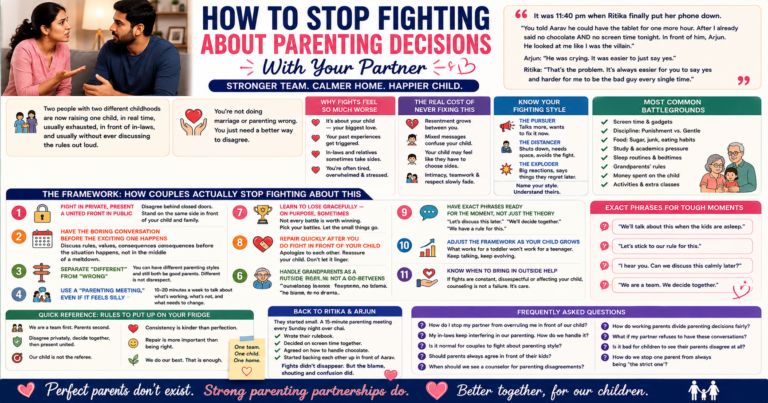
9. Presenting a United Front With Your Partner
Navigating this dynamic is significantly easier and more effective when both parents are aligned:
- Discuss your shared discipline philosophy and specific boundaries privately before raising concerns with grandparents, ensuring you’re not visibly negotiating your approach in real time in front of extended family
- Support each other publicly in front of grandparents, even if you have minor disagreements between yourselves — address those privately afterward
- Divide the “family diplomacy” conversations based on which partner has an easier relationship with which grandparent, rather than assuming this labor falls on one partner by default — in many Indian households, this responsibility disproportionately falls on the mother regarding her in-laws specifically, which is worth acknowledging and actively redistributing where possible
10. Involving Grandparents as Allies, Not Opponents
Rather than positioning this purely as a boundary-setting exercise, actively involving grandparents in your parenting approach tends to reduce friction over time:
- Ask for their specific involvement in age-appropriate ways that align reasonably well with your approach — storytelling, teaching specific skills, cultural or religious guidance — giving them genuine ownership rather than positioning them as needing to be “managed”
- Share small wins and positive outcomes you observe from the gentle parenting approach, building gradual credibility through visible results rather than only through explanation
- Invite their experience-based wisdom on areas where it’s genuinely valuable — managing common childhood situations they’ve navigated before, family traditions, or practical caregiving knowledge — reinforcing that this isn’t a wholesale rejection of their input, just a specific difference in discipline philosophy
11. Respecting What Grandparents Get Right
It’s worth genuinely acknowledging, both internally and in conversation, that stricter generational approaches often come bundled with real strengths worth preserving:
- Consistency and follow-through were often core strengths of more traditional discipline approaches, which gentle parenting also values, even while differing on method
- Respect for elders and family structure, when taught through connection rather than fear, remains a value most gentle-parenting families still want to instill
- Grandparents’ patience, availability, and unconditional love often provide children with a secure relationship that complements rather than competes with the parents’ own approach
Approaching this conversation with genuine respect for what’s valuable in the grandparents’ approach — not just correction of what you want changed — tends to build a far more collaborative dynamic.
12. Managing Your Own Emotional Reactions
These conversations often carry significant emotional weight, particularly when a parent feels their own parenting philosophy is being questioned or undermined:
- Recognize when you’re responding from personal frustration versus genuine concern for your child, since these can sometimes get tangled together in the moment
- Take time before addressing particularly triggering incidents, rather than reacting immediately in a highly emotional state
- Seek support from your partner or a trusted friend to process frustration separately, rather than letting every interaction with grandparents become emotionally charged
- Remember that occasional imperfect alignment doesn’t undo your overall gentle parenting approach — children are resilient to reasonable variation across different relationships, provided the parents’ own core approach remains consistent
13. Talking to Your Child About Different Household Rules
As children grow older, particularly past toddlerhood, they often notice and ask about differences between how parents and grandparents respond to behavior:
- Explain simply that different people sometimes have different rules or ways of doing things, without framing either approach as “wrong” in a way that undermines the child’s relationship with grandparents
- Reinforce your own core expectations clearly, helping your child understand which behaviors and values remain consistent regardless of which adult is present
- Avoid putting your child in the position of comparing or judging the different approaches, which can create loyalty conflicts or emotional burden inappropriate for their age
- Use age-appropriate honesty about your reasoning (“In our home, we talk about feelings when someone’s upset, because it helps us understand each other better”)
14. When to Hold Firm vs When to Let It Go
Not every difference warrants active pushback — discernment here significantly reduces ongoing family tension:
Worth holding firm on:
- Physical discipline or any approach involving fear, shaming, or humiliation
- Direct undermining of a specific consequence in the moment, especially repeatedly
- Approaches that conflict with your child’s specific individual needs (such as a child with particular sensory or emotional regulation needs requiring specific handling)
Often worth letting go:
- Minor differences in tone or strictness during grandparent-led time that don’t involve your core non-negotiables
- Occasional additional treats, indulgences, or rule flexibility specifically during grandparent time, within reason
- Differing communication style that doesn’t cross into disrespect or harm, even if it’s not exactly how you’d phrase things yourself
15. Common Scenarios and How to Handle Them
Scenario: A grandparent scolds harshly in front of others, causing visible embarrassment to the child. Address privately afterward: “I know you want her to understand she did something wrong — could we talk about handling it more privately next time, since public correction tends to make her shut down rather than understand the lesson?”
Scenario: A grandparent repeatedly says “in our time, this wouldn’t have been tolerated.” Acknowledge without necessarily agreeing: “I know things were different when you were raising us, and I really respect how much you cared about raising us well — we’re just trying a slightly different approach based on some newer understanding of how kids learn best.”
Scenario: Grandparents use comparison to other children as motivation (“Why can’t you behave like your cousin?”). This is worth addressing directly and calmly, since comparison-based motivation is generally understood to undermine self-esteem rather than build genuine behavioral change: “I’ve noticed comparing her to [cousin] seems to make her more upset than motivated — could we try encouraging her own progress instead?”
Scenario: A grandparent believes gentle parenting means the child will grow up “spoiled” or without discipline. Share specific, concrete examples of the boundaries and consequences that do exist in your approach, directly countering the misconception that gentle parenting means permissiveness.
16. Long-Term Relationship Building Beyond the Discipline Debate
A few habits support long-term family harmony beyond navigating specific discipline disagreements:
- Build regular, low-stakes positive family time together, which creates goodwill that makes occasional disagreements easier to navigate without lasting tension
- Express specific, genuine appreciation regularly for grandparents’ involvement and care, separate from any discipline-related conversations
- Revisit the conversation periodically, not just reactively, allowing gradual adjustment over time as grandparents observe your approach’s outcomes firsthand
- Remember that most friction in this dynamic ultimately comes from love — for the child, and often for you as their parent — even when it manifests in ways that feel frustrating in the moment
17. Common Myths About This Generational Divide, Addressed
Myth: Grandparents who prefer stricter discipline don’t respect gentle parenting as a legitimate approach. Reality: Many grandparents, once gentle parenting is explained clearly and they observe its outcomes over time, come to respect and even partially adopt aspects of the approach — skepticism often stems from unfamiliarity or misrepresentation, not fixed opposition.
Myth: You have to choose between respecting your elders and protecting your parenting approach. Reality: These aren’t mutually exclusive — it’s genuinely possible to hold firm boundaries around core discipline principles while maintaining a respectful, warm relationship with grandparents, particularly when boundaries are framed thoughtfully.
Myth: Any inconsistency between households will confuse or harm the child. Reality: Children are generally resilient to reasonable variation across different relationships and contexts, provided the parents’ own core approach remains consistent and the child isn’t exposed to significant ongoing conflict about it.
Myth: This tension will never improve over time. Reality: Many families report that this specific friction eases meaningfully over months and years, as grandparents observe outcomes firsthand and grow more familiar and comfortable with the approach.
18. A Practical Conversation Framework for Difficult Discussions
A simple framework for addressing specific disagreements calmly and productively:
- Choose a calm moment, not immediately after a triggering incident
- Acknowledge their perspective and care first, before raising your concern
- State your specific concern clearly and briefly, focusing on the child’s needs rather than a critique of their parenting history
- Offer a specific, concrete alternative rather than only naming what you don’t want
- Express appreciation for their willingness to consider your approach, reinforcing the collaborative rather than adversarial framing
Read Also
20. Final Checklist for Navigating This Balance
- Identify your genuine non-negotiables versus flexible style differences
- Align privately with your partner before raising concerns with grandparents
- Explain gentle parenting in relatable, jargon-free terms, directly countering permissiveness misconceptions
- Address undermining incidents privately, never in front of your child
- Acknowledge grandparents’ genuine care and valuable strengths, not just areas of disagreement
- Choose calm moments for difficult conversations, not immediately after incidents
- Give your child age-appropriate, simple explanations for different household rules
- Build regular positive family time to strengthen overall relationship goodwill
- Revisit the conversation periodically as grandparents observe outcomes over time
This article reflects general, practical strategies for navigating discipline philosophy differences with grandparents in Indian joint families. Every family’s specific relationships and circumstances are different — adapt these suggestions to fit your own household, and consider family counseling support if tension significantly affects family wellbeing.