Physical Address
304 North Cardinal St.
Dorchester Center, MA 02124
Physical Address
304 North Cardinal St.
Dorchester Center, MA 02124

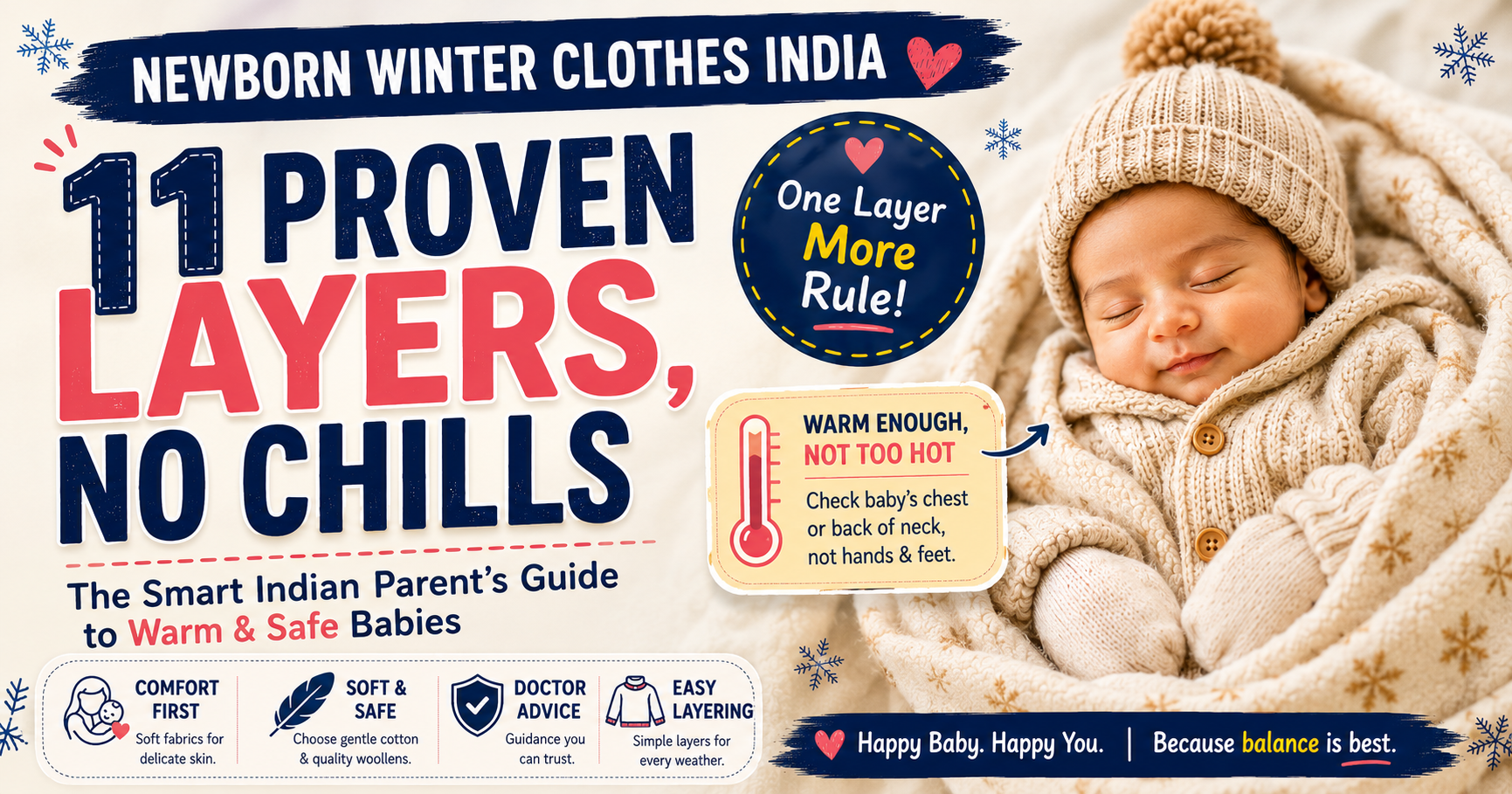
Shalini’s baby was born on the first week of December, in a small house in Ludhiana, and the cold arrived with him.
The fog was so thick that the neighbour’s balcony disappeared at noon. The tiles felt like ice under her feet. Her mother-in-law had come from the village with two bags, one of ration and one of knitted things, and she took charge of the baby the way an army captain takes charge of a border.
“Thand bahut hai, beta. Bachche ko khoob dhak ke rakho.”
So the baby wore a vest, a thermal, a full-sleeve top, a woollen sweater, a second sweater over it, a woollen cap, socks, mittens, and then a shawl, and then a thick rajai on top. He looked like a small, sleepy parcel. Only his nose was out.
Shalini was too tired to argue. For three days, she followed the plan. But on the fourth afternoon, she picked him up, and something felt wrong. His face was red. His hair was damp at the back of his neck. He was fussing and twisting, and the cry was not hungry, not sleepy, just uncomfortable.
She slid her hand under the layers, onto his chest. It was hot and sweaty.
“Mummyji, yeh toh pasina pasina ho raha hai.”
Her mother-in-law frowned. “Pasina? Itni thand mein?”
That evening, they called the pediatrician. He listened, smiled gently, and said the thing that Shalini still repeats to her friends. “Thand se bachana zaroor hai. Lekin garmi se bhi. Dono ka balance chahiye.”
That is the real story of newborn winter care in India. We worry so much about the cold that we forget about the heat. And we forget that a newborn cannot tell us which one is bothering him.
If you are expecting a winter baby, or you are caring for one now, this article is for you. I will give you a simple newborn winter clothes India layering guide, with 11 layers you can mix and match, the “one layer more” rule, how to check if your baby is warm enough, how to choose thermal wear and woollens, how to avoid sweater itch, and how to stay safe at night. No panic. No heavy bundles. Just clear, calm steps.
Quick note: I am a parent and content writer, not a doctor. This article gives general guidance based on common pediatric advice. Newborns are delicate, and every baby is different. For questions about your baby’s temperature, feeding, sleep or health, please talk to your pediatrician, especially in the first weeks.
Dress your newborn in soft cotton layers, with about one more layer than an adult would be comfortable in. Start with a cotton base, add a warm middle layer, and use an outer layer only when going out. Check the baby’s chest or back of the neck, not the hands and feet, and take off or add a layer as needed.
Here is a quick table of what to wear, depending on how cold it is:
| How cold is it? | Example places and times | What to dress your newborn in |
|---|---|---|
| Mild | Pune, Hyderabad, Bengaluru nights; early winter days in many cities | Cotton vest, full-sleeve top, pants, a light cardigan if needed |
| Cool | North Indian plains in the evening and early morning; central India nights | Cotton vest, full-sleeve top, pants or sleepsuit, a sweater, socks, and a shawl for outings |
| Cold | Delhi NCR, Punjab, Haryana, UP in December and January; hill towns | Cotton vest, thermal inner, full-sleeve top, sleepsuit, sweater, socks, cap and shawl when going out |
| Very cold | Hills, Kashmir, and cold nights in mountain regions | All of the above, with a warm outer layer outdoors, and a warmer room, with doctor’s guidance |
These are rough guides, not strict rules. Your own baby, your house and your weather will decide what works. Let me explain how to find the balance.
Let me explain this in simple words, the way our pediatrician explained it to Shalini.
A newborn cannot control body temperature as well as an adult can. A baby has a small body and thin skin, and loses heat faster. In a cold room, the baby may get cold more quickly than you do. A baby also cannot shiver properly, cannot pull on a blanket, and cannot tell you, “I am cold.”
But the opposite is also true. A baby who is wrapped in too many layers can get too hot. A baby cannot take off a sweater. Overheating can make a baby sweaty, cranky, and can give heat rash. Doctors also warn that overheating is a risk factor for babies during sleep. So warm does not mean as many layers as possible.
So what we want is balance: warm enough, not too hot, and easy to adjust.
Here is a thought that helps. Imagine you are dressing a baby the way you would dress yourself, in a comfortable room, plus one soft layer. Not three. Not five. One more. This is the idea behind the “one layer more” rule, which I will explain in detail.
You may have heard this rule from your pediatrician, a nurse, or a parenting book. It is a simple guide that many pediatric groups share:
Dress your baby in about one more layer than you are comfortable wearing.
If you are comfortable in a kurta and a light sweater, your baby may need a vest, a top, pants and a light sweater. If you are comfortable in a kurta only, your baby may need a vest, a top and pants, or a cotton sleepsuit.
This is the most useful skill for winter baby care, and it takes five seconds.
Put your hand on the chest, the tummy, or the back of the neck. These areas tell you the true body warmth. Do not rely on the hands and feet. In newborns, the hands and feet are often cooler than the body, even when the baby is perfectly warm and comfortable. Cold hands and feet alone do not mean the baby is cold.
If your baby’s chest feels cold, warm the baby with skin-to-skin contact or add a dry layer in a warm room. And if the baby seems very sleepy, is not feeding, looks pale or bluish, or has trouble breathing, please get medical help urgently. Do not wait.
If your baby is too hot, take off a layer, move to a cooler part of the room, and offer a feed. If the baby seems very unwell, has a fever, or does not settle, call your doctor.
Every time you pick up your baby, put your hand at the back of the neck or on the chest for two seconds. After a few days, it becomes a habit, and you will know what feels right.
Before I list the 11 layers, here are the fabric rules. They will help you choose the right clothes.
Rule 1: Cotton next to the skin. Whatever you wear on top, the first layer should be soft cotton, because it absorbs sweat and is gentle on newborn skin. (See our guide on the best fabric for baby clothes in India for details.)
Rule 2: Warmth comes from layers, not from thickness. Thin layers trap warm air between them. One thick, heavy garment cannot be adjusted.
Rule 3: Wool and synthetic fibres go on the outside. Woollen and acrylic sweaters can itch and trap sweat if they touch the skin. Always keep a cotton layer under them.
Rule 4: Soft, loose, front-open styles are best. A newborn cannot hold up the head. Avoid tight necks, tight cuffs and hard buttons.
Rule 5: Avoid anything that can cover the face or come loose. Long strings, scarves, loose blankets and big pom-poms are not for newborns.
Rule 6: Wash new woollens before use. They can carry dust and loose fibres.
Rule 7: Keep it dry. A damp layer makes a baby cold faster. Change wet or sweaty clothes quickly.
Here is the heart of the article. These are 11 pieces you can mix and match, from the skin outward. You will not wear all 11 at once. Choose what you need, based on the weather, the time of day and the place.
When to use: all the time, in all winter weather.
This is the foundation of your winter wardrobe. A soft cotton vest or bodysuit sits next to the skin and absorbs sweat. Choose a full-sleeve one for cold days, and a short-sleeve one for mild days. An envelope neck helps if there is a leak.
What to look for: 100% soft cotton, flat seams, snaps that do not press, and no hard labels.
How many: 4 to 6, depending on how often you wash.
When to use: cold winter days and nights in places like Delhi NCR, Punjab, Haryana, UP, Uttarakhand, Himachal and Kashmir.
A thermal inner is designed to hold warmth close to the body. For newborns, I would choose a soft, cotton-rich thermal, not a tight, fully synthetic one. It goes over the vest, or in place of it, and under the top.
What to look for: soft cotton or a cotton-rich blend, a loose fit, no itchy seams, and a wide neck.
What to avoid: tight synthetic thermals, which can trap sweat and cause rashes. And remember to take it off when the baby is indoors in a warm room.
How many: 2.
(We discuss thermal wear more below.)
When to use: most of the day, on cool and cold days.
A full-sleeve, front-open top, like a winter jhabla, an angrakha-style wrap, or a kimono top, is the easiest garment to put on a newborn. You lay the baby on it and tie it loosely. No pulling over the head.
What to look for: soft cotton, interlock or brushed cotton, short ties or snaps, and sleeves that cover the wrists without being tight.
How many: 4 to 6.
When to use: cool and cold days, and nights.
Soft cotton pyjamas, leggings, or pants with foldable cuffs keep the legs warm. Footed pants cover the feet, too, and reduce the need for socks.
What to look for: a soft waist with no tight elastic, foldable cuffs, and a loose fit around the diaper or nappy.
How many: 4 to 5.
When to use: nights, naps, and cool indoor days.
A one-piece sleepsuit that covers the body, arms and legs is one of the best winter pieces for a newborn. It replaces loose blankets and keeps the baby warm without extra covers. Choose one with a two-way zip or front snaps for night changes.
What to look for: soft cotton or cotton interlock, no hood, no loose strings, and a snug but comfortable fit. Check the neck and wrists.
How many: 2 to 3.
When to use: cool and cold days, over the top layer.
A soft, front-open cardigan or sweater adds warmth, and you can take it off in a minute when the baby gets warm. Choose a cotton-rich knit or a very soft baby wool blend.
What to look for: a front opening, a wide neck, soft yarn, no loose threads, no big buttons, and no tight cuffs.
What to avoid: itchy wool, tight pullovers, and anything with beads or pom-poms.
How many: 2.
When to use: going outside in cold weather, short trips, hospital visits and family visits.
An outer layer is for the outside world, not for the house. A soft fleece jacket, a quilted baby jacket or a warm bunting suit keeps the wind out. Take it off as soon as you come indoors, or the baby will get hot quickly.
What to look for: a soft lining, a front zip or snaps, no hood that covers the face, and a loose fit.
What to avoid: bulky puffy jackets in a car seat or carrier, because the padding can make the straps loose and unsafe. If you use a car seat, dress the baby in thin layers and put a blanket over the buckled straps instead.
How many: 1.
When to use: cool and cold days and nights, outdoors and indoors.
Soft cotton or cotton-blend socks keep the feet warm. In winter, many newborns do well with socks on cold days. Make sure they are not tight, and check the toes for loose threads.
What to look for: soft elastic, a gentle fit, and no beads or hard parts.
How many: 3 to 4 pairs.
When to use: cold outings, and when the baby is scratching the face.
Mittens keep hands warm and stop scratches. But babies also need free hands, to explore and suck on their fingers. Use mittens mostly for outings and cold times, not all day. Keep nails short, and check for loose threads that can wrap a finger.
How many: 2 pairs.
When to use: cold outings, and cold rooms when the baby is awake.
A lot of heat leaves through the head, so a cap helps a newborn in the cold. We cover caps in detail below. The short rule: a thin cotton cap for cool indoor spaces, a soft woollen cap for cold outings, and no cap on a sleeping baby.
What to look for: soft, stretchy, no tight band, no tie under the chin, no pom-pom, and a cotton lining if the cap is woollen.
How many: 2, one cotton and one woollen.
When to use: carrying the baby, feeding, going out, and sitting in cold rooms.
A soft shawl or dohar is the classic Indian way to keep a baby warm. Use it on top of the baby’s clothes when you are carrying or feeding, and take it off when the baby is warm. A soft, light, washable shawl is better than a thick, heavy blanket.
What to look for: soft, washable, no fringes or loose beads, and a size you can manage.
Safety note: do not leave loose shawls, blankets or dohars in the sleeping area. They can cover the baby’s face. For sleep, a sleepsuit is a safer choice. Ask your pediatrician about safe sleep for your baby’s age.
How many: 2.
Here are some simple outfits, built from the layers. You will see that a baby almost never needs all 11 at the same time.
| Situation | Layers to use | Notes |
|---|---|---|
| Mild winter day at home | 1 (vest) + 3 (top) + 4 (pants) | Add a light cardigan only if the room feels cool |
| Cool morning at home | 1 + 3 + 4 + 6 (cardigan) + 8 (socks) | Take off the cardigan when the sun comes in |
| Cold day at home, with a warm room | 1 + 2 (thermal) + 3 + 4 + 8 | Skip the cardigan if the baby feels warm |
| Cold outing (short) | 1 + 2 + 3 + 4 + 6 + 7 (jacket) + 8 + 9 + 10 + 11 | Remove outer layers as soon as you are indoors |
| Cool night in a sleepsuit | 1 + 5 (sleepsuit) + 8 (socks, if needed) | No cap, no loose blanket |
| Cold night in a sleepsuit | 1 + 2 + 5 + 8, plus a warm, safe room | Ask your doctor about room temperature |
| Feeding in a cold room | 1 + 3 + 4 + 11 (shawl over mother and baby) | Remove the shawl after the feed |
| Visit to the doctor | 1 + 3 + 4 + 6 + 7, with the cap for the outing | Wear clothes that are easy to remove for examination |
The golden idea is “add one, remove one.” If the baby feels cool, add a layer. If the baby feels warm, remove one. You are never locked into a plan.
Nights in winter are when parents worry the most. Many of us were taught to cover the baby with thick blankets and a cap, and to keep the room tightly closed. But modern pediatric advice is a bit different, and I want to share the general ideas. Please ask your own pediatrician for advice that suits your baby.
1. Dress the baby in a sleepsuit, not in loose blankets. A one-piece sleepsuit keeps the baby warm, and cannot slip over the face.
2. Avoid heavy blankets, quilts, rajai and pillows in the baby’s sleeping area. Soft bedding can cover the face and cause overheating. Ask your pediatrician about safe options.
3. Do not put a cap on a sleeping baby indoors. Babies lose extra heat through the head, and a cap during sleep can lead to overheating. Use a cap for outings and cold rooms when the baby is awake.
4. Keep the room comfortably warm, not hot. Some guidelines suggest a room temperature of about 16 to 20°C for sleeping babies, while many Indian families keep rooms a little warmer. Please ask your pediatrician what is right for your baby and your home.
5. Do not use hot water bottles, electric blankets or heating pads in the baby’s bed. These can cause burns and overheating.
6. Do not place a room heater or blower close to the baby. And never leave a heater on in a closed room all night. (See the heater safety section below.)
7. Use a firm, flat sleeping surface, with a fitted sheet, and the baby on the back, as your pediatrician advises. Keep soft toys, pillows and loose bedding out.
8. Check the baby by feeling the chest or the back of the neck, not the hands and feet.
9. Use a sleep sack or a sleepsuit in colder rooms, instead of piling on layers.
If these ideas feel different from what your family has done, please talk with your pediatrician, and explain them kindly to the grandparents. Many families find it helpful when the doctor says it, too.
In many North Indian homes, families use room heaters, blowers, electric blankets, or coal and charcoal braziers (angithi or sigri) in winter. Some of these are risky for babies, so I want to be clear.
Warmth should come from layers, a safe sleepsuit and a comfortable room, not from unsafe heating. If you are unsure, please ask your pediatrician or a local safety authority.
Thermal wear for babies is one of the most searched topics in winter, and I get many questions about it.
Thermal wear is designed to hold body warmth close to the skin. Good thermals can help on really cold days. But a newborn’s thermal needs care.
When a thermal may help:
When to skip it:
How to choose:
How to use:
If you are unsure, ask your pediatrician whether your baby needs thermal wear in your area.
A woollen cap is the symbol of winter baby care in India. Almost every grandmother has knitted one. And it can be helpful, if used in the right way.
Why caps help: a baby loses warmth through the head, and the ears are exposed to cold wind. A cap protects them on a cold outing.
Cap rules for newborns:
What about scarves and mufflers? I would skip them for newborns. Long scarves and loose mufflers can cover the face or wrap around the neck. If your baby needs extra neck warmth, choose a high-neck cotton top or a soft collar, instead.
The sweater itch is common. A baby in a woollen sweater starts to fuss and rub the neck, and you may see red patches on the neck, arms or tummy.
If the rash does not settle, spreads, or the baby seems unwell, see your pediatrician.
Many grandmothers and mothers knit soft sweaters for newborns, and they are lovely. A few tips: use baby-soft yarn, choose a loose stitch with no big holes for fingers to catch, keep buttons small and sewn tight (or skip them), make the neck wide, and keep the sleeves a little long so that you can fold them back. Wash before use, and always use a cotton layer underneath.
Winter in India is not one season. Here is a region-wise guide, to help you choose the right layers.
Your pediatrician and your neighbours can tell you what your local winter really needs.
Winter changes the daily routine of a newborn. Here are some gentle ideas. Please check with your pediatrician for what suits your baby, because newborns differ.
Bath:
Oil massage:
Sunlight:
Outings:
Carrying and feeding:
Winter laundry can be tricky, because of slow drying and fog. Here are some ideas.
Here is a sample list for a newborn born in a cold region, for a family that washes every day or every two days. Adjust it for your region, and see our newborn clothes checklist for India for the full list.
| Item | Cold region | Mild region |
|---|---|---|
| Cotton vests or bodysuits (full-sleeve) | 5 to 6 | 3 to 4 |
| Thermal inners (cotton-rich) | 2 | 0 to 1 |
| Full-sleeve front-open tops | 5 to 6 | 3 to 4 |
| Pants, leggings or footed pants | 4 to 5 | 3 to 4 |
| Footed sleepsuits | 3 | 2 |
| Cardigans or sweaters | 2 | 1 |
| Outer jacket or fleece | 1 | 0 to 1 |
| Socks | 4 pairs | 2 pairs |
| Mittens | 2 pairs | 0 to 1 |
| Caps (1 cotton, 1 woollen) | 2 | 1 |
| Shawl or dohar | 2 | 1 |
| Muslin swaddles or wraps | 4 to 5 | 4 |
Buy only a few pieces in the newborn size, and most in 0-3 months, as we explained in our guide on newborn vs 0-3M size. Accept hand-me-downs and hand-knit pieces, and wash them well before use.
Winter clothes can be costly, but you do not need to spend a lot.
Here are the mistakes I see most often.
Please call your pediatrician or get medical help urgently if you see any of these:
Newborns can change quickly. It is always better to ask than to wait.
Morning:
Daytime:
Evening:
Night:
Go back to Shalini, with her red-faced, damp-haired baby in his mountain of layers, and her mother-in-law frowning in the corner.
Here is what I would tell her. You were not wrong to protect your baby from the cold. That love is real. Next time, start with a cotton vest and one warm layer, check the chest, and add only what the baby needs. Keep the room comfortable, use a sleepsuit at night, and keep the cap and the shawl for outings. And when your mother-in-law worries, show her your hand on the baby’s chest. Warm and dry means just right.
So, if you are looking for a newborn winter clothes India layering guide, here is the whole idea in a few lines: soft cotton at the skin, thin layers on top, one more layer than an adult, a sleepsuit at night, caps and shawls for outings, and a hand on the chest to check. Add and remove layers as the day changes.
Winter is a beautiful time with a newborn. The snuggles, the soft sun, the warm milk. With a few simple habits, you can keep your baby cosy without a single chill, and without a single drop of sweat.
Dress your newborn in soft cotton layers: a cotton vest, a full-sleeve top, pants or a sleepsuit, and one more warm layer if needed. Use an outer layer, a cap and a shawl only for outings. Check the chest or back of the neck, and add or remove a layer.
It means dressing your baby in about one more layer than you are comfortable wearing. It is a general guide, and you should still check the baby’s chest or neck, and adjust.
Usually two to four thin layers indoors, depending on how cold it is, and more outdoors. A newborn rarely needs all layers at once. Use the add-one, remove-one idea.
Feel the chest, tummy or back of the neck. If it feels cool, add a layer. Do not go by the hands and feet, which are often cool. If the baby is very sleepy, not feeding, pale or bluish, get medical help urgently.
Soft, loose, cotton-rich thermals can be used as an inner layer on very cold days. Avoid tight or fully synthetic ones, and do not combine them with too many other layers indoors. Take them off in a warm room.
A soft woollen cap helps on cold outings, with a cotton layer underneath. Take it off indoors, and do not use a cap on a sleeping baby.
Wool and acrylic can feel rough on newborn skin, and can trap sweat. Always put a cotton layer under a sweater, choose very soft yarn, wash it before use, and check for rough seams.
Pediatric advice for babies generally suggests avoiding heavy blankets, quilts and rajai in the baby’s sleeping area. A sleepsuit is a safer choice. Please ask your pediatrician for advice that suits your baby.
Some guidelines suggest about 16 to 20°C for sleeping babies, but this depends on your baby and your home. Please ask your pediatrician, and check the baby’s chest instead of relying on the number alone.
Never use a coal, charcoal or wood brazier in a closed room, because of the risk of carbon monoxide. Keep electric heaters away from the baby and bedding, and do not leave them on all night in a closed room. Ask your doctor or a safety authority if unsure.
Socks are useful on cold days and nights. Mittens help on cold outings, but babies also need free hands, so use them in moderation.
Outings are often limited in the first weeks, especially in fog, cold wind and crowded places. If you must go out, dress in layers, keep the face clear, and come indoors quickly. Ask your pediatrician for advice.
Use thin layers and a blanket over the baby, not bulky jackets. Keep the face clear. If you use a car seat, put a blanket over the buckled straps, and ask your pediatrician about safe travel.