Physical Address
304 North Cardinal St.
Dorchester Center, MA 02124
Physical Address
304 North Cardinal St.
Dorchester Center, MA 02124

October 8, 2026
It was six in the morning, and the bucket was already full. A kurta. A gym shirt. A pair of work trousers. And, tangled in a sleeve like a tiny white flag, one baby onesie. Someone had thrown everything in together because there was a lot to do and the baby had finally gone to
October 7, 2026
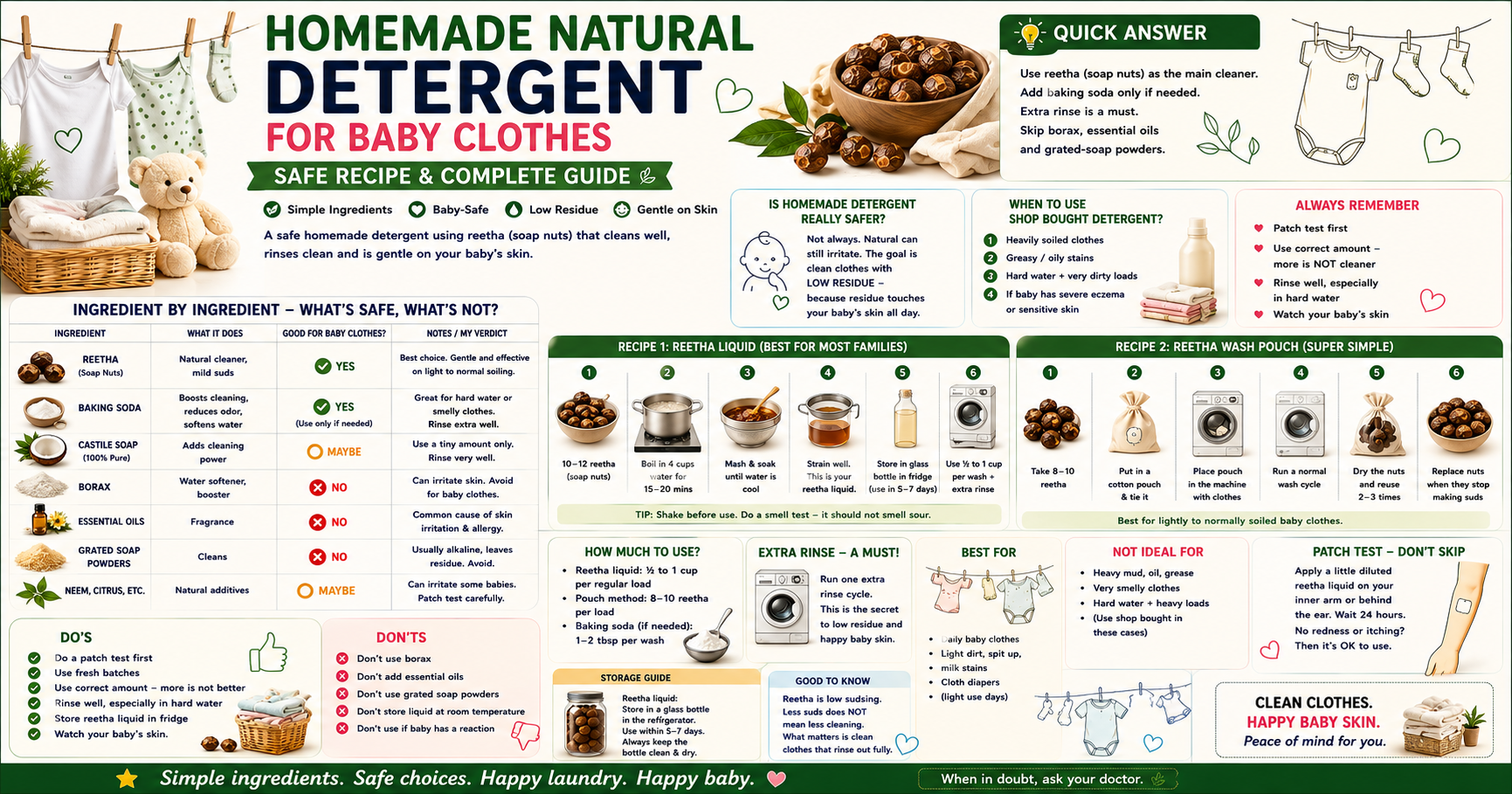
A few weeks before the baby came, my aunt showed up at the door with a small cloth bag. Inside were dry, brown, wrinkly things that looked a bit like old dates. “Reetha,” she said. “This is what we used for you. No powder. No smell. Nothing.” I smiled and thanked her. Then I put
October 6, 2026
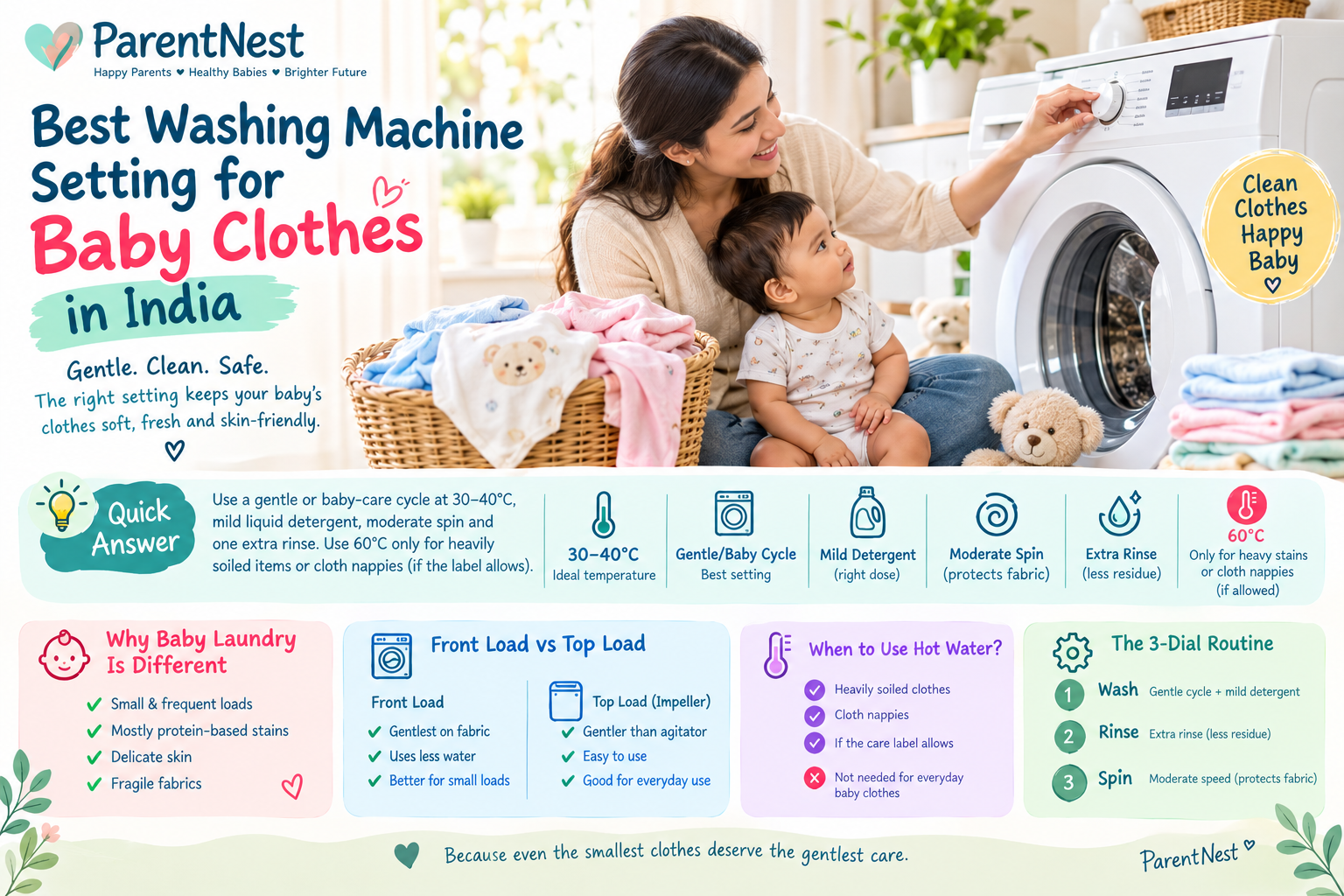
It was 11 p.m., and I was standing in front of the washing machine with a basket of tiny clothes on my hip and no idea what to press. The dial had fifteen programs. Cotton. Synthetics. Quick 15. Hygiene. Allergy. Something with a little picture of a baby on it, which seemed promising until I
October 5, 2026
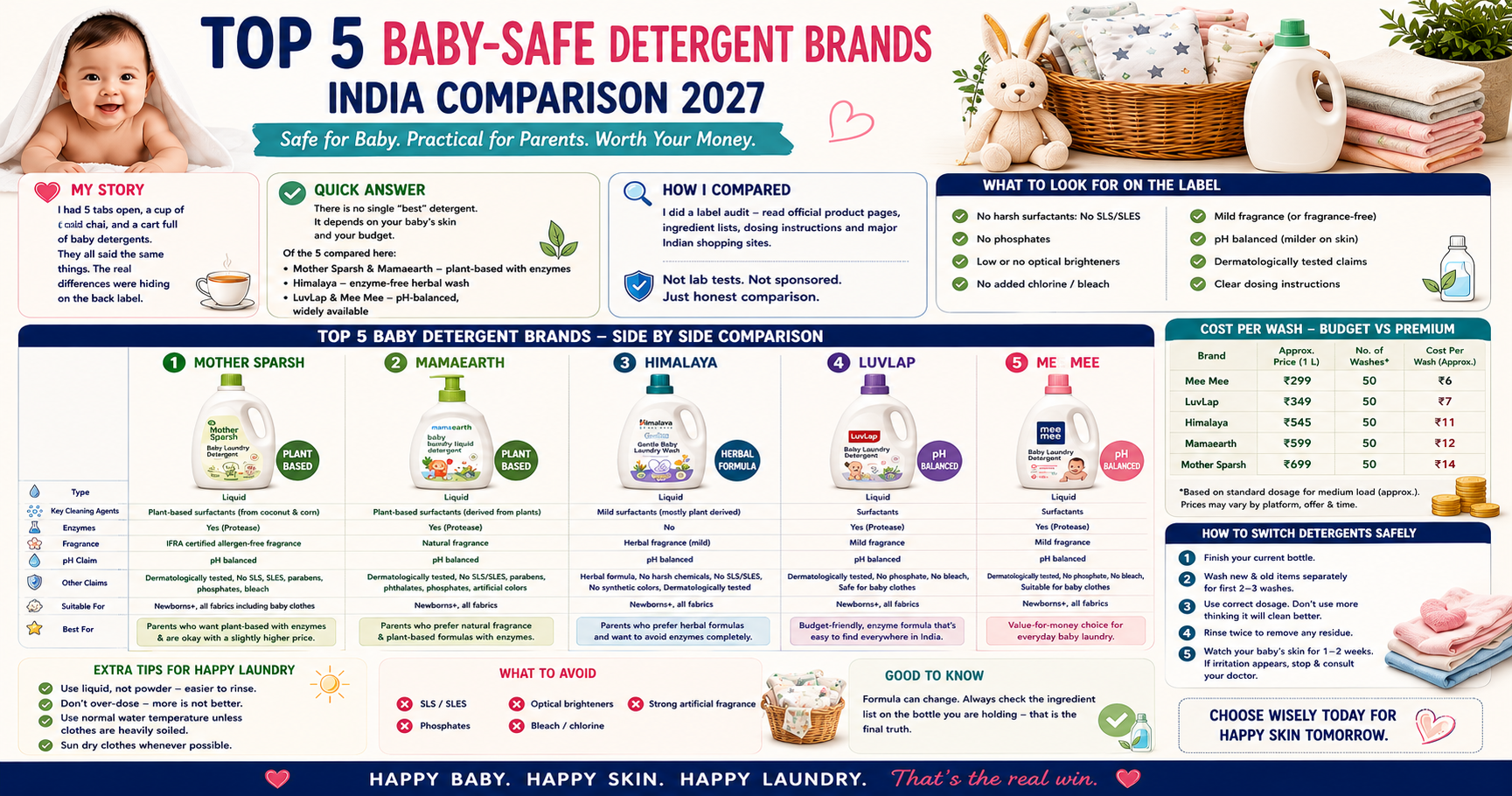
I had five browser tabs open, a cup of cold chai beside the laptop, and a shopping cart that kept growing. Six bottles of baby detergent. Every single one promised the same things: dermatologically tested, safe for your baby, plant-based, gentle, chemical-free. And every one of them cost a different amount. I remember sitting there
October 3, 2026
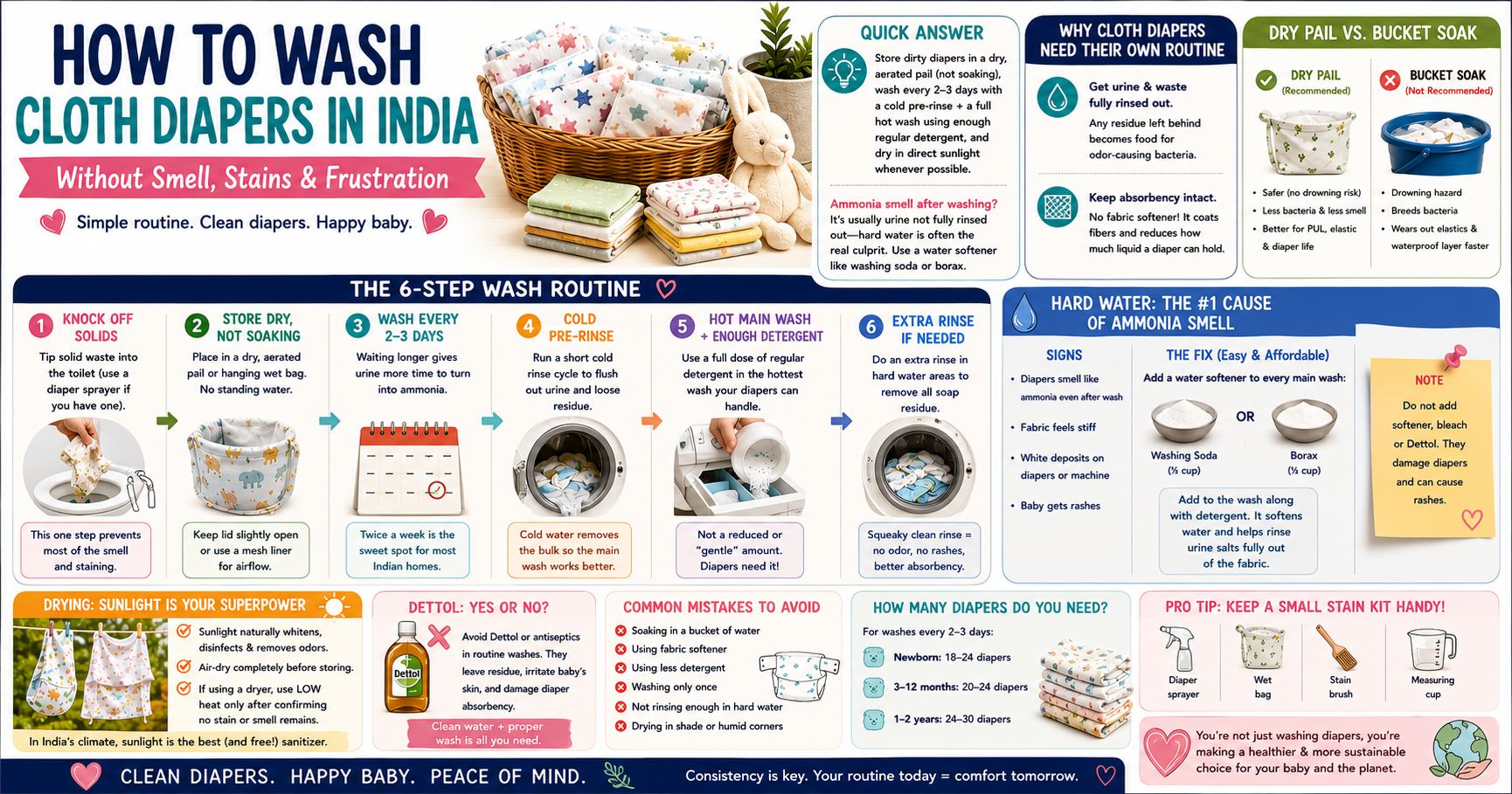
Quick answer: Store dirty diapers in a dry, aerated pail (not soaking in a bucket of water), wash every two to three days with a short cold pre-rinse followed by a full hot wash using enough regular detergent (not a softener, not a reduced “gentle” dose), and finish by drying in direct sunlight whenever possible.
October 2, 2026
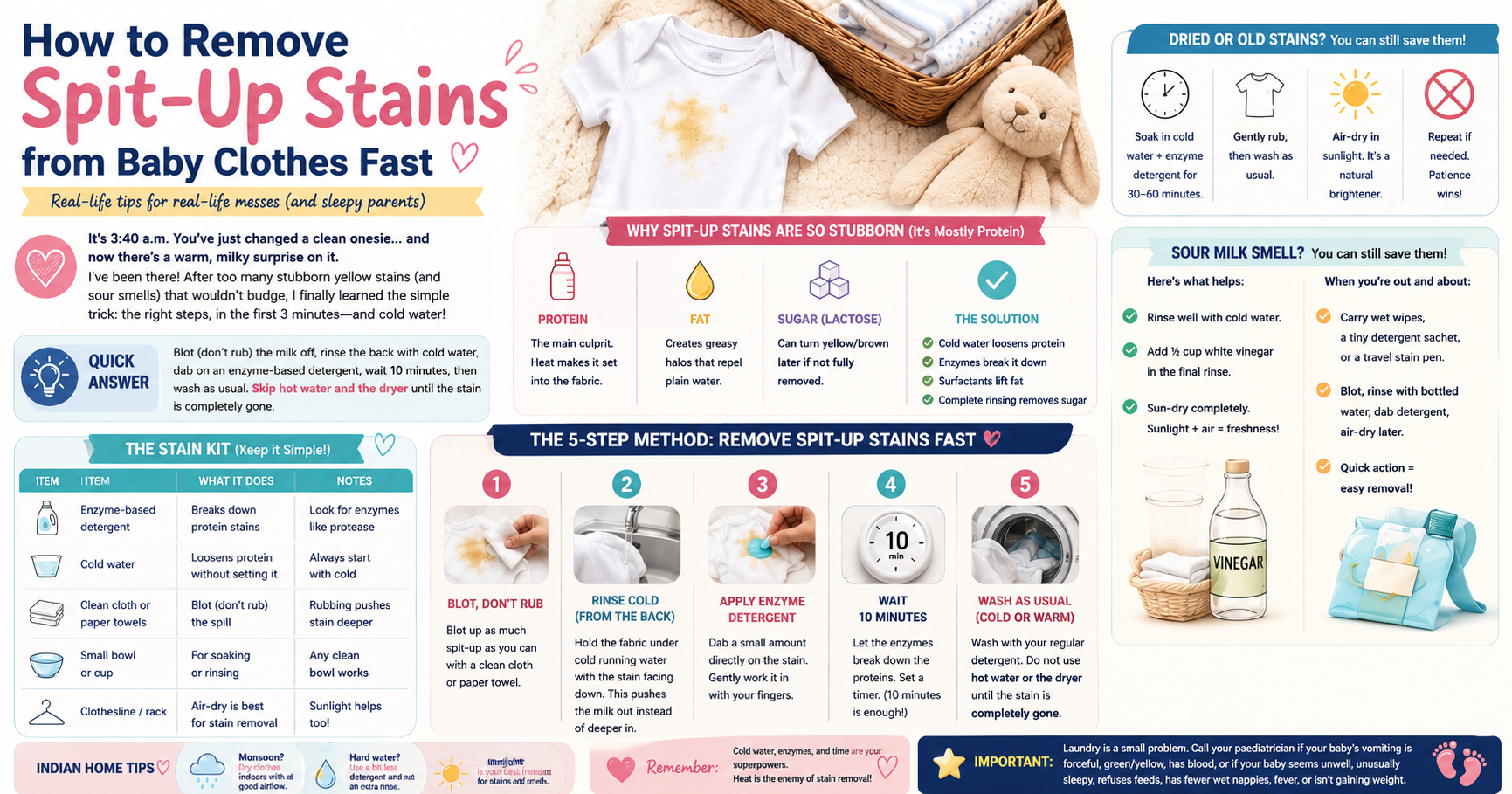
It was 3:40 in the morning, and I was standing in the bathroom with a wet muslin cloth in one hand and a white onesie in the other, staring at a stain that hadn’t been there four minutes earlier. If you’ve fed a baby, you know this moment. The feed went well. The burp happened,
October 1, 2026
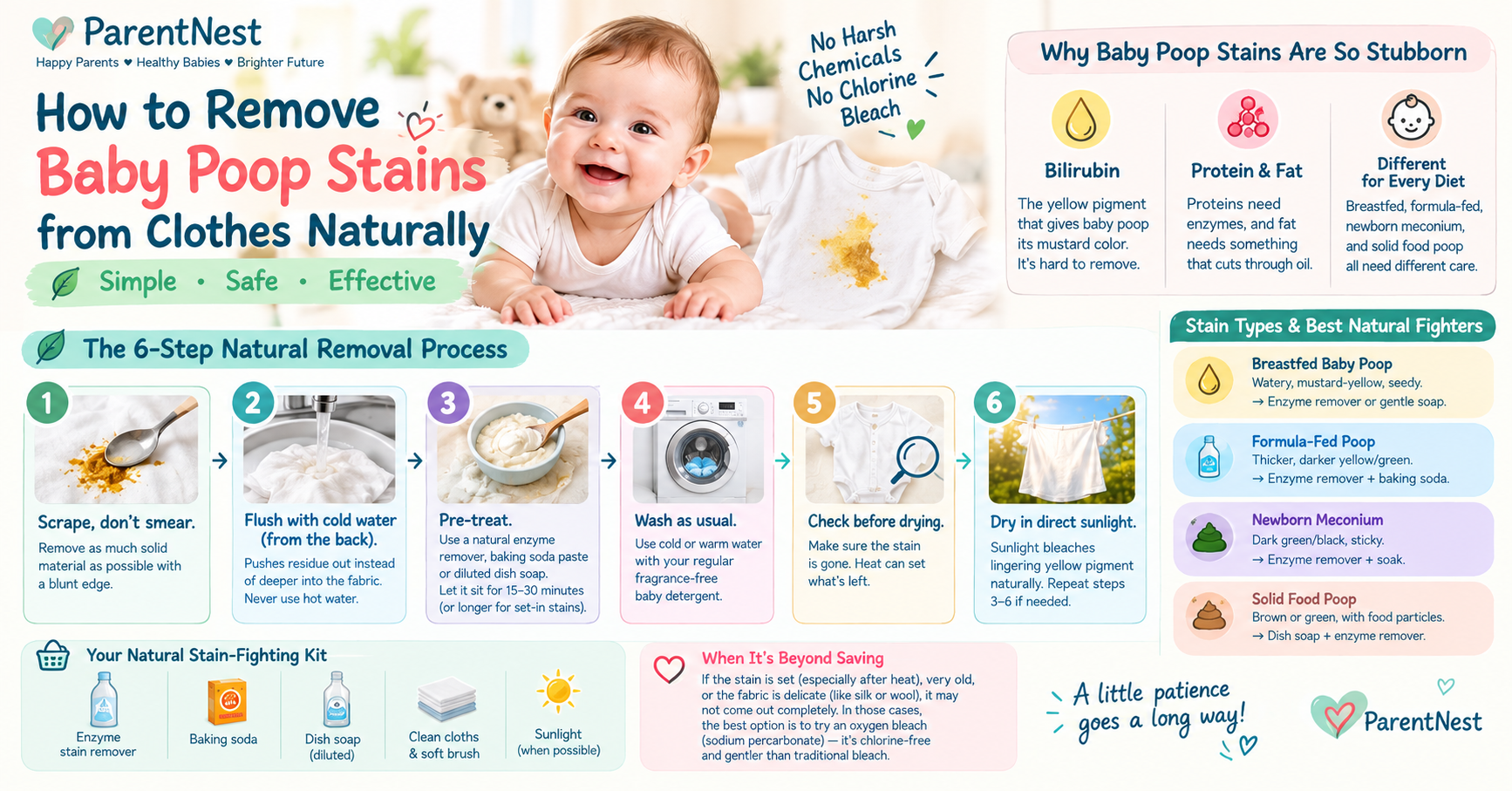
Act fast and cold — scrape off solids, flush the stain with cold water from the back of the fabric, and never use hot water or a hot dryer before the stain is fully gone, since heat sets protein-based stains permanently. Pre-treat with a natural enzyme-based stain remover, a baking soda paste, or diluted dish
September 30, 2026
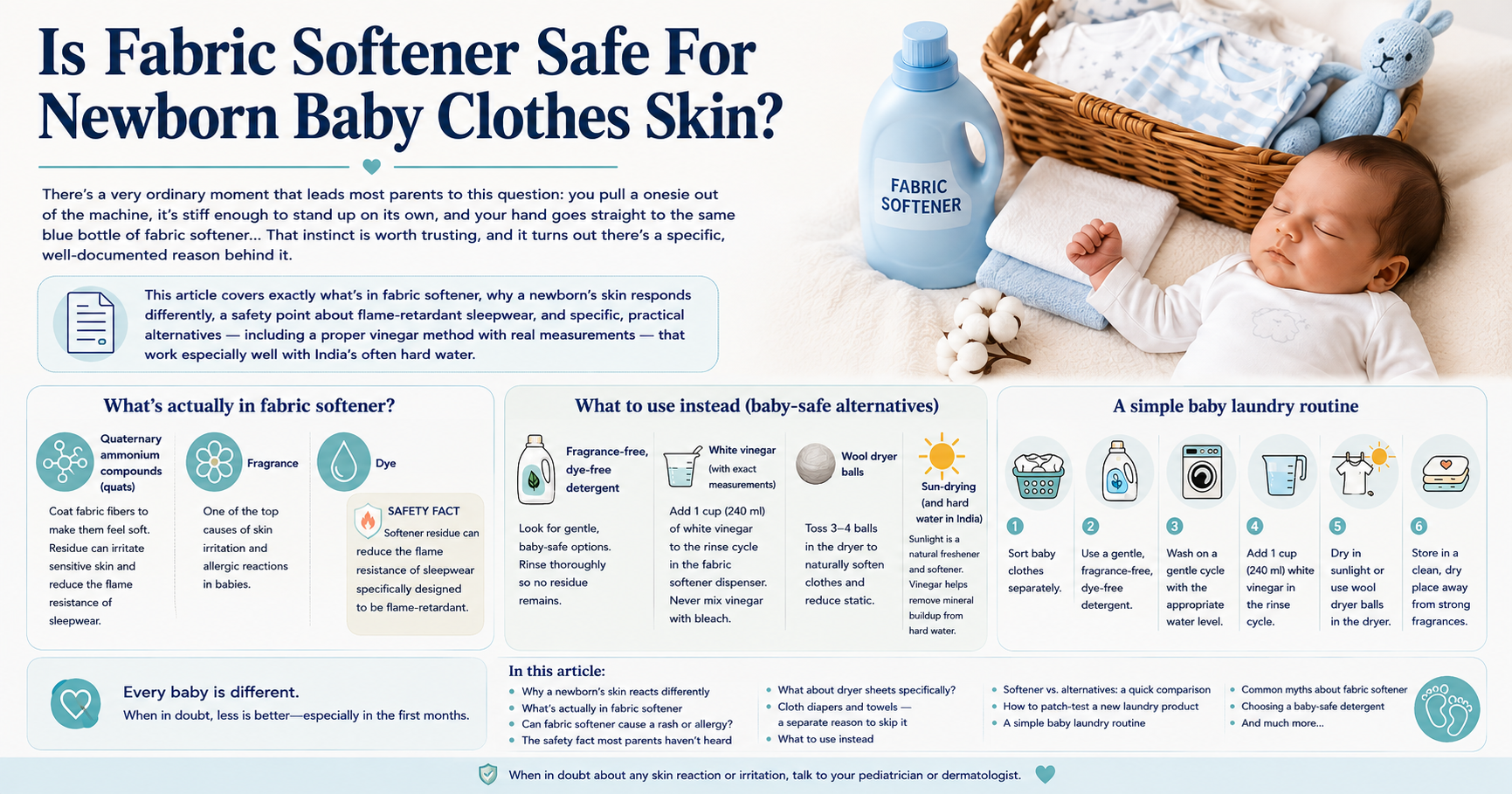
Most pediatric and dermatology sources recommend avoiding regular fabric softener and dryer sheets on baby clothes, especially for newborns. The concern isn’t that softener is toxic in a dramatic sense — it’s that the fragrance, dyes, and chemical residue it leaves on fabric can irritate a newborn’s thin, still-developing skin barrier, and softener residue can
September 29, 2026
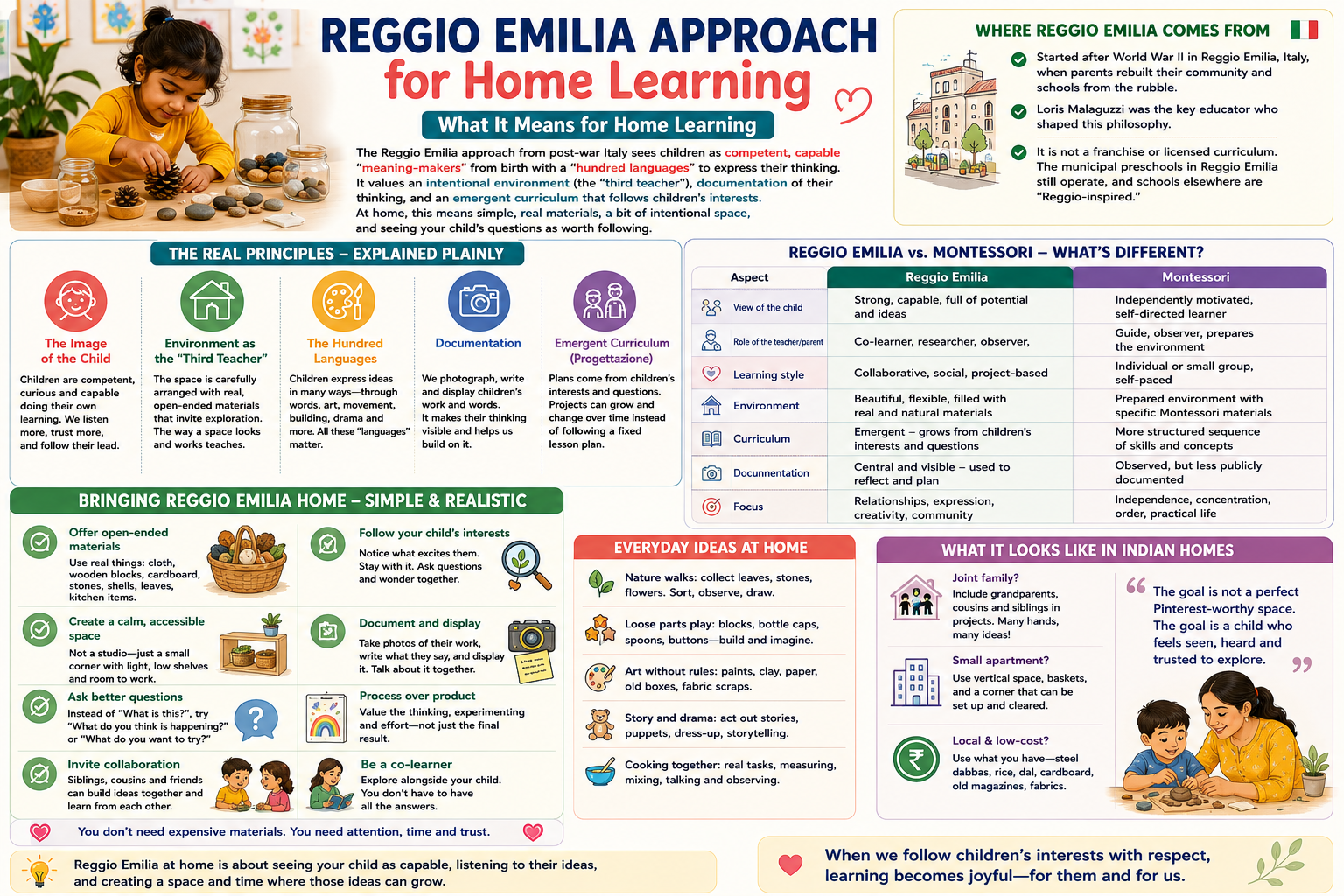
The Reggio Emilia approach is an early-childhood philosophy from post-war Italy that treats children as competent, capable “meaning-makers” from birth, expressing their thinking through many forms — words, art, movement, building — described as their “hundred languages.” Its core practices are an intentionally prepared environment (called the “third teacher”), documentation of children’s thinking and work,
September 28, 2026
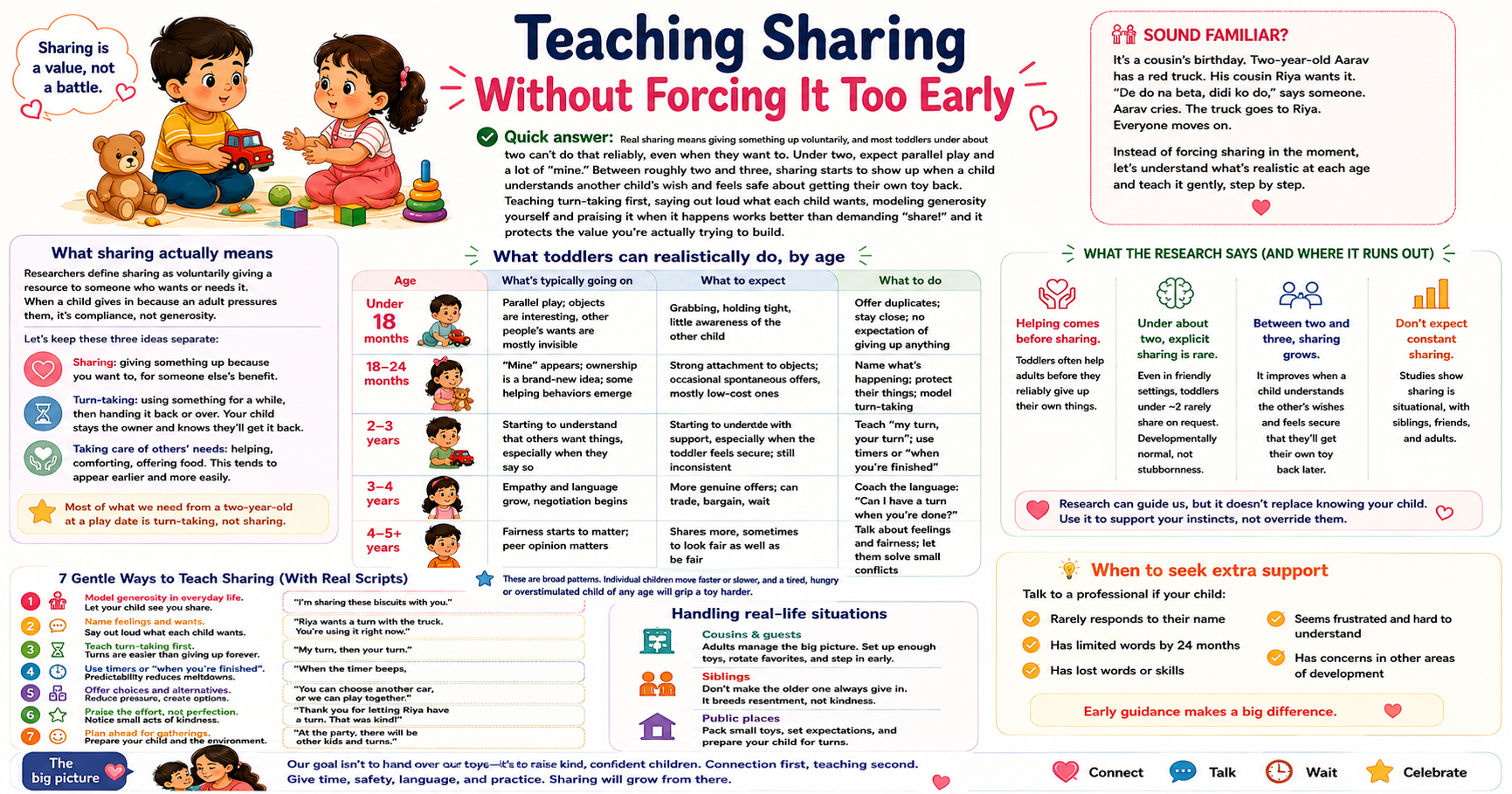
Quick answer: Real sharing means giving something up voluntarily, and most toddlers under about two can’t do that reliably, even when they want to. Under two, expect parallel play and a lot of “mine.” Between roughly two and three, sharing starts to show up when a child understands another child’s wish and feels safe about