Physical Address
304 North Cardinal St.
Dorchester Center, MA 02124
Physical Address
304 North Cardinal St.
Dorchester Center, MA 02124

If you’re searching for a hospital bag checklist for first baby, your due date is probably getting closer.
And with it comes the questions.
What if I forget something important?
What does a newborn actually need?
Will the hospital provide everything?
As a parenting expert who has guided hundreds of first-time parents, I can tell you this: packing your hospital bag isn’t just about items. It’s about peace of mind.
This ParentNest guide will walk you step-by-step through exactly what to pack, why it matters, and how to feel fully prepared — without overpacking or overspending.
You deserve to walk into labor feeling confident.
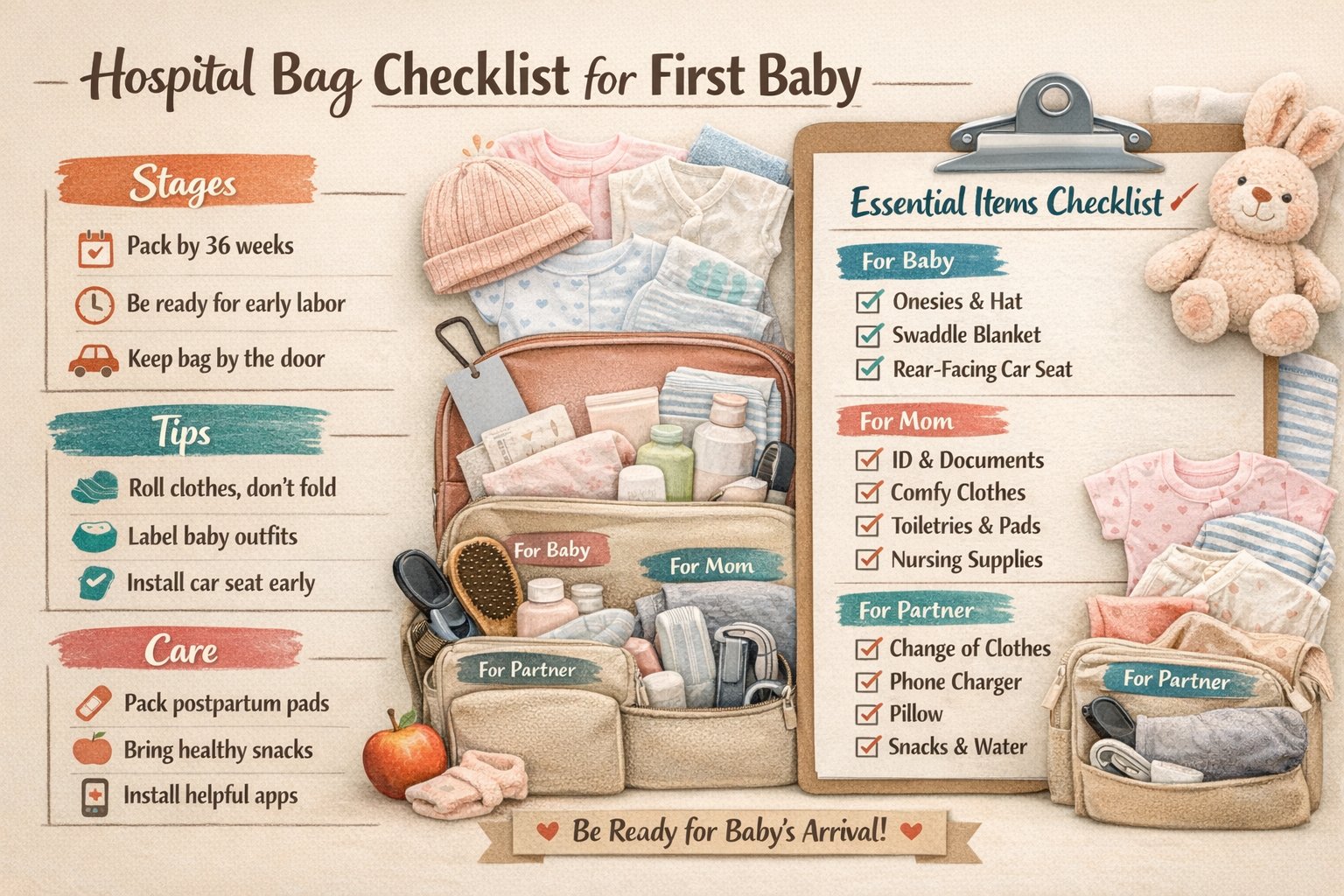
A hospital bag checklist for first baby should include newborn outfits, swaddle blanket, diapers, car seat, mom’s comfortable clothing, toiletries, postpartum care items, important documents, phone charger, snacks, and partner essentials. Pack by week 36 to prepare for early labor and reduce stress.
First babies bring first-time uncertainty.
Unlike experienced parents, you don’t yet know what the hospital provides or how your body will feel after delivery.
According to the World Health Organization (WHO), emotional support and comfort during labor improve birth experiences and outcomes.
Preparation reduces anxiety. Lower anxiety can support smoother labor progression.
Having a clear hospital bag checklist for first baby helps you:
Experts at the Mayo Clinic recommend packing by week 36.
Why week 36?
Keep your bag near the door or in your car after week 37.
Newborns need very little. But they need the right things.
Newborns lose heat quickly. The CDC notes temperature regulation is still developing at birth.
Swaddling mimics the womb.
According to HealthyChildren.org, proper swaddling can calm babies and improve sleep in early days.
You cannot leave without it.
Motor vehicle injuries remain a leading cause of infant harm, according to the CDC. Install a rear-facing seat before labor begins.
Labor is physically intense. Recovery is real.
After birth, your body still looks about six months pregnant. Choose comfort over style.
Dry air and long labor can make basic comfort items feel essential.
The NHS explains postpartum bleeding (lochia) may last weeks.
Pack:
Partners often underestimate their needs.
Encourage them to pack:
A well-rested partner supports better emotional care.
Planned or unexpected, cesarean birth changes recovery needs.
The Mayo Clinic notes mobility may be limited.
Pack:
Avoid waistbands pressing on incision areas.
The WHO recommends early breastfeeding within the first hour.
Pack:
Even if the hospital provides supplies, familiar items boost confidence.
If you plan to formula feed:
Confirm hospital policy ahead of time.
| Minimalist Bag | Fully Prepared Bag |
|---|---|
| 2 outfits | 4 outfits |
| Basic toiletries | Full skincare kit |
| Charger | Charger + power bank |
| Basic underwear | Postpartum recovery kit |
Choose what lowers your stress.
Research from HealthyChildren.org and the CDC shows:
Comfort items support these outcomes.
✔ 2–3 outfits
✔ Hat & socks
✔ Swaddle blanket
✔ Car seat
✔ Burp cloth
✔ Documents
✔ Nightgown
✔ Toiletries
✔ Nursing supplies
✔ Postpartum pads
✔ Clothes
✔ Snacks
✔ Charger
Print and keep near your bag.
Keep it simple.
Preparation builds confidence.
(ParentNest may earn from qualifying purchases.)
You may also want to Read our complete baby care guide.
And explore Newborn sleep basics every parent must know.
Plus, check out How to soothe a crying newborn safely before baby arrives.
Preparation supports emotional health.
By week 36 of pregnancy.
Two to three newborn outfits.
Most provide basic diapers during your stay.
Optional but often comforting.
ID, insurance information, and birth plan.
Only if you plan to formula feed and hospital allows it.
Heavy pads, large underwear, and nursing supplies.
Now you have a complete hospital bag checklist for first baby.
This isn’t about perfection. It’s about feeling calm when labor begins.
When contractions start, you don’t want to think about chargers or socks.
You want to think about your baby.
Pack early. Pack smart. Trust yourself.
You are ready.