Physical Address
304 North Cardinal St.
Dorchester Center, MA 02124
Physical Address
304 North Cardinal St.
Dorchester Center, MA 02124

If you’re asking what to pack in hospital bag for baby delivery, you’re likely feeling a mix of excitement and quiet panic.
What if labor starts early?
What if you forget something important?
What does your baby really need in those first hours?
Packing your hospital bag is more than a task. It’s emotional. It’s symbolic. It means your baby is almost here.
This ParentNest guide gives you a calm, research-backed, practical checklist so you feel fully prepared — not overwhelmed.
Let’s make this simple.
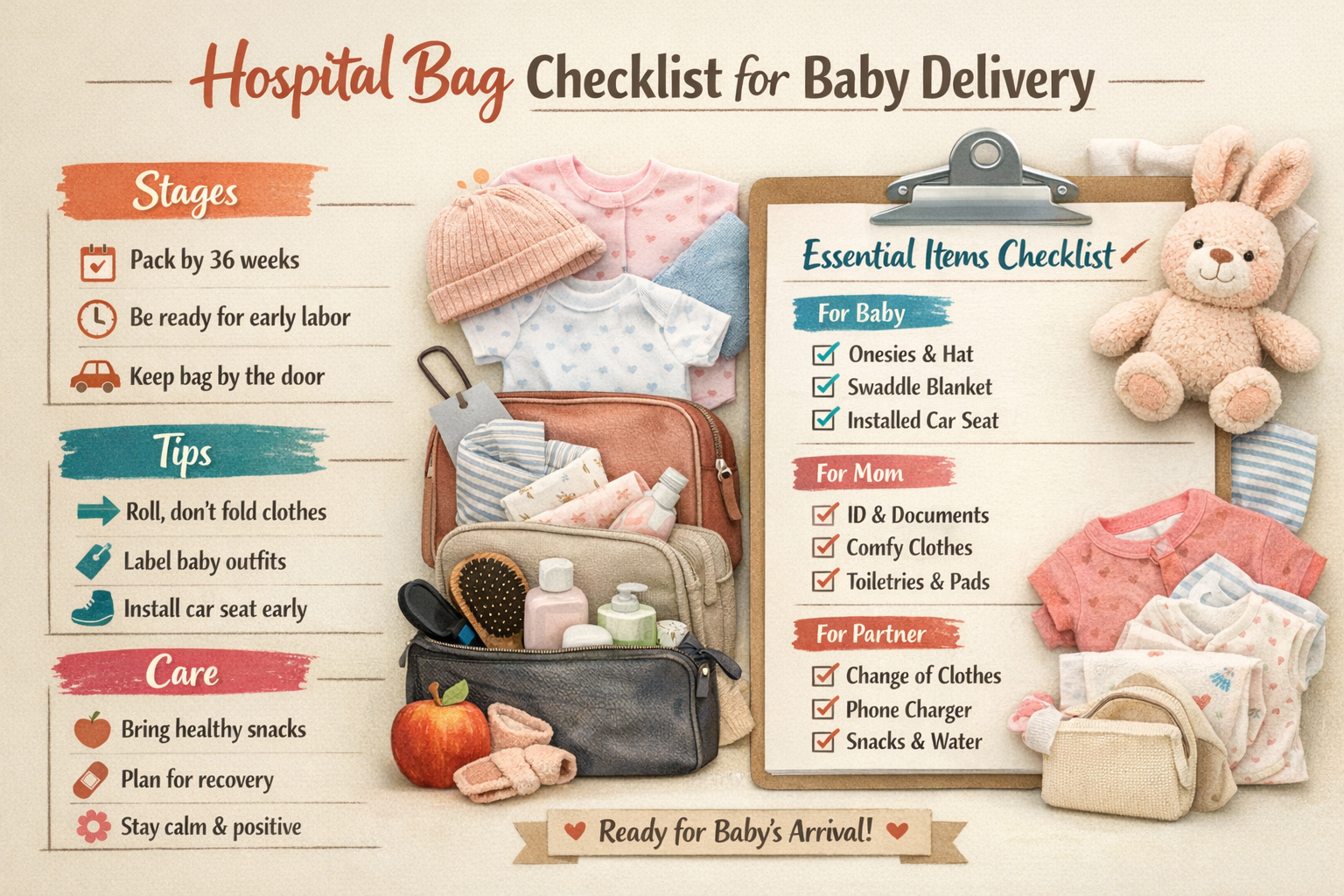
To pack your hospital bag for baby delivery, include newborn clothing, diapers, wipes, a blanket, car seat, important documents, toiletries, comfortable clothing, feeding supplies, phone charger, and postpartum essentials. Pack by week 36 to reduce stress and ensure readiness for early labor.
Hospitals provide basic medical care. But comfort? That’s up to you.
According to the World Health Organization (WHO), childbirth outcomes improve when mothers feel emotionally supported and comfortable. Stress hormones can impact labor progression.
Being prepared reduces anxiety. And lower anxiety can mean smoother labor.
Packing your bag gives you:
Experts from the Mayo Clinic suggest having your hospital bag ready by week 36 of pregnancy.
Why?
Because:
Pro Tip: Keep the bag near the door or in your car trunk after week 37.
Your baby needs less than you think.
Hospitals usually provide diapers and basic blankets. But these are the must-haves:
The American Academy of Pediatrics (HealthyChildren.org) explains swaddling helps newborns feel secure by mimicking the womb.
Choose soft, easy snaps — not tight waistbands.
The CDC reports motor vehicle injuries are a leading cause of infant injury.
Install your rear-facing seat before labor begins.
Labor is intense. Recovery is real.
Here’s what truly helps:
The NHS notes postpartum bleeding (lochia) lasts several weeks, so comfort matters.
Partners often forget themselves.
Encourage them to pack:
Support people need energy too.
If you’re planning or at risk for a surgical birth:
The Mayo Clinic explains mobility may be limited after surgery. Comfort is key.
According to WHO, early breastfeeding supports immunity and bonding.
Pack:
Hospitals may offer lactation support, but having your own supplies helps confidence.
If formula feeding:
Check hospital policy in advance.
| Minimalist Bag | Fully Prepared Bag |
|---|---|
| 1 outfit | 3–4 outfits |
| Toiletries only | Full skincare kit |
| Phone charger | Entertainment tablet |
| Basic underwear | Postpartum recovery kit |
Both are fine. Choose what reduces your stress.
Research from CDC and HealthyChildren.org shows:
Comfort items directly impact these outcomes.
✔ 2–3 outfits
✔ Hat & socks
✔ Swaddle
✔ Car seat
✔ Burp cloth
✔ Documents
✔ Nightgown
✔ Toiletries
✔ Nursing supplies
✔ Underwear
✔ Clothes
✔ Snacks
✔ Charger
Print this and place it near your bag.
Keep it simple.
As pediatric guidance from HealthyChildren.org emphasizes, preparation improves safety outcomes.
(ParentNest may earn from qualifying purchases.)
You may also want to Read our complete baby care guide for first-week survival tips.
And don’t miss our article on Newborn sleep basics every parent must know.
Plus, explore How to prepare siblings for a new baby if this isn’t your first child.
Preparation supports emotional well-being.
By week 36 of pregnancy.
Two to three newborn outfits.
Most provide basic diapers during stay.
Only if you plan to formula feed and hospital allows it.
ID, insurance info, birth plan.
Optional, but many parents prefer it.
Large underwear and heavy maternity pads.
Now you know exactly what to pack in hospital bag for baby delivery.
More importantly, you know why each item matters.
Preparation isn’t about perfection. It’s about peace.
When labor begins, you want to focus on your baby — not your toothbrush.
Pack early. Pack calmly. Trust yourself.
You’ve got this.