Co-parenting after divorce is challenging in any context, but Indian families often navigate this alongside specific cultural, social, and legal considerations that aren’t always addressed in generic parenting advice. Extended family involvement, social stigma around divorce, differing custody norms, and limited formal support infrastructure all shape what effective co-parenting looks like in an Indian context.
Co-Parenting After Divorce: Practical Tips for Indian Parents
This guide offers practical, India-specific strategies for co-parenting after divorce — focused on protecting your children’s emotional wellbeing, managing communication with a former spouse, navigating extended family dynamics, and building a stable, cooperative routine even when the relationship between parents remains difficult.
A note before starting: this article addresses the emotional, communication, and day-to-day practical aspects of co-parenting. It does not provide legal advice — custody arrangements, legal rights, and formal agreements should always be discussed with a qualified family law attorney, since these are governed by specific legal frameworks in India that vary by personal law and individual circumstances.
1. Why Co-Parenting Looks Different in India
Co-parenting after divorce in India often involves navigating factors that differ meaningfully from co-parenting contexts more commonly discussed in Western parenting resources:
Joint family involvement means co-parenting decisions frequently involve grandparents and extended family on both sides, not just the two parents directly.
Social stigma around divorce, while gradually shifting in urban India, still means many co-parenting families navigate judgment or unsolicited commentary from community, extended family, or even school environments.
Legal and custody frameworks in India are governed by personal laws that vary by religion and specific circumstances, making the legal process itself often more complex and slower than in some other countries.
Limited formal co-parenting support infrastructure — such as court-mandated co-parenting classes or structured mediation services common in some Western contexts — means many Indian parents are navigating this transition with less structured external guidance.
Recognizing these specific factors helps frame co-parenting strategies that genuinely fit Indian family realities, rather than applying advice designed for a different social and legal context.
2. The Core Principle: Children’s Wellbeing First
Despite every practical complexity, the research on children and divorce consistently points to one central factor: children’s long-term adjustment is shaped far more by the level of ongoing conflict between parents than by the divorce itself. Children in low-conflict co-parenting arrangements generally show significantly better emotional and academic outcomes than children in high-conflict marriages that remain intact.
This reframes the goal of co-parenting clearly: the objective isn’t necessarily reconciliation or even a warm relationship between former spouses, but rather minimizing the child’s exposure to conflict and maintaining stable, consistent, loving relationships with both parents wherever safely possible.
Every strategy in this guide flows from this central principle — prioritizing your child’s stability and emotional security over any residual conflict, resentment, or unresolved feelings between parents.
3. Establishing Basic Communication Ground Rules
Clear, business-like communication between co-parents significantly reduces the friction children are exposed to, even indirectly:
- Keep communication child-focused, discussing logistics, schedules, and your child’s needs rather than relitigating relationship history
- Choose a consistent communication channel — many co-parents find a simple shared messaging thread or dedicated co-parenting app helps keep logistics organized and creates a written record
- Set a reasonable response-time expectation for non-urgent communication, reducing the pressure of constant back-and-forth
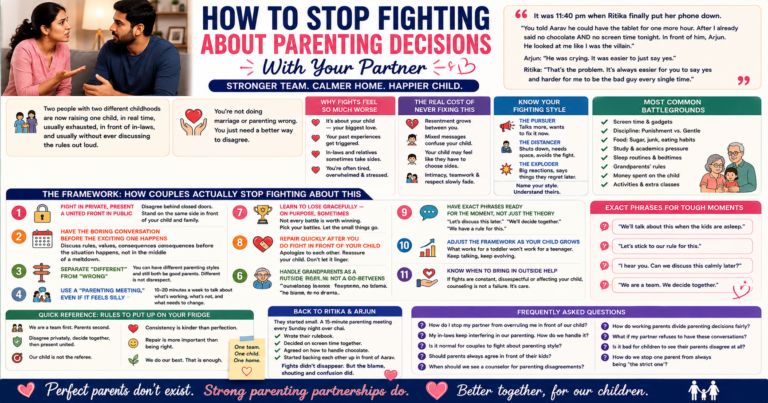
- Avoid using children as messengers between parents — logistics and communication should flow directly between adults, not through the child
- Keep tone neutral and factual, even when communication from the other parent feels charged — responding calmly, rather than matching an escalated tone, tends to reduce overall conflict over time
4. Creating Consistency Across Two Households
Children generally adjust better to co-parenting when there’s reasonable consistency in routines, rules, and expectations across both homes, even if the two households aren’t identical:
- Align on core rules — bedtime ranges, screen time limits, homework expectations — even if smaller preferences differ between households
- Share important information proactively — school updates, health concerns, behavioral changes — rather than waiting to be asked
- Maintain similar disciplinary approaches where possible, since significant inconsistency between households can create confusion or allow children to play one parent against the other
- Keep a shared calendar for school events, extracurricular activities, and appointments, ensuring both parents stay informed regardless of custody schedule
- Respect the other parent’s household rules during your own time with the child, avoiding undermining comments about the other home’s approach
5. Handling Custody and Visitation Logistics Practically
Beyond the legal custody arrangement itself (which should be established with proper legal guidance), the practical day-to-day logistics matter significantly for reducing ongoing friction:
- Establish a clear, written schedule for regular custody and visitation, reducing ambiguity that can lead to repeated renegotiation and conflict
- Build in flexibility for genuine exceptions (illness, work emergencies, special family events) through a mutually agreed process, rather than treating the schedule as completely rigid
- Plan transitions calmly and predictably — consistent handoff times and locations reduce stress for children, who often find transitions between households emotionally taxing regardless of how amicable the co-parenting relationship is
- Keep a simple record of schedule changes and agreements, which reduces disputes about what was actually agreed upon later
- Involve children in the schedule appropriately for their age, giving older children some voice in preferences where reasonable, while keeping final logistics decisions with the parents
6. Talking to Your Children About the Divorce
How divorce is explained and discussed with children significantly shapes their emotional processing of the situation:
- Keep initial explanations simple, honest, and age-appropriate, avoiding excessive detail about adult relationship conflicts
- Reassure explicitly that the divorce isn’t their fault — this is a common, quiet fear among children of divorce across age groups, and direct reassurance matters even if it seems obvious to parents
- Avoid criticizing the other parent in front of or to the child, even when frustration is genuinely warranted — children generally experience criticism of either parent as, in some sense, criticism of a part of themselves
- Allow ongoing conversations, not just a single explanation, since children often process and revisit questions about divorce over time as they mature and understand more
- Validate a range of emotional responses — sadness, anger, relief, confusion — without judgment, since children can experience seemingly contradictory feelings simultaneously
7. Managing Extended Family Involvement
Joint family dynamics add a layer of complexity to co-parenting that’s particularly relevant in the Indian context:
- Set clear expectations with your own extended family about not criticizing the other parent in front of your child, even if family members hold strong personal opinions about the divorce
- Address disagreements about grandparents’ involvement calmly and directly with your co-parent, since both sides’ extended family often want ongoing relationships with the children
- Recognize that grandparents’ relationships with grandchildren are generally valuable to preserve, separate from the parents’ own relationship dynamics, unless there are genuine safety or wellbeing concerns
- Communicate custody schedules clearly to extended family on both sides, reducing confusion or unintentional scheduling conflicts around family events
8. Dealing with Social Stigma and Judgment
While attitudes are gradually shifting, particularly in urban India, many co-parenting families still navigate social judgment or unsolicited commentary:
- Prepare simple, neutral responses for intrusive questions from acquaintances or extended community members, without feeling obligated to over-explain your family’s private circumstances
- Focus on your immediate support network — close family and friends who are genuinely supportive — rather than expending energy on broader social validation
- Model confidence and stability for your children, since children often take cues from how parents themselves handle external judgment or awkward questions
- Connect with other co-parenting families if possible, whether through informal networks or online communities, for mutual understanding and reduced isolation
Not every co-parenting relationship can achieve a cooperative, business-like dynamic — some situations involve a genuinely high-conflict former spouse, requiring additional strategies:
- Minimize direct communication where possible, using structured co-parenting apps or written communication that creates a clear record and reduces opportunities for escalation
- Stick strictly to facts and logistics in all communication, avoiding engagement with provocative or accusatory messages
- Consider involving a neutral third party — a mediator or family counselor experienced in co-parenting — for situations where direct negotiation repeatedly breaks down
- Document significant incidents factually, particularly if there are genuine concerns about the child’s safety or wellbeing, which may be relevant for legal consultation
- Protect your own emotional regulation deliberately before and after difficult exchanges, since a dysregulated response from you can escalate conflict further and also affects your ability to be present for your child afterward
If there are concerns about abuse, safety, or serious high-conflict dynamics, these situations warrant professional legal and, where appropriate, mental health support beyond the general strategies in this guide.
10. Financial Co-Parenting Considerations
While specific financial and maintenance arrangements should be established through proper legal channels, a few practical co-parenting principles help reduce ongoing friction:
- Keep financial discussions separate from emotional or relationship conflict wherever possible, treating agreed financial arrangements as a practical logistics matter
- Maintain clear records of agreed-upon expenses and contributions, reducing disputes based on unclear memory of prior agreements
- Discuss discretionary expenses (extracurricular activities, gifts, larger purchases) proactively rather than assuming shared expectations, since misaligned assumptions here are a common source of ongoing tension
- Avoid involving children directly in financial disagreements between parents, which can create inappropriate emotional burden for a child regardless of age
11. Introducing New Partners Later
If and when new romantic relationships develop after divorce, introducing this to children requires careful, gradual handling:
- Wait until a relationship is genuinely stable before introducing a new partner to children, avoiding a pattern of frequent introductions to less established relationships
- Introduce gradually, starting with casual, low-pressure contexts rather than immediately positioning a new partner in a significant parental role
- Communicate with your co-parent about plans to introduce a new partner, particularly for younger children, reducing surprise or conflict
- Reassure children explicitly that a new partner doesn’t replace their other parent, addressing this concern directly rather than assuming it’s understood
- Move at your child’s pace for building comfort with a new partner, recognizing that children may need significant time regardless of how positively parents feel about the new relationship
12. Supporting Children at Different Ages
Young children (under 5): Focus on maintaining consistent routines and simple, reassuring explanations. Young children generally need concrete reassurance about practical continuity (where they’ll sleep, who will care for them) more than detailed understanding of the divorce itself.
School-age children (6–12): This age group often processes divorce with more complex questions and emotional responses, sometimes including self-blame or hope for parental reconciliation. Consistent reassurance, stable routine, and age-appropriate honesty help significantly during this stage.
Adolescents (13+): Teenagers often have stronger opinions about custody logistics and may want more direct involvement in scheduling decisions. They may also process parental divorce through the lens of their own developing understanding of relationships, making balanced, non-blaming communication from both parents particularly important at this stage.
13. Managing Festivals, Holidays, and Special Occasions
Festivals and special occasions carry significant emotional and cultural weight in Indian families, making co-parenting planning around these events particularly important:
- Establish a clear rotation or shared-time arrangement for major festivals well in advance, reducing last-minute conflict during emotionally significant occasions
- Consider your child’s specific attachment to particular traditions when planning arrangements, rather than only splitting time administratively
- Communicate holiday plans to extended family early, reducing confusion or competing expectations from both sides of the family
- Be willing to show flexibility occasionally for significant one-off events (a milestone birthday, a specific family wedding) even outside the standard schedule, when reasonable
- Keep your own emotional reactions around difficult occasions private from your child, saving processing for your own support system rather than the shared family event itself
14. Building Your Own Support System
Successfully co-parenting through an often emotionally difficult transition requires genuine support for the parents themselves, not just strategies focused on the children:
- Lean on trusted friends and family for emotional support separate from your children, who shouldn’t be positioned as your primary emotional confidants during this transition
- Consider individual counseling or therapy, which can provide significant support in processing the emotional aspects of divorce while maintaining a stable, regulated presence for your children
- Connect with other co-parenting or divorced parents, whether informally or through support groups, for practical advice and reduced isolation
- Practice basic self-care consistently, recognizing that a well-supported, emotionally regulated parent is better equipped to co-parent effectively than one operating from chronic stress or exhaustion
15. When to Seek Professional Support
Certain situations particularly benefit from professional guidance beyond general co-parenting strategies:
- Persistent high conflict that doesn’t improve despite genuine effort at structured, business-like communication
- Signs that a child is struggling significantly — persistent behavioral changes, academic decline, or emotional distress that doesn’t ease with reassurance and stable routine
- Complex custody or legal disputes requiring qualified family law guidance specific to your circumstances and applicable personal law
- Co-parenting mediation services, where available, can provide structured, neutral support for parents struggling to establish workable communication independently
If you’re finding the emotional weight of this transition difficult to manage, speaking with a counselor or therapist is a reasonable, valuable step — not a sign of failure to cope.
16. Common Mistakes to Avoid
- Speaking negatively about the other parent in front of children, even when frustration feels justified
- Using children as messengers or putting them in the position of relaying information between parents
- Making children choose sides or share private details about the other household
- Inconsistent scheduling without clear communication, creating repeated logistical conflict
- Introducing new partners too quickly or without adequate preparation for children
- Discussing adult financial or legal disputes directly with children
- Competing for a child’s affection through gifts or lenient rules, rather than maintaining consistent, values-based parenting
17. Common Myths About Co-Parenting, Addressed
Myth: Children of divorce are inevitably worse off long-term. Reality: Research consistently shows that ongoing parental conflict, not divorce itself, is the primary factor affecting children’s long-term adjustment — children in stable, low-conflict co-parenting arrangements generally do well.
Myth: Co-parents need to become friends for the arrangement to work. Reality: A business-like, respectful, child-focused relationship is sufficient and often more sustainable than pursuing genuine friendship, particularly in high-conflict situations.
Myth: Children should be shielded from knowing about the divorce until they’re older. Reality: Age-appropriate honesty, provided calmly and without excessive detail, generally supports better emotional processing than delayed or vague explanations that leave children confused or anxious.
Myth: 50-50 custody is always the ideal arrangement. Reality: The most appropriate custody arrangement depends on the specific child’s needs, the practical logistics of both households, and the co-parents’ ability to maintain consistency — there’s no universally “correct” split that applies to every family.
18. A Practical Co-Parenting Communication Framework
A simple framework many co-parents find helpful for day-to-day communication:
- Keep it factual: Stick to logistics, schedules, and the child’s needs
- Keep it brief: Avoid lengthy messages that invite extended back-and-forth conflict
- Keep it written where possible, for high-conflict situations, creating a clear record
- Keep it child-centered: Frame requests and decisions around the child’s wellbeing, not parental preference alone
- Keep it respectful: Even when frustrated, maintaining a neutral, non-accusatory tone tends to de-escalate rather than provoke further conflict
19. Frequently Asked Questions
How do I handle it when my ex-spouse speaks negatively about me to our child?
Avoid retaliating with negative comments about the other parent. Instead, reassure your child calmly (“I understand that’s how your [mother/father] sees it, but here’s how I see things”) without dwelling extensively on the disagreement, and consider addressing the pattern directly and calmly with your co-parent if it continues.
What if grandparents on one side refuse to acknowledge the divorce or undermine the co-parenting arrangement?
This is worth a direct, calm conversation, ideally involving your former spouse if the family members are on their side, emphasizing the shared goal of the child’s stability and wellbeing above extended family opinions about the divorce itself.
Is it normal for my child to want to live with the other parent more sometimes?
Yes, this is common and doesn’t necessarily reflect on your parenting — children’s preferences can shift for many reasons, including simple developmental changes, and it’s worth discussing calmly with your co-parent rather than interpreting it as a personal rejection.
How do I co-parent with someone I have very little trust in?
Focus on structured, written communication, clear agreements, and minimizing direct unstructured contact. Consider a co-parenting app or mediator for situations where trust is significantly compromised.
Should my child attend family therapy after our divorce?
This depends on your child’s specific needs — if you notice persistent emotional or behavioral difficulty, a conversation with a child psychologist or family therapist is a reasonable, valuable step, rather than something to reserve only for severe situations.
How do I handle co-parenting during major Indian festivals if we can’t agree on a rotation?
Consider involving a neutral mediator specifically for this planning, and aim to establish a clear, written rotation well in advance of festival season each year, reducing repeated last-minute negotiation.
20. Final Checklist for Co-Parents
- Establish clear, written custody and visitation logistics
- Set up a consistent, business-like communication channel with your co-parent
- Align on core household rules across both homes
- Talk to your children honestly and calmly, reassuring them the divorce isn’t their fault
- Set boundaries with extended family about not criticizing the other parent in front of children
- Plan festival and holiday arrangements well in advance
- Build your own support system separate from your children
- Watch for signs your child may need additional professional support
- Avoid common mistakes: negative talk, using children as messengers, inconsistent scheduling
- Consult a qualified family law attorney for all legal and custody matters specific to your situation
This article is intended for general informational purposes to help parents navigate the practical and emotional aspects of co-parenting after divorce. It does not constitute legal advice — please consult a qualified family law attorney for guidance specific to your custody, legal, and financial circumstances. If you or your child are struggling emotionally with this transition, consider reaching out to a counselor or therapist for additional support.
Read Also