Monsoon Safety Tips for Babies and Toddlers in India
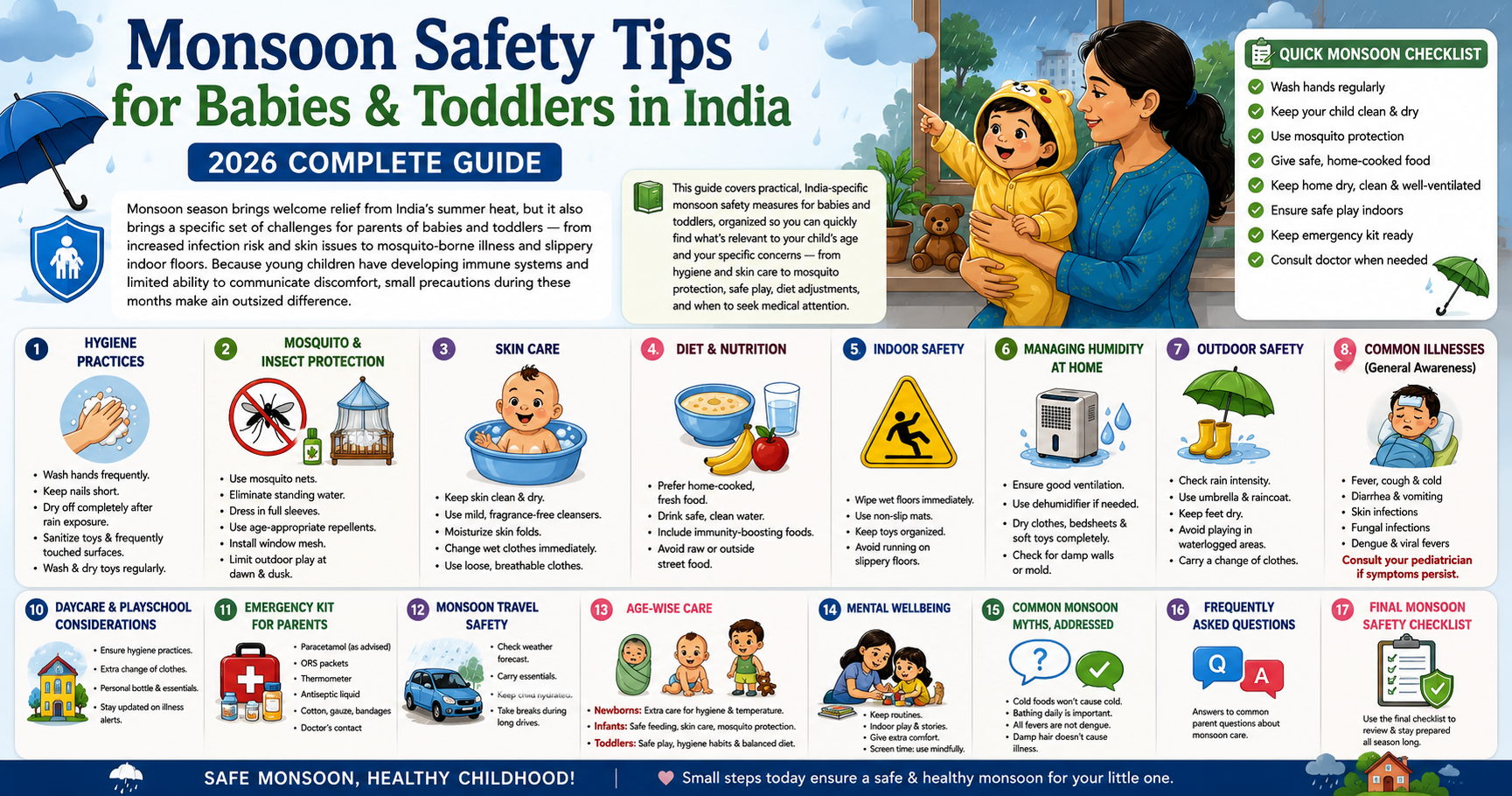
Monsoon season brings welcome relief from India’s summer heat, but it also brings a specific set of challenges for parents of babies and toddlers — from increased infection risk and skin issues to mosquito-borne illness and slippery indoor floors. Because young children have developing immune systems and limited ability to communicate discomfort, small precautions during these months make an outsized difference.
This guide covers practical, India-specific monsoon safety measures for babies and toddlers, organized so you can quickly find what’s relevant to your child’s age and your specific concerns — from hygiene and skin care to mosquito protection, safe play, diet adjustments, and when to seek medical attention.
1. Why Monsoon Season Needs Special Care for Young Children
India’s monsoon months bring a combination of high humidity, water accumulation, temperature fluctuation, and increased insect activity — all of which affect young children more significantly than adults. Babies and toddlers have developing immune systems, more sensitive skin, and limited ability to regulate body temperature as effectively as older children, making them more susceptible to infections, skin conditions, and mosquito-borne illnesses common during this season.
Additionally, monsoon conditions tend to keep children indoors more, changing daily routines around play, sleep, and social interaction — which brings its own set of considerations beyond pure physical health.
Understanding these seasonal risk factors allows parents to take proportionate precautions without unnecessary anxiety — most monsoon-related health concerns are manageable with consistent, simple habits.
2. Hygiene Practices During Monsoon
Hygiene becomes especially important during monsoon due to increased moisture, waterlogging, and higher circulation of infection-causing organisms.
- Frequent handwashing — for both caregivers and children old enough to participate — before meals and after outdoor exposure is one of the single most effective monsoon precautions
- Keep nails trimmed short for toddlers, since dirt and moisture accumulate more easily under longer nails during this season
- Dry off thoroughly after any rain exposure — lingering dampness on skin, especially in body folds, significantly increases fungal infection risk
- Sanitize frequently touched surfaces — door handles, toys, and play mats — more regularly during monsoon, since increased humidity can extend the survival time of certain germs on surfaces
- Wash and dry toys regularly, particularly soft toys, which retain moisture and can develop mold in humid conditions if not dried properly
3. Mosquito and Insect Protection for Babies and Toddlers
Mosquito-borne illnesses tend to rise during monsoon due to increased standing water, making mosquito protection one of the most important monsoon safety measures for young children.
- Use mosquito nets over cribs and sleeping areas, particularly during early morning and evening hours when mosquito activity peaks
- Eliminate standing water around the home — flower pots, coolers, buckets — which serve as mosquito breeding grounds
- Dress toddlers in full-sleeved, breathable clothing during outdoor time in the evening, when mosquito activity is typically highest
- Use age-appropriate mosquito repellents only as directed by the product’s specific age guidelines, and consult your pediatrician if unsure which products are appropriate for your child’s age
- Install mesh screens on windows where possible, offering continuous protection without relying solely on repellents
- Keep outdoor play limited during dawn and dusk hours, when mosquito activity is generally at its peak
If your child develops a persistent fever, unusual rash, or seems unusually lethargic during monsoon season, contact your pediatrician promptly rather than waiting to see if symptoms resolve on their own, given the increased circulation of mosquito-borne illness during this period.
4. Skin Care: Preventing Rashes and Fungal Infections
High humidity combined with sweat and dampness creates ideal conditions for skin irritation, rashes, and fungal infections in babies and toddlers, particularly in skin folds like the neck, underarms, and diaper area.
- Keep skin folds clean and thoroughly dry, checking areas like neck folds and underarms more frequently than during drier seasons
- Use a mild, fragrance-free moisturizer if skin appears dry despite humidity — monsoon air conditioning combined with humidity can sometimes paradoxically dry out skin
- Change diapers more frequently during monsoon, since increased humidity can make diaper rash develop more quickly than in drier months
- Choose breathable, natural fabrics like cotton over synthetic materials, which trap moisture against the skin
- Watch for early signs of fungal infection — persistent redness, small bumps, or unusual itching in skin folds — and consult your pediatrician if these don’t resolve with basic hygiene measures within a few days
5. Safe Clothing Choices for Monsoon
Clothing choices during monsoon should balance protection from dampness with breathability, since overheating in trapped moisture can be just as problematic as getting wet.
- Layer lightweight clothing rather than single heavy garments, allowing easier adjustment as indoor and outdoor temperatures fluctuate
- Keep a spare set of dry clothes easily accessible at all times, including in the diaper bag when heading out, since sudden rain exposure is common during this season
- Choose quick-drying fabrics for outdoor wear, and avoid leaving damp clothing on children longer than necessary
- Use waterproof footwear for toddlers old enough to walk, reducing the chance of prolonged wet feet, which can contribute to fungal infections and general discomfort
- Avoid tight, non-breathable rain gear for extended periods, since trapped humidity inside non-breathable materials can worsen skin issues rather than prevent them
6. Diet and Nutrition Adjustments During Monsoon
Monsoon season often sees a rise in waterborne and foodborne illnesses, making dietary caution particularly important for young children with developing digestive systems.
- Prioritize freshly cooked, warm food over raw or previously refrigerated leftovers during this season
- Wash fruits and vegetables thoroughly with clean water before preparation, and consider peeling produce that’s typically eaten raw
- Avoid street food and outside food for young children specifically during monsoon months, given higher contamination risk during this season
- Include immunity-supportive foods appropriate for your child’s age and stage — your pediatrician can offer specific guidance based on your child’s individual nutritional needs
- Ensure adequate hydration, even though monsoon weather feels cooler, since children can still lose fluids through humidity-driven sweating and increased indoor heating use
7. Water Safety: Drinking Water and Bathing
Water quality often becomes more variable during monsoon due to potential contamination in municipal supply systems from heavy rainfall and flooding in some areas.
- Use boiled or properly filtered water for drinking and formula preparation, particularly if there’s any uncertainty about local water quality during heavy rain periods
- Avoid bathing in potentially contaminated standing water if flooding occurs in your area
- Clean water storage containers regularly, since stagnant stored water can develop bacterial growth more quickly in humid conditions
- Dry bathing areas thoroughly after each use to prevent slippery surfaces and reduce fungal growth in bathroom tiles and grout
8. Indoor Safety: Preventing Slips and Falls
With more time spent indoors and increased dampness tracked in from outside, slip-related injuries become a more common monsoon concern for toddlers who are walking or beginning to walk.
- Place absorbent mats near entryways to catch water and mud before it spreads across the house
- Wipe wet floors immediately, particularly in high-traffic areas like near doors and bathrooms
- Use non-slip mats in bathing areas, since tiles become significantly more slippery with increased humidity
- Keep toddler socks with grip soles for indoor use during monsoon, reducing slip risk on smooth flooring
- Check for water leaks or dampness around windows and walls regularly, addressing any issues promptly to prevent mold growth in living spaces
9. Managing Humidity and Dampness at Home
Excess indoor humidity during monsoon doesn’t just affect comfort — it can contribute to mold growth, dust mite proliferation, and respiratory discomfort for sensitive young children.
- Use a dehumidifier in particularly damp rooms if feasible, especially in ground-floor homes or areas prone to dampness
- Ensure good ventilation by opening windows during dry spells between rain showers, rather than keeping rooms sealed continuously
- Check and clean air conditioning filters more frequently, since increased humidity can accelerate mold buildup within units
- Store children’s clothing and bedding in moisture-resistant containers, particularly if your home tends to develop dampness
- Address any visible mold promptly, since young children can be more sensitive to mold exposure than adults
10. Outdoor Safety: When and How to Step Out
While outdoor time remains valuable for child development even during monsoon, a few precautions help make it safer:
- Avoid outings during heavy rainfall or thunderstorm warnings, prioritizing safety over routine
- Check for waterlogging along your usual walking routes before heading out with a stroller or toddler on foot
- Carry a compact umbrella or rain cover specifically sized for strollers, ensuring full coverage without restricting airflow excessively
- Choose shorter outdoor windows during breaks between rain, rather than extended outings that risk getting caught in sudden downpours
- Avoid letting toddlers play in puddles or standing water, which often contains contaminants and poses both hygiene and mosquito-breeding concerns
11. Daycare and Playschool Considerations During Monsoon
For working parents relying on daycare or playschool, monsoon season brings specific logistical considerations:
- Confirm your daycare’s monsoon protocol — how they handle heavy rain days, indoor alternative activities, and hygiene practices during this season
- Pack an extra full change of clothes beyond the usual daily allowance, given higher likelihood of getting wet during transport
- Discuss illness policies clearly with your daycare provider, since monsoon season often sees higher rates of common colds and stomach upset circulating among young children in group settings
- Consider a backup transport plan for days with severe waterlogging that might disrupt your usual commute or pickup arrangement
12. Common Monsoon Illnesses in Children (General Awareness)
Being generally aware of common monsoon-season health concerns helps parents recognize when to seek prompt medical attention, without this replacing professional medical guidance.
Monsoon months in India often see increased circulation of mosquito-borne illnesses, waterborne stomach infections, common cold and viral infections (partly due to more time spent in indoor group settings), and fungal skin infections related to prolonged dampness.
When to contact your pediatrician promptly: persistent fever that doesn’t improve within a day or two, unusual rash accompanied by fever, ongoing vomiting or diarrhea affecting hydration, unusual lethargy or reduced activity level, or any symptom pattern that feels different from your child’s typical minor illnesses.
This section is for general seasonal awareness only and does not replace professional medical evaluation. Always consult your child’s pediatrician for any specific health concerns, diagnosis, or treatment guidance.
13. Building a Monsoon Emergency Kit for Parents
Having supplies ready in advance reduces stress when monsoon-related situations arise:
- A functioning flashlight or emergency light in case of power outages, common during heavy monsoon storms
- Basic first-aid supplies, kept dry in a waterproof container
- A few days’ supply of your child’s regular essentials (diapers, formula if applicable, any regularly used items) in case of transport disruption from heavy waterlogging
- Important phone numbers — pediatrician, nearest hospital, and a trusted emergency contact — saved both digitally and written down in case of connectivity issues during severe weather
- A battery-powered fan or backup cooling option for humid nights during power outages, particularly relevant in warmer coastal regions during monsoon
14. Monsoon Travel Safety with Babies and Toddlers
If travel is unavoidable during monsoon season, a few specific precautions help:
- Check weather and flooding advisories for your route before departure, particularly for road travel through flood-prone areas
- Pack extra dry clothing and blankets beyond your usual travel kit, anticipating potential delays or unexpected wetness
- Avoid travel during active severe weather warnings where possible, rescheduling non-urgent trips
- Keep your child’s regular routine as consistent as possible during travel disruptions, since unpredictable monsoon delays can already be unsettling for young children
15. Age-Wise Monsoon Care: Newborns, Infants, and Toddlers
Newborns (0–3 months): Focus heavily on maintaining stable room temperature and humidity, since newborns have limited ability to regulate body temperature. Avoid unnecessary outdoor exposure during this stage, and prioritize thorough handwashing for all caregivers given the newborn’s still-developing immune system.
Infants (3–12 months): As mobility increases, monitor for skin fold dampness more actively, particularly for infants who are crawling and coming into more direct contact with floors that may carry tracked-in moisture. Continue prioritizing mosquito protection, since this age group often can’t communicate discomfort from bites clearly.
Toddlers (1–3 years): Increased mobility and curiosity mean toddlers are more likely to want to explore puddles and wet outdoor areas — consistent, calm redirection combined with appropriate footwear tends to work better than repeated verbal warnings alone at this age. This is also a good stage to begin simple hygiene habits like handwashing, framed as a fun routine rather than a chore.
16. Mental and Emotional Wellbeing During Long Rainy Spells
Extended monsoon periods can mean significantly reduced outdoor time and disrupted routines, which affects not just physical health but mood and behavior for both children and parents.
- Create engaging indoor activity options in advance — simple sensory play, indoor obstacle courses, or reading corners — to reduce the restlessness that comes with limited outdoor time
- Maintain consistent sleep and meal routines even when daily structure feels disrupted by weather, since consistency helps children feel secure during unpredictable periods
- Watch for signs of restlessness or irritability in toddlers during extended indoor stretches, and build in short bursts of physical activity indoors when outdoor play isn’t possible
- Take care of your own wellbeing too — extended indoor periods with young children can be genuinely tiring for parents, and it’s reasonable to seek support from a partner, family member, or friend during particularly long rainy spells
17. Common Myths About Monsoon Baby Care, Addressed
Myth: Babies should be kept indoors entirely throughout monsoon season. Reality: Complete avoidance of outdoor time isn’t necessary or ideal — short, well-timed outdoor windows during breaks in rainfall, with appropriate precautions, are generally fine and support healthy development.
Myth: Cold, rainy weather directly causes colds and infections. Reality: Colds and infections are caused by viruses and bacteria, not cold weather itself — increased illness during monsoon is more closely linked to increased indoor crowding, humidity-related germ survival, and mosquito-borne illness circulation, rather than temperature alone.
Myth: All mosquito repellents are equally safe for babies of any age. Reality: Age-appropriate product selection matters significantly — always check product labeling for minimum age recommendations and consult your pediatrician if uncertain which options are suitable for your child’s specific age.
Myth: A little dampness on skin isn’t a big concern. Reality: Prolonged dampness, especially in skin folds, is one of the most common preventable causes of monsoon-season rashes and fungal infections in young children — consistent drying matters more than parents often assume.
Frequently Asked Questions
Is it safe to bathe my baby daily during monsoon?
Yes, regular bathing remains important for hygiene during monsoon — just ensure thorough drying afterward, particularly in skin folds, to prevent dampness-related skin issues.
Should I stop all outdoor activities during monsoon?
No, complete avoidance isn’t necessary. Short, well-timed outdoor periods during breaks in rainfall, with appropriate footwear and clothing, generally remain fine and beneficial for development.
What’s the biggest monsoon health risk for toddlers specifically?
Mosquito-borne illness and waterborne stomach infections tend to be the most significant seasonal concerns, making mosquito protection and food/water hygiene the highest-priority precautions.
How can I tell if my child’s rash is just monsoon-related dampness or something needing medical attention?
Basic dampness-related rashes typically improve within a few days of consistent drying and hygiene. If a rash persists, worsens, spreads significantly, or comes with fever, it’s best to consult your pediatrician rather than continuing home management alone.
Are humidifiers or dehumidifiers better during Indian monsoon season?
Given India’s monsoon season already brings high ambient humidity, a dehumidifier is generally more relevant than a humidifier for most households during this specific period, particularly in already-damp indoor spaces.
Is it normal for toddlers to get sick more often during monsoon?
Some increase in minor illnesses (colds, mild stomach upset) is common during monsoon due to increased indoor time and seasonal germ circulation, but persistent or severe symptoms should always be discussed with your pediatrician rather than assumed to be “just seasonal.”
19. Final Monsoon Safety Checklist for Parents
- Set up mosquito nets and eliminate standing water around the home
- Keep a spare set of dry clothes accessible at all times, including while traveling
- Dry skin folds thoroughly after baths and rain exposure
- Use boiled or properly filtered water for drinking and formula
- Place absorbent mats and wipe wet floors promptly to prevent slips
- Prepare a basic monsoon emergency kit (flashlight, first aid, essentials supply)
- Confirm your daycare’s monsoon-specific hygiene and illness protocols
- Plan engaging indoor activities for extended rainy stretches
- Know the signs that warrant a prompt pediatrician visit rather than home management alone
Read Also