Physical Address
304 North Cardinal St.
Dorchester Center, MA 02124
Physical Address
304 North Cardinal St.
Dorchester Center, MA 02124

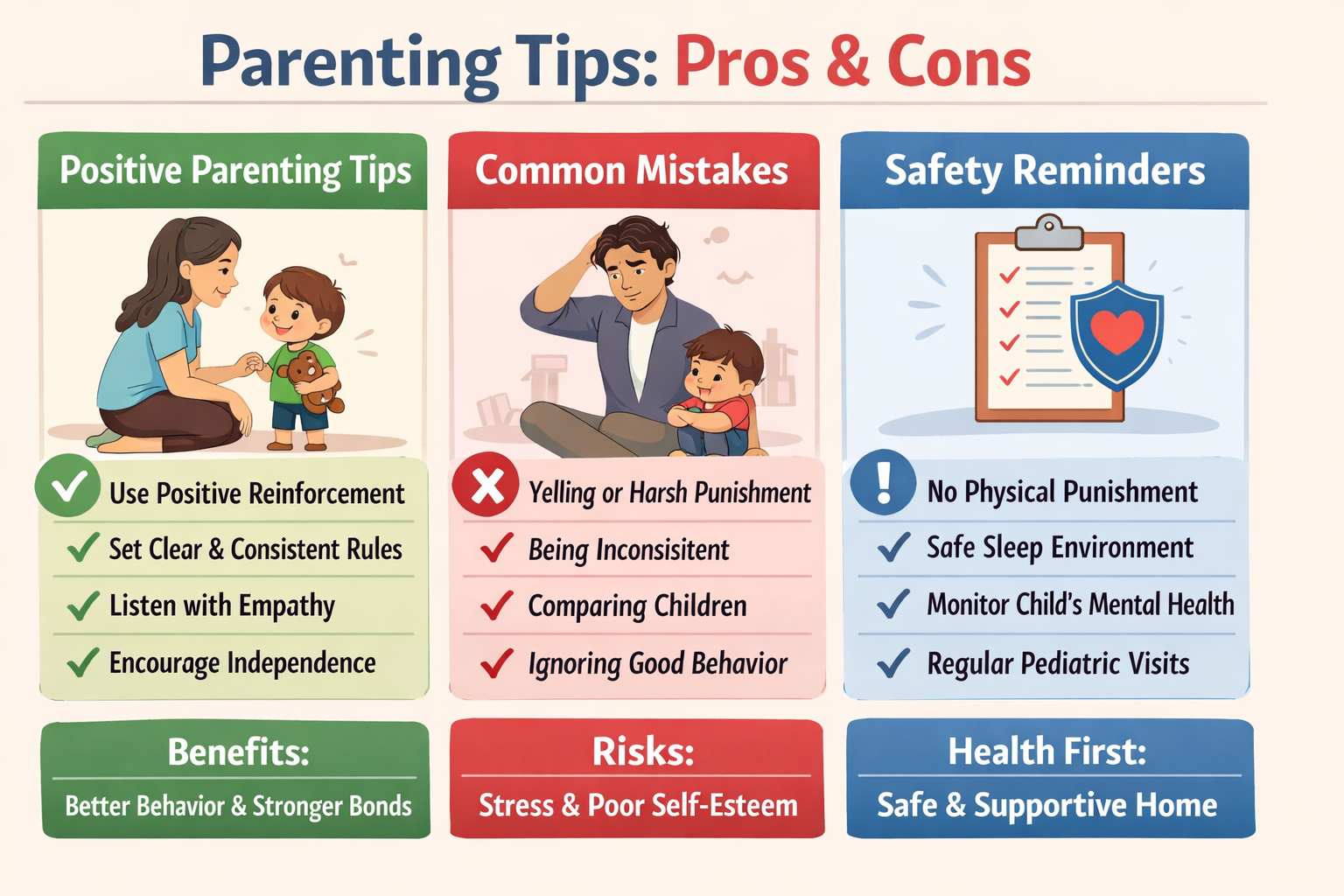
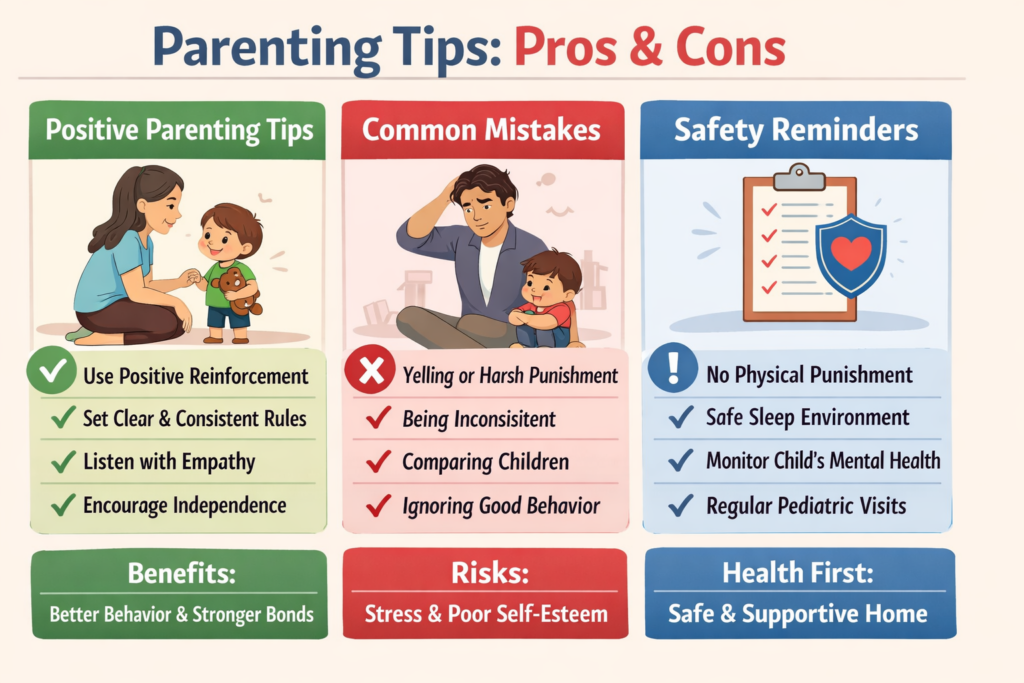
Positive parenting tips help parents build strong emotional connections with their children while guiding behavior in a healthy and respectful way. Instead of punishment or fear, positive parenting focuses on communication, empathy, consistency, and encouragement.
Modern child psychology research shows that children raised with supportive parenting techniques develop stronger emotional intelligence, better social skills, and improved mental health.
According to experts from the American Academy of Pediatrics (AAP) and World Health Organization (WHO), positive discipline and supportive communication help children develop resilience, confidence, and lifelong learning skills.
Whether you’re raising a newborn, toddler, or preschooler, learning effective positive parenting tips for healthy child development can transform everyday parenting challenges into opportunities for growth.
In this detailed guide, you will learn practical strategies, expert insights, and real-life examples to help you become a calmer, more confident parent.
Positive parenting tips are strategies that help parents guide children’s behavior using respect, encouragement, and emotional connection instead of punishment.
These techniques support healthy emotional development, better behavior, and stronger family relationships.
Positive parenting is an approach that focuses on teaching children rather than punishing them.
Instead of saying:
❌ “Stop doing that!”
Parents using positive parenting might say:
✅ “Let’s try a safer way to play.”
This approach builds:
Child development research shows that children respond better to guidance and encouragement than to fear-based discipline.
Children learn by observing their parents. The way parents respond to mistakes, emotions, and behavior shapes a child’s emotional and psychological growth.
| Benefit | How It Helps Children |
|---|---|
| Strong emotional security | Children feel safe expressing feelings |
| Better behavior | Kids learn self-control |
| Improved communication | Children talk openly with parents |
| Higher self-esteem | Kids feel valued and confident |
| Stronger family bond | Parents and children trust each other |
Research from Mayo Clinic shows that supportive parenting reduces anxiety and improves children’s mental health.
Sometimes children show behavior that signals they need more emotional guidance.
These behaviors are normal in young children but respond well to consistent positive parenting tips for toddlers.
Here are practical, science-backed parenting strategies.
Children behave better when they feel emotionally connected to their parents.
Ways to build connection:
A child who feels secure is more cooperative.
Praise encourages children to repeat good behavior.
Examples:
Positive attention is one of the most powerful positive parenting tips for healthy child development.
Children feel safer when they know expectations.
Example rules:
Consistency helps children learn responsibility.
Children copy what parents do.
If you want your child to:
You must demonstrate those behaviors first.
Allow children to try things themselves.
Examples:
This builds confidence and decision-making skills.
Instead of punishment, teach consequences.
Example:
If a child throws a toy, explain calmly:
“Throwing toys can break them. Let’s use them safely.”
Children often misbehave when overwhelmed.
Say things like:
Empathy reduces conflict.
Predictable routines help children feel secure.
Important routines include:
Instead of solving every issue, guide children to find solutions.
Example:
“Your block tower fell. What could we do differently?”
This strengthens critical thinking.
Help children label their feelings.
Examples:
This builds emotional intelligence.
Too much screen time can affect sleep, behavior, and attention.
Experts recommend:
| Age | Recommended Screen Time |
|---|---|
| Under 2 | Avoid when possible |
| 2–5 years | 1 hour per day |
(Source: American Academy of Pediatrics)
Allow children to learn from outcomes.
Example:
If a child refuses a jacket, they may feel cold outside.
This teaches responsibility.
Teach children how to:
Social skills support lifelong relationships.
Praise effort instead of results.
Example:
“I love how hard you tried.”
This encourages a growth mindset.
Parenting stress can affect children.
Self-care includes:
Calm parents raise calmer children.
Toddlers often test boundaries as they develop independence.
Effective positive parenting tips for toddlers 2 3 include:
Example:
Instead of saying:
❌ “Stop running!”
Try:
✅ “Walking feet inside.”
Experts identify five essential parenting skills.
| Skill | Description |
|---|---|
| Positive communication | Listening and speaking respectfully |
| Emotional coaching | Helping children understand feelings |
| Consistency | Maintaining clear rules |
| Encouragement | Praising effort and good behavior |
| Problem-solving | Teaching children how to fix mistakes |
These skills create a balanced parenting approach.
Even loving parents sometimes make mistakes.
Positive parenting focuses on guidance instead of punishment.
Parenting experts recommend the following:
Children cooperate more when they feel understood.
Children learn emotional control by observing parents.
Positive feedback motivates better behavior.
Parenting strategies should always support both emotional and physical health.
Important safety reminders:
Trusted medical organizations such as Centers for Disease Control and Prevention (CDC) recommend nurturing parenting environments to support healthy development.
The best positive parenting tips include building strong emotional bonds, setting consistent rules, encouraging independence, and praising positive behavior.
Positive parenting tips support emotional security, confidence, and better social skills
Effective strategies include clear routines, calm discipline, emotional coaching, and redirection.
The five main skills are communication, emotional support, consistency, encouragement, and problem-solving.
Yes. Research from organizations like WHO and the American Academy of Pediatrics supports positive parenting strategies.
Take a moment to breathe, respond calmly, and focus on teaching rather than punishing.
Yes. Consistency, empathy, and routines help reduce tantrums and emotional outbursts.
Yes. Respectful communication and trust-building strategies work for all ages.
Use praise, positive attention, and clear expectations.
Yes. Positive parenting strengthens trust, communication, and emotional bonds.
Future articles for ParentNest:
Using positive parenting tips helps parents raise confident, emotionally healthy children while building strong family relationships.
By focusing on empathy, communication, and consistent guidance, parents can turn everyday challenges into learning opportunities.
Remember that parenting is not about perfection — it’s about connection, patience, and growth.
Small positive changes today can have a powerful impact on your child’s future.
This article is for educational purposes only and should not replace professional medical or pediatric advice. Always consult a qualified healthcare provider for concerns regarding your child’s health or development.