Physical Address
304 North Cardinal St.
Dorchester Center, MA 02124
Physical Address
304 North Cardinal St.
Dorchester Center, MA 02124

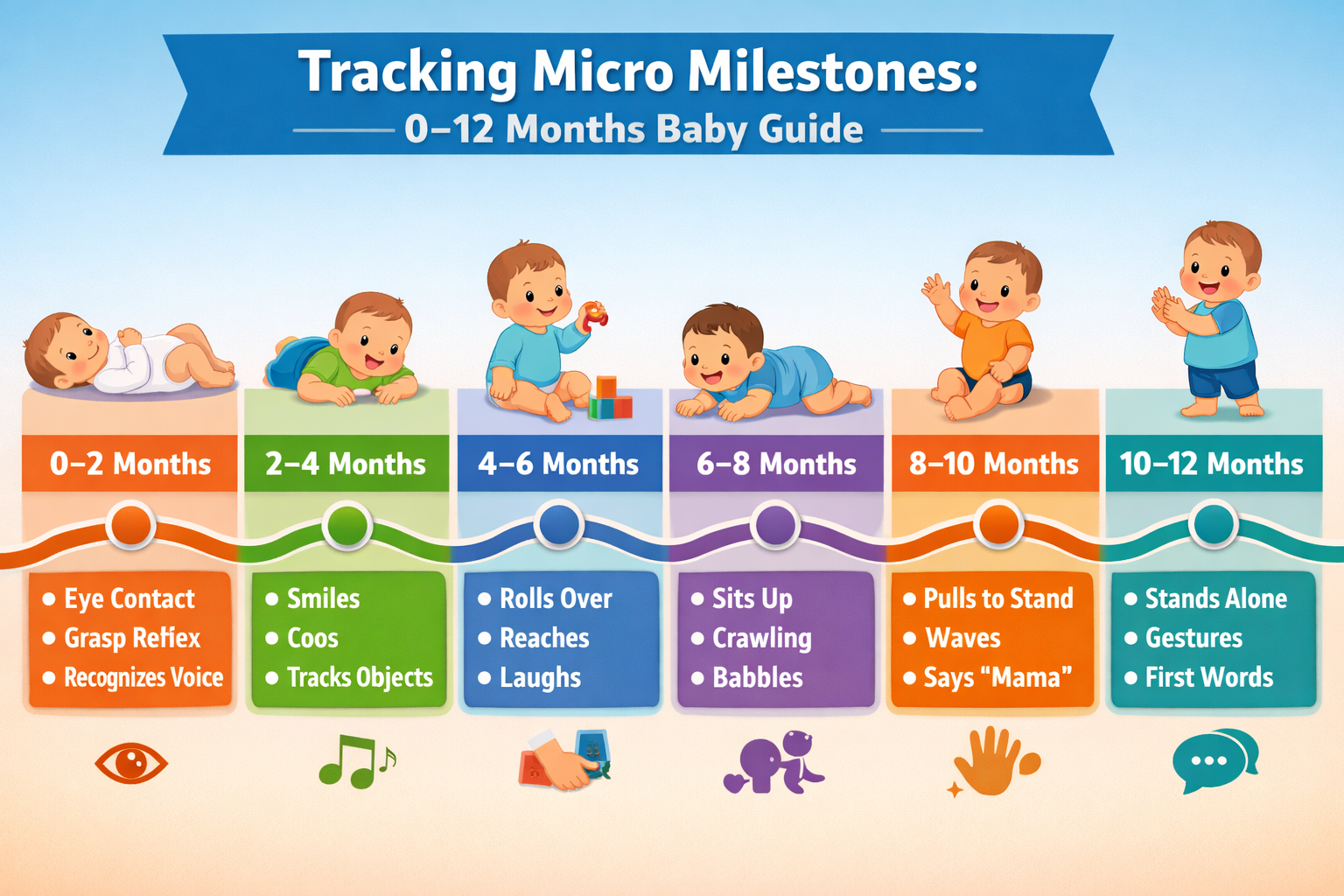
Tracking micro milestones 0–12 months baby guide is one of the most powerful tools parents can use to understand their baby’s growth beyond traditional milestones. While major milestones like “first steps” or “first words” get attention, micro milestones are the tiny, often overlooked developmental changes that happen daily.
These small achievements—like making eye contact, gripping a finger, or responding to sound—offer deeper insight into your baby’s brain development, motor skills, and emotional bonding. For new parents, recognizing these subtle signs can reduce anxiety and help detect early developmental delays.
This comprehensive guide will walk you through each stage from birth to 12 months, explain what to watch for, and provide practical, research-backed parenting advice. Whether you’re a first-time parent or a caregiver, this guide will help you confidently track your baby’s progress and support healthy development.
What are micro milestones in babies?
Micro milestones are small, gradual developmental steps that babies achieve between major milestones. These include subtle behaviors like eye tracking, cooing, finger grasping, rolling attempts, and emotional responses. Tracking micro milestones from 0–12 months helps parents identify healthy development patterns and detect early signs of delays.
Micro milestones are the small building blocks of development that lead to major achievements. Unlike traditional milestones, these occur frequently and often go unnoticed.
These tiny steps indicate progress in:
Tracking micro milestones helps parents:
According to pediatric guidelines from WHO and AAP, early observation plays a critical role in developmental screening.
Parent Tip: Talk and sing frequently to stimulate auditory development.
Real-life Example:
A mother notices her baby smiling when she enters the room—this is a key emotional micro milestone.
Expert Insight: These actions indicate early coordination between brain and muscles.
Look for these positive signs:
Spend 10–15 minutes observing your baby without distractions.
Use a journal or app to note behaviors.
Avoid daily comparisons—focus on trends.
If delays persist, consult a pediatrician.
| Age | Motor Skills | Social Skills | Cognitive Signs |
|---|---|---|---|
| 0–2 months | Reflexes | Eye contact | Recognizes voice |
| 2–4 months | Head control | Smiles | Tracks objects |
| 4–6 months | Rolling | Laughing | Responds to name |
| 6–8 months | Sitting | Stranger awareness | Object transfer |
| 8–10 months | Crawling | Attachment | Understands words |
| 10–12 months | Standing | Gestures | Imitation |
This may still be normal if other micro milestones are present.
This could require early evaluation.
Trusted sources: WHO, CDC, Mayo Clinic, AAP
It is a method of observing small developmental changes in babies during their first year.
They help detect early developmental delays.
If multiple milestones are missing consistently.
Use journals, apps, and monthly checklists.
No, development varies widely.
Not directly, but they reflect brain development.
Yes, if concerned.
Tummy time, talking, and play.
Not always; some babies skip crawling.
Tracking micro milestones 0–12 months baby guide empowers parents to understand their baby’s unique developmental journey. By focusing on little, meaningful progress rather than rigid timelines, you can support your child’s growth with confidence and clarity.
This content is for informational purposes only and does not replace professional medical advice. Always consult a pediatrician for concerns about your baby’s development.