Separation anxiety is one of the most emotionally difficult parts of starting daycare — for toddlers and parents alike. That first morning of tears at drop-off can leave parents second-guessing everything from timing to their choice of daycare, even when it’s a completely normal developmental response. The good news is that separation anxiety, while genuinely uncomfortable to witness, is highly manageable with the right preparation and consistent support during the adjustment period.
How to Prepare a Toddler for Daycare Separation Anxiety in India
This guide walks through practical, India-specific strategies to prepare your toddler for daycare, ease separation anxiety during the transition, and recognize the difference between normal adjustment difficulty and signs that something needs to change.
1. Understanding Separation Anxiety: Why It Happens
Separation anxiety is a normal part of toddler development, rooted in a healthy, secure attachment to primary caregivers. As toddlers develop stronger memory and awareness of object permanence — understanding that their caregiver still exists even when out of sight — they simultaneously develop a clearer sense of what it means when that caregiver leaves, which can trigger genuine distress.
This isn’t a sign of poor parenting, insecure attachment, or something being “wrong” with your child. In fact, developmental research generally associates separation anxiety with secure, healthy attachment — children who show little to no distress at separation aren’t necessarily more “independent,” and in some cases this can reflect a different attachment pattern entirely.
Understanding this reframes separation anxiety not as a problem to eliminate entirely, but as a normal developmental phase to support your child through with patience and consistency.
2. When Separation Anxiety Typically Peaks
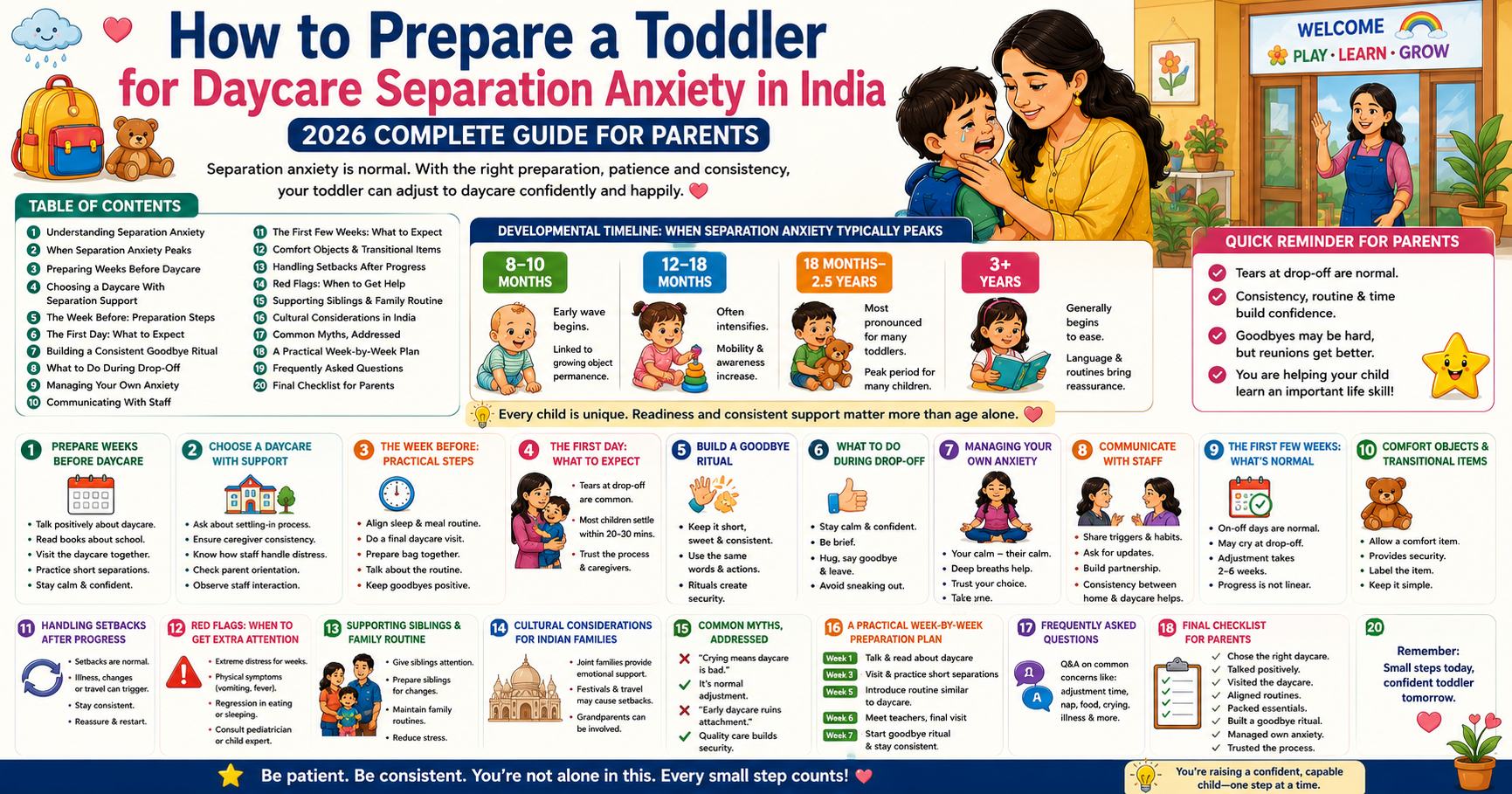
Separation anxiety tends to follow a general developmental pattern, though individual variation is significant:
- 8–10 months: An early wave often begins, tied to growing object permanence understanding
- 12–18 months: Frequently intensifies, coinciding with increased mobility and awareness
- 18 months–2.5 years: Often the most pronounced period for many toddlers, sometimes intensifying just as daycare or playschool transitions typically begin
- 3+ years: Generally begins to ease as language skills improve, allowing better understanding of routines and reassurance (“Mama will come back after snack time”)
This timing means that many families starting daycare in the toddler age range are navigating separation anxiety at or near its developmental peak — which is worth knowing, since it reframes difficult early days as expected rather than a sign of a specific problem with your child or your daycare choice.
3. Preparing Your Toddler Weeks Before Daycare Starts
Preparation works best when it begins well before the actual start date, giving your toddler gradual, low-pressure exposure to the idea of daycare:
- Talk about daycare simply and positively, using short, concrete language appropriate to your toddler’s age (“You’ll play with toys and other children, and Mama will come back after lunch”)
- Read books about starting daycare or school together, which helps normalize the experience through familiar storytelling
- Visit the daycare together for a short, low-pressure visit before the official start date, if the facility allows this
- Practice brief separations at home — leaving your toddler with a trusted family member or caregiver for short periods — if they haven’t had much practice with this already
- Avoid over-explaining or introducing the topic with visible anxiety yourself, since toddlers pick up on parental emotional cues significantly
4. Choosing a Daycare With Separation Support in Mind
Not all daycare facilities approach the settling-in period the same way — this is worth specifically evaluating when choosing a daycare, not just facilities and curriculum:
- Ask directly about their settling-in process for new children — a thoughtful daycare typically has a structured, gradual approach rather than expecting an immediate full-day transition
- Ask about caregiver consistency — daycares with stable, low-turnover staff generally support easier attachment and adjustment for toddlers
- Ask about their approach to comfort during distress — how staff typically respond to a crying, distressed toddler during the day matters significantly for how quickly your child settles
- Ask whether parents can stay for an initial orientation period, and for how long this is typically offered
- Trust your own observation during a visit — watch how staff interact with children already there, which often tells you more than official policy descriptions alone
5. The Week Before: Practical Preparation Steps
In the final week before starting, a few concrete steps help smooth the transition:
- Align your toddler’s sleep and meal schedule with the daycare’s routine, reducing the number of simultaneous adjustments happening at once
- Do a final, calm walkthrough conversation about what the first day will look like, keeping the tone matter-of-fact and reassuring rather than building anticipatory anxiety
- Prepare any comfort item (discussed further in Section 12) your toddler may want to bring
- Confirm logistics — drop-off time, who will do drop-off, pickup arrangements — so the actual first day itself feels calm and unrushed rather than logistically stressful for you as well
- Avoid introducing other major changes (like starting toilet training or transitioning out of a crib) in this same window, if possible, to reduce simultaneous transition stress
6. The First Day: What to Expect and How to Handle It
The first day is often the hardest, both for toddlers and parents, and it’s worth mentally preparing for a difficult morning without assuming it reflects how the whole experience will go:
- Arrive with enough time that drop-off doesn’t feel rushed, but avoid excessive lingering, which tends to prolong distress rather than ease it
- Expect some tears — this is genuinely normal and doesn’t necessarily mean the daycare or the timing is wrong
- Keep your own tone calm and confident, even if you’re feeling anxious internally — toddlers take significant emotional cues from their parents’ demeanor during drop-off
- Follow your planned goodbye ritual (covered in the next section) consistently, even on this first, hardest day
- Leave promptly after your goodbye ritual, trusting the daycare staff to manage the settling-in process rather than staying to monitor from a distance, which often extends distress for the child
7. Building a Consistent Goodbye Ritual
A predictable, consistent goodbye ritual is one of the most effective tools for easing separation anxiety over time:
- Keep it brief — a specific phrase, a particular hug or high-five sequence, or a short song works well, generally lasting no more than a minute or two
- Use the exact same ritual every single day, since predictability itself is reassuring, even during days when your toddler still shows some distress
- Always say goodbye directly — never sneak away without a goodbye, even if it seems like it would avoid a difficult moment, since this can undermine trust once your toddler notices you’re gone unexpectedly
- Reassure with a specific, concrete return reference appropriate to their understanding of time (“I’ll be back after snack time” rather than an abstract “later”), which helps build predictability into the separation itself
- Avoid prolonging the goodbye once the ritual is complete — repeated returns for “one more hug” often increase distress rather than provide comfort
8. What to Do During Drop-Off (and What to Avoid)
Helpful approaches:
- Hand your toddler directly to a familiar staff member if possible, rather than leaving them to transition alone
- Acknowledge their feelings briefly (“I know you’re sad, and that’s okay — I’ll see you soon”) without dwelling on it extensively
- Maintain a warm but efficient pace, moving through the goodbye ritual smoothly rather than hesitating
Approaches to avoid:
- Sneaking out without saying goodbye
- Returning repeatedly after an initial goodbye
- Showing visible distress or hesitation yourself, which toddlers often mirror
- Making promises you can’t reliably keep (e.g., about exact pickup timing) which can undermine trust if not met consistently
- Bribing extensively with treats or toys tied specifically to separation, which can inadvertently reinforce the idea that separation is something requiring compensation
9. Managing Your Own Anxiety as a Parent
Parental anxiety during this transition is completely normal and worth acknowledging directly, since it significantly affects how the transition unfolds for your toddler as well:
- Recognize that your own guilt or worry is a valid feeling, not something to suppress entirely, but also not something to let drive last-minute changes to a well-considered plan
- Find a support system — other parents going through the same transition, whether through daycare parent groups or your own social circle — for honest venting and reassurance
- Give yourself permission to feel sad after drop-off, even while trusting that your toddler is likely settling better than the goodbye moment suggested — many daycares report that distress often eases within minutes of a parent’s departure
- Avoid checking in excessively during the day if this tends to increase rather than ease your own anxiety — establish a reasonable check-in rhythm with the daycare that works for both your peace of mind and their operational flow
10. Communicating With Daycare Staff Effectively
Clear, ongoing communication with daycare staff significantly supports a smoother adjustment:
- Share specific information about your toddler’s comfort strategies — what typically soothes them, their usual nap and eating patterns, any particular preferences or triggers
- Ask for brief updates during the settling-in period, whether through a quick message, photo, or note at pickup, without expecting constant real-time updates that may not be practical for busy caregivers
- Discuss your toddler’s specific separation anxiety patterns honestly, rather than downplaying difficulty, so staff can respond with informed, individualized support
- Give feedback constructively if something isn’t working, framing it collaboratively (“I noticed she seems more settled with X approach — could we try that consistently?”) rather than as a complaint
11. The First Few Weeks: What Normal Adjustment Looks Like
Most toddlers show a general pattern of gradual improvement over the first two to four weeks, though this varies by individual temperament:
- Week 1: Often the most difficult, with visible distress at drop-off being common and expected
- Week 2: Many toddlers begin showing brief distress that eases more quickly once the parent has left, even if drop-off itself remains hard
- Week 3–4: Gradual improvement is common, with many toddlers beginning to engage more readily with activities and peers, sometimes even showing enthusiasm about specific aspects of their daycare routine
It’s worth resisting the urge to judge the entire daycare decision based on the first few difficult days — the adjustment curve, while emotionally taxing for parents to watch, is a normal and expected part of the process for most toddlers.
12. Comfort Objects and Transitional Items
A familiar comfort object can provide meaningful reassurance during the adjustment period:
- A small, familiar item from home — a soft toy, a small blanket piece, or a family photo — can help bridge the gap between home and daycare environments
- Confirm the daycare’s policy on comfort items beforehand, since some facilities have specific guidelines around personal items, particularly for hygiene or safety reasons
- Consider a “goodbye object” ritual — a specific small item your toddler holds during the goodbye moment itself, which some children find soothing as a transition marker
- Avoid introducing a new comfort item for the first time specifically for daycare — familiarity is the entire point, so use something your toddler already has an established, positive association with
13. Handling Setbacks After Initial Progress
It’s common for separation anxiety to resurface even after a toddler has seemingly adjusted well, particularly following illness, holidays, or other schedule disruptions:
- Treat setbacks as normal, not as a sign of regression or failure, since disrupted routines genuinely do reset some of the adjustment progress temporarily
- Return to your original consistent goodbye ritual and calm, confident approach, rather than introducing new strategies during a setback period
- Expect setbacks to resolve more quickly than the initial adjustment period, typically within several days to a week with consistent routine
- Communicate setbacks to daycare staff, so they can offer extra support during this specific window, particularly after extended absences like holiday breaks
While most separation anxiety resolves with time and consistency, certain patterns warrant closer attention or professional guidance:
- Distress that shows no improvement at all after four to six weeks of consistent attendance and supportive routine
- Significant regression in previously established skills (sleep, eating, toileting) that persists well beyond the typical adjustment window
- Physical symptoms — persistent stomachaches, headaches, or sleep disruption — that appear specifically tied to daycare days and don’t ease over time
- Extreme, prolonged distress throughout the entire day as reported by staff, rather than difficulty concentrated around drop-off that eases afterward
If these patterns persist, discussing the situation with your pediatrician is a reasonable next step — they can help distinguish between an unusually prolonged but still normal adjustment and a pattern that may benefit from additional support.
This section is for general awareness only and does not replace professional evaluation. Always consult your pediatrician for guidance specific to your child.
15. Supporting Siblings and Family Routine During the Transition
If you have other children at home, the daycare transition affects the whole family system, not just the toddler starting daycare:
- Maintain consistent routines for siblings as much as possible, since family-wide disruption can add unnecessary additional stress during this period
- Involve older siblings positively in the transition, if age-appropriate, which can also help the toddler feel supported by familiar figures beyond just parents
- Watch for attention-seeking behavior from siblings during this period, since a temporary shift in parental focus toward supporting the daycare transition is common and worth acknowledging directly with older children
16. Cultural Considerations for Indian Families
Daycare and separation anxiety navigation in India often comes with specific cultural dimensions worth acknowledging directly:
- Joint family dynamics may mean navigating differing opinions about daycare necessity or approach from grandparents, particularly if extended family previously provided full-time childcare
- Guilt around working parenthood is a common experience specifically discussed in Indian working-mother contexts, and it’s worth separating genuine parenting concerns from broader societal narratives about maternal guilt that may not reflect your child’s actual wellbeing
- Language transition may be an additional factor if your toddler’s home language differs from the daycare’s primary language of instruction, adding an extra adjustment dimension worth discussing directly with daycare staff
- Extended family support for the transition period — even informal encouragement or backup during particularly hard weeks — can meaningfully ease the load on primary caregivers navigating this alone
17. Common Myths About Toddler Separation Anxiety, Addressed
Myth: A toddler who cries at every drop-off isn’t ready for daycare. Reality: Persistent difficulty specifically at the drop-off moment, which eases once the parent leaves, is common and doesn’t necessarily indicate readiness issues — it’s the pattern throughout the rest of the day that matters more.
Myth: If my toddler doesn’t cry at all, something is wrong. Reality: Some toddlers show minimal separation distress due to individual temperament, prior separation experience, or a naturally more easygoing disposition — this isn’t automatically a red flag either.
Myth: Separation anxiety means the daycare choice is wrong. Reality: Separation anxiety is largely a developmental phase tied to your toddler’s age and attachment stage, not primarily a reflection of daycare quality — though daycare approach to settling-in does meaningfully affect how smoothly the adjustment unfolds.
Myth: A quick, unnoticed exit is kinder than a proper goodbye. Reality: While sneaking away might avoid an immediate difficult moment, most child development guidance suggests consistent, direct goodbyes build more trust and predictability over time, even if the goodbye itself is briefly harder.
18. A Practical Week-by-Week Preparation Plan
4 weeks before: Begin simple, positive conversations about daycare; read books on the topic together
3 weeks before: Visit the daycare together if possible; begin aligning sleep/meal routine with daycare schedule
2 weeks before: Practice brief separations at home with a trusted caregiver; identify and prepare a comfort item
1 week before: Finalize logistics (drop-off/pickup plan); do a final calm walkthrough conversation about what to expect
Day 1–3: Focus purely on consistent goodbye ritual and calm, confident drop-offs; expect the hardest days here
Week 2: Continue consistency; look for early signs of easier post-goodbye settling, even if drop-off itself remains hard
Week 3–4: Expect gradual improvement; begin light check-ins with staff about overall adjustment pattern
Beyond week 4: If significant distress persists without any improvement, discuss specifically with daycare staff and consider your pediatrician’s input
19. Frequently Asked Questions
Is it normal for separation anxiety to get worse before it gets better?
Yes, some toddlers show an initial spike in distress during the first few days as the reality of the new routine sets in, before gradually improving over the following weeks with consistency.
Should I stay longer during drop-off if my toddler is crying?
Generally, no — prolonged goodbyes tend to extend distress rather than ease it. A brief, consistent, confident goodbye followed by a prompt departure typically supports faster settling.
How do I know if my toddler is truly ready for daycare despite separation anxiety?
Separation anxiety alone doesn’t indicate lack of readiness, since it’s largely age-related rather than a readiness marker specifically. Look instead at overall developmental signs discussed in playschool/daycare readiness guidance, alongside your family’s practical circumstances.
What if grandparents in a joint family disagree with sending the toddler to daycare?
This is worth a calm, private conversation with your partner first to align on your shared decision, followed by a respectful conversation with extended family that acknowledges their concern while explaining your reasoning.
Can comfort objects create dependency issues later?
Generally, no — familiar comfort objects during a genuinely stressful transition period are a normal, temporary support tool, and most children naturally reduce reliance on them as they settle into the new routine over time.
Should working parents feel guilty about a difficult daycare transition?
Some guilt is a common, human response, but it’s worth separating that feeling from the actual facts — daycare transitions are developmentally normal experiences that the vast majority of toddlers navigate successfully with appropriate support, regardless of parental work status.
20. Final Checklist for Parents
- Begin positive, simple conversations about daycare a few weeks before starting
- Visit the daycare together beforehand if possible
- Practice brief separations at home in advance
- Choose and prepare a familiar comfort item, checking daycare policy first
- Establish a brief, consistent goodbye ritual before day one
- Communicate your toddler’s specific comfort strategies to daycare staff
- Commit to leaving promptly after the goodbye ritual, even on hard days
- Give the adjustment period at least two to four weeks before judging overall fit
- Watch for genuine red flags versus normal initial adjustment difficulty
- Build your own support system for the emotional weight of this transition
Read Also