Physical Address
304 North Cardinal St.
Dorchester Center, MA 02124
Physical Address
304 North Cardinal St.
Dorchester Center, MA 02124

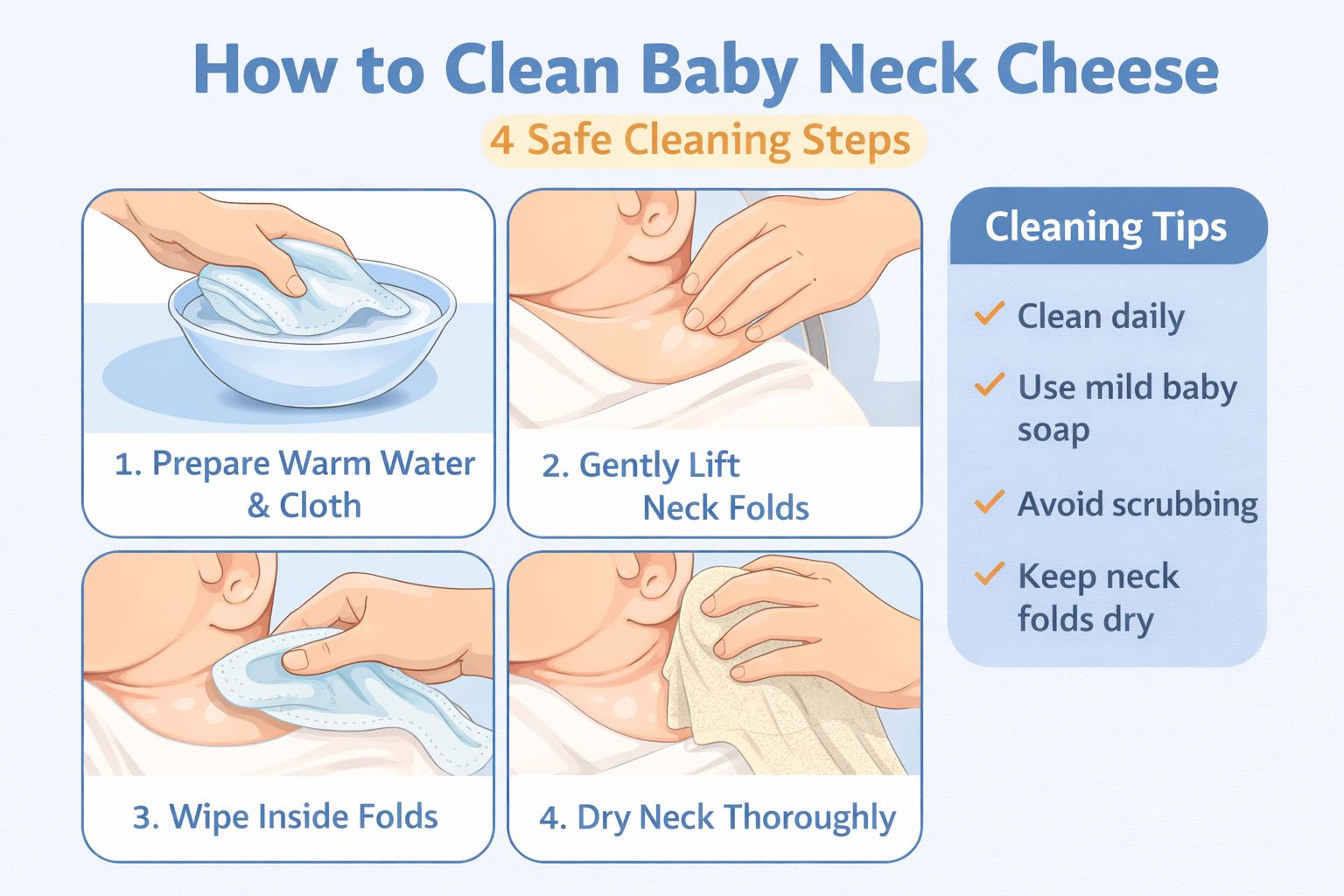
How to clean baby neck cheese is a common concern for new parents who notice a white or yellowish buildup in their baby’s neck folds. While the term “neck cheese” may sound alarming, it is usually a harmless combination of milk residue, sweat, dead skin cells, and moisture trapped in the folds of a baby’s neck.
Because babies often have chubby neck folds and limited neck control, milk dribbles, drool, and formula can collect in this area during feeding. Without proper cleaning, this buildup can cause odor, irritation, or even rashes.
The good news is that baby neck cheese is easy to manage with gentle hygiene and consistent care.
In this comprehensive guide, you will learn:
Whether you’re a first-time parent or caring for a newborn, these simple methods can help keep your baby’s skin clean, healthy, and comfortable.
How do you clean baby neck cheese?
To clean baby neck cheese safely:
Cleaning daily and keeping the neck folds dry helps prevent buildup and rashes.
Baby neck cheese refers to a buildup of milk residue, sweat, drool, and dead skin trapped inside the folds of a baby’s neck.
It commonly appears as:
While harmless in most cases, poor hygiene or excessive moisture can lead to irritation or yeast growth.
Several factors contribute to this condition.
Breast milk or formula often spills into the neck folds.
Babies drool heavily during the first few months.
Chubby babies naturally have deeper neck folds.
Newborns cannot lift their heads easily, making cleaning harder.
Parents may notice:
If the skin becomes bright red, swollen, or painful, it may indicate a rash or yeast infection.
Cleaning baby neck cheese daily is simple and safe.
You will need:
Avoid harsh soaps or alcohol-based wipes.
Lay your baby comfortably on their back and gently support the head.
This allows you to access the neck folds safely.
Use your fingers to gently lift each fold.
This exposes the hidden areas where residue collects.
Using a damp cloth:
Gentle wiping protects sensitive skin.
Moisture encourages yeast growth.
Pat the neck dry with a soft towel.
If the skin looks dry or irritated, use a fragrance-free baby lotion.
Parents often ask how to clean neck folds of a baby without causing irritation.
Follow these gentle tips:
• Use lukewarm water instead of hot water
• Avoid scrubbing
• Clean after messy feedings
• Keep skin folds dry
Consistency is more important than deep cleaning.
Sometimes dirt mixes with sweat and milk residue.
Safe removal methods include:
Never use adult soaps or perfumes.
Moist skin folds can occasionally develop yeast infections.
Symptoms include:
According to Mayo Clinic and AAP, yeast infections occur in warm, moist areas.
A pediatrician may recommend:
Never apply medicated creams without consulting a doctor.
| Condition | Appearance | Cause | Treatment |
|---|---|---|---|
| Neck Cheese | White buildup | Milk, sweat | Clean and dry |
| Irritation Rash | Red skin | Friction or moisture | Moisturizer |
| Yeast Infection | Bright red rash | Fungus growth | Antifungal cream |
Prevention is easier than treatment.
Parents can reduce buildup by:
• Cleaning neck folds during daily baths
• Wiping neck after feeding
• Using absorbent bibs
• Changing drool-soaked clothes quickly
• Keeping skin dry
A 2-month-old baby who frequently spits up milk may develop neck cheese quickly.
By simply wiping the neck after each feeding and cleaning folds during bath time, most parents notice the buildup disappears within a few days.
Many parents forget to check hidden skin folds.
Too much soap can dry and irritate baby skin.
Damp skin encourages yeast growth.
Baby skin is extremely delicate.
Pediatricians recommend:
• Clean the neck area once daily
• Always dry the folds completely
• Use fragrance-free products
• Check folds during diaper changes
Simple habits prevent most skin issues.
Trusted health organizations recommend gentle hygiene for newborns.
Guidance from:
Key advice includes:
Consult a pediatrician if redness worsens.
Use warm water and a soft cloth to gently clean inside the neck folds, then dry thoroughly.
Lift the folds and wipe with a damp cloth during bath time or after feeding.
Clean neck folds daily and keep the area dry after feeding.
Gently lift each fold, wipe with warm water, and pat dry.
Clean the area gently and apply baby-safe moisturizer. Consult a pediatrician if redness persists.
A doctor may prescribe antifungal cream and recommend keeping the skin dry.
In most cases, it is harmless and caused by milk residue.
Once daily during bath time or after messy feedings.
Milk and drool trapped in neck folds can create odor.
If the skin becomes red, swollen, cracked, or painful.
Knowing how to clean baby neck cheese helps parents keep their baby comfortable and prevent skin irritation.
Regular cleaning, gentle products, and keeping neck folds dry are the most effective ways to avoid buildup and rashes.
Most cases are harmless and can be easily managed with simple hygiene habits.
By checking neck folds daily and cleaning them properly, parents can protect their baby’s delicate skin and maintain healthy hygiene.