Physical Address
304 North Cardinal St.
Dorchester Center, MA 02124
Physical Address
304 North Cardinal St.
Dorchester Center, MA 02124

The first moments after birth are magical, emotional, and sometimes overwhelming. Parents often wonder:
These questions are natural. Every parent wants to protect their baby and do everything “right.”
This guide on newborn baby care immediately after birth will walk you through exactly what your baby needs during the first hours, days, and early weeks. You’ll learn gentle, science-backed practices that support bonding, comfort, safety, and healthy development.
By the end, you’ll feel calmer, informed, and prepared to nurture your newborn with confidence.
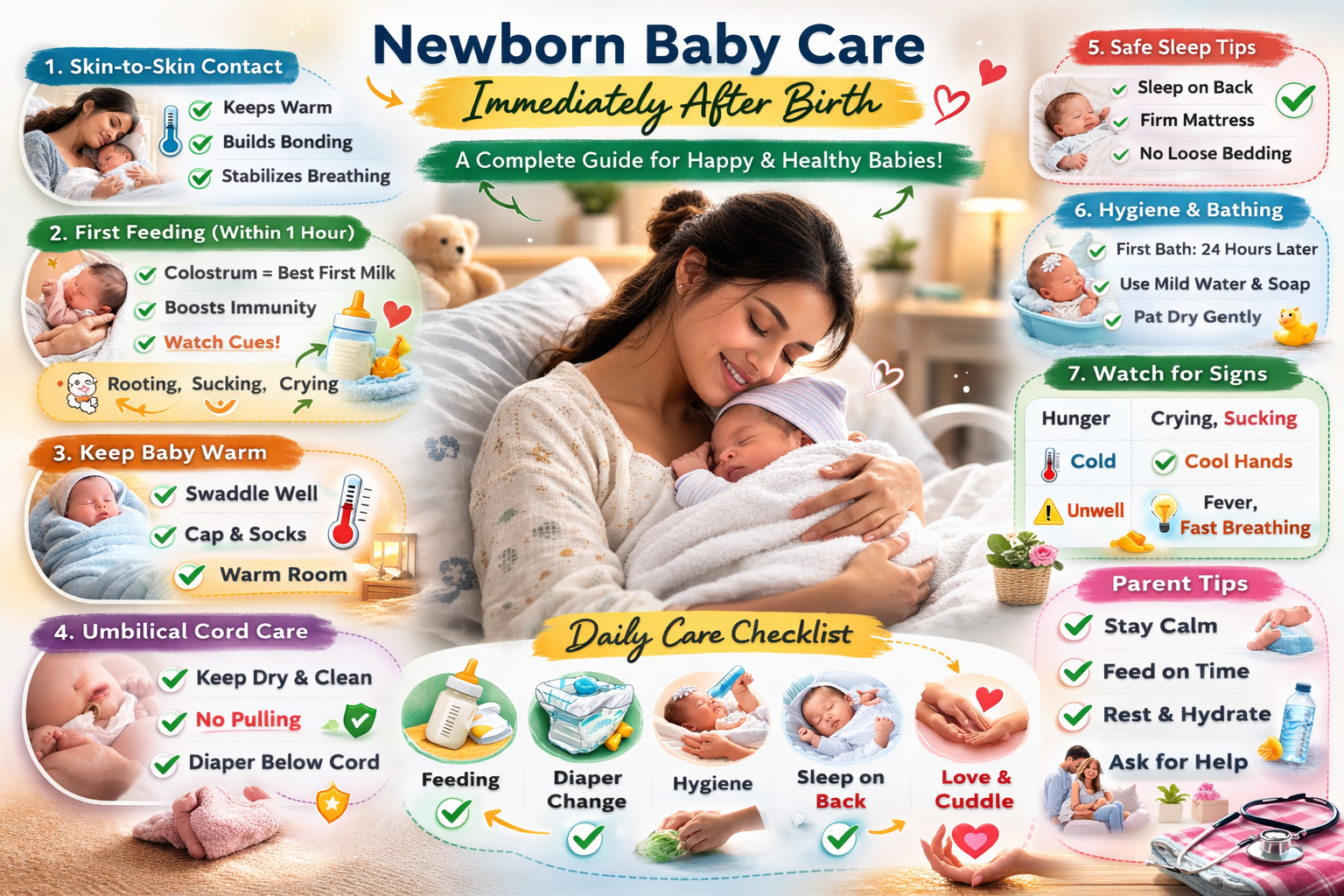
Newborn baby care immediately after birth includes keeping the baby warm through skin-to-skin contact, starting early feeding, ensuring safe breathing, delaying bathing, monitoring temperature, maintaining hygiene, and supporting bonding. Gentle handling, responsive feeding, and observing newborn cues help babies adjust safely to life outside the womb.
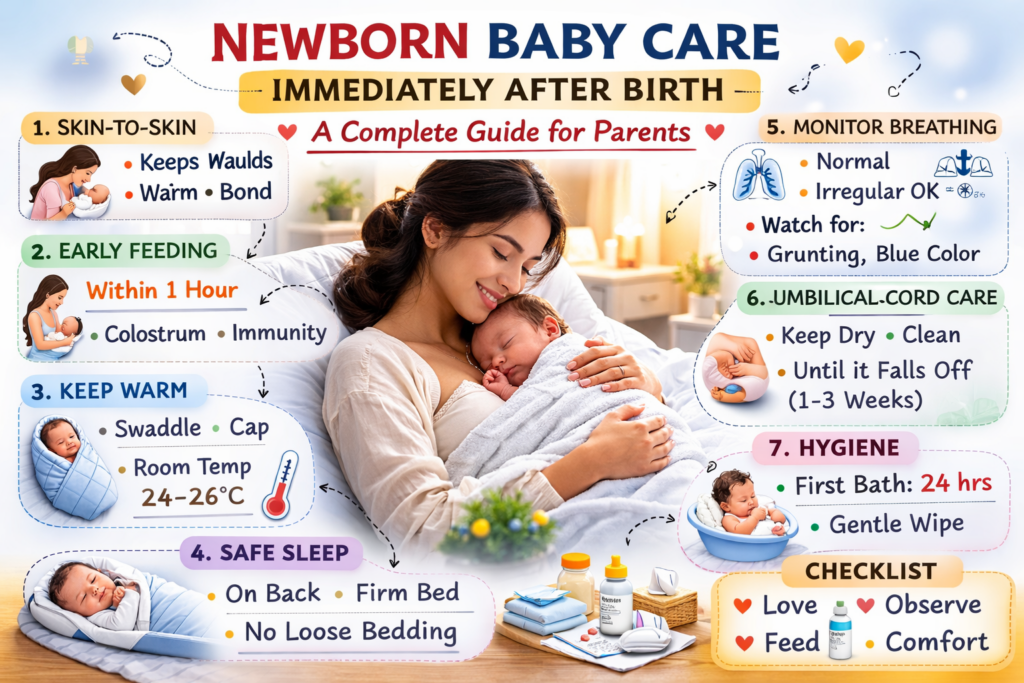
The transition from womb to world is profound. Inside the womb, babies receive warmth, nutrition, oxygen, and protection automatically. After birth, they rely on caregivers for these essentials.
Newborn baby care immediately after birth focuses on:
Experts from organizations like the World Health Organization emphasize that gentle, uninterrupted contact and early feeding are key protective practices for newborn survival and development.
The “golden hour” refers to the first hour after birth when babies are highly alert and biologically primed to bond and feed.
Parents often remember this hour vividly because it sets the emotional tone for early parenting.
Skin-to-skin contact is one of the most powerful elements of newborn baby care immediately after birth.
The baby lies chest-to-chest with a caregiver, covered with a blanket.
The Mayo Clinic notes that skin-to-skin care improves newborn physiological stability and strengthens attachment.
Newborns typically show feeding readiness within the first hour.
Avoid waiting for crying, as this is a late hunger signal.
Newborns lose heat quickly because they have:
Guidance from the NHS highlights warmth as a core newborn safety priority.
The umbilical stump usually falls off within 1–3 weeks.
Gentle dry care supports natural healing.
Many parents worry about newborn breathing.
These patterns often reflect immature respiratory control.
The Centers for Disease Control and Prevention advises monitoring breathing comfort rather than counting breaths obsessively.
Bathing immediately after birth is no longer recommended.
Many newborns enjoy gentle wiping rather than full immersion initially.
Sleep dominates newborn life.
Safe positioning reduces sleep-related risks.
Newborn baby care immediately after birth also involves parental emotional adaptation.
Parents may experience:
These feelings are normal.
Remember: learning newborn care is a process, not a test.
✔ Skin-to-skin contact
✔ Dry baby gently
✔ Check breathing
✔ Initiate feeding
✔ Maintain warmth
✔ Observe feeding cues
✔ Monitor elimination
✔ Support bonding
✔ Cord care
✔ Gentle hygiene
✔ Sleep positioning
✔ Emotional adjustment
This checklist simplifies the transition period.
Can cause temperature instability.
May lead to overheating.
Delays nutrition.
Newborns need calm environments.
Every newborn develops uniquely.
Recognizing these patterns helps parents respond thoughtfully rather than reactively.
Pediatric guidance from HealthyChildren.org reinforces responsive caregiving as the cornerstone of early development.
(Soft affiliate-friendly suggestions)
These tools simplify daily care without replacing responsive parenting.
Statistics highlight how small practices can produce meaningful outcomes.
Skin-to-skin contact, early feeding, and warmth maintenance are the most critical initial steps.
Most babies are ready within the first hour and benefit from early feeding initiation.
Yes. Irregular breathing patterns are typical in newborns unless accompanied by distress signs.
Bathing is often delayed at least 24 hours to support temperature stability and skin protection.
Cool hands, fussiness, and low body temperature may indicate cold stress.
Newborns may sleep 14–17 hours daily in short cycles.
Usually within 1–3 weeks, depending on individual healing.
The first days with your baby are tender, emotional, and deeply transformative. While newborn baby care immediately after birth may feel overwhelming, it centers on simple, powerful actions:
Perfection isn’t required. Presence is.
By responding gently to your baby’s cues and trusting your growing instincts, you create a safe world where your newborn can thrive. Each diaper change, cuddle, and feeding builds confidence — both yours and your baby’s.
You are learning together, one quiet moment at a time.