Physical Address
304 North Cardinal St.
Dorchester Center, MA 02124
Physical Address
304 North Cardinal St.
Dorchester Center, MA 02124

How can I safely use a baby monitor for my newborn? This is a common question many new parents ask when setting up their baby’s nursery.
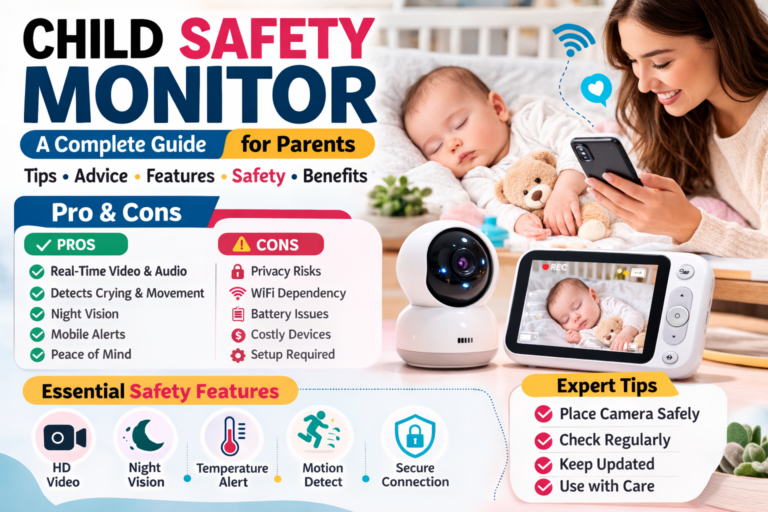
Baby monitors can provide reassurance when your baby sleeps in another room. They help parents hear early cries, monitor sleep patterns, and respond quickly to their baby’s needs.
However, parents often worry about:
Understanding how to safely use a baby monitor for your newborn can help you reduce risks while enjoying the benefits of modern parenting technology.
In this detailed guide, you’ll learn:
This guide is based on recommendations from trusted medical organizations such as WHO, CDC, Mayo Clinic, ACOG, and the American Academy of Pediatrics (AAP).
To safely use a baby monitor for your newborn:
When used correctly, baby monitors can help parents monitor sleep safely without disturbing the baby.
Baby monitors are designed to help parents stay connected with their baby while doing everyday tasks.
Common situations include:
A mother puts her newborn down for a nap in the nursery while folding laundry in the next room.
With a baby monitor, she can:
This helps babies stay calmer and supports healthy sleep patterns.
Many parents wonder:
Do you need a baby monitor for newborns?
The answer depends on your home layout.
Baby monitors are especially helpful if:
However, if your newborn sleeps in the same room (recommended during the first months), a monitor may not always be necessary.
According to the American Academy of Pediatrics, room-sharing without bed-sharing is recommended for the first 6 months.
Understanding how baby monitor works helps parents use them safely.
Most monitors consist of two main units:
The baby unit sends signals to the parent unit through:
This allows parents to hear or see their baby in real time.
Many families start using baby monitor before 6 months when their baby begins sleeping longer periods.
During the early months, babies wake frequently for feeding.
A baby monitor can help parents notice:
This allows parents to respond gently before babies become distressed.
Many parents ask: Is it safe to use a baby monitor?
Yes, baby monitors are generally safe when used properly.
Important safety guidelines include:
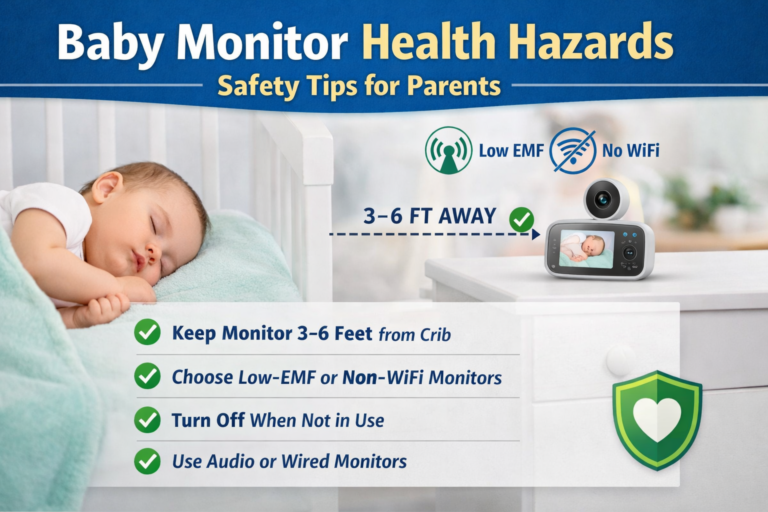
Baby monitors emit very low radiofrequency signals similar to:
According to WHO and the CDC, household electronics that meet safety regulations are considered safe for normal use.
Another common concern is:
Is it safe for a child to sleep near a baby monitor?
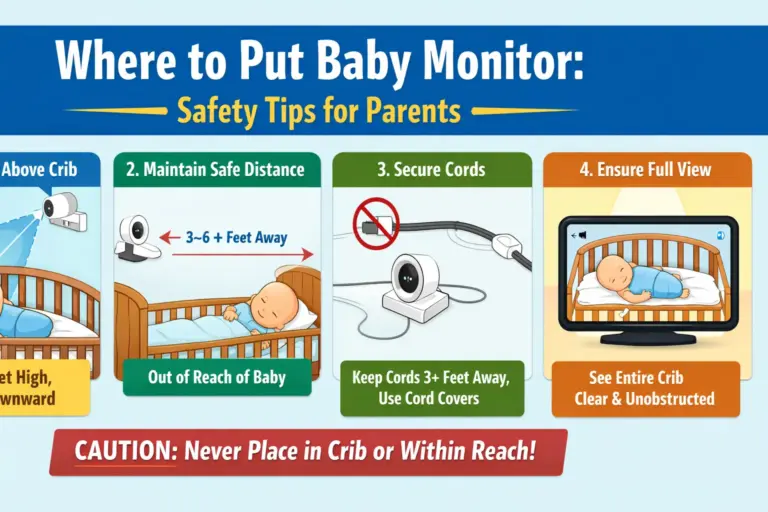
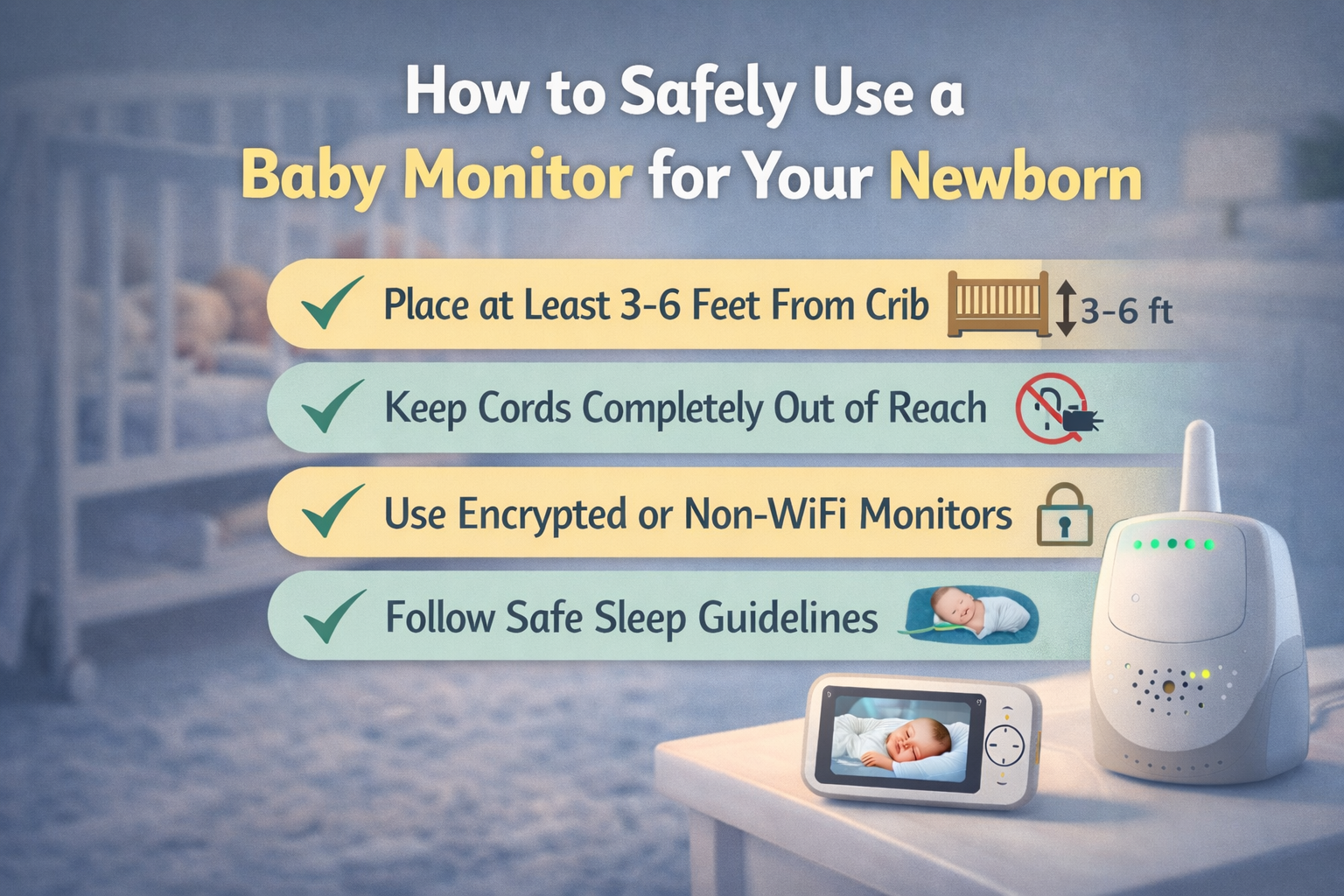
Experts recommend placing the monitor at least 3 feet away from the baby’s crib.
This distance helps:
Never place monitors directly inside the crib.
Some parents prefer gentle sleep methods instead of letting babies cry.
A baby monitor helps parents follow a responsive approach.
Parents can watch for early signs such as:
Responding early helps babies feel secure.
Follow these steps to ensure safe monitoring.
Place the monitor 3–6 feet from the crib.
Mount cameras on shelves or walls.
Hide or secure cords.
Test the audio and video signal.
Check monitor battery regularly.
A baby monitor helps parents detect early signals.
Common signs include:
Responding quickly can prevent full crying episodes.
| Monitor Type | Internet Required | Best For | Safety Level |
|---|---|---|---|
| Audio Monitor | No | Simple monitoring | Very High |
| Video Monitor | No | Visual monitoring | High |
| WiFi Monitor | Yes | Remote viewing | Moderate |
Audio monitors are often recommended for parents who want simple and secure monitoring.
Parents sometimes make mistakes when setting up baby monitors.
Always maintain safe distance.
Loose cables can become hazards.
Parents should still check on babies regularly.
Smart monitors require security updates.
Experts recommend these simple strategies.
Choose encrypted monitors.
Test the signal before bedtime.
Avoid placing monitors on the crib.
Keep monitors away from heating sources.
Medical organizations emphasize safe sleep practices.
According to Mayo Clinic, safe sleep includes:
Baby monitors help parents monitor babies, but they do not replace safe sleep practices.
Place the monitor 3–6 feet away from the crib, secure cables, and follow safe sleep guidelines.
Yes, when placed at a proper distance and used according to manufacturer instructions.
It depends on your home layout. Monitors are helpful when babies sleep in separate rooms.
Yes, many parents use monitors during the first months for peace of mind.
A transmitter near the baby sends audio or video signals to a parent receiver.
Yes, but keep the device at least 3 feet away.
No. Parents should still check their baby regularly.
Watch early sleep signals and respond before full crying begins.
Understanding how can I safely use a baby monitor for my newborn helps parents balance convenience with safety.
Baby monitors can provide reassurance, but they should always be used responsibly.
Remember these key safety tips:
When used correctly, baby monitors help parents respond quickly while allowing babies to sleep peacefully.
This article is for educational purposes only and does not replace professional medical advice. Always consult your pediatrician regarding your baby’s health and sleep safety.