Physical Address
304 North Cardinal St.
Dorchester Center, MA 02124
Physical Address
304 North Cardinal St.
Dorchester Center, MA 02124

Let’s be real for a second. Most parents have done it. You are tired, dinner is finally on the table, and turning on a cartoon just feels like the easiest way to get your child to sit still and actually eat something. No judgment here. Parenting is hard.
But is letting kids watch TV while eating actually a problem? Or is it one of those things that gets blown out of proportion by parenting experts while the rest of us just try to survive the day?
In this article, we are going to give you the honest truth. We will look at what the research says about kids watching TV while eating, what it means for their health and development, and what you can do if you want to make a change — without making mealtimes a battleground.
Whether you are a parent, a caregiver, or someone who just wants real information, this guide is written in plain English and covers everything you need to know.
A generation ago, TV at the dinner table was seen as rude. Today, screen time during meals is so common that many households consider it part of the routine. Kids eating in front of the TV, tablets propped up on the kitchen counter, or phones lying next to the plate — it has become everyday life.
So why did this happen? A few reasons stand out:
Understanding why it happens is the first step to deciding whether it is something you want to change in your family. There is no shame in how this habit started. But it is worth knowing what it is doing — both good and bad — so you can make an informed choice.
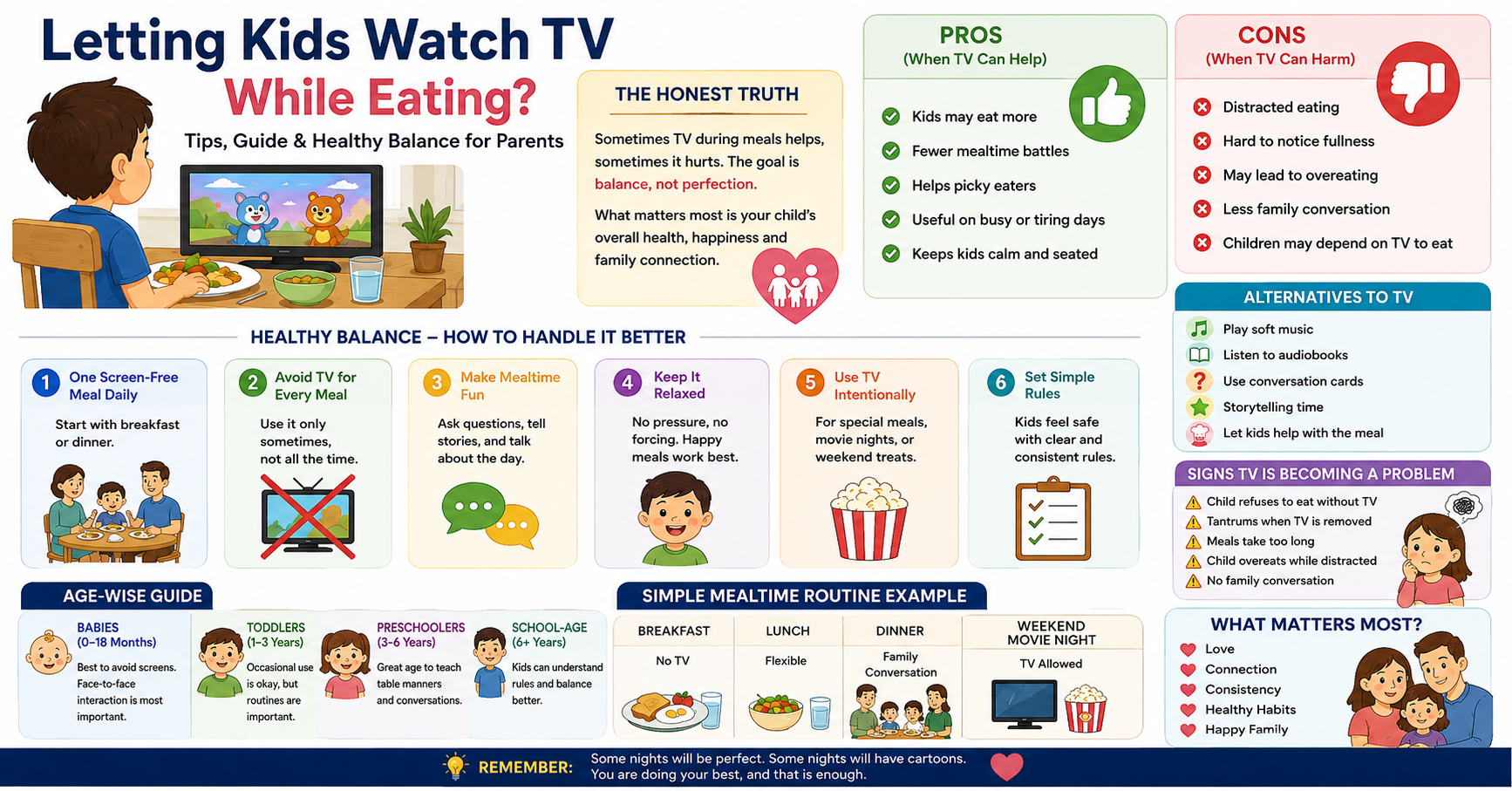
Before we get into the problems, let’s be fair. There are a few situations where kids watching TV while eating actually helps. Here is what parents commonly report:
If you have a picky eater, you know the struggle. Some parents find that their child is more relaxed and eats a wider variety of food when distracted by a show. The focus shifts away from the food itself, which can reduce anxiety around eating for some kids.
Parenting is mentally and emotionally exhausting. Sometimes sitting down in front of a show while kids eat dinner is the only quiet moment of the day. That matters. A stressed, burnt-out parent is not the same as a calm and present one.
If your child is watching something educational — a nature documentary, a language program, or even a cooking show — that screen time during meals is not purely wasted. Some parents use mealtime as an opportunity for the family to watch something together and talk about it.
For children who are underweight or recovering from illness, pediatricians sometimes suggest distraction as a short-term strategy to increase calorie intake. When eating more matters medically, distraction through TV can serve a purpose.
These benefits are real. But they come with a cost, and that is where the honest part of this article comes in.
Here is where the research gets heavy. And this is not about scaring you — it is about giving you the full picture.
This is the biggest issue. When kids are watching TV while eating, they are not paying attention to their food. They are not noticing when they feel full. They are not tasting their food properly. Research consistently shows that distracted eating — eating while watching a screen — is linked to eating more than the body needs. This is true for adults too, but children are especially vulnerable because their internal hunger and fullness cues are still developing.
When a child grows up eating in front of the TV, they learn to associate eating with screens rather than hunger. This can be a hard habit to break later in life.
Multiple studies have found a connection between screen time during meals and higher rates of childhood obesity. A study published in Pediatrics found that children who regularly ate in front of the TV consumed more snacks, more calories, and fewer fruits and vegetables than children who ate without screens. The distracted eating pattern caused by kids watching TV while eating is one contributing factor to the childhood obesity epidemic.
Children learn to eat well partly by paying attention to food. They learn what different foods look like, taste like, and feel like. They learn to enjoy a variety of textures and flavors. When kids are watching TV while eating, they miss a big chunk of that sensory experience. This can slow down their development as eaters and contribute to picky eating long term.
Family meals are one of the most powerful tools for raising emotionally healthy, academically successful kids. Research from Harvard and other institutions consistently shows that children who eat regular family meals do better in school, have lower rates of depression and anxiety, are less likely to use drugs and alcohol, and communicate better with parents. All of that depends on actually talking during meals. Screen time during meals tends to shut down conversation entirely.
Here is a less obvious one. Evening screen time, including TV during dinner, has been linked to sleep problems in children. The blue light from screens affects melatonin production. But beyond that, exciting or stimulating content before bed gets kids mentally wound up, making it harder for them to settle down. Kids eating in front of the TV at night may have a harder time falling asleep.
Habits formed in childhood tend to stick. Adults who grew up eating in front of the TV are more likely to continue that habit. And adult distracted eating is associated with all the same issues — poor portion control, less enjoyment of food, overeating, and weight gain. The patterns your child builds now will travel with them into adulthood.
Pediatric organizations around the world have spoken clearly on this issue:
These are not fringe opinions. They represent the consensus view of major pediatric and nutrition organizations. And while no expert expects perfection from families, understanding the guidance helps you make better choices most of the time.
This age group is the most vulnerable. Kids watching TV while eating in these early years are at the highest risk for developing poor eating habits. Babies and toddlers are in a critical window for learning to self-regulate hunger and fullness. Screen distraction interferes with that process directly. Pediatricians are clear: no background TV for babies, and screens should not be present at mealtimes for toddlers either.
At this age, children are still developing their relationship with food. Screen time during meals is associated with higher intake of processed snacks and lower intake of healthy foods in this group. Preschoolers are highly impressionable, and the habits they form now tend to stick. If you have not yet set a mealtime screen routine, this is the best age to establish a no-screen habit before it gets ingrained.
Kids in this range are more able to understand rules and reasons. They may push back against removing TV from mealtimes, especially if it has been part of the routine. Research shows that family meals without screens in this age group are associated with better academic performance, better emotional wellbeing, and healthier eating habits. Setting expectations at this stage is still very effective.
Teenagers are harder to redirect. Screen time during meals for teens is closely tied to social media and phone use rather than TV specifically. The same issues apply — distracted eating, lack of family connection, disrupted sleep. But the approach needs to be different: involve teens in the conversation, make shared meals feel worth putting the phone down for, and lead by example.
If kids watching TV while eating is a regular habit in your home and you want to change it, here is a realistic approach that works for most families:
Removing TV from every meal overnight will create conflict. Instead, start with one meal a day — breakfast is often easiest — and make that a screen-free meal. Build from there gradually.
One reason kids want the TV is because meals can feel boring. Add some spark: let them choose one vegetable for the week, use fun plates or cutlery, create a special family playlist to eat by, or start a silly mealtime tradition. The goal is to make eating together feel worthwhile.
Silence at the table makes screens feel appealing. Keep a jar of question cards on the table — things like ‘If you could have any superpower, what would it be?’ or ‘What is the best thing that happened today?’ These kinds of questions get kids talking and engaged with the people around them.
For older children and teenagers, involve them in the decision. Have a family meeting, explain the reasons, and agree on rules together. When kids have a say in the rule, they are more likely to follow it. You might decide that one meal a week can include a movie, but the rest are screen-free.
This sounds obvious but it works. When the TV is in another room, it is much less likely to be on during meals. Environmental changes are often more effective than willpower-based rules.
If you want your kids to put the phone down at dinner, you have to put yours down too. Children learn from watching adults. If you are scrolling during meals, the message to your kids is that screens are more important than the people at the table.
Changing habits takes time. Expect some resistance. Stay consistent, stay calm, and remember that even imperfect progress is progress. Two screen-free meals a day is better than zero.
Many families keep the TV on in the background during meals without anyone really watching it. Is that different from kids actively watching TV while eating?
The research says: yes, there is a difference — but background TV is still a problem.
Background television, even when no one is paying attention to it, has been shown to reduce the quantity and quality of parent-child interaction, reduce the length of time children focus during play, and create noise that interferes with conversation. For young children especially, background screen time during meals is nearly as disruptive as active viewing.
The safest approach for families is to turn off all screens during meals — not just the ones being actively watched.
Let’s be honest — there are situations where TV during a meal is not the end of the world:
The issue is not occasional screen time during meals. The issue is daily, habitual screen time at every meal, without any balance. Context matters.
Yes, in most cases it is not ideal. Kids watching TV while eating tend to eat more than they need, pay less attention to their food, and miss out on important family connection during mealtimes. Regular screen time during meals is linked to poor eating habits and childhood obesity over time. That said, occasional TV during a meal is not going to cause lasting harm.
The American Academy of Pediatrics recommends avoiding screen time during meals for all ages. However, the earlier you start a no-screen-at-meals habit, the easier it is to maintain. For children under 2, there should be no screens during meals at all. For older children, the goal is to make screen-free meals the norm, not the exception.
Research shows a clear association between screen time during meals and higher rates of childhood obesity. Kids watching TV while eating consume more calories, eat faster, and are less aware of their fullness cues. While TV is not the only cause of childhood obesity, regular distracted eating definitely contributes to it.
Make the meal itself more interesting. Use conversation starters, let kids help choose or prepare the food, use fun serving tools, or play background music. Start with one screen-free meal a day and build from there. Consistency and patience matter more than perfection.
Background TV is somewhat less disruptive than active viewing, but it still reduces family conversation and can distract young children. The best approach is to turn off all screens during meals, even if no one is actively watching.
In limited situations, yes. Watching educational content together as a family and discussing it can add value to a mealtime. However, this should be the exception, not the everyday rule. The benefits of engaged, screen-free family meals generally outweigh the benefits of even educational screen time at the table.
Try conversation games, storytelling, letting kids share the best and worst part of their day, singing silly songs, or using question cards. For younger children, simple activities like counting vegetables on their plate or talking about the colors of their food can work well. The goal is engagement, not entertainment.
It can. Evening screen exposure, including TV during dinner, is linked to later bedtimes and poorer sleep quality in children. The stimulating content and blue light exposure close to bedtime can make it harder for children to wind down. Turning off screens at least an hour before bed — including during the evening meal — supports better sleep.
Research from multiple institutions, including Harvard, consistently shows that regular family meals without screens are linked to better academic performance, lower rates of depression and anxiety in children, healthier eating habits, and stronger family relationships. The benefits are well-documented and significant.
It is never too late, but you will need a different approach with teenagers. Involve them in the conversation, explain the reasons, set agreed-upon rules together, and lead by example. You might not get perfect compliance, but even improving the habit is worthwhile.
Here is the honest bottom line on kids watching TV while eating:
It is one of those habits that feels harmless in the moment but adds up over time. The evidence is clear that regular screen time during meals is linked to worse eating habits, higher obesity risk, less family connection, and disrupted sleep. These are not small things.
But the evidence is equally clear that occasional screen time during meals, used with intention, is not going to ruin your child’s health or your family’s relationships.
The goal is not perfection. The goal is awareness and gradual improvement. If you can make three or four meals a week screen-free, and make those meals warm, relaxed, and engaged — you are doing a great job. That is what the research actually supports: not no TV ever, but intentional, connected mealtimes as the norm.
Start small. Be consistent. And do not beat yourself up for the days when the TV goes on and everyone just needs a break. That is called being a real parent. And real parents are doing the best they can — which is always enough.