
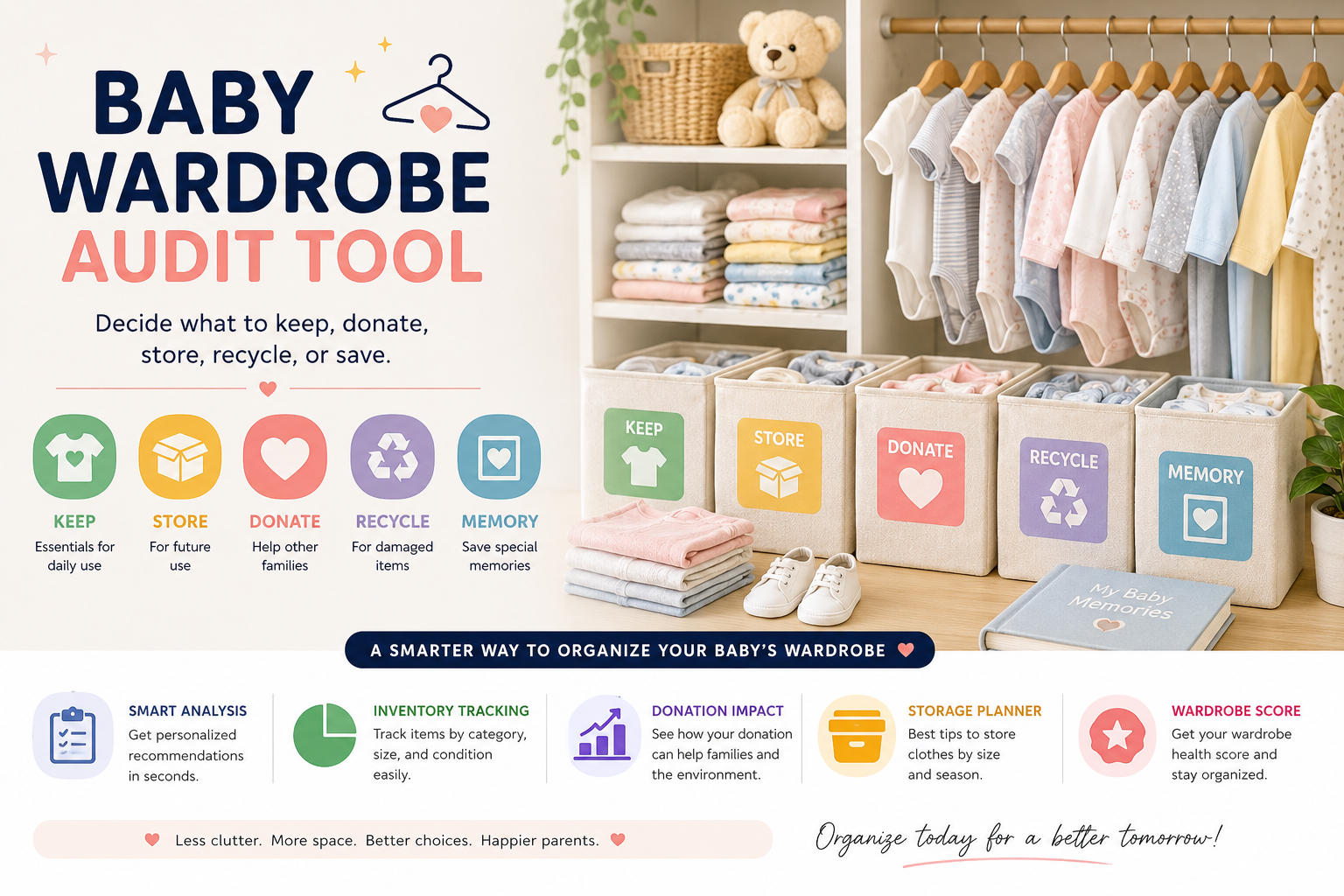
Baby Wardrobe Audit Tool
Find out what baby clothes to keep, donate, store, recycle, or save as memories.
Keep
Store
Donate
Memory Box
Recycle
Table of Contents
Baby Wardrobe Audit Tool: Complete Guide to Organizing Baby Clothes
What Is a Baby Wardrobe Audit?
A baby wardrobe audit is the process of reviewing your baby’s clothing collection to determine which items should be kept, donated, stored, recycled, or saved as keepsakes. Since babies grow rapidly during their first two years, clothes can quickly become too small, resulting in cluttered drawers and closets.
Using a Baby Wardrobe Audit Tool helps parents stay organized, save storage space, and make smarter purchasing decisions for future clothing needs.
Why Should Parents Audit Baby Clothes Regularly?
Babies often outgrow clothing sizes within a few months. Without regular organization, wardrobes can become overcrowded with clothes that no longer fit.
Benefits of a baby wardrobe audit include:
- Reducing household clutter
- Creating more storage space
- Identifying clothes suitable for donation
- Preparing for future growth stages
- Saving money on unnecessary purchases
- Preserving sentimental clothing items
Many parenting experts recommend reviewing baby clothes every three to six months.
What Baby Clothes Should You Keep?
Parents should keep clothing that:
- Fits their baby currently
- Will fit within the next few months
- Is appropriate for the current season
- Is frequently used
- Is in excellent condition
Everyday essentials such as onesies, sleepers, socks, and weather-appropriate outfits should remain easily accessible.
What Baby Clothes Should You Donate?
Donating baby clothes is a great way to help other families while reducing clutter.
Consider donating:
- Outgrown clothing in good condition
- Unused gifts
- Duplicate items
- Clothing no longer needed
Many local charities, shelters, and community organizations accept gently used baby clothing donations.
How to Store Baby Clothes Long Term
Before storing baby clothes:
- Wash all clothing thoroughly.
- Remove stains completely.
- Fold items by size.
- Label storage containers clearly.
- Use airtight bins or vacuum-sealed bags.
Proper storage helps prevent damage from moisture, dust, and pests.
What Should Go Into a Baby Memory Box?
Certain baby clothes hold special sentimental value and may be worth preserving separately.
Popular keepsake items include:
- First hospital outfit
- Coming-home outfit
- First birthday outfit
- Holiday clothing
- Personalized garments
- Handmade baby clothes
A dedicated memory box can help preserve these cherished memories for years.
Benefits of a Capsule Baby Wardrobe
A capsule wardrobe focuses on maintaining only essential clothing items.
Advantages include:
- Easier organization
- Less laundry sorting
- Reduced spending
- Faster outfit selection
- Better storage management
Many parents find that a smaller, well-organized wardrobe is easier to maintain than an oversized collection.
Common Baby Clothing Organization Mistakes
Avoid these common mistakes:
- Keeping every outgrown item
- Storing dirty clothing
- Forgetting seasonal rotation
- Purchasing too many duplicate items
- Mixing sizes together
Regular wardrobe audits help prevent these issues.
Is Your Baby’s Closet Overflowing?
Babies grow surprisingly fast. One week a onesie fits perfectly, and a few weeks later it is already too small. Many parents find themselves with drawers full of clothing that no longer fits, making it difficult to know what should stay, what should be stored, and what should be donated.
Our Baby Wardrobe Audit Tool helps parents make organized decisions quickly. Instead of guessing, you can review every item and receive recommendations based on size, condition, season, and future family plans.
Why Audit Baby Clothes Regularly?
Regular wardrobe reviews help:
- Reduce clutter
- Save nursery storage space
- Prepare for upcoming growth stages
- Make room for new clothing
- Identify donation opportunities
- Preserve sentimental memories
Many families discover they are storing dozens of items that will never be used again. An organized audit can free valuable space while helping other families through donations.
What Should You Keep?
Generally, clothing should remain in your active wardrobe if:
- It currently fits your baby
- It will fit within the next few months
- It is appropriate for the current season
- It is worn frequently
These items should remain easily accessible inside your baby’s dresser or closet.
What Should You Store?
Storage is ideal for:
- Outgrown clothes in excellent condition
- Seasonal items needed next year
- Clothing reserved for younger siblings
- High-quality specialty outfits
Vacuum storage bags and labeled bins can help preserve clothing quality.
What Should You Donate?
Donation candidates include:
- Outgrown everyday clothing
- Duplicate outfits
- Unused gifts
- Items your baby never wore
Donating gently used baby clothes can support local families while reducing household clutter.
What Should Go Into a Memory Box?
Some clothing has emotional significance:
- First outfit home
- First birthday outfit
- Holiday outfits
- Personalized clothing
- Handmade garments
These items may be worth preserving separately from everyday clothing.
Benefits of a Seasonal Wardrobe Review
Experts recommend reviewing baby wardrobes every three to six months. Seasonal reviews help parents stay organized and ensure clothing remains appropriate for current weather conditions and growth stages.
Our Baby Wardrobe Audit Tool simplifies this process and provides practical recommendations in minutes.
FAQ
How often should I audit my baby’s clothes?
Every 3 to 6 months is typically recommended because babies grow quickly during their first years.
Should I keep outgrown baby clothes?
Keep special items or clothes intended for future siblings. Otherwise consider donation or recycling.
What baby clothes should be donated?
Gently used clothing that no longer fits and is unlikely to be used again.
How do I store baby clothes long term?
Wash all items first and place them in labeled storage bins or vacuum-sealed bags.
What should go into a baby memory box?
First outfits, milestone clothing, personalized garments, and sentimental keepsakes.
Final Thoughts
The Baby Wardrobe Audit Tool makes it easier for parents to decide what baby clothes to keep, donate, store, recycle, or save for future children. By regularly reviewing your baby’s wardrobe, you can maintain an organized nursery, reduce clutter, and ensure that every item serves a purpose.