Physical Address
304 North Cardinal St.
Dorchester Center, MA 02124
Physical Address
304 North Cardinal St.
Dorchester Center, MA 02124

It was 11:17 PM. My baby had been asleep for forty-three blissful minutes, I’d finally eaten something that wasn’t cold, and I was standing in the nursery doorway staring at a mountain of onesies, burp cloths, and tiny socks that had somehow multiplied since morning. The washer was empty. The basket was overflowing. And every bone in my body was screaming at me to just go to bed.
If you’ve been there — and let’s be honest, every parent of a baby or toddler has — then this article is for you.
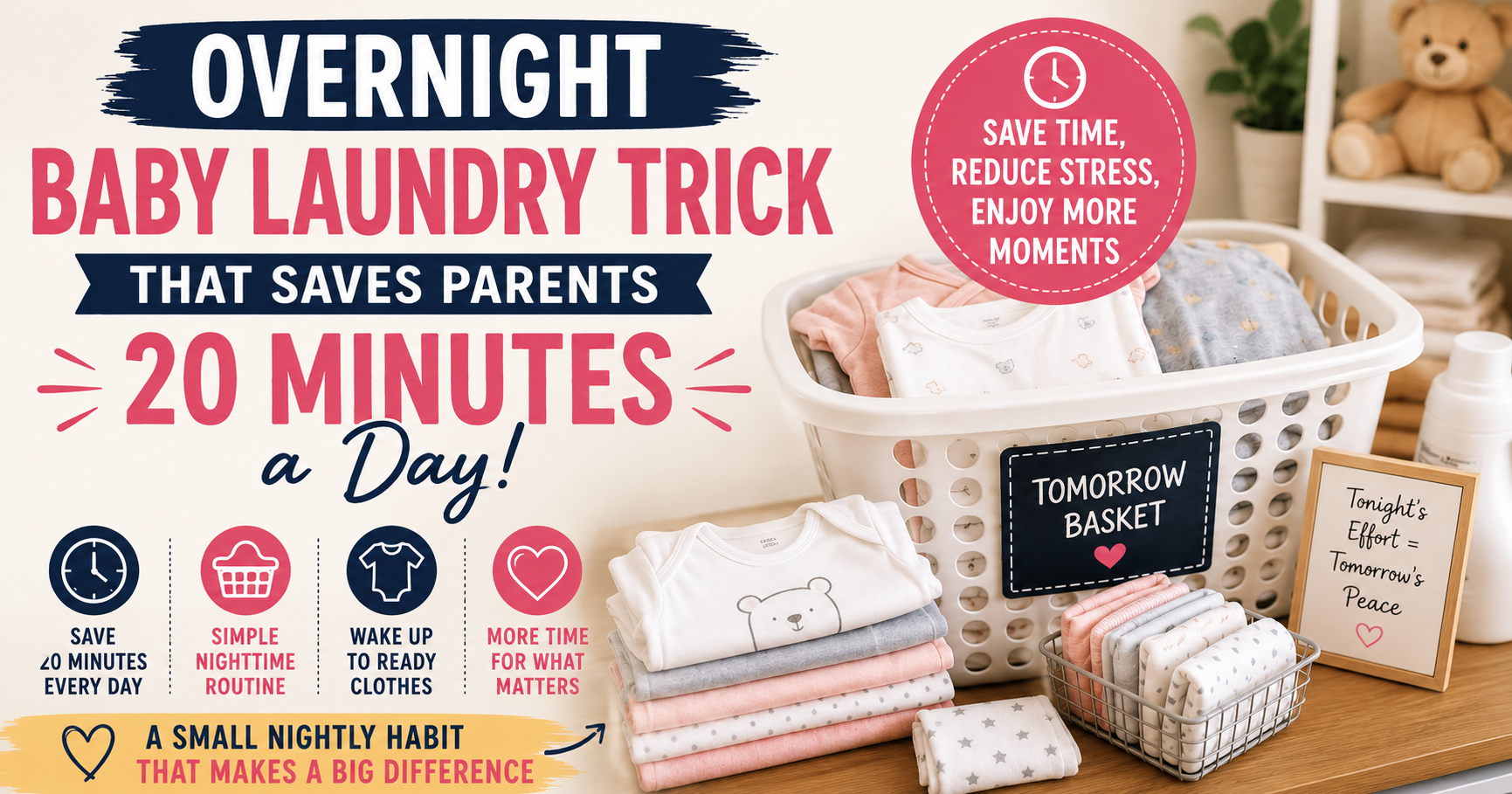
I’m going to walk you through the overnight baby laundry trick that saves parents at least 20 minutes every single day. It’s not magic. It’s not a special product you need to buy. It’s a simple, repeatable system you can start tonight — the one that finally got baby laundry off my mental load for good.
| This isn’t a tips post. This is a complete, step-by-step overnight laundry system built specifically for parents of babies and toddlers — covering sorting, stain treatment, machine timing, folding, and staying consistent. |
Before we get into the trick, let’s acknowledge the thing nobody talks about: baby laundry is psychologically exhausting in a way regular laundry isn’t.
A newborn goes through an average of 2–3 full outfit changes per day — and that’s on a calm day. Add in swaddles, sleep sacks, burp cloths, bibs, and crib sheets and you’re looking at a load every single day or two. That’s not a parenting fail. That’s just babies being babies.
The problem isn’t the laundry itself. It’s the mental effort of deciding when to do it. It’s the interrupted cycle — you start a load, get called away for a feed, forget it for 48 hours, and spend half the day rewashing because it smells musty. It’s the tiny socks that fall behind the dryer. It’s the stained onesie you didn’t notice until it had been baked in by the dryer and is now ruined.
The overnight trick removes all of that decision-making. You do the thinking once, build one habit, and the laundry practically runs itself.
Here’s the core idea in one sentence: You load the washer as part of your bedtime wind-down routine, set a delayed timer so it finishes just before you wake up, and transfer to the dryer first thing in the morning — before your brain is even fully awake.
That’s it. But the magic is in the system around it. Let’s break it down into four phases.
The single biggest time-waster in baby laundry isn’t the washing — it’s the sorting. Most parents throw everything into one basket, then spend five minutes separating it before each load. Over a week, that’s 35 minutes wasted.
The fix? A two-bin nursery sorting system.
Put both bins in or near the nursery. The moment you change an outfit or a bib gets soiled, it goes directly in the correct bin. No thinking. No pile. No sorting later.
| Real parent tip: My second bin became the morning transfer bin — if I stripped the baby’s crib sheets during a nighttime blowout, they went straight in without disturbing the sorted piles. |
| Baby Age | Avg. Daily Outfit Changes | Weekly Laundry Loads | Biggest Culprits |
| Newborn (0–3 months) | 3–4 per day | 5–7 loads | Spit-up, diaper blowouts, swaddles |
| 3–6 months | 2–3 per day | 4–5 loads | Drool, spit-up, sleep sack changes |
| 6–12 months | 2 per day | 3–4 loads | Food introduction, drool bibs, floor play |
| 12–24 months (Toddler) | 1–2 per day | 2–3 loads | Meal mess, outdoor play, potty training |
Here’s the thing about baby stains: yellow spit-up, orange sweet potato, green pea puree, and the dreaded blowout. These stains set if you let them sit dry in a basket overnight. But if you pre-soak them? They lift out almost like magic in the morning wash.
This is the step most parents skip. And it’s the step that will save you from ruined outfits.
If you don’t have time to pre-treat every item individually, fill a small plastic bucket (keep it next to the sorting bin) with cold water and a cap of gentle oxygen-based cleaner. Toss in the most stained items. By morning they’re ready.
| Item | Overnight Soak OK? | Tip |
| Spit-up onesies | Yes | Cold water soak removes most yellowing |
| Food-stained bibs | Yes | Dish soap pre-treat + cold water soak |
| Blowout onesies | Yes (after rinsing) | Rinse solids first, then soak in oxygen cleaner |
| Crib sheets with urine | Wash the same day if possible | Can develop a smell if left too long |
| Muslin swaddles | Yes | No pre-treat needed unless soiled |
| Sleep sacks | Yes | Zip them up before washing to protect zippers |
This is the heart of the system. Once sorting is already done during the day, loading the washer before bed takes under five minutes.
| Note: Always load detergent before using delayed start. Liquid or pod detergents work best for overnight delayed-start cycles. |
| Household Size | Recommended Nights | Load Order |
| Single baby (newborn–3 mo) | Every night or every other night | Baby clothes → baby soft goods → crib sheets |
| Single baby (3–12 mo) | Every other night (3–4x per week) | Alternate: baby clothes / bibs + swaddles |
| Baby + toddler | Baby: Mon/Wed/Fri · Toddler: Tue/Thu | Never mix — different detergents may be needed |
| Single baby + family wash | Baby: Sun/Tue/Thu · Family: Mon/Wed/Sat | Keep baby loads separate always |
This is where most laundry systems collapse. The wash is done but nobody transfers it. Then it sits, gets musty, and you’re rewashing a load you already did.
The overnight trick solves this by making the morning transfer the very first thing you do after you wake up — before coffee, before checking your phone, before anything.
By dinner time, the dryer is done. The fold doesn’t have to be perfect. Baby clothes are tiny and wrinkle-forgiving. Fold only what needs folding. Roll what doesn’t.
| Time | Action | Time Needed |
| Throughout the day | Sort clothes into Bin 1 (outfits) and Bin 2 (soft goods) as changes happen | 30 seconds per change |
| As stains happen | Quick cold rinse + pre-treat + soak in bucket | 1–2 minutes per item |
| 8–10 PM (bedtime routine) | Load washer from Bin 1, add detergent, set delayed start timer | 4–5 minutes |
| Morning wake-up | Transfer washer load to dryer, press start | 90 seconds |
| Dinner time | Remove dry clothes, fold and put away | 8–12 minutes |
| TOTAL DAILY EFFORT | ~15–18 minutes |
| A note on separating baby laundry: Most pediatricians suggest a gentle, fragrance-free detergent is fine for the whole family. But for newborns especially, keeping a dedicated gentle detergent for baby loads is worth it for the first 3–6 months. |
Make it part of a trigger chain. After you turn on the nightlight and turn off the lamp in the nursery, you go to the laundry room. Attach the laundry habit to something you already do every single night without thinking. Within a week it becomes automatic.
Get a timer smart plug. It’s a $10–$15 investment that changes everything. You plug your washer into it, set the app to turn the washer on at 4 AM (so it’s done by 6:30 AM), and the system works exactly the same.
Baby clothes don’t wrinkle the way adult clothes do — onesies and cotton sleep suits are usually fine. But if you’re worried, set a secondary phone alarm for 2 hours after you start the dryer. A 10-minute fluff-no-heat cycle before folding also works wonders.
Give yourself a full week before judging whether it’s working. Every new parenting habit feels clunky at first. This one is worth it.
The overnight baby laundry trick that saves you 20 minutes a day is really four habits stacked together:
The total time? 15–20 minutes of active effort per day. The benefit? Clean, sorted, stain-free baby clothes without the mental overhead of deciding when to deal with it.
You don’t have to do everything at once. Start with the sorting bins tonight. Add the bedtime loading habit in a few days. Build slowly and let the system settle in around you.
You’re already doing the hardest job in the world. Let this one small system take something off your plate.
The overnight baby laundry trick is a four-phase system where you load the washer as part of your bedtime routine, set a delayed start timer, transfer to the dryer in the morning, and fold in the evening. It reduces active laundry effort to under 20 minutes per day by making each step a small, predictable habit rather than a large sporadic task.
Most front-load and top-load washers made after 2015 include a Delay Start or Delay Wash button. Press it to select a delay in hours. If your machine doesn’t have this feature, a timer smart plug (available online for $10–15) plugged between your washer and the wall socket achieves the same result.
For newborns (0–3 months), washing every 1–2 days is typical due to frequent spit-up, diaper leaks, and outfit changes. The overnight system makes this volume manageable by running small daily loads rather than large weekly ones.
For the first 3–6 months, many pediatricians recommend keeping baby laundry separate with a fragrance-free, gentle detergent. After this, if your household uses a gentle, dye-free detergent, mixing is generally considered safe. Babies with eczema or skin sensitivities may benefit from separate washes longer-term.
Rinse the garment immediately in cold water (never hot — it sets protein stains). Apply a small amount of gentle dish soap or oxygen-based stain remover. Place the item in a bowl of cold water to soak overnight. Wash in the morning as part of your regular overnight load. This method lifts most spit-up and food stains without scrubbing.
Look for detergents that are fragrance-free, dye-free, hypoallergenic, and free from optical brighteners. Brands like Dreft (original), All Free & Clear, Seventh Generation Free & Clear, and Attitude Baby are commonly recommended. Always check ingredient labels rather than relying on baby branding alone.
Traditional fabric softeners are generally not recommended for babies under 6 months — they contain fragrances and coatings that may irritate sensitive skin and reduce the absorbency of bibs and burp cloths. Wool dryer balls are a safe, effective alternative that softens fabric and reduces drying time.
Most parents of newborns run 5–7 baby-related loads per week. This includes outfits (3–4 per day), swaddles and sleep sacks (2–3 per week), burp cloths and bibs (daily), and crib sheets (1–2 per week). Volume decreases significantly after 3–4 months.
Use a two-section hamper in or near the nursery — one side for outfits, one side for soft goods. Store onesies and sleepers vertically in drawer organizers so you can see everything at once. Roll burp cloths and swaddles in a basket near the feeding station for easy access during night feeds.
Cold water (30°C / 86°F) is appropriate for most baby clothing — gentle on fabrics, energy-efficient, and works well with modern gentle detergents. Use warm water (40°C / 104°F) for heavily soiled items, crib sheets, and anything used during illness. Avoid hot water for delicate fabrics and items with elastic.