Physical Address
304 North Cardinal St.
Dorchester Center, MA 02124
Physical Address
304 North Cardinal St.
Dorchester Center, MA 02124

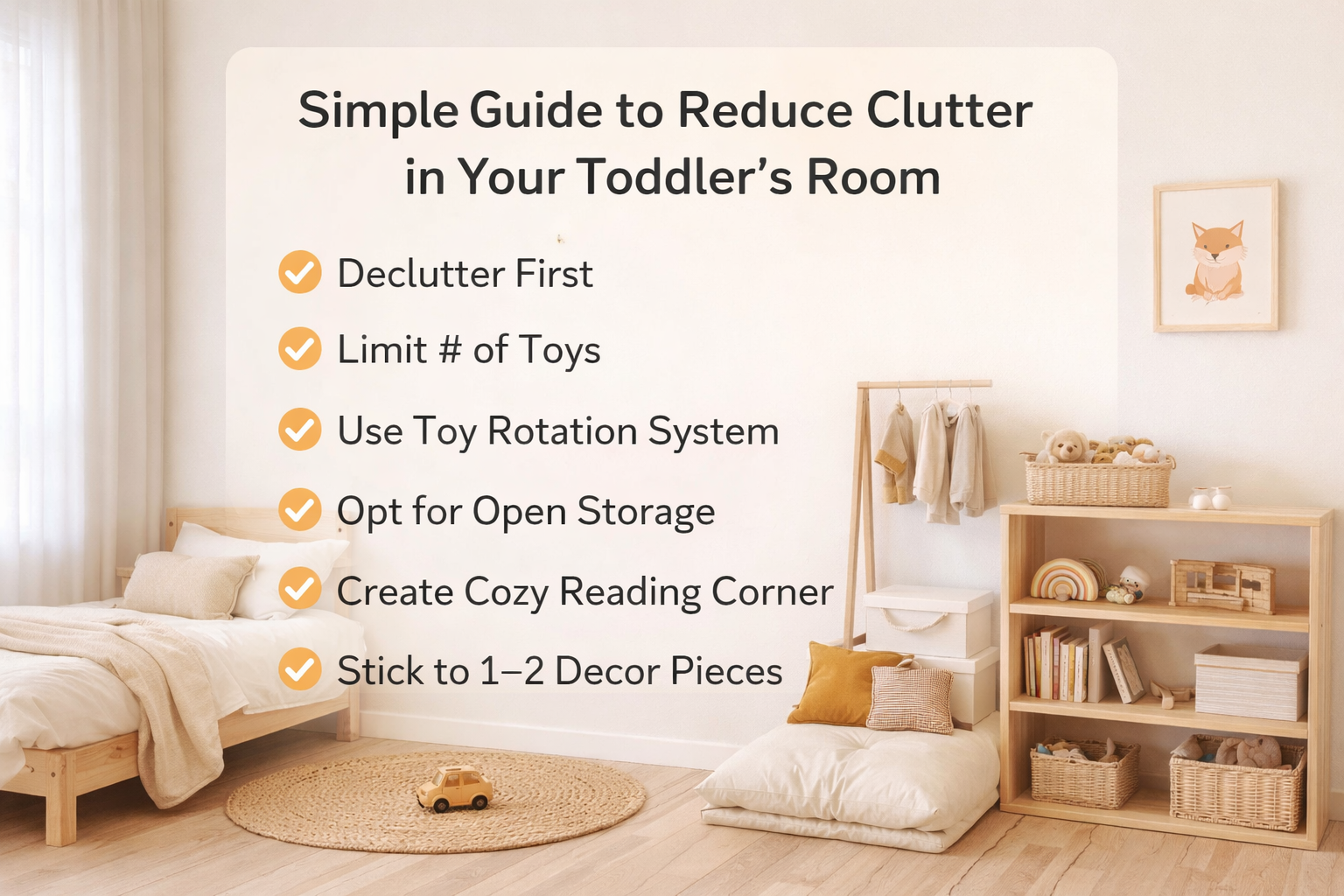
Creating a peaceful space for your toddler can feel impossible when toys, clothes, and random clutter seem to multiply overnight. If you’ve ever walked into your child’s room and instantly felt overwhelmed, you’re not alone.
That’s exactly why more parents are turning to minimalist toddler bedroom ideas—not for aesthetics alone, but for sanity, simplicity, and better daily routines.
In this guide, you’ll learn how to design a clutter-free toddler room that actually works in real life. No unrealistic Pinterest expectations—just practical, parent-tested ideas you can start today.
A minimalist toddler bedroom is a thoughtfully designed space that includes only what your child truly needs.
It focuses on:
Minimalism is not about having an empty room. It’s about removing excess so your child can focus, play better, and sleep peacefully.
Before you start decluttering, it’s important to understand why this approach is so effective.
Too many toys overwhelm toddlers. When everything is available, nothing feels special.
With fewer choices, children:
A minimalist toddler bedroom setup makes it easier for kids to choose activities on their own.
Instead of dumping everything out, they:
Let’s be honest—cleaning a toddler’s room can feel like a never-ending battle.
Minimalism changes that.
With fewer items:
A cluttered room = a busy mind.
A calm, simple bedroom:
The biggest mistake parents make is buying storage instead of removing clutter.
Start fresh.
Take everything out and sort into:
Ask yourself:
If it hasn’t been used in the last 2–3 weeks, it doesn’t need to stay.
Minimalist toddler bedroom ideas rely heavily on smart furniture choices.
The goal is space to move, play, and breathe.
This is the hardest step for most parents—but also the most powerful.
Keep only 8–12 toys visible at a time
Everything else? Store it.
Instead of getting rid of everything, rotate toys.
Your toddler will feel like they’re getting new toys—without buying anything.
Closed boxes often become dumping zones.
Open storage works better for toddlers.
Color plays a huge role in how a room feels.
You can always add warmth with textures like rugs and cushions.
Even a small room can feel organized when divided into zones.
This helps toddlers understand where things belong.
Minimal doesn’t mean boring.
Toddlers live on the floor—so prioritize it.
Remove unnecessary furniture that blocks movement.
If cleaning is complicated, it won’t happen.
Your toddler should be able to clean independently.
Books are important—but too many can overwhelm.
Display them front-facing so covers are visible.
Clothes can easily become clutter.
Store seasonal clothes elsewhere.
Toys will keep coming—from birthdays, relatives, festivals.
Wood, cotton, and neutral fabrics create a calming environment.
They are:
A small reading space can transform your toddler’s routine.
It encourages quiet time and builds a love for books.
Bedtime should feel calm—not stimulating.
That’s enough.
Instead of buying new decor, swap what you already have.
This keeps the room fresh without adding clutter.
Toddlers need a safe space for big emotions.
Minimalism is not about perfect labels and bins.
If it’s too complicated, it won’t last.
Keep systems simple.
Minimalism works only if maintained.
Takes less than 15 minutes.
When I first tried minimalist toddler bedroom ideas, I didn’t go all in.
I removed about half the toys and stored the rest.
Within a week, I noticed:
The biggest surprise?
The room felt calmer—not just for my toddler, but for me too.
If your space is small, minimalism becomes even more powerful.
Less truly becomes more in small spaces.
You don’t need to spend a lot.
Minimalism actually saves money.
Link to:
Around 8–12 toys at a time works best.
Yes, it improves focus, sleep, and behavior.
Every 7–10 days.
Absolutely—kids engage more with fewer toys.
Minimalist toddler bedroom ideas are not about having less for the sake of it.
They’re about:
Start small.
Even reducing clutter by 30% can completely change how your toddler’s room feels.
And once you experience the difference, you won’t want to go back.