Working from Home with a Toddler in the Same Room: Complete Survival Guide
Working from home with a toddler in the same room is one of the most challenging yet common realities for modern parents. Balancing meetings, deadlines, and childcare can feel overwhelming—but with the right strategies, it’s absolutely manageable.
This comprehensive guide is designed to help you stay productive, reduce stress, and support your toddler’s development—all at the same time.
Quick Answer
How do you work from home with a toddler in the same room?
- Create a flexible daily routine
- Set up a safe, engaging play area nearby
- Use independent play activities
- Schedule work during naps or screen time
- Communicate boundaries clearly
- Rotate toys to maintain interest
- Lower expectations and prioritize tasks
Table of Contents
Why Working from Home with a Toddler is Challenging
Working from home with a toddler in the same room requires constant multitasking. Toddlers naturally seek attention, exploration, and interaction.
Key Challenges:
- Short attention spans
- Frequent interruptions
- Emotional dependency
- Noise during meetings
- Limited independent play skills
According to the American Academy of Pediatrics (AAP), toddlers thrive on interaction and routine—both of which conflict with traditional work demands.
Early Signs You Need a Better System
If you’re struggling, here are signs your current setup isn’t working:
- You feel constantly distracted
- Your toddler becomes more clingy
- Work deadlines are slipping
- Increased stress or burnout
- Frequent tantrums during work hours
Recognizing these early helps you adjust before burnout hits.
Setting Up Your Space for Working from Home with a Toddler in the Same Room
Creating a structured environment is the first step.
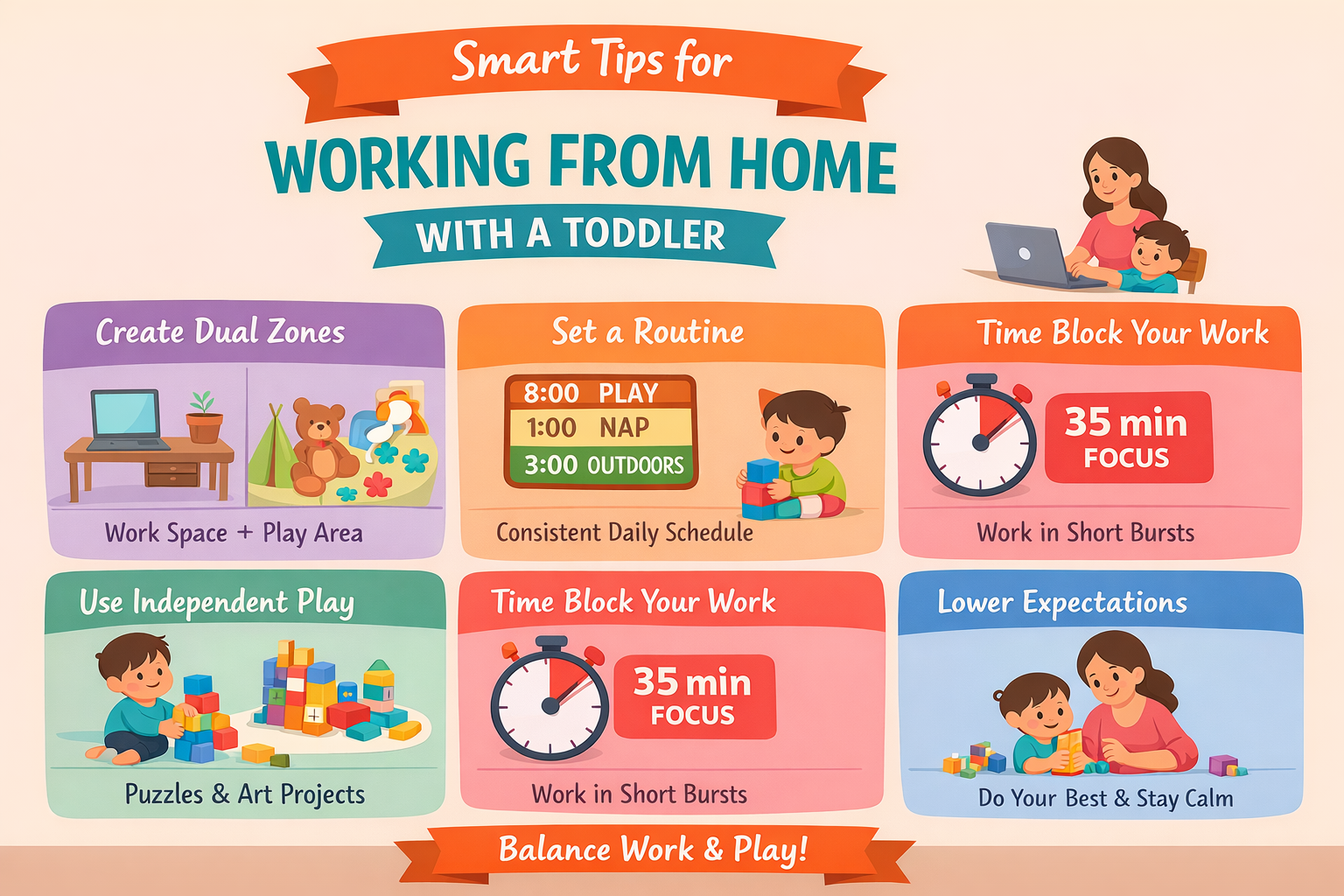
1. Create a “Dual Zone” Setup
Divide your room into:
- Work zone (desk, laptop)
- Toddler zone (toys, mat, books)
2. Use Visual Boundaries
Toddlers respond well to:
- Rugs
- Playpens
- Low shelves
3. Keep Essentials Nearby
- Snacks
- Water
- Diapers
- Favorite toys
Daily Routine for Working from Home with a Toddler in the Same Room
Consistency reduces chaos.
Sample Routine Table
| Time | Activity | Parent Focus |
|---|---|---|
| 7:00 AM | Wake up & breakfast | Light planning |
| 8:00 AM | Independent play | Deep work |
| 9:30 AM | Snack + interaction | Break |
| 10:00 AM | Educational toys | Meetings |
| 12:00 PM | Lunch | Rest |
| 1:00 PM | Nap time | Focused work |
| 3:00 PM | Outdoor/active play | Light tasks |
| 5:00 PM | Family time | End work |
Best Activities While Working from Home with a Toddler in the Same Room
Independent Play Ideas
- Stacking blocks
- Puzzle boards
- Coloring books
- Sensory bins
Low-Supervision Activities
- Water play (with supervision)
- Sticker books
- Toy rotation baskets
Screen Time (When Needed)
The World Health Organization (WHO) recommends limited, high-quality screen time.
Working from Home with a Toddler in the Same Room During Meetings
Meetings are often the hardest part.
Solutions:
- Schedule during nap time
- Use headphones with a mic
- Prepare a “meeting toy box”
- Mute when not speaking
Managing Deadlines and Productivity
Use the “3 Priority Rule”
Focus on:
- 1 major task
- 2 smaller tasks
Time Blocking
Work in:
- 25–45 minute intervals
Accept Imperfection
Productivity will look different—and that’s okay.
Real-Life Parenting Situations
Situation 1: Toddler Interrupts a Call
Solution:
Give a toy + acknowledge briefly + redirect.
Situation 2: Tantrum During Work
Solution:
Pause work. Emotional needs come first.
Situation 3: No Nap Day
Solution:
Switch to low-focus tasks.
Common Mistakes Parents Make
- Expecting full productivity
- Ignoring toddler’s need for attention
- Overusing screens
- Skipping routines
- Not preparing activities in advance
Expert Tips for Working from Home with a Toddler in the Same Room
- Rotate toys weekly
- Wake up earlier than your toddler
- Use “special work-time toys”
- Communicate expectations (even if they don’t fully understand)
- Build a support system
Safety & Health Notes
- Avoid small choking hazards
- Ensure electrical safety
- Maintain proper posture while working
- Take breaks to reduce stress
According to the CDC, parental stress can impact child behavior—so self-care matters.
FAQ Section
Is working from home with a toddler in the same room possible?
Yes, with structure, routines, and realistic expectations.
How do I stay productive while working from home with a toddler in the same room?
Use time blocking, prioritize tasks, and align work with nap times.
What activities keep toddlers busy while working from home?
Puzzles, sensory bins, coloring, and rotating toys.
How much screen time is okay?
Follow WHO guidelines—limited, high-quality content.
How do I handle interruptions during meetings?
Prepare toys, mute mic, and stay flexible.
Can toddlers learn independent play?
Yes, gradually with practice and encouragement.
What if my toddler refuses to play alone?
Start with short intervals and build up.
Is it stressful working from home with a toddler?
Yes, but manageable with proper systems.
How do I create a routine?
Follow consistent daily patterns with flexibility.
Should I hire help?
If possible, even part-time help can improve balance.
Read Also
- 17 Smart Tips: Finding Hobbies as a Mum When You’re Always Tired
- 21 Realistic Self-Care Ideas for Parents with Zero Time
- Screen time rules for kids
- Best indoor activities for toddlers
- Work-life balance for parents
External Authority Sources
- World Health Organization (WHO)
- Centers for Disease Control and Prevention (CDC)
- American Academy of Pediatrics (AAP)
- Mayo Clinic
- American College of Obstetricians and Gynecologists (ACOG)
Conclusion
Working from home with a toddler in the same room is not about perfection—it’s about balance. By creating routines, setting realistic expectations, and prioritizing both your work and your child’s needs, you can build a system that works for your family.
Remember, this phase is temporary—but the bond you build during this time is lasting.
Medical Disclaimer
This article is for informational purposes only and does not replace professional medical or psychological advice. Always consult a pediatrician or healthcare provider for concerns about your child’s development or behavior.