Physical Address
304 North Cardinal St.
Dorchester Center, MA 02124
Physical Address
304 North Cardinal St.
Dorchester Center, MA 02124

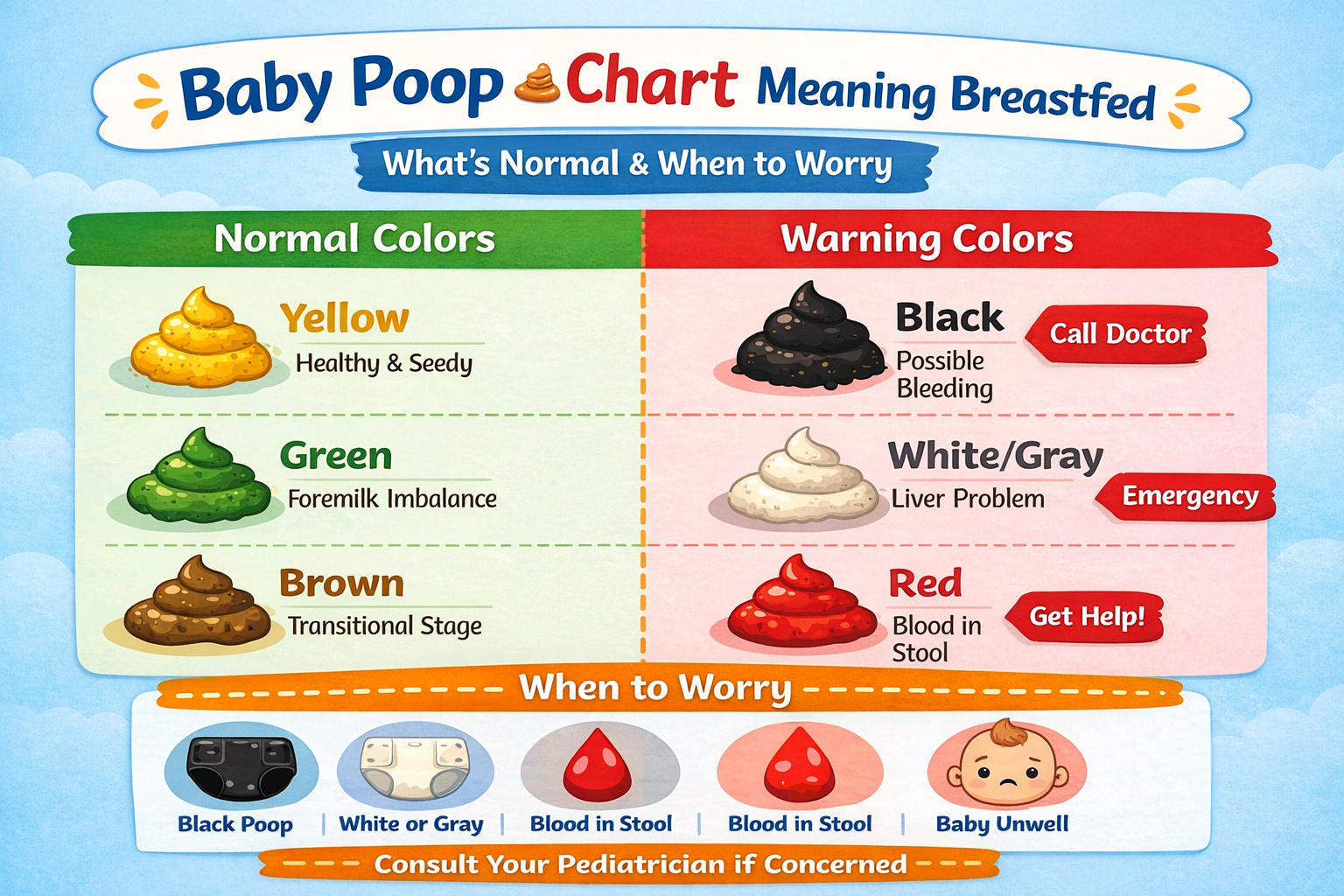
Baby poop color chart meaning breastfed is one of the most searched concerns among new parents—and honestly, I get it. The first few weeks after bringing your baby home are filled with tiny surprises… and yes, a lot of diaper checking.
One day it’s mustard yellow, the next it looks greenish, and suddenly you’re wondering, “Is this normal or should I call the doctor?”
If you’re breastfeeding, your baby’s poop will look very different compared to formula-fed babies. That’s completely natural. But knowing what’s normal—and what’s not—can save you unnecessary stress (and help you act quickly when needed).
In this detailed guide, you’ll learn:
Let’s break it down step-by-step so you can feel confident every time you open that diaper.
What does baby poop color mean for breastfed babies?
👉 Most breastfed baby poop is soft, yellow, and slightly grainy.
In the first few days, your baby passes meconium—a sticky, black substance.
After that, breastfed baby poop typically becomes:
💡 Real-life note: Many parents panic seeing “seeds” in poop—but those are just milk fat particles, completely normal.
This is the gold standard.
✔️ No action needed
Green poop is common but depends on context.
Possible reasons:
✔️ Usually normal
⚠️ Monitor if persistent with fussiness
✔️ Completely normal
⚠️ Warning sign
👉 Contact pediatrician immediately
🚨 Serious condition
👉 Immediate medical attention required
Possible causes:
👉 Always consult a doctor
Understanding the baby poop color chart meaning breastfed becomes easier when you know the causes:
💡 Example: Eating leafy greens or iron supplements can slightly affect color.
👉 Always look at the overall pattern, not just one diaper.
Your baby suddenly has green poop for 2 days.
✔️ Likely cause: feeding imbalance
✔️ Solution: Ensure longer feeding on one breast
✔️ Still normal if baby is active and feeding well
⚠️ Could be minor tear or allergy
👉 Monitor + consult doctor
| Color | Meaning | Action Needed |
|---|---|---|
| Mustard Yellow | Healthy digestion | No |
| Green | Diet/milk imbalance | Monitor |
| Brown | Transitional | No |
| Black | Possible bleeding | Yes |
| White/Gray | Liver issue | Urgent |
| Red | Blood presence | Yes |
👉 Trust your instincts—if something feels off, check with a pediatrician.
💡 Always observe patterns, not isolated changes.
✔️ Breastfed poop is naturally more variable
According to global health organizations like:
👉 Breastfed babies typically have frequent, soft stools in early months.
⚠️ Any sudden drastic change + baby discomfort = medical check
It explains how different stool colors indicate a breastfed baby’s health and digestion.
Yes, usually normal but monitor if frequent.
This is the most normal and healthy stool type.
If it’s black, white, or contains blood.
Yes, certain foods can slightly change stool color.
It varies—multiple times daily or once every few days.
Yes, if baby is otherwise healthy.
Possible bleeding—seek medical advice.
Possible foremilk imbalance.
It may slightly affect consistency, not usually color.
Understanding the baby poop color chart meaning breastfed gives you confidence as a parent. Most color changes are completely normal—but knowing the warning signs can make all the difference.
Remember:
Parenting isn’t about perfection—it’s about awareness. And you’re already doing a great job by learning this.
This article is for informational purposes only and does not replace professional medical advice. Always consult a pediatrician for concerns about your baby’s health.