Physical Address
304 North Cardinal St.
Dorchester Center, MA 02124
Physical Address
304 North Cardinal St.
Dorchester Center, MA 02124

Learning to identify baby overstimulated signs and how to calm a fussy infant is a rite of passage for every new parent. Whether it is a crowded family gathering or a loud toy, a baby’s nervous system can easily become overwhelmed by the world around them.
When a baby receives more sensory input—sights, sounds, or touch—than their developing brain can process, they reach a breaking point. This often leads to the dreaded “witching hour” or inconsolable crying. Understanding these cues is not just about peace and quiet; it is about supporting your baby’s neurological development and emotional regulation.
In this comprehensive guide, we will dive deep into the physiological triggers of overstimulation, provide a step-by-step calming roadmap, and share expert advice from the AAP and Mayo Clinic to help you navigate these sensitive moments with confidence.
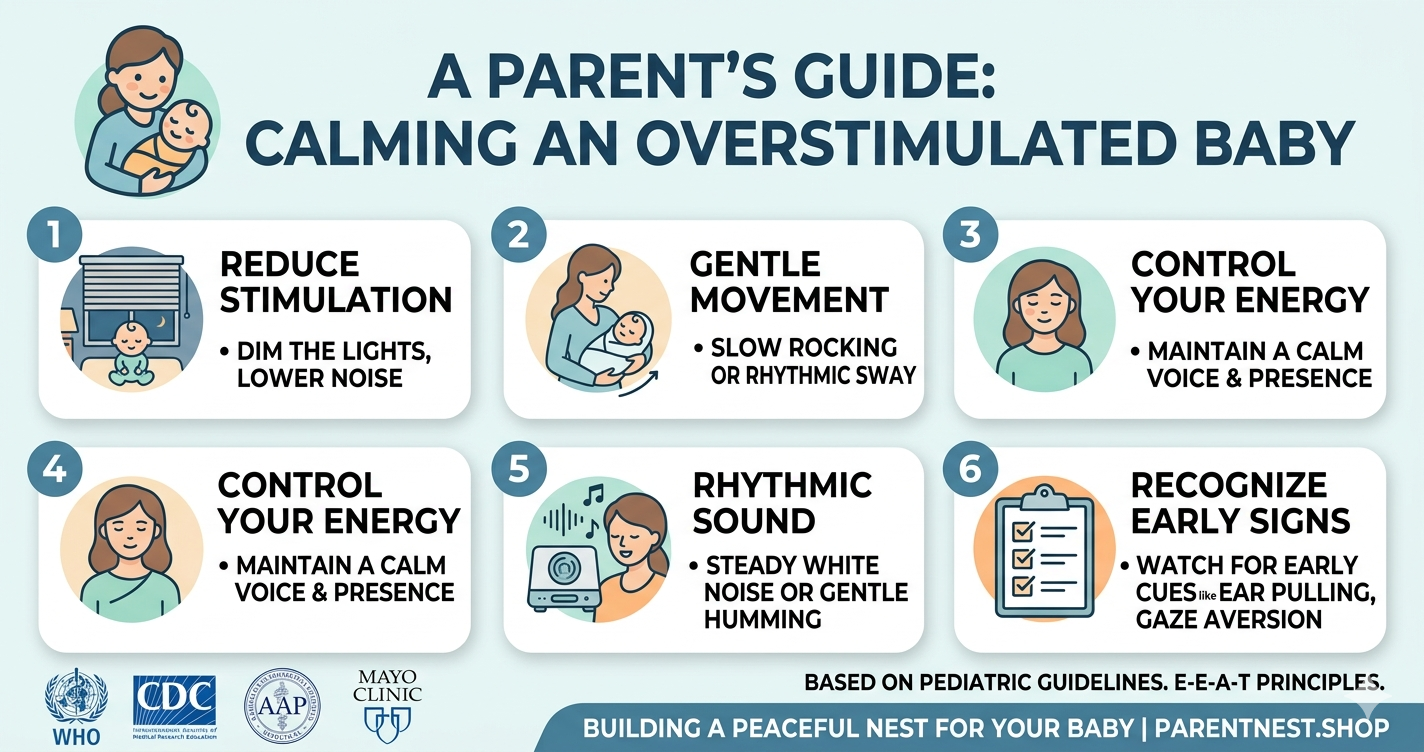
To spot baby overstimulated signs, look for jerky movements, ear pulling, turning away from faces, or intense, high-pitched crying. To calm your baby:
Overstimulation occurs when a baby’s five senses—sight, hearing, smell, taste, and touch—are bombarded with more information than their immature nervous system can handle. Unlike adults, who can filter out background noise or bright lights, infants take in everything at once.
According to the American Academy of Pediatrics (AAP), a baby’s brain is rapidly forming neural connections. When the environment becomes too “loud” (metaphorically or literally), the baby enters a “fight or flight” state.
Early detection is the key to preventing a full-blown meltdown. Look for these subtle and overt cues:
The infant brain lacks a fully developed Prefrontal Cortex, the area responsible for emotional regulation. Instead, their Amygdala—the brain’s alarm system—runs the show.
When a baby is overstimulated, their body releases cortisol and adrenaline. These “stress hormones” make it physically impossible for the baby to fall asleep, creating a cycle of “overtired and overstimulated” that many parents find difficult to break.
If you notice your baby is hitting their limit, follow this 4-Step Soothing Protocol:
Immediately remove the baby from the environment. Go to a room with:
For newborns, swaddling provides “deep pressure therapy,” which lowers the heart rate. For older infants, skin-to-skin contact releases oxytocin, the “love hormone,” which naturally counteracts cortisol.
Use a white noise machine or a rhythmic “shhh-shhh” sound. This mimics the sound of blood rushing through the placenta, which is a familiar and comforting sound for infants.
Avoid vigorous rocking. Instead, use a slow, steady sway. Place your hand on the baby’s chest and breathe deeply; babies often “entrain” or sync their breathing to yours.
| Feature | Overstimulation | Hunger | Colic |
| Primary Trigger | Noise, lights, crowds | Time since last feed | Unknown/Digestive |
| Body Language | Arching away, turning head | Rooting, sucking fists | Drawing knees to chest |
| Cry Sound | Frantic, high-pitched | Rhythmic, “neh” sound | Inconsolable, long duration |
| Best Solution | Dark room, quiet | Feeding | Gentle tummy massage |
While baby overstimulated signs and how to calm them are part of normal development, always consult a pediatrician if:
Nighttime overstimulation usually looks like “fighting sleep.” Calm them by keeping the bedtime routine extremely boring—low lights and no talking.
Yes! To a newborn, a human face is a complex landscape of information. If they look away, give them a break.
It typically takes 15–30 minutes for cortisol levels to drop once you enter a quiet environment.
No. Tantrums are goal-oriented (wanting a toy). Overstimulation is a physical collapse of the nervous system.
Explain that the baby’s “battery” is drained and they need a quiet recharge period to stay happy.
Yes, white noise provides a consistent auditory “blanket” that masks startling outside sounds.
In extreme cases, the stress of intense crying can trigger a gag reflex.
No. Overstimulation is a stress response. The baby needs your help to regulate their nervous system.
Mastering the art of identifying baby overstimulated signs and how to calm your little one is one of the most valuable skills in your parenting toolkit. By observing the subtle shifts in your baby’s body language—like looking away or clenching fists—you can intervene before the stress becomes overwhelming.
Remember, every baby is different. What overstimulates one infant might be perfectly fine for another. Trust your instincts, prioritize a calm environment, and know that providing a safe, quiet space is exactly what your baby needs to thrive.
Medical Disclaimer: The information in this article is for educational purposes only and does not substitute for professional medical advice. Always consult your pediatrician regarding your child’s health.