Physical Address
304 North Cardinal St.
Dorchester Center, MA 02124
Physical Address
304 North Cardinal St.
Dorchester Center, MA 02124

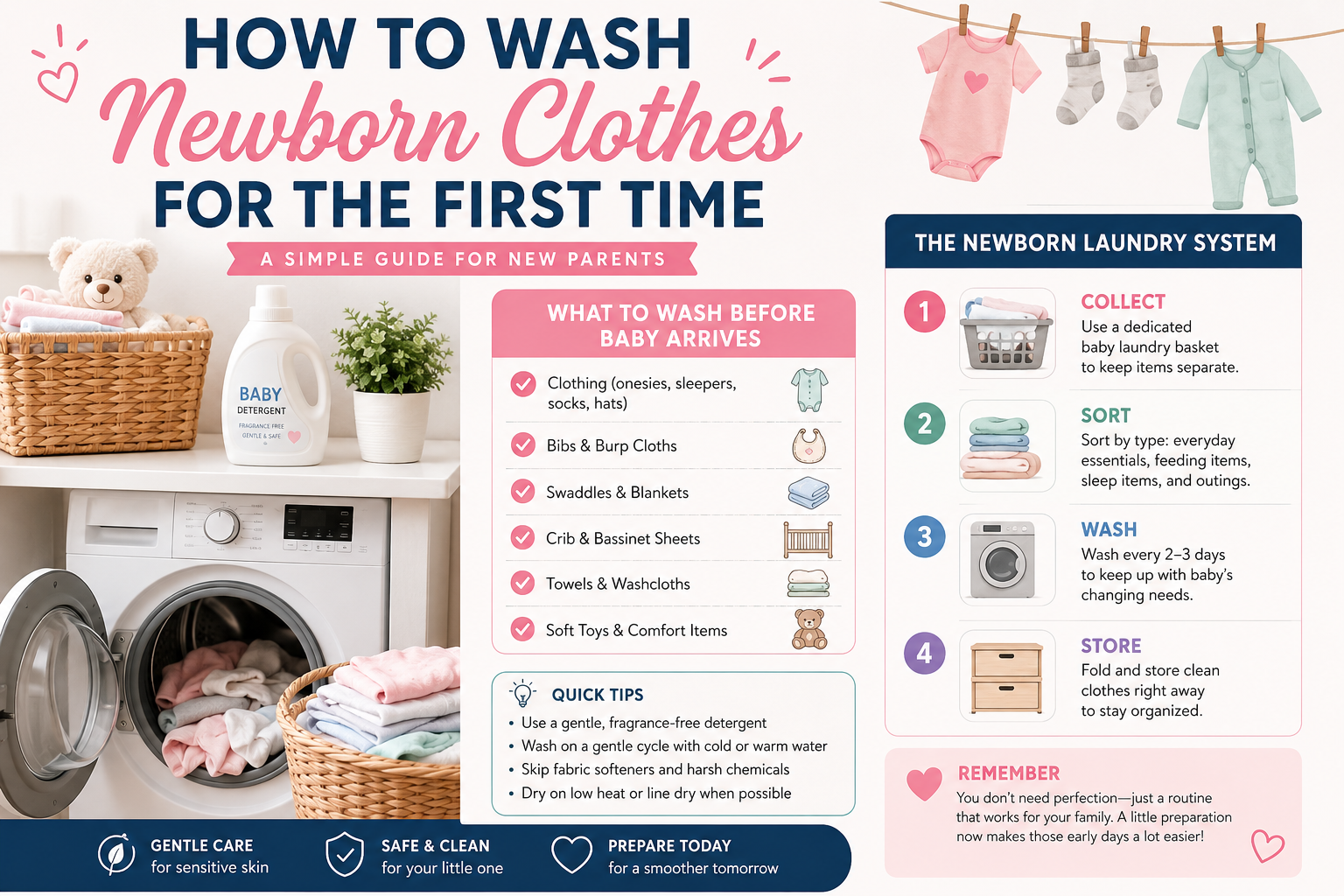
There’s something magical about folding tiny onesies and stacking newborn sleepers in the nursery drawer. But before any of those soft little outfits touch your baby’s skin, there’s one step that often gets overlooked in the newborn prep rush: washing them first.
And no, this isn’t overprotective new-parent anxiety. It’s actually one of the most important things you can do in those final weeks before your baby arrives – or in those bleary-eyed first days at home.
New clothes – even the ones still in packaging – carry manufacturing residues, chemical finishing agents, dyes, and dust from warehouse storage. For adult skin, none of that matters much. But a newborn’s skin is up to 30% thinner than an adult’s, absorbs substances more easily, and has an immune system still learning to handle the world. That tiny body is worth a 45-minute wash cycle.
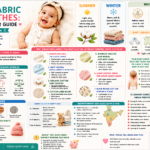
Quick answer: Yes, wash all newborn clothes before the first use. Use a fragrance-free, dye-free detergent. Wash in warm water (30-40 degrees C) and rinse twice. Air dry or tumble dry on low. Do this for new, gifted, and second-hand items alike.
Brand-new baby clothes often contain:
Here’s the exact process to use – whether you’re prepping the nursery at 37 weeks or washing a quick outfit at 3am because the hospital bag is already packed.
Sort into three piles: delicates (thin cotton, muslin, lace trim), everyday items (onesies, sleepsuits, leggings), and anything that says ‘hand wash only’ on the label. You’ll wash these differently.
Newborn clothing labels are tiny, but they matter. Here’s a quick reference:
| Symbol | What It Means | What to Do |
| Tub with 30 | Wash at 30 degrees C | Use a cool-to-warm cycle |
| Tub with 40 | Wash at 40 degrees C | Standard warm wash – safe for most cotton |
| Hand in tub | Hand wash only | Soak 10 min in sink, squeeze gently |
| Circle with X | Do not tumble dry | Air dry flat or on a rack |
| Iron with dots | Low heat iron only | Skip iron entirely for newborns if possible |
This is where a lot of first-time parents get confused. The baby detergent aisle is overwhelming, and marketing claims don’t always tell the full story.
| Detergent Type | Good for Newborns? | What to Watch For |
| Fragrance-free, dye-free baby detergent | Yes – first choice | Check for optical brighteners |
| Natural/plant-based detergent | Yes – if fragrance-free | ‘Natural fragrance’ still means fragrance – avoid for newborns |
| Sensitive skin adult detergent | Often yes | Must be fragrance and dye-free to qualify |
| Regular family detergent | No – for newborns | Contains optical brighteners, fragrance, enzymes |
| Fabric softener / dryer sheets | No | Skip entirely for the first 6 months |
Parent tip: Don’t assume that ‘baby’ on the label means it’s better. Some popular baby detergents still contain synthetic fragrances. Flip the bottle and look for: fragrance-free, no optical brighteners, no dyes. Three boxes ticked? You’re good.
For most newborn clothing, 30-40 degrees C (86-104 degrees F) is the sweet spot. Warm enough to lift residues, cool enough to protect delicate fabrics and prevent shrinking. Avoid hot water on cotton unless the label specifically allows it – that tiny sleepsuit will come out two sizes smaller.
Select your machine’s ‘delicate,’ ‘gentle,’ or ‘baby’ cycle if available. If your machine doesn’t have one, use the shortest normal cycle with reduced spin speed. A long, aggressive spin cycle can damage embroidered details and stretch neckholes.
This is the step most guides skip – but it matters. Run a second rinse cycle to remove any detergent residue left in the fabric. Even the gentlest baby detergents can leave traces that irritate sensitive skin if not fully rinsed out. Many modern machines have an ‘extra rinse’ option; use it every time for newborn laundry.
Two options work well for newborn clothes:
Freshly washed clothes should go into a clean drawer or closet. A quick wipe with a damp cloth before loading the nursery drawers is worth the two minutes. Dust in drawer liners can undo all your washing effort.
Your baby shower probably generated a mountain of gorgeous gifted clothing. And maybe a well-meaning relative dropped off a bag of hand-me-downs. All of it needs washing before it goes on your baby – even if it was ‘freshly washed’ by whoever gave it to you.
Treat exactly like brand-new store-bought clothing. Manufacturing residues are still present regardless of how thoughtfully the gift was wrapped. Follow the full 8-step process above.
Add these extra steps before the standard wash:
Real talk: Most hand-me-down baby clothes are perfectly fine – babies grow so fast they’re barely worn. But the other family’s detergent residue is still in those fibres. Two washes removes it completely.
If there’s a family history of eczema, skin allergies, or you’ve been told your baby has particularly sensitive skin, take the following extra precautions from day one:
If your baby develops a rash after wearing newly washed clothing, change the detergent first before assuming it’s a fabric allergy. Detergent residue causes more skin reactions in newborns than the fabric itself.
Just as important as the how-to – here’s what to avoid. These are the mistakes that catch out even the most prepared first-time parents.
| Common Mistake | Why It’s a Problem | What to Do Instead |
| Using regular adult laundry detergent | Contains optical brighteners, synthetic fragrance, and enzymes that irritate newborn skin | Use fragrance-free, baby-safe detergent |
| Skipping the pre-wash on new clothes | Chemical finishing agents remain on fabric | Always wash before first use – no exceptions |
| Washing on hot | Shrinks cotton, damages elastics, fades prints | 30-40 degrees C for most newborn items |
| Using fabric softener or dryer sheets | Coats fabric with fragrance and softening chemicals that absorb into skin | Skip softeners until at least 6 months |
| Only one rinse cycle | Detergent residue remains in fabric and touches baby’s skin all day | Always run a double rinse |
| Drying on high heat | Damages delicate fabrics, can leave elastic scratchy or warped | Low heat or air dry |
| Storing in unclean drawers | Dust recontaminates freshly washed items | Wipe drawers before loading |
| Mixing with adult laundry | Adult clothing carries heavy fragrance and deodorant residue | Wash baby items separately for first 3 months |
One of the things nobody tells you before having a baby: newborns generate a truly impressive amount of laundry. A newborn can go through 3 to 8 outfit changes a day in the early weeks. Setting up a small but functional laundry routine before your baby arrives will save your sanity when you’re running on four hours of sleep.
| Frequency | Task | Time Needed |
| Every day | Collect dirties into a mesh laundry bag kept in the nursery | 2 minutes |
| Every 2-3 days | Run onesies, sleepsuits, bibs, muslins on gentle 40 degrees C with double rinse | 5 min + wash cycle |
| Weekly | Wash bedding and sleep sacks separately | 5 min + wash cycle |
| As needed | Emergency blowout washes: cold rinse first, then 40 degrees C with enzyme-free detergent | Immediate |
Pro tip: Buy a second mesh laundry bag and keep one inside the nappy bag for outings. Blowout at the park? Separate it immediately from clean clothes. Future you will be grateful.
Newborn stains are a category of their own. Meconium, milk protein, and spit-up create stains that can set fast if you’re not prepared.
Use this checklist every time you do the first wash for any new baby clothing:
Yes. New clothing contains manufacturing chemicals including formaldehyde-based resins, synthetic dyes, and finishing agents. A newborn’s skin is significantly thinner and more permeable than adult skin, making them more sensitive to these residues. One wash removes the vast majority of surface chemicals.
Look for a detergent that is fragrance-free, dye-free, and free from optical brighteners. Many brands sell ‘baby’ versions that meet these criteria. For eczema-prone babies, choose a preservative-free formula too. Avoid fabric softeners and dryer sheets for at least the first 6 months.
For the first 3 months, yes. Adult clothing carries fragrance residue, deodorant, and other chemicals that transfer during washing. After 3 months, most parents combine loads once baby’s skin has toughened up slightly.
Yes, on the lowest heat setting. Place delicate items in a mesh laundry bag. Remove clothes while still slightly damp to prevent shrinkage. Never tumble dry on high heat.
Rinse immediately in cold water – never hot, as heat sets the stain permanently. Soak in cold water for 30 minutes, apply a baby-safe stain remover, leave for 10 minutes, then wash at 40 degrees C.
Yes. Sealed packaging prevents dust but not the manufacturing chemicals already embedded in the fabric. The sealing happens after treatment – so finishing agents, dyes, and residues are still present regardless of packaging.