Physical Address
304 North Cardinal St.
Dorchester Center, MA 02124
Physical Address
304 North Cardinal St.
Dorchester Center, MA 02124

The house feels quiet.
Too quiet.
Your newborn is in your arms, and suddenly it hits you — it’s just you. No nurse. No partner. No family member nearby.
If you are searching for how to take care of newborn baby alone, you are not weak. You are brave.
Many parents find themselves caring for a newborn solo, whether by choice, work schedules, or life circumstances. This guide will walk you through everything you need — feeding, sleep, safety, emotional health — with calm, expert-backed advice.
You can do this. And I will show you how
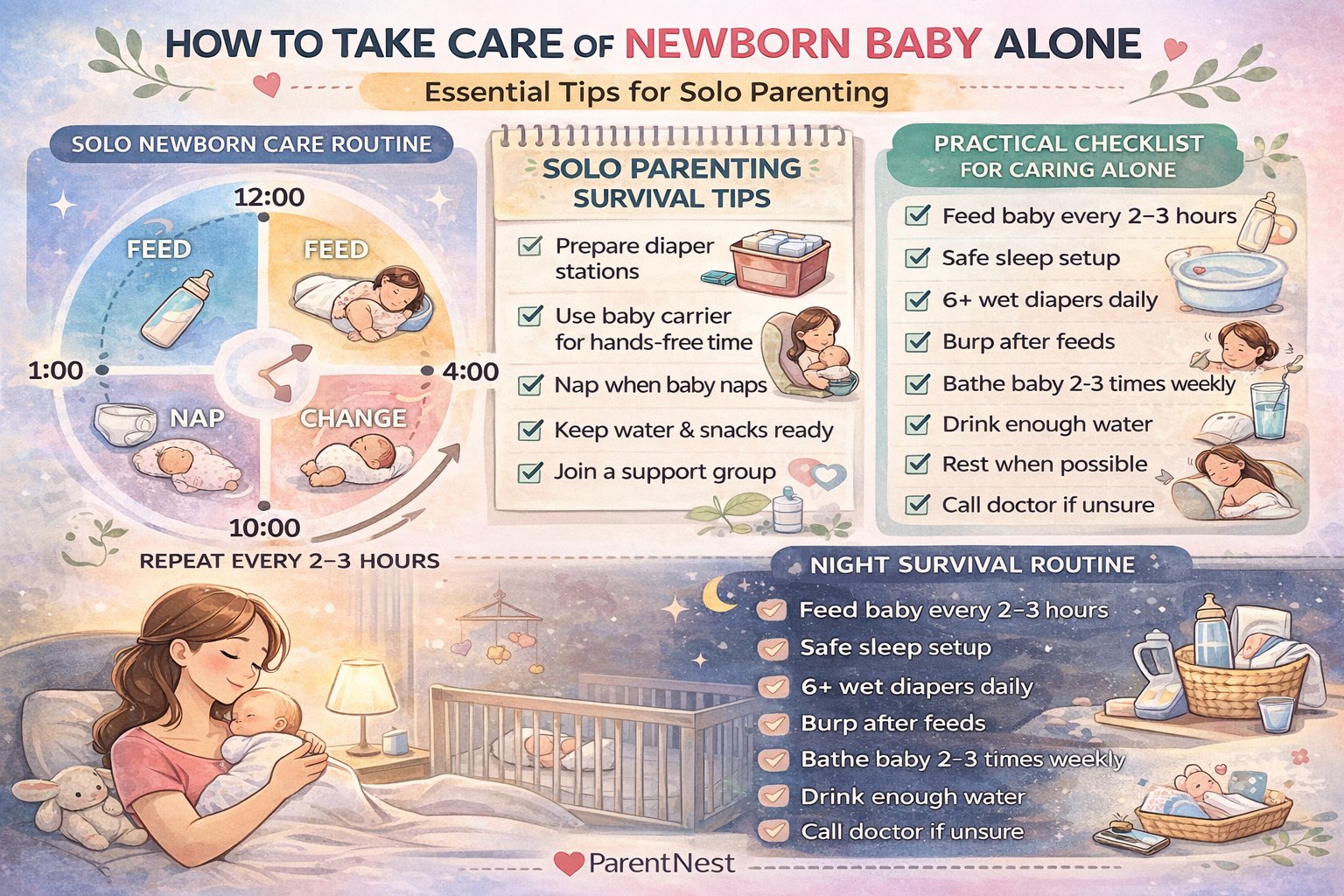
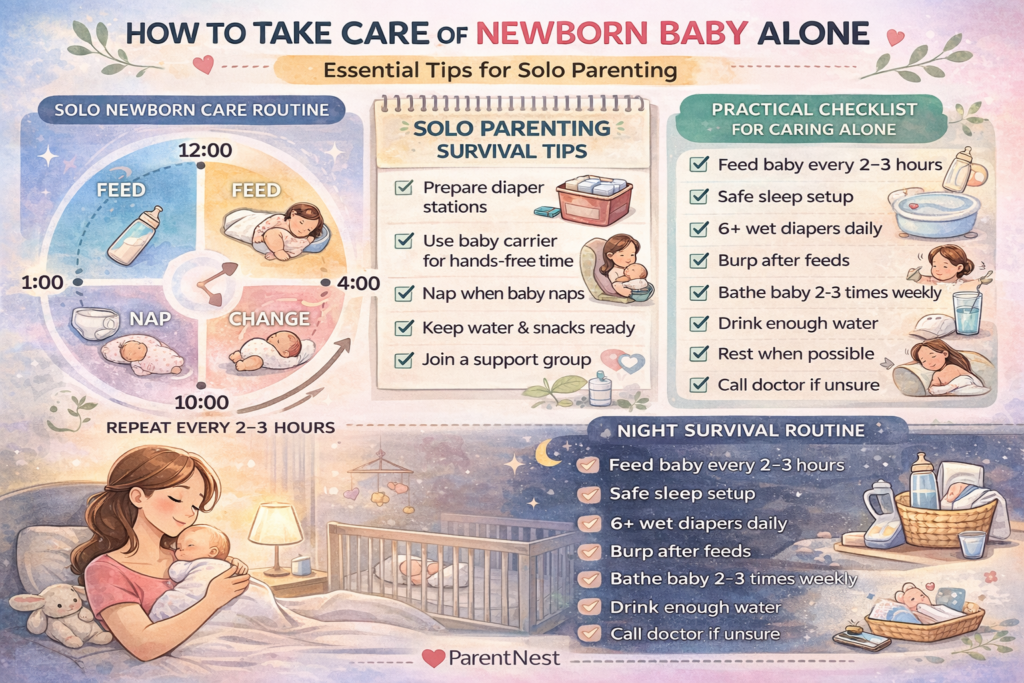
To take care of a newborn baby alone, focus on four essentials: feeding every 2–3 hours, safe sleep practices, diaper care and hygiene, and asking for support when needed. Create a simple daily routine, prepare supplies in advance, and prioritize your own rest and mental health.
Caring for a newborn alone can feel intense because newborns depend on you for everything.
According to the World Health Organization, newborns need:
The key is not perfection. The key is meeting basic needs consistently.
Before focusing on routines, create a safe environment.
The CDC recommends:
This reduces risk of sleep-related accidents.
Keep within reach:
When caring alone, convenience reduces stress.
Newborns eat every 2–3 hours.
Whether breastfeeding or bottle-feeding, consistency matters.
The Mayo Clinic notes newborns typically nurse 8–12 times daily.
Tips:
If you’re unsure, Read our complete baby care guide for feeding basics.
Sleep deprivation is real.
Newborns sleep 14–17 hours daily but wake often.
According to HealthyChildren.org, waking every 2–4 hours is normal.
Small systems protect your energy.
Newborns need 8–12 diaper changes daily.
The NHS advises:
It falls off in 1–3 weeks.
All babies cry.
Sometimes for clear reasons. Sometimes not.
Common causes:
If baby continues crying:
If you feel overwhelmed, place baby safely in crib and take 2–3 minutes to breathe.
The American Academy of Pediatrics emphasizes never shaking a baby.
Newborns do not follow strict schedules.
Instead, use a flexible pattern:
Feed → Burp → Change → Sleep → Repeat
This rhythm reduces chaos.
Write down:
Tracking builds confidence.
This is where many parents struggle.
Your health matters.
The National Institutes of Health explains postpartum recovery requires rest and nutrition.
You are not selfish for needing support.
You are human.
Contact a professional if baby has:
Trust your instinct.
Prepare before bed:
Consider shifts if someone can help occasionally.
If alone, completely simplify everything.
No extra chores. No pressure.
✔ Feeding every 2–3 hours
✔ 6+ wet diapers daily
✔ Safe sleep setup
✔ Burping after feeds
✔ Clean umbilical care
✔ Rest when possible
✔ Hydrate yourself
✔ Ask for help if overwhelmed
You don’t need to do everything perfectly.
Also, Read our complete baby care guide and explore newborn sleep basics for deeper support.
These tools simplify solo caregiving.
These numbers show you are not alone in your experience.
Yes, with safe sleep, feeding, and hygiene practices.
Every 2–3 hours, or on demand.
Nap when baby naps and simplify chores.
Check basic needs. If overwhelmed, place baby safely and breathe.
Yes, if baby is safely in crib.
8–12 is common.
If you feel exhausted, emotionally distressed, or unsure about baby’s health.
Learning how to take care of newborn baby alone is not about becoming superhuman.
It’s about small, consistent care.
Feed. Change. Comfort. Rest.
Your baby does not need perfection. Your baby needs you.
And you are already enough.
Whenever you feel unsure, return to ParentNest. We are walking this journey with you.