
Introduction
Outdoor activities for toddlers age 2 are essential for healthy growth, brain development, and emotional well-being. At this stage, toddlers are naturally curious, energetic, and eager to explore the world around them. Fresh air, sunlight, and movement play a crucial role in strengthening their immune system, improving motor skills, and encouraging creativity.
Many parents struggle with keeping their toddlers engaged outdoors without relying on screens or structured classes. The good news? You don’t need expensive toys or complicated setups. Simple, age-appropriate outdoor activities can provide powerful developmental benefits while creating joyful bonding moments.
In this guide, you’ll discover expert-approved outdoor activities, practical parenting tips, safety advice, and real-life examples to help you confidently plan outdoor playtime for your toddler.
Quick Answer Box
What are the best outdoor activities for toddlers age 2?
The best outdoor activities for toddlers age 2 include:
- Nature walks
- Water play
- Sandbox digging
- Ball games
- Bubble chasing
- Chalk drawing
- Obstacle courses
- Gardening
These activities improve physical development, coordination, creativity, and social skills while keeping toddlers active and happy.
Table of Contents
Why Outdoor Activities Matter for Toddlers
Outdoor play is not just fun—it’s foundational.
According to the World Health Organization, toddlers need at least 180 minutes of physical activity daily. Outdoor activities naturally encourage movement, exploration, and sensory learning.
Benefits include:
- Stronger muscles and bones
- Better sleep patterns
- Reduced screen dependency
- Improved mood and behavior
Developmental Benefits Explained
Physical Development
Running, jumping, and climbing strengthen gross motor skills.
Cognitive Growth
Exploring nature stimulates curiosity and problem-solving.
Emotional Well-being
Outdoor play reduces stress and tantrums.
Social Skills
Playing outside encourages interaction and communication.
Experts from the American Academy of Pediatrics emphasize that unstructured outdoor play is critical for early brain development.
15 Best Outdoor Activities for Toddlers Age 2
1. Nature Walk Adventures
Let your toddler explore leaves, stones, and flowers.
Parent Tip: Ask questions like “What color is this leaf?”
2. Water Play Fun
Set up a small tub or bucket.
Benefits:
- Sensory stimulation
- Fine motor skills
3. Sandbox Digging
Encourages creativity and imagination.
4. Bubble Chasing
Simple yet incredibly engaging.
5. Ball Rolling & Kicking
Improves coordination and balance.
6. Sidewalk Chalk Drawing
Boosts creativity and early writing skills.
7. Mini Obstacle Course
Use pillows, cones, or toys.
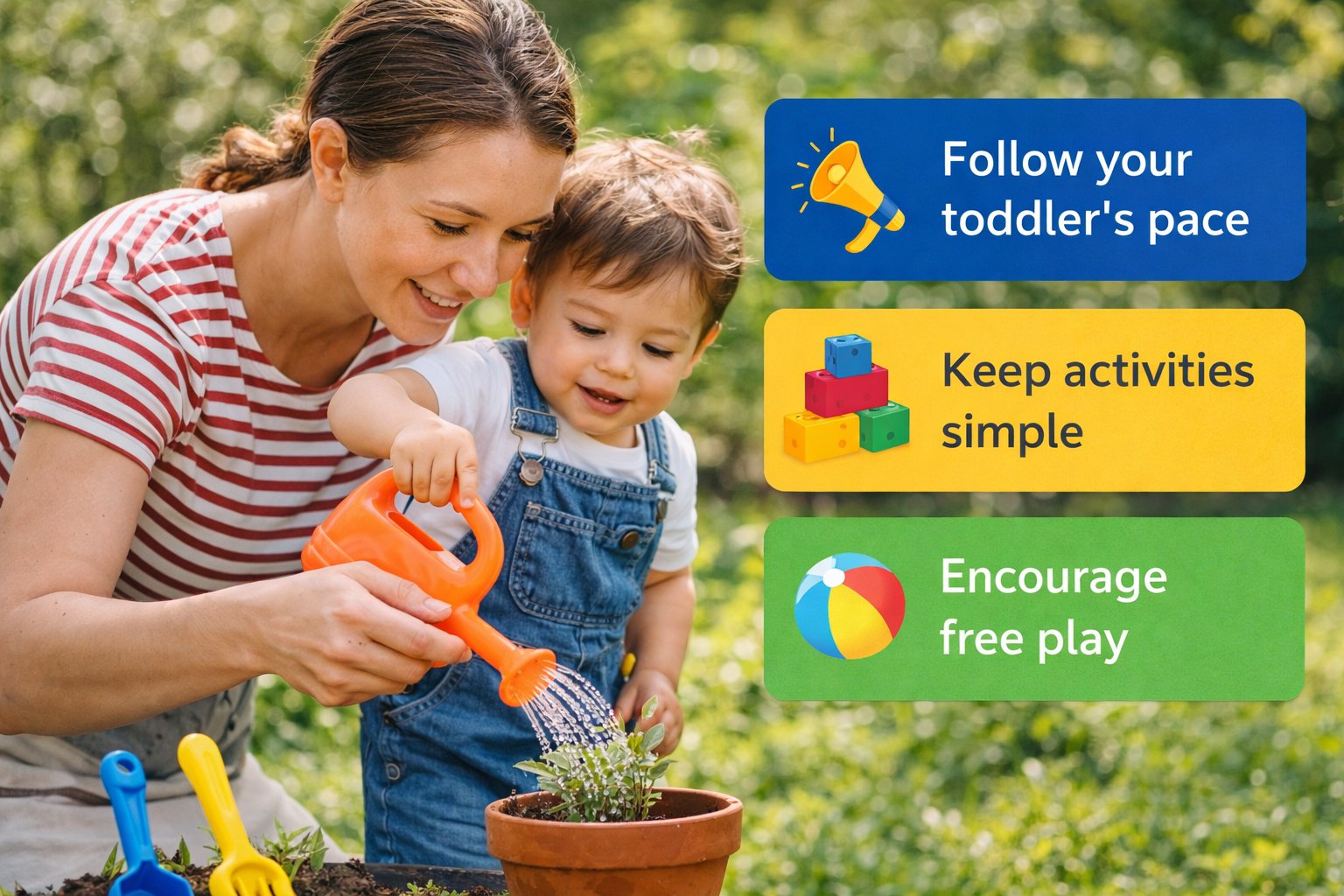
8. Gardening Together
Let toddlers water plants or dig soil.
9. Ride-On Toys
Improves leg strength and coordination.
10. Treasure Hunt
Hide toys and let them find them.
11. Music & Movement Outdoors
Dance to songs in open space.
12. Animal Watching
Visit parks and observe birds or dogs.
13. Picnic Playtime
Combine eating and outdoor fun.
14. Sensory Path Walking
Create paths with grass, sand, and stones.
15. Push & Pull Toys
Encourage walking and balance.
Signs Your Toddler Needs More Outdoor Activities
Watch for these signs:
- Increased irritability
- Poor sleep
- Excess screen time
- Low energy levels
Step-by-Step Activity Planning Guide
Step 1: Choose a safe outdoor space
Step 2: Pick 2–3 simple activities
Step 3: Keep sessions short (20–30 mins)
Step 4: Follow your toddler’s interest
Step 5: Stay flexible and patient
Comparison Table of Activities
| Activity | Skill Developed | Energy Level | Setup Needed |
|---|---|---|---|
| Nature Walk | Observation | Low | None |
| Water Play | Sensory Skills | Medium | Bucket |
| Ball Play | Coordination | High | Ball |
| Chalk Drawing | Creativity | Low | Chalk |
| Obstacle Course | Motor Skills | High | Toys |
Common Mistakes Parents Make
- Over-scheduling activities
- Expecting structured play
- Ignoring weather conditions
- Not supervising properly
- Forcing participation
Expert Tips for Parents
- Follow your toddler’s pace
- Keep activities simple
- Encourage free play
- Rotate activities to avoid boredom
- Join the play—your presence matters
Safety & Health Notes
Guidelines from the Centers for Disease Control and Prevention:
- Use sunscreen
- Ensure hydration
- Avoid extreme weather
- Supervise constantly
- Check play areas for hazards
FAQ Section
What are the best outdoor activities for toddlers age 2?
Simple activities like water play, walking, and ball games are ideal.
How long should toddlers play outside daily?
At least 2–3 hours spread throughout the day.
Are outdoor activities safe for toddlers age 2?
Yes, with proper supervision and safety measures.
What if my toddler refuses outdoor play?
Start small and make it fun with familiar toys.
Can outdoor play improve sleep?
Yes, it helps regulate sleep cycles.
What are low-cost outdoor activities for toddlers age 2?
Nature walks, bubbles, and chalk drawing.
How do outdoor activities help brain development?
They stimulate sensory and cognitive growth.
What should toddlers wear outdoors?
Comfortable, weather-appropriate clothing.
Can outdoor play reduce tantrums?
Yes, it improves mood and reduces stress.
Read Also
- 7 Powerful Daily Routine for Toddlers That Works
- 9 Powerful Baby Brain Development Activities Parents Must Try
- Baby crawling exercises
- Best first foods for babies
- Baby monitor safety guide
External Authority Sources
- World Health Organization (WHO)
- Centers for Disease Control and Prevention (CDC)
- American Academy of Pediatrics (AAP)
- Mayo Clinic
- ACOG
Conclusion
Outdoor activities for toddlers age 2 are one of the most powerful ways to support your child’s physical, emotional, and cognitive development. By incorporating simple, fun, and safe outdoor play into your daily routine, you can nurture curiosity, build strong bonds, and create lasting memories.
Start small, stay consistent, and enjoy every moment of outdoor exploration with your toddler.
Medical Disclaimer
This article is for informational purposes only and is not a substitute for professional medical advice. Always consult a pediatrician for health-related concerns.