
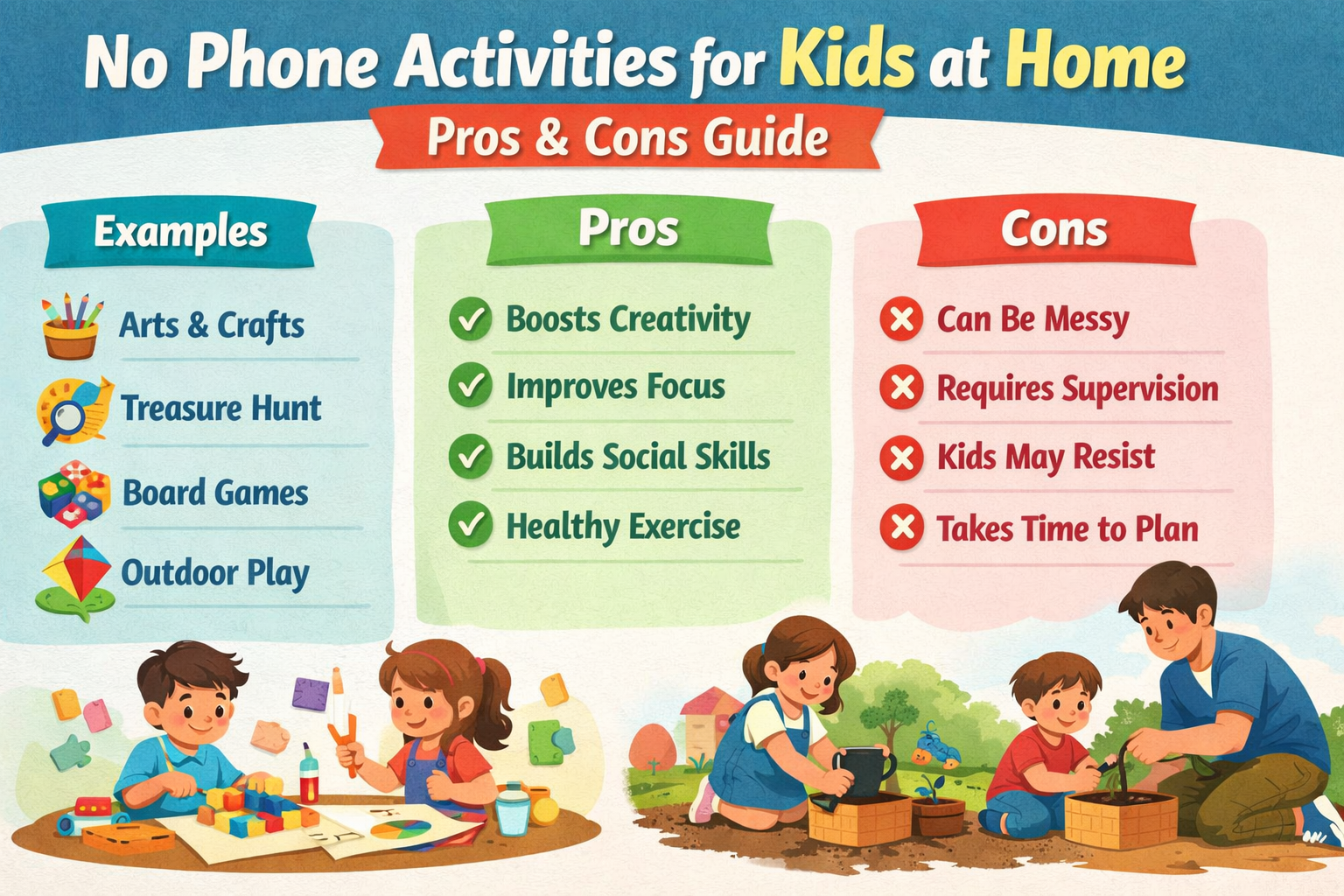
Introduction
No phone activities for kids at home are becoming more important than ever in today’s screen-dominated world. As parents, we often rely on phones to keep kids busy—but too much screen time can impact sleep, behavior, and development.
I remember one evening when my toddler refused dinner because he was glued to a screen. That moment made me rethink everything. Like many parents, I needed simple, effective, and fun alternatives that didn’t involve phones or tablets.
The good news? You don’t need expensive toys or complicated plans.
This guide will walk you through practical, creative, and research-backed no phone activities for kids at home that support brain development, emotional bonding, and physical growth.
Whether you’re dealing with boredom, tantrums, or just want healthier routines—this article has everything you need.
Quick Answer Box
What are the best no phone activities for kids at home?
The best no phone activities for kids at home include:
- Creative play (drawing, crafts)
- Physical games (obstacle courses, dancing)
- Learning activities (puzzles, reading)
- Sensory play (water play, sand play)
- Imaginative play (role-playing, storytelling)
These activities improve focus, creativity, and emotional development while reducing screen dependency.
Table of Contents
Why Screen-Free Activities Matter
Excessive screen exposure has been linked to:
- Delayed speech development
- Sleep disturbances
- Reduced attention span
- Behavioral issues
Pediatric experts recommend limiting screen time, especially for younger children.
Replacing screen time with meaningful activities helps build:
- Stronger parent-child bonds
- Better emotional regulation
- Improved creativity
Benefits of No Phone Activities for Kids at Home
- 🧠 Boosts brain development
- 🎨 Enhances creativity
- 💪 Improves physical health
- ❤️ Strengthens family bonding
- 😌 Reduces anxiety and overstimulation
15 Best No Phone Activities for Kids at Home
1. Arts & Crafts Time
Let kids draw, paint, or create DIY crafts.
👉 Real-life tip: Give them old magazines and glue—they’ll stay busy for hours.
2. Indoor Treasure Hunt
Hide toys and give clues.
This improves:
- Problem-solving
- Memory skill
3. Build a Fort
Use pillows, blankets, and chairs.
Kids LOVE this—it’s simple and magical.
4. Storytelling & Role Play
Act out stories or pretend games.
Example:
- Doctor & patient
- Kitchen play
5. Puzzle Time
Puzzles improve focus and patience.
6. Dance Party
Play music and let them move freely.
7. Cooking Together
Simple tasks like:
- Mixing
- Washing veggies
8. Reading Corner
Create a cozy reading space.
9. Sensory Play (Water, Rice, Sand)
Perfect for toddlers.
10. DIY Science Experiments
Simple experiments like:
- Baking soda volcano
11. Coloring Challenges
Give themes like:
“Draw your dream house”
12. Gardening
Even small pots work.
13. Board Games
Teaches patience and rules.
14. Exercise Games
Jumping, crawling, obstacle course.
15. Music & Singing Time
Boosts language development.
Activity Comparison Table
| Activity Type | Age Group | Benefits | Time Needed |
|---|---|---|---|
| Arts & Crafts | 2–8 yrs | Creativity | 30–60 min |
| Puzzle Games | 3–10 yrs | Focus & logic | 20–40 min |
| Sensory Play | 1–5 yrs | Brain development | 15–30 min |
| Role Play | 2–7 yrs | Social skills | 20–60 min |
| Physical Games | All ages | Fitness & coordination | 15–45 min |
Age-Based Activity Guide
Toddlers (1–3 years)
- Sensory play
- Music & dancing
- Simple stacking games
Preschoolers (3–5 years)
- Role play
- Coloring
- Storytelling
School-age Kids (5+)
- Puzzles
- Science experiments
- Board games
Common Mistakes Parents Make
- Using screens as a “default babysitter”
- Expecting kids to play independently too early
- Not rotating activities
- Overcomplicating simple play ideas
💡 Expert Tips
- Rotate toys weekly (keeps things fresh)
- Create a daily routine
- Join your child in activities
- Keep it simple—kids don’t need perfection
🏥 Safety & Health Notes
- Avoid small choking hazards
- Supervise water play
- Ensure safe materials (non-toxic)
- Balance active & calm activities
FAQ Section
What are the best no phone activities for kids at home?
Creative play, puzzles, and physical games are best.
How do I reduce screen time for my child?
Gradually replace screen time with engaging activities.
Are no phone activities good for brain development?
Yes, they improve creativity, focus, and problem-solving.
How many hours should kids play without screens?
At least 2–4 hours of active play daily.
What indoor activities keep kids busy?
Arts, puzzles, and role play work best.
Are no phone activities better than educational apps?
Yes, they offer real-world learning and interaction.
How do I entertain kids without gadgets?
Use simple games, storytelling, and physical play.
Can toddlers benefit from no phone activities for kids at home?
Absolutely—they are crucial for early development.
Read Also
- How to Burp a Baby: The Gentle Trick That Stops Gas, Crying, and Sleepless Nights
- 15 Powerful Newborn Parenting Tips That Make Early Parenting Easier
- Baby development by age
- Screen time effects on kids
- Parenting tips for toddlers
External Authority Sources
- WHO – Screen time guidelines
- CDC – Child development
- Mayo Clinic – Child behavior
- AAP – Pediatric recommendations
Conclusion
No phone activities for kids at home are not just alternatives—they are essential for healthy development. From creative play to physical movement, these activities help your child grow mentally, emotionally, and physically.
Start small. Stay consistent.
And remember—your presence matters more than any screen.
Medical Disclaimer
This content is for informational purposes only and does not replace professional medical advice. Always consult a pediatrician for concerns.