
Growth Scan in Which Month of Pregnancy? A Complete Parent-Friendly Guide
Growth scan in which month of pregnancy is a common question many expecting parents ask after their first few ultrasounds. If you’re pregnant or supporting someone who is, understanding the right timing for this scan can reduce anxiety and help you prepare confidently for the months ahead.
A growth scan is typically done in the third trimester, most commonly between 28 and 32 weeks, though some providers repeat it around 36 weeks depending on medical needs. It evaluates your baby’s size, weight, movement, amniotic fluid levels, and placental function.
In this medically reviewed and parent-focused guide, we’ll explain:
- When the growth scan is done
- Why doctors recommend it
- What the results mean
- When extra scans may be needed
- Expert-backed safety insights
- Practical advice for parents
This guide references trusted authorities including the World Health Organization, Centers for Disease Control and Prevention, Mayo Clinic, American College of Obstetricians and Gynecologists, and the American Academy of Pediatrics.
Quick Answer Box
Growth scan in which month of pregnancy is done?
A growth scan is usually performed in the 7th or 8th month of pregnancy (28–32 weeks). It helps assess the baby’s growth, weight, amniotic fluid, and placental health. Some women may need additional growth scans at 36 weeks if medically indicated.
Table of Contents
What Is a Growth Scan?
A growth scan is a third-trimester ultrasound that measures how well your baby is developing inside the womb.
It checks:
- Baby’s head size (HC)
- Abdominal circumference (AC)
- Femur length (FL)
- Estimated fetal weight (EFW)
- Amniotic fluid levels
- Placental position
- Blood flow (if Doppler is used)
Unlike the early dating scan or anomaly scan, this one focuses specifically on whether your baby is growing at a healthy rate.
Growth Scan in Which Month of Pregnancy Is Done?
Most doctors schedule the growth scan in:
| Pregnancy Weeks | Month | Purpose |
|---|---|---|
| 28–30 weeks | 7th month | First growth assessment |
| 30–32 weeks | 7th–8th month | Standard growth monitoring |
| 36 weeks | 9th month | Final growth & delivery planning |
So if you’re wondering growth scan in which month of pregnancy, the most common answer is:
- 7th or early 8th month
However, timing may vary depending on:
- High-risk pregnancy
- Gestational diabetes
- High blood pressure
- Twin pregnancy
- Previous small or large baby
Why the Third Trimester?
During the third trimester:
- Babies gain weight rapidly
- Brain and lung development accelerates
- Amniotic fluid levels change
- Placenta performance becomes critical
This is why doctors rely on a growth scan to ensure everything is progressing normally.
Why Is Growth Scan Important?
Understanding growth scan in which month of pregnancy matters because timing affects early detection of potential issues.
It Helps Detect:
- Intrauterine Growth Restriction (IUGR)
- Macrosomia (large baby)
- Low amniotic fluid (oligohydramnios)
- Excess fluid (polyhydramnios)
- Placental insufficiency
- Cord blood flow problems
According to guidance supported by ACOG, growth ultrasounds are especially useful in high-risk pregnancies.
What Happens During the Growth Scan?
The procedure is:
- Non-invasive
- Painless
- Takes 20–40 minutes
Step-by-Step Process
- You lie on an examination table.
- Gel is applied on your abdomen.
- A transducer moves across your belly.
- Images appear on the monitor.
- Measurements are taken digitally.
You may see:
- Baby’s face
- Movements
- Heartbeat
- Practice breathing motions
What Do Growth Scan Results Mean?
Doctors interpret results using percentiles.
| Percentile | Meaning |
|---|---|
| Below 10th | Smaller than expected |
| 10th–90th | Normal growth range |
| Above 90th | Larger than average |
Remember:
A small baby does not always mean a problem. Some babies are genetically small.
Your provider will compare:
- Previous scans
- Fundal height
- Maternal health
- Blood flow studies
When Are Extra Growth Scans Needed?
If you’re still wondering growth scan in which month of pregnancy might be repeated, here are common reasons:
High-Risk Conditions:
- Gestational diabetes
- Preeclampsia
- Twin pregnancy
- Previous stillbirth
- Reduced baby movements
Doctors may perform scans every 2–4 weeks for monitoring.
Growth Scan vs Other Pregnancy Scans
| Scan Type | When Done | Purpose |
|---|---|---|
| Dating Scan | 6–10 weeks | Confirm due date |
| NT Scan | 11–14 weeks | Chromosomal screening |
| Anomaly Scan | 18–22 weeks | Structural abnormalities |
| Growth Scan | 28–32 weeks | Growth & fluid check |
Common Mistakes Parents Make
- Assuming one growth scan guarantees everything is perfect.
- Comparing baby weight with friends.
- Ignoring reduced fetal movements.
- Googling percentile charts without medical context.
- Skipping follow-up scans.
Expert Tips for Parents
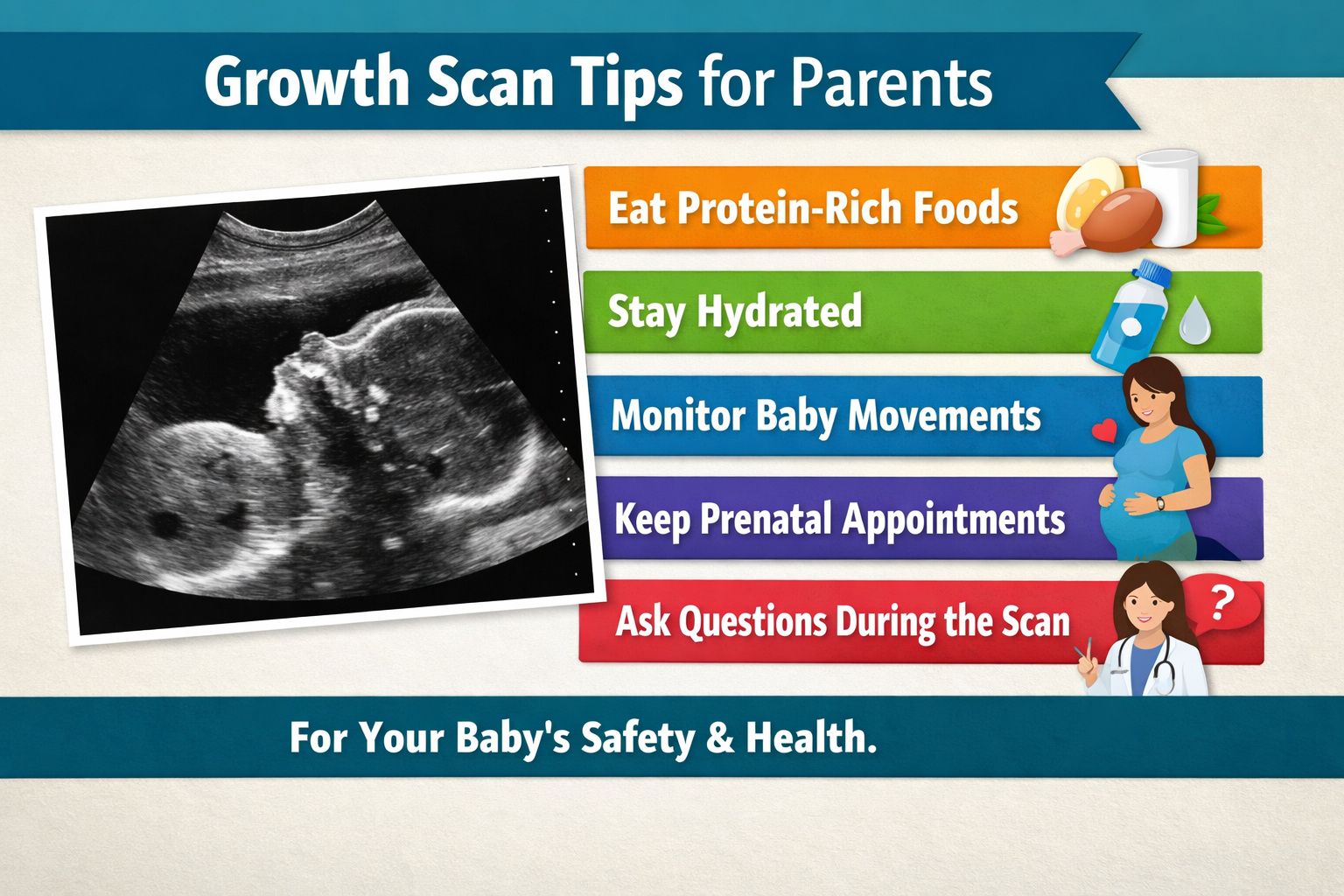
✔ Eat protein-rich foods in third trimester
✔ Stay hydrated
✔ Monitor baby movements daily
✔ Keep all prenatal appointments
✔ Manage blood sugar if diabetic
✔ Ask questions during the scan
According to the WHO, routine antenatal care significantly improves pregnancy outcomes.
Safety & Health Notes
Many parents worry about ultrasound safety.
Reassurance:
- Ultrasound uses sound waves (not radiation).
- It is considered safe when medically indicated.
- Major organizations like Mayo Clinic and ACOG support its use.
However:
Avoid non-medical “keepsake” ultrasounds.
Real-Life Parenting Scenario
Anita, 32 weeks pregnant, noticed her belly measured smaller than expected.
Her doctor scheduled a growth scan.
Result: Baby was at 15th percentile — small but healthy.
She was advised:
- Weekly monitoring
- Increased protein intake
- Kick count tracking
She delivered a healthy 2.8 kg baby at 38 weeks.
Lesson: Growth scan timing matters.
FAQ Section
Growth scan in which month of pregnancy is mandatory?
Usually in the 7th or 8th month (28–32 weeks).
Can growth scan be done in the 9th month?
Yes, especially around 36 weeks if needed.
Is growth scan painful?
No, it is painless and non-invasive.
What if growth scan shows small baby?
Your doctor may recommend monitoring and Doppler studies.
How accurate is growth scan weight?
There can be a ±10–15% variation.
Is fasting required?
No fasting is needed.
Does insurance cover growth scans?
Usually yes if medically necessary.
How long does growth scan take?
20–40 minutes.
Can growth scan detect cord problems?
Yes, especially with Doppler.
Growth scan in which month of pregnancy gives best results?
Between 28–32 weeks gives the most reliable growth trend.
Read Also
- When to Start Counting Baby Kicks
- Safe Sleeping Positions During Pregnancy
- What to Pack in Hospital Bag
- Signs of Labor in First-Time Moms
- Third Trimester Nutrition Guide
- How to Manage Gestational Diabetes Naturally
External Authority References
- World Health Organization (WHO)
- Centers for Disease Control and Prevention (CDC)
- Mayo Clinic
- American College of Obstetricians and Gynecologists (ACOG)
- American Academy of Pediatrics (AAP)
Conclusion
If you’ve been asking growth scan in which month of pregnancy, the clear answer is: typically in the 7th or 8th month (28–32 weeks).
This scan plays a crucial role in:
- Monitoring baby’s growth
- Checking fluid levels
- Ensuring placental health
- Planning safe delivery
Always follow your provider’s guidance and remember — growth scans are tools for reassurance and safety, not comparison.
Medical Disclaimer
This article is for informational purposes only and does not replace professional medical advice. Always consult your obstetrician or healthcare provider regarding pregnancy-related decisions.