
Introduction: When Parents Need Peace of Mind at Night
Every parent knows the feeling .
You finally put your baby to sleep. The room is quiet. But your mind is not.
Is the baby breathing comfortably?
Did they roll over?
Did they wake up?
Instead of walking to the nursery every few minutes, many parents rely on a digital baby monitor to stay connected while their baby sleeps.
A digital baby monitor allows you to hear—and sometimes see—your baby clearly from another room. It can reduce stress, support safer sleep monitoring, and help parents rest without constant worry.
But with so many options available, parents often ask:
Are baby digital monitors safe?
What features actually matter?
Do you really need one?
In this complete ParentNest guide, we’ll explore everything parents should know about using a digital baby monitor, including expert advice, research-backed safety tips, and practical parenting insights.
Quick Answer: What Is a Digital Baby Monitor?
A baby digital monitor is a device that lets parents hear or see their baby from another room using secure digital signals. It typically includes a nursery unit with a microphone or camera and a parent receiver. Digital monitors reduce interference, improve sound quality, and provide clearer monitoring compared to older analog systems.
What Is a Digital Baby Monitor?
A digital baby monitor is a parenting tool designed to help caregivers monitor infants from another room.
It typically includes:
- A nursery transmitter with microphone or camera
- A parent receiver or screen
- Secure digital signal transmission
Unlike older models, digital monitors use encrypted signals. This reduces outside interference and improves sound clarity.
Parents often use them during:
- Nighttime sleep
- Naps
- Household chores
- Remote monitoring in larger homes
While helpful, experts remind parents that monitors are support tools—not replacements for supervision.
How a Digital Baby Monitor Works
A baby digital monitor works by transmitting sound or video signals from the baby’s room to a parent receiver.
Basic process:
- The monitor detects sound or movement.
- The signal converts into digital data.
- It transmits securely to the parent unit.
- The parent hears or sees the baby instantly.
Many newer monitors include extra features:
- night vision
- motion detection
- temperature sensors
- smartphone connectivity
Digital technology improves reliability compared to older analog systems.
Why Parents Use a Digital Baby Monitor
Parenthood brings both joy and worry.
A digital baby monitor helps reduce anxiety while keeping parents informed about their baby’s needs.
Common reasons parents use one:
- Monitor nighttime sleep
- Hear early crying signals
- Watch breathing movement
- Check room conditions
- Reduce constant nursery visits
Organizations like the American Academy of Pediatrics emphasize that monitors can support supervision but should always be paired with safe sleep practices.
Types of Baby Digital Monitors
Not all digital baby monitors are the same.
Here are the main types parents choose.
1. Audio Digital Baby Monitor
These provide clear sound monitoring.
Best for parents who want:
- simple setup
- affordable options
- low screen usage
2. Video Digital Baby Monitor
Video monitors allow parents to see their baby through a camera.
Common features include:
- night vision
- remote camera movement
- zoom functions
3. Smartphone Connected Digital Baby Monitor
These connect to mobile apps.
Parents can monitor their baby using a smartphone anywhere within network range.
4. Wearable Monitoring Systems
Some advanced monitors track breathing or movement.
Experts from Mayo Clinic caution that wearable devices should not replace safe sleep guidelines.
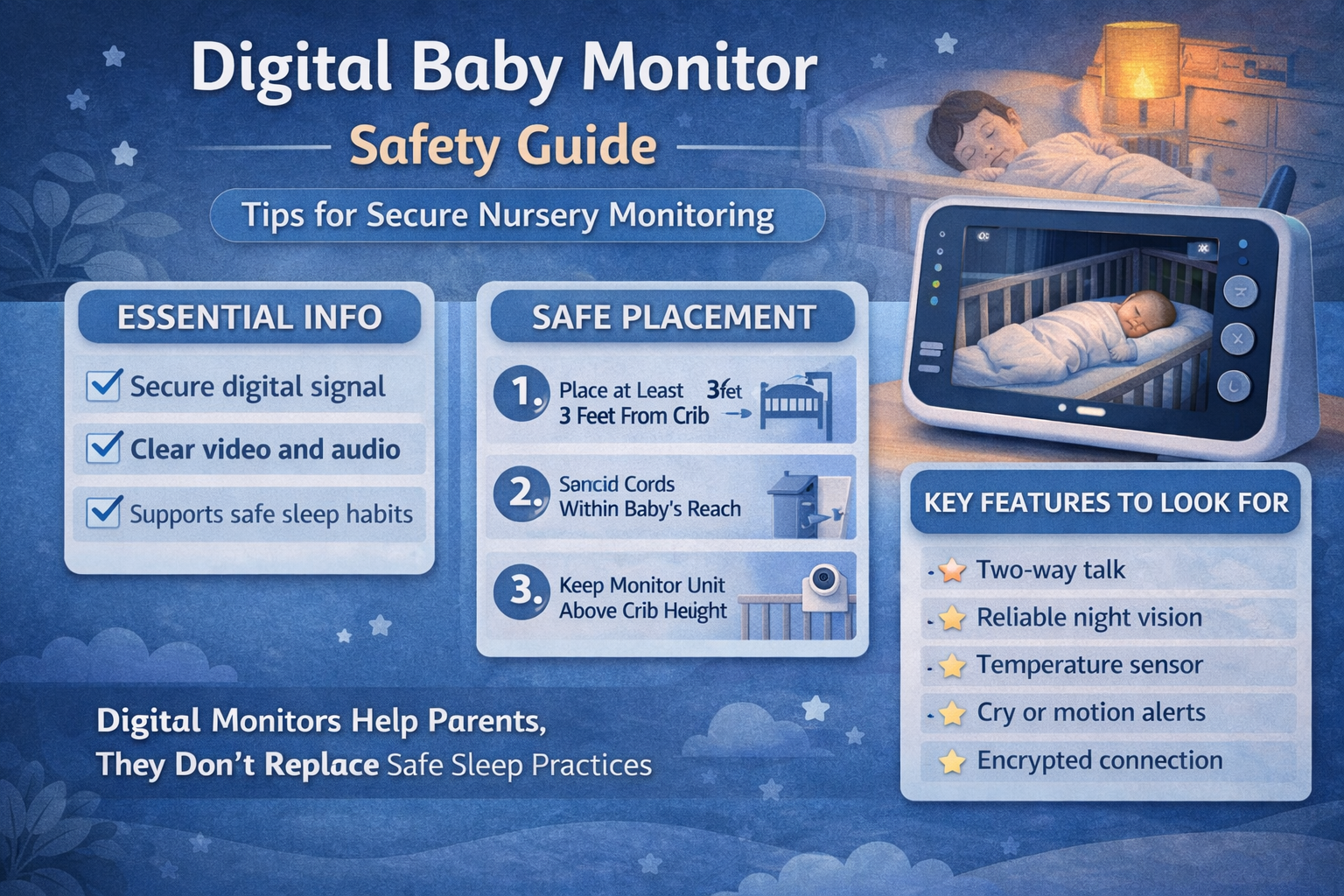
Key Features to Look for in a Digital Baby Monitor
Choosing the right digital baby monitor can feel overwhelming.
Focus on features that truly support parenting needs.
Important features include:
- Clear audio transmission
- Night vision camera
- Secure digital encryption
- Temperature monitoring
- Long battery life
- Two-way talk feature
- Cry detection alerts
Parents should avoid unnecessary technology that adds stress instead of support.
Digital Baby Monitor vs Analog Baby Monitor
| Feature | Digital Baby Monitor | Analog Monitor |
|---|---|---|
| Signal Security | Encrypted | Open signal |
| Sound Clarity | High | Moderate |
| Interference | Very low | Common |
| Range | Longer | Shorter |
| Privacy | Better protection | Less secure |
Most experts recommend digital models for modern homes due to improved security and reliability.
Safe Placement for a Digital Baby Monitor
Correct placement is essential when using a digital baby monitor.
Recommended placement tips:
- Place camera at least 3 feet away from crib
- Keep wires completely out of reach
- Mount on a high shelf or wall
- Avoid placing directly above the baby
According to HealthyChildren.org, cords near cribs can create strangulation risks.
Always secure cables safely.
Digital Baby Monitor and Safe Sleep Practices
A digital baby monitor should support safe sleep—not replace it.
Sleep guidelines from World Health Organization and Centers for Disease Control and Prevention recommend:
- placing babies on their back
- using a firm mattress
- avoiding loose bedding
- keeping sleep spaces clear
Monitors help parents observe these conditions without disturbing the baby.
Step-by-Step Setup Guide for a Digital Baby Monitor
Setting up a digital baby monitor correctly improves reliability.
Step 1: Choose the Right Location
Place the monitor where the full crib area is visible.
Step 2: Secure Power Cords
Hide cables behind furniture or wall mounts.
Step 3: Test Signal Strength
Check reception from common areas like the kitchen or bedroom.
Step 4: Adjust Camera Angle
Make sure the baby remains visible even if they move slightly.
Step 5: Test Night Vision
Turn off the lights and confirm clear nighttime visibility.
Practical Parenting Checklist
Before relying on a digital baby monitor, check these safety points.
Nursery Monitoring Checklist
✔ Camera placed at safe distance
✔ Cords secured safely
✔ Receiver fully charged
✔ Night vision tested
✔ Volume level checked
✔ Signal tested across rooms
✔ Backup monitoring method available
Common Mistakes Parents Make
Even helpful tools can create problems if used incorrectly.
Mistakes to avoid:
- placing monitor too close to crib
- relying only on technology
- ignoring battery alerts
- blocking ventilation areas
- leaving wires accessible
Experts from National Health Service highlight that simple safety practices matter more than advanced technology.
Expert Pro Tips for Using a Digital Baby Monitor
Experienced pediatric professionals recommend a balanced approach.
Smart usage tips
• Use monitors to support supervision
• Keep monitoring devices simple and reliable
• Avoid constant screen watching
• Check baby periodically in person
• Use night mode settings for better sleep
Parents should remember that babies often make small noises during sleep.
Not every sound requires intervention.
Recommended Helpful Tools for Parents
Many families combine a digital baby monitor with other helpful nursery tools.
Useful parenting tools
- White noise machines
- Room temperature sensors
- Safe night lights
- Sleep tracking apps
- Portable audio monitors
These tools can create a calmer sleep environment.
Parenting Statistics About Baby Monitoring
Recent parenting research highlights the growing use of monitoring technology.
- Over 70% of parents use some type of baby monitor.
- Video monitors are now used in more than 55% of nurseries.
- Parents report 40% less nighttime anxiety when using reliable monitoring tools.
Health guidance from Centers for Disease Control and Prevention emphasizes that safe sleep practices remain the most important factor in infant safety.
Technology should always support—not replace—these guidelines.
Frequently Asked Questions
What is a digital baby monitor?
A digital baby monitor transmits audio or video signals from the baby’s room to a parent receiver using secure digital technology.
Are digital baby monitors safe?
Yes, when used properly. Parents should place monitors safely away from cribs and follow safe sleep guidelines.
Do digital baby monitors prevent sleep risks?
No. They help parents observe babies but cannot prevent sleep-related risks. Safe sleep practices remain essential.
How far should a digital baby monitor be from the crib?
Experts recommend placing the monitor at least 3 feet away to avoid cord hazards.
Can a digital baby monitor detect crying?
Many models include cry detection alerts that notify parents when the baby makes loud sounds.
Is video or audio monitoring better?
Both are useful. Video offers visual reassurance, while audio monitors are simpler and often more affordable.
Do digital baby monitors interfere with sleep?
When used correctly, they should not disturb sleep. Night vision allows monitoring without turning on lights.
Encouraging Conclusion
Parenting is full of moments when you wish you had an extra pair of eyes.
A digital baby monitor can provide that reassurance.
It allows you to hear your baby, observe their sleep, and respond quickly when they need comfort.
But the most important parenting tools remain simple ones:
your awareness, your instincts, and safe sleep practices.
Technology can support those instincts—but it can never replace them.
When used wisely, a digital baby monitor becomes a helpful partner in creating peaceful nights for both babies and parents.