
Cryptic Pregnancy Symptoms Negative Pregnancy Test: Complete Medical & Parenting Guide
Cryptic pregnancy symptoms negative pregnancy test situations can feel confusing, emotional, and even frightening for many women and families. You may experience pregnancy-like symptoms but repeatedly receive negative results on home tests — leaving you unsure what is happening in your body.
While rare, cryptic pregnancy (also called “denied pregnancy” or “hidden pregnancy”) does occur. In some cases, women do not realize they are pregnant until late in the second trimester — or even labor.
This comprehensive, medically reviewed guide explains:
- What cryptic pregnancy really means
- Why pregnancy tests may show negative
- Early warning signs
- When to see a doctor
- Safety concerns for mother and baby
- Practical parenting guidance
This article references trusted health authorities including the World Health Organization, Centers for Disease Control and Prevention, Mayo Clinic, American College of Obstetricians and Gynecologists, and the American Academy of Pediatrics.
Let’s break it down clearly and calmly.
Quick Answer Box
What are cryptic pregnancy symptoms with negative pregnancy test results?
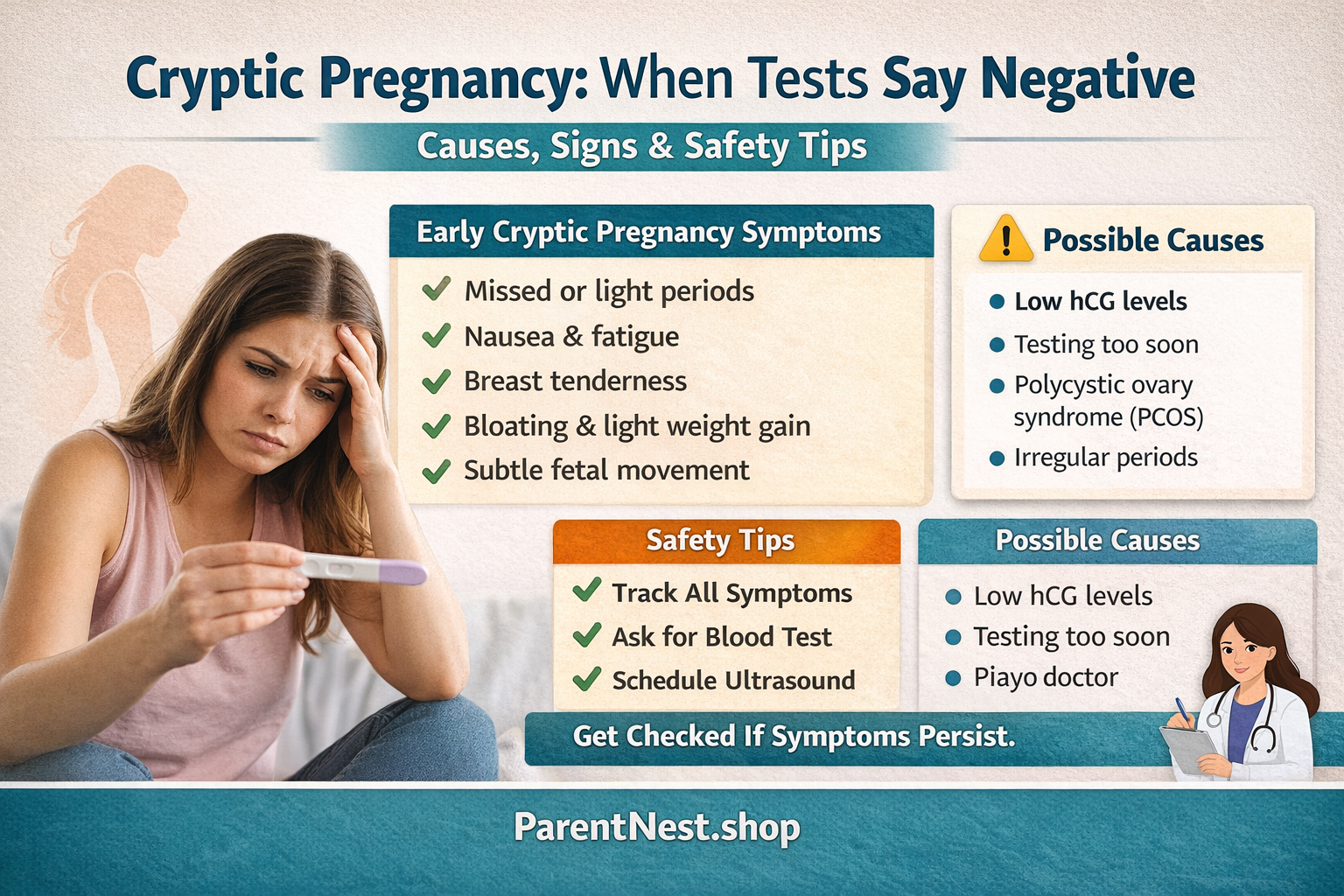
Cryptic pregnancy symptoms negative pregnancy test cases occur when a woman is pregnant but receives negative test results due to low hCG levels, irregular testing, hormonal imbalances, or medical factors. Symptoms may include missed periods, nausea, fatigue, mild weight gain, and subtle fetal movement. A blood test and ultrasound confirm pregnancy.
Table of Contents
What Is a Cryptic Pregnancy?
A cryptic pregnancy is a pregnancy that goes undetected for weeks or months — sometimes until delivery.
It may happen because:
- Symptoms are mild
- Period-like bleeding continues
- Pregnancy tests are negative
- Hormone levels are lower than expected
Though uncommon, it is medically recognized.
According to clinical data referenced by ACOG, hormonal variations and irregular ovulation can affect detection.
Why Can Pregnancy Tests Be Negative?
Understanding cryptic pregnancy symptoms negative pregnancy test situations requires knowing how pregnancy tests work.
Home pregnancy tests detect human chorionic gonadotropin (hCG) in urine.
If hCG levels are:
- Too low
- Diluted in urine
- Tested too early
- Affected by hormonal conditions
The test may appear negative.
How hCG Hormone Works
After implantation:
- hCG levels double every 48–72 hours
- Blood tests detect lower levels than urine tests
- Levels peak around 8–11 weeks
In rare cases:
- hCG rises slowly
- Implantation occurs later than expected
- Hormonal disorders interfere
This can delay positive results.
Early Cryptic Pregnancy Symptoms Negative Pregnancy Test
Some women report classic pregnancy symptoms — even with negative tests.
Common Early Signs
- Missed or lighter period
- Nausea (especially morning)
- Breast tenderness
- Fatigue
- Frequent urination
- Mild abdominal bloating
- Subtle fetal movement mistaken for gas
Because symptoms overlap with PMS or stress, many women dismiss them.
Comparison Table: Typical vs Cryptic Pregnancy
| Symptom | Typical Pregnancy | Cryptic Pregnancy |
|---|---|---|
| Missed period | Common | May still have light bleeding |
| Positive test | Early | Often delayed |
| Visible belly | Gradual | May be minimal |
| Morning sickness | Noticeable | Mild or absent |
| Fetal movement | Felt by 18–20 weeks | Often mistaken for gas |
Medical Causes Behind False Negative Tests
Several medical reasons may explain cryptic pregnancy symptoms negative pregnancy test:
1. Low hCG Production
Some women naturally produce lower hormone levels.
2. Late Implantation
Delayed implantation shifts detection timing.
3. Polycystic Ovary Syndrome (PCOS)
Hormonal imbalance may affect ovulation timing.
4. Testing Too Early
Testing before missed period may not show positive.
5. Diluted Urine
Testing later in the day reduces concentration.
6. Hook Effect (Rare)
Extremely high hCG levels can overwhelm the test.
According to the Mayo Clinic, blood tests are more sensitive than home urine tests.
Step-by-Step: What to Do If You Suspect It
If you suspect cryptic pregnancy symptoms negative pregnancy test, follow this plan:
- Track symptoms carefully.
- Repeat test using first morning urine.
- Request quantitative blood hCG test.
- Schedule pelvic exam.
- Get ultrasound confirmation.
Never rely solely on home tests if symptoms persist.
Cryptic Pregnancy vs False Pregnancy (Pseudocyesis)
| Feature | Cryptic Pregnancy | False Pregnancy |
|---|---|---|
| Actual fetus | Yes | No |
| hCG present | Yes (may be low) | No |
| Ultrasound | Shows baby | No fetus |
| Cause | Hormonal/biological | Psychological + hormonal |
Pseudocyesis is rare but medically documented.
Risks and Safety Considerations
Missing prenatal care increases risk of:
- Low birth weight
- Preterm delivery
- Nutritional deficiencies
- Undiagnosed complications
The CDC emphasizes early prenatal care reduces complications.
If pregnancy is confirmed late:
- Start prenatal vitamins immediately
- Screen for gestational diabetes
- Check blood pressure
- Assess fetal growth
Real-Life Parenting Scenario
Riya, 29, experienced fatigue and irregular spotting.
Three home tests were negative.
At 22 weeks, abdominal pain led to an ER visit.
Ultrasound confirmed pregnancy.
She had no prenatal care until then.
Thankfully, with immediate medical supervision, she delivered a healthy baby at 38 weeks.
Lesson: Listen to your body.
Common Mistakes Parents Make
- Ignoring persistent symptoms
- Assuming negative test means impossible pregnancy
- Not consulting doctor
- Using expired test kits
- Dismissing irregular bleeding
Expert Tips for Parents
✔ Always test first thing in the morning
✔ Don’t panic — stay calm and confirm medically
✔ Seek blood testing if unsure
✔ Start prenatal vitamins if pregnancy suspected
✔ Avoid alcohol until confirmed
The WHO recommends early antenatal contact whenever pregnancy is suspected.
Safety & Health Notes
If you experience:
- Severe abdominal pain
- Heavy bleeding
- Dizziness
- Fainting
Seek emergency care immediately.
Ectopic pregnancy must be ruled out.
The American Academy of Pediatrics also emphasizes maternal health impacts newborn outcomes.
Emotional & Psychological Impact
Discovering pregnancy late can cause:
- Shock
- Anxiety
- Guilt
- Stress
Support systems matter:
- Partner involvement
- Family guidance
- Mental health counseling
Healthy emotional support improves outcomes.
FAQ Section
What are cryptic pregnancy symptoms negative pregnancy test cases?
They occur when pregnancy exists but tests remain negative due to low hCG or testing errors.
Can you be pregnant for months with negative tests?
Rarely, yes — especially if hormone levels rise slowly.
How accurate are home pregnancy tests?
About 97–99% when used correctly.
Can stress cause false negative pregnancy test?
Stress does not directly cause false negatives but can delay ovulation.
What confirms cryptic pregnancy?
Blood hCG test and ultrasound.
Is cryptic pregnancy dangerous?
Risk increases if prenatal care is delayed.
How common is cryptic pregnancy?
Estimates suggest 1 in 2,500 pregnancies may go unnoticed until later stages.
Can birth control cause cryptic pregnancy?
Birth control reduces risk but no method is 100% effective.
Does cryptic pregnancy show baby bump?
Sometimes minimal or delayed.
What should I do if I suspect cryptic pregnancy symptoms negative pregnancy test?
Seek medical evaluation immediately.
Read Also
- The Ultimate, Stress-Free Guide: What to Pack in Hospital Bag for Baby Delivery (So You Feel 100% Ready)
- How to Confirm Pregnancy Without a Test
- Signs of Ectopic Pregnancy
- First Trimester Nutrition Guide
- When to Start Prenatal Vitamins
- Pregnancy After Irregular Periods
External Authority References
- World Health Organization (WHO)
- Centers for Disease Control and Prevention (CDC)
- Mayo Clinic
- American College of Obstetricians and Gynecologists (ACOG)
- American Academy of Pediatrics (AAP)
Conclusion
Experiencing cryptic pregnancy symptoms negative pregnancy test can feel overwhelming and confusing.
While rare, it is medically possible.
If your body feels different despite negative tests:
- Trust your instincts
- Request blood testing
- Seek ultrasound confirmation
Early medical support ensures safety for both mother and baby.
Never ignore persistent symptoms.
Medical Disclaimer
This content is for educational purposes only and does not replace professional medical advice. Always consult a licensed healthcare provider for diagnosis and treatment.