
Introduction
Baby hunger cues vs crying is one of the most confusing topics for new parents. When a newborn cries, many caregivers assume the baby is hungry — but crying is actually a late sign of hunger.
Newborns communicate through subtle body signals long before they cry. Learning to recognize early baby hunger cues can make feeding easier, prevent stress, and support healthy development.
Understanding these signals also helps prevent common parenting worries such as:
- Overfeeding
- Missing nighttime hunger
- Misinterpreting cluster feeding
- Struggling with breastfeeding or bottle feeding
In this detailed guide, we’ll explain how to tell the difference between baby hunger cues vs crying, what the rooting reflex means, and how to identify signs your baby is hungry at night.
You’ll also find a newborn feeding cues chart, expert pediatric insights, and practical parenting examples to help you respond confidently to your baby’s needs.
Quick Answer Box (Featured Snippet)
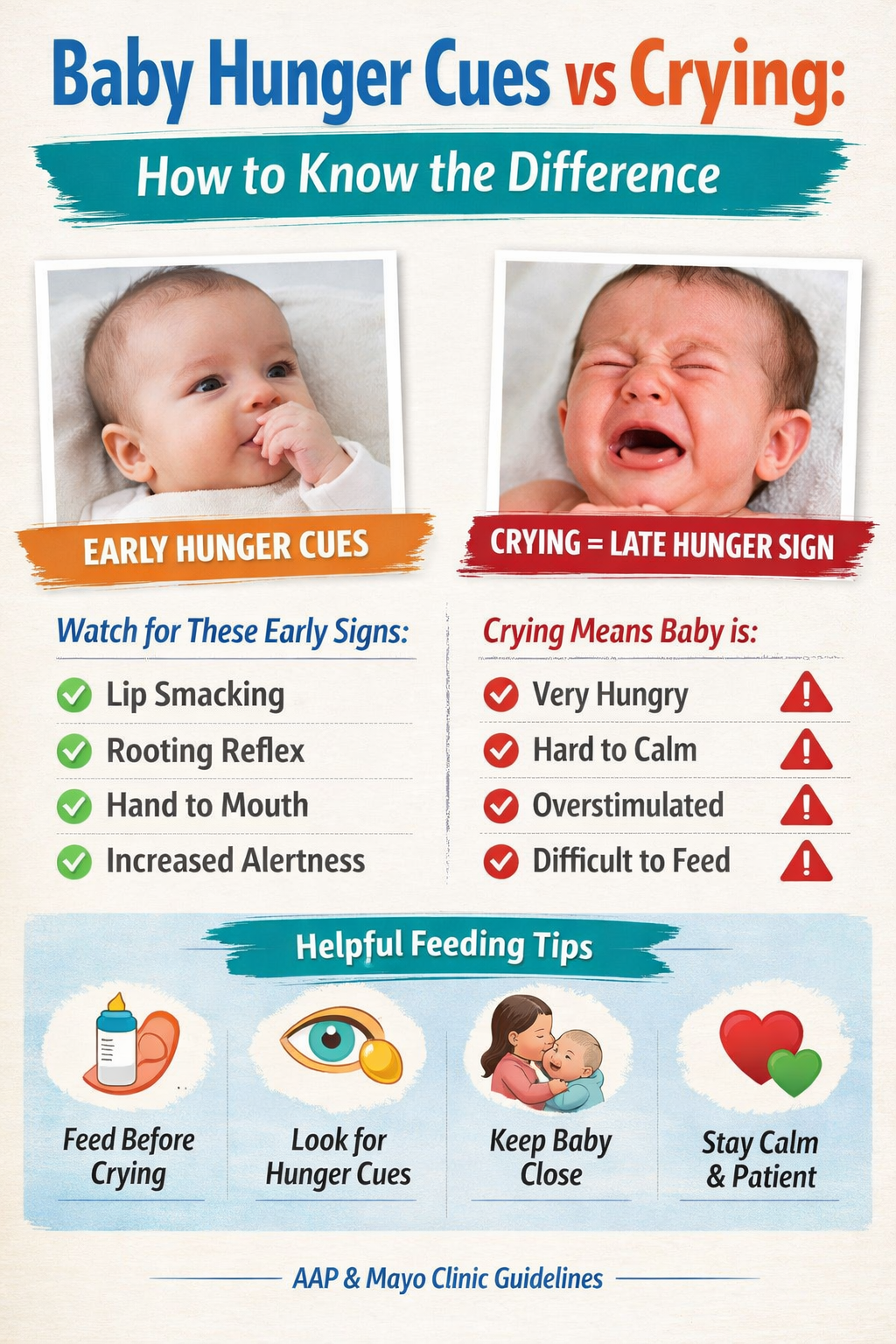
Baby hunger cues vs crying:
Hunger cues are early signals that a baby wants to eat, such as:
- Lip smacking
- Rooting reflex
- Hand-to-mouth movements
- Increased alertness
Crying is usually a late hunger cue, meaning the baby is already very hungry and may become harder to calm or feed.
Responding to early baby hunger cues helps babies feed more calmly and effectively.
What Are Baby Hunger Cues?
Baby hunger cues are physical and behavioral signals that indicate a baby is ready to eat.
According to the American Academy of Pediatrics, recognizing feeding cues early helps babies:
- Feed more efficiently
- Maintain stable blood sugar
- Reduce excessive crying
Babies usually show hunger cues 30–45 minutes before crying begins.
Baby Hunger Cues vs Crying: The Key Differences
Understanding baby hunger cues vs crying is essential for responsive parenting.
| Behavior | Hunger Cue | Crying |
|---|---|---|
| Lip smacking | Early hunger sign | Rare |
| Rooting | Strong hunger indicator | May appear |
| Hand sucking | Common early cue | Possible |
| Fussiness | Mild | Severe |
| Crying | Late hunger sign | Main signal |
Key insight:
By the time babies cry, they may already be overstimulated or very hungry, making feeding more difficult.
According to World Health Organization, responsive feeding improves breastfeeding success and infant growth.
Early Baby Hunger Cues Every Parent Should Know
Recognizing early baby hunger cues helps parents feed babies before distress begins.
1. Lip Smacking
Small sucking movements or lip smacking often appear first.
2. Rooting Reflex
The baby turns their head toward anything touching their cheek.
This reflex helps babies find the breast or bottle naturally.
3. Hand-to-Mouth Movements
Babies frequently bring their hands to their mouth when hungry.
4. Increased Alertness
Hungry babies may:
- Wake from sleep
- Move arms and legs
- Become more attentive
5. Sucking Motions
Even without a nipple present, babies may practice sucking movements.
Newborn Feeding Cues Chart
Below is a simple newborn feeding cues chart parents can follow.
| Hunger Stage | Baby Behavior | Parent Action |
|---|---|---|
| Early | Lip smacking, rooting | Start feeding |
| Active | Hand sucking, squirming | Feed immediately |
| Late | Crying, red face | Calm baby then feed |
This chart helps parents respond before the baby becomes overwhelmed.
Baby Rooting Reflex Meaning
The baby rooting reflex is a natural survival instinct.
When something touches the baby’s cheek or mouth, they turn their head and open their mouth.
According to Mayo Clinic, the rooting reflex:
- Helps babies locate food
- Appears at birth
- Usually fades around 4 months of age
Rooting is one of the clearest signs when comparing baby hunger cues vs crying.
Signs Baby Is Hungry at Night
Nighttime hunger can be difficult to interpret, especially for exhausted parents.
Common signs baby is hungry at night include:
- Stirring in sleep
- Hand sucking
- Head turning
- Small grunts or fussing
- Increased movement
Responding early prevents full crying episodes and helps babies return to sleep faster.
Cluster Feeding Signs
Cluster feeding is normal during growth spurts.
Typical cluster feeding signs include:
- Feeding every 30–60 minutes
- Fussiness in the evening
- Short frequent feeds
- Increased comfort nursing
According to the Centers for Disease Control and Prevention, cluster feeding supports healthy milk supply.
Common Mistakes Parents Make
1. Waiting Until Baby Cries
Crying is the last hunger signal, not the first.
2. Mistaking Sleep Cues for Hunger
Sometimes babies are actually overtired, not hungry.
3. Overfeeding
Not every cry means hunger.
Babies may cry due to:
- Gas
- Diaper discomfort
- Temperature changes
- Need for comfort
4. Ignoring Nighttime Hunger Signals
Night feeds are normal during the first 6 months.
Expert Tips for Parents
Watch for Patterns
Most newborns feed 8–12 times per day.
Keep Baby Close
Skin-to-skin contact helps parents notice subtle hunger cues.
Feed Before Crying
Calm babies latch better and digest more efficiently.
Track Feeding Signals
Use a simple feeding log during the first few weeks.
Safety & Health Notes
Always consult a pediatrician if your baby:
- Refuses feeds frequently
- Shows poor weight gain
- Appears lethargic
- Cries excessively after feeding
Trusted guidance is available from:
- World Health Organization
- American College of Obstetricians and Gynecologists
- American Academy of Pediatrics
FAQ: Baby Hunger Cues vs Crying
What is the difference between baby hunger cues vs crying?
Hunger cues are early signals such as rooting or sucking motions, while crying is a late sign of hunger.
How early do babies show hunger cues?
Most babies show early hunger cues 30–45 minutes before crying.
Is crying always a sign of hunger?
No. Babies may cry due to discomfort, tiredness, gas, or overstimulation.
What is the rooting reflex in newborns?
The rooting reflex helps babies turn toward the breast or bottle when their cheek is touched.
How often should newborns eat?
Typically 8–12 times per day, depending on growth and feeding method.
What are cluster feeding signs?
Frequent feeds in short intervals, often during growth spurts.
Are night hunger cues different?
Night hunger cues are usually subtler, like stirring or sucking motions.
Can babies cry even if they are not hungry?
Yes. Crying may signal tiredness, gas, or need for comfort.
When should parents worry about feeding?
If babies show poor weight gain or refuse feeds regularly, consult a pediatrician.
Read Also
Future articles for ParentNest:
- Newborn Feeding Schedule by Age
- How to Burp a Baby Correctly
- Cluster Feeding Survival Guide
- Breastfeeding Positions for New Moms
- Why Babies Cry at Night
Conclusion
Understanding baby hunger cues vs crying helps parents respond earlier and create a calmer feeding experience.
Instead of waiting for crying, watch for subtle signals like:
- Lip smacking
- Rooting reflex
- Hand-to-mouth movements
- Increased alertness
Responding to early baby hunger cues supports healthy feeding habits, reduces stress, and strengthens the parent-baby bond.
With practice, most parents become experts at reading their baby’s unique signals.
Medical Disclaimer
This article is for educational purposes only and does not replace professional medical advice. Always consult a pediatrician or qualified healthcare provider for concerns about infant feeding or health.