Physical Address
304 North Cardinal St.
Dorchester Center, MA 02124
Physical Address
304 North Cardinal St.
Dorchester Center, MA 02124

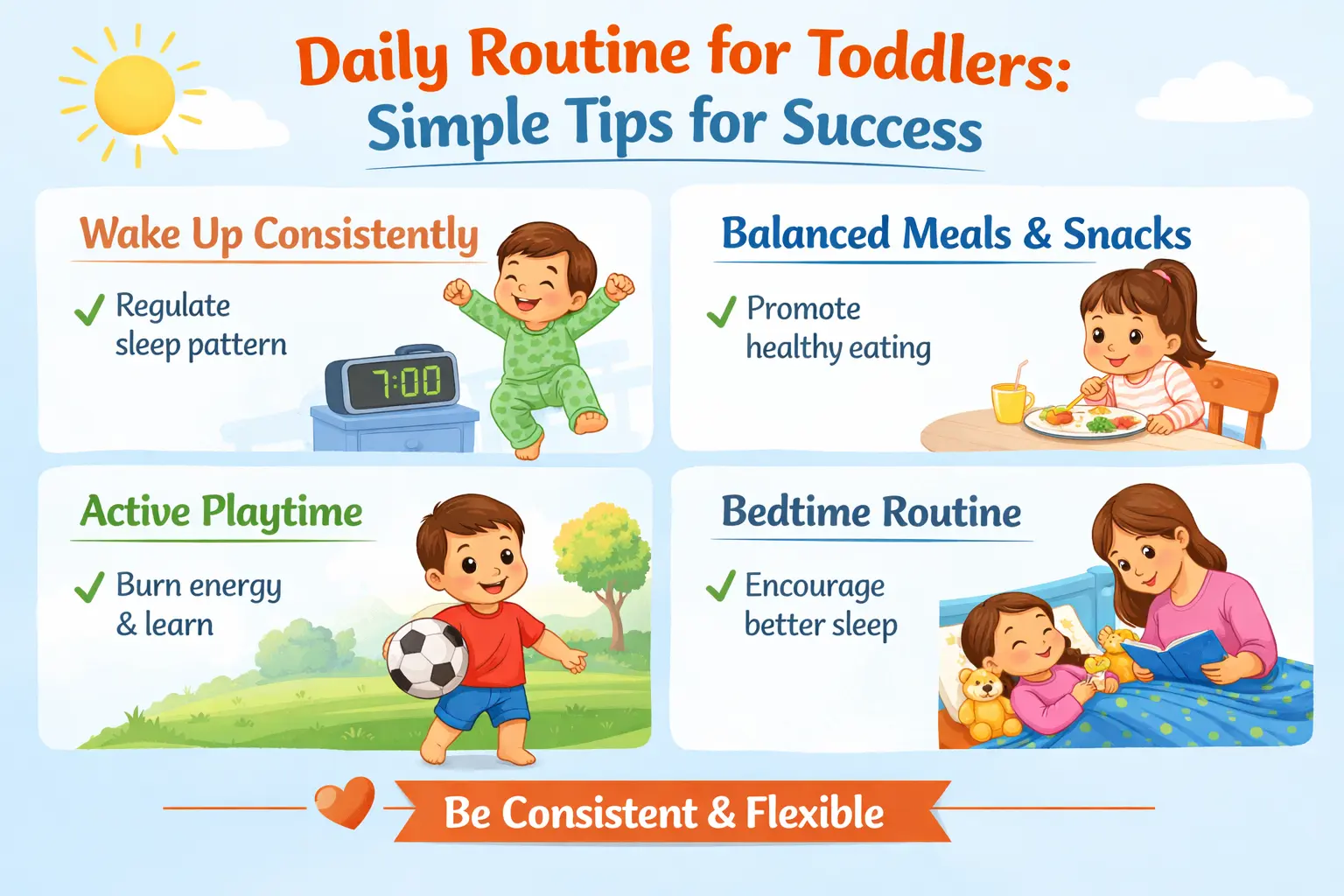
A daily routine for toddlers is one of the most powerful tools parents can use to support healthy growth, emotional stability, and better behavior. Toddlers thrive on predictability. When they know what to expect, they feel safe, confident, and more cooperative throughout the day.
Without a structured routine, many parents face daily struggles like tantrums, poor sleep, irregular eating habits, and overstimulation. The good news? A well-balanced daily routine can transform your toddler’s mood, improve sleep patterns, and even boost brain development.
In this expert-backed guide, you’ll learn how to build a realistic daily routine for toddlers, including sample schedules, age-specific tips, and practical solutions for common parenting challenges. Whether you’re a new parent or looking to improve your current routine, this guide will help you create a calm, happy, and structured day for your child.
What is the best daily routine for toddlers?
The best daily routine for toddlers includes consistent wake-up times, balanced meals, active play, learning activities, naps, and a calming bedtime routine. A structured routine helps improve behavior, sleep quality, and emotional development.
A structured daily routine for toddlers supports both physical and emotional development.
Health organizations like WHO and AAP emphasize consistent routines for early childhood development.
Not sure if your child needs a structured daily routine? Look for these signs:
These signs often indicate a lack of structure.
Creating a balanced daily routine for toddlers doesn’t have to be complicated.
Start the day with consistency.
Activities:
Tip: Morning sunlight helps regulate sleep cycles.
This is peak energy time.
Activities:
Focus on active play.
Activities:
Wind down gradually.
Activities:
Different ages require slight adjustments.
Growth spurts and developmental changes can disrupt routines.
Adjust by:
| Time | Activity | Purpose |
|---|---|---|
| 7:00 AM | Wake up | Set body clock |
| 8:00 AM | Breakfast | Nutrition |
| 10:00 AM | Playtime | Motor skills |
| 12:30 PM | Lunch | Energy |
| 1:30 PM | Nap | Rest & growth |
| 4:00 PM | Snack + Play | Social development |
| 7:00 PM | Dinner | Nutrition |
| 8:30 PM | Bedtime routine | Sleep readiness |
Solution:
Solution:
Solution:
Based on WHO, CDC, and Mayo Clinic guidelines:
A balanced routine includes meals, play, naps, and bedtime.
It improves behavior, sleep, and emotional stability.
Yes, adjust gradually based on needs.
Between 7:30–9:00 PM.
Usually 1–2 naps depending on age.
Yes, predictability reduces stress.
Consistent but flexible.
Yes, excessive screen time disrupts sleep and behavior.
Introduce changes slowly.
Yes, it supports brain and emotional growth.
Creating a consistent daily routine for toddlers is one of the best ways to support your child’s growth, behavior, and emotional well-being. With a balanced mix of play, learning, meals, and rest, your toddler will feel secure and thrive every day.
Remember, routines don’t need to be perfect—they need to be consistent. Start small, stay patient, and adjust based on your child’s needs.
This content is for informational purposes only and does not replace professional medical advice. Always consult a pediatrician for concerns about your child’s health or development.