Physical Address
304 North Cardinal St.
Dorchester Center, MA 02124
Physical Address
304 North Cardinal St.
Dorchester Center, MA 02124

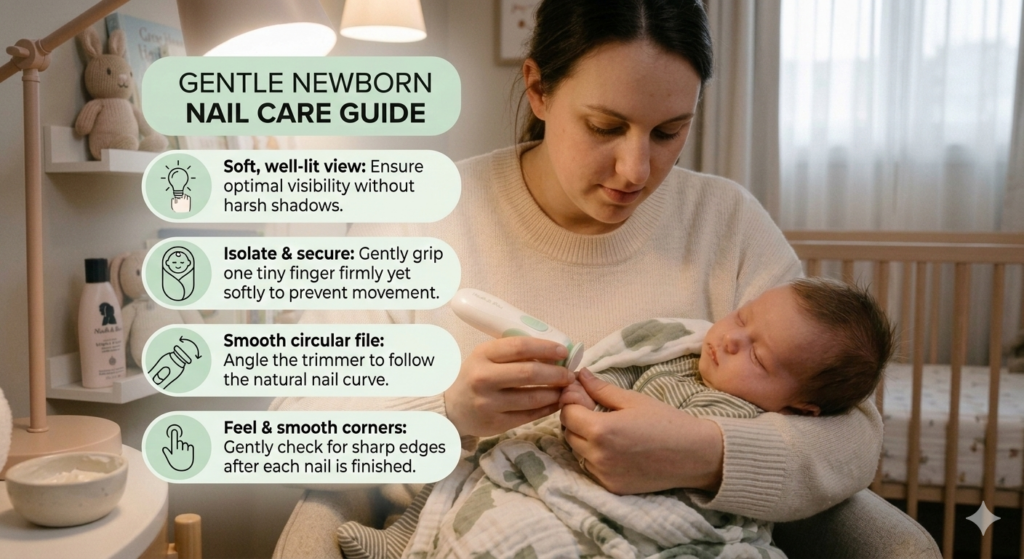
Cutting baby nails while sleeping is the ultimate parenting “pro-move.” If you have ever tried to trim the talons of a wiggling, protesting infant, you know it feels less like grooming and more like a high-stakes wrestling match. Because newborns lack muscle control, those paper-thin nails can quickly become tiny razors, leading to painful scratches on their delicate faces.
Medical experts from the American Academy of Pediatrics (AAP) and Mayo Clinic agree: keeping your baby’s nails short is vital for preventing skin infections and self-injury. However, the fear of “nicking” a tiny finger is real. That is why most veteran parents wait until their little one is in a deep “milk coma” to get the job done.
Expert Insight: “A baby’s nails grow surprisingly fast, sometimes requiring a trim twice a week. The safest window is during deep sleep cycles when their startle reflex is lowest.” — ParentNest Medical Review Team
Yes. In fact, most pediatricians recommend cutting baby nails while sleeping or right after a bath when nails are softest. During sleep, a baby’s hands are relaxed, significantly reducing the risk of accidental nicks caused by sudden jerks or movements.
When your baby is awake, their world is full of sensory input. A cold metal clipper or the sensation of someone holding their hand tightly can trigger a “fight or flight” response.
Babies move through sleep cycles quickly. To successfully manage cutting baby nails while sleeping, wait for the “limp limb” stage. This usually occurs about 20 minutes after they fall asleep.
Many parents wonder when to start cutting newborn nails. Some babies are born with “manicure-ready” long nails, while others take a few weeks to develop enough growth to trim.
According to the World Health Organization (WHO), neonatal skin is incredibly fragile. For the first 2–3 weeks, you may only need to use a soft emery board to file down sharp edges. Once the nail hardens slightly, you can transition to cutting baby nails with scissors specifically designed for infants.
If you are wondering what happens if you don’t cut baby toenails, the risks include:
Not all tools are created equal. Your choice depends on your comfort level and the baby’s age.
| Tool Type | Best For | Pros | Cons |
| Baby Scissors | Newborns (0-3m) | Rounded tips prevent poking; better visibility. | Requires steady hand coordination. |
| Baby Clippers | 3 months+ | Fast, “one-click” trim; familiar design. | Easier to accidentally nick the skin. |
| Electric Trimmer | All Ages | Zero risk of cutting skin; very quiet. | Requires batteries; takes longer. |
| Emery Board | First 2 weeks | Safest possible method; smooths edges. | Can be tedious; doesn’t handle length well. |
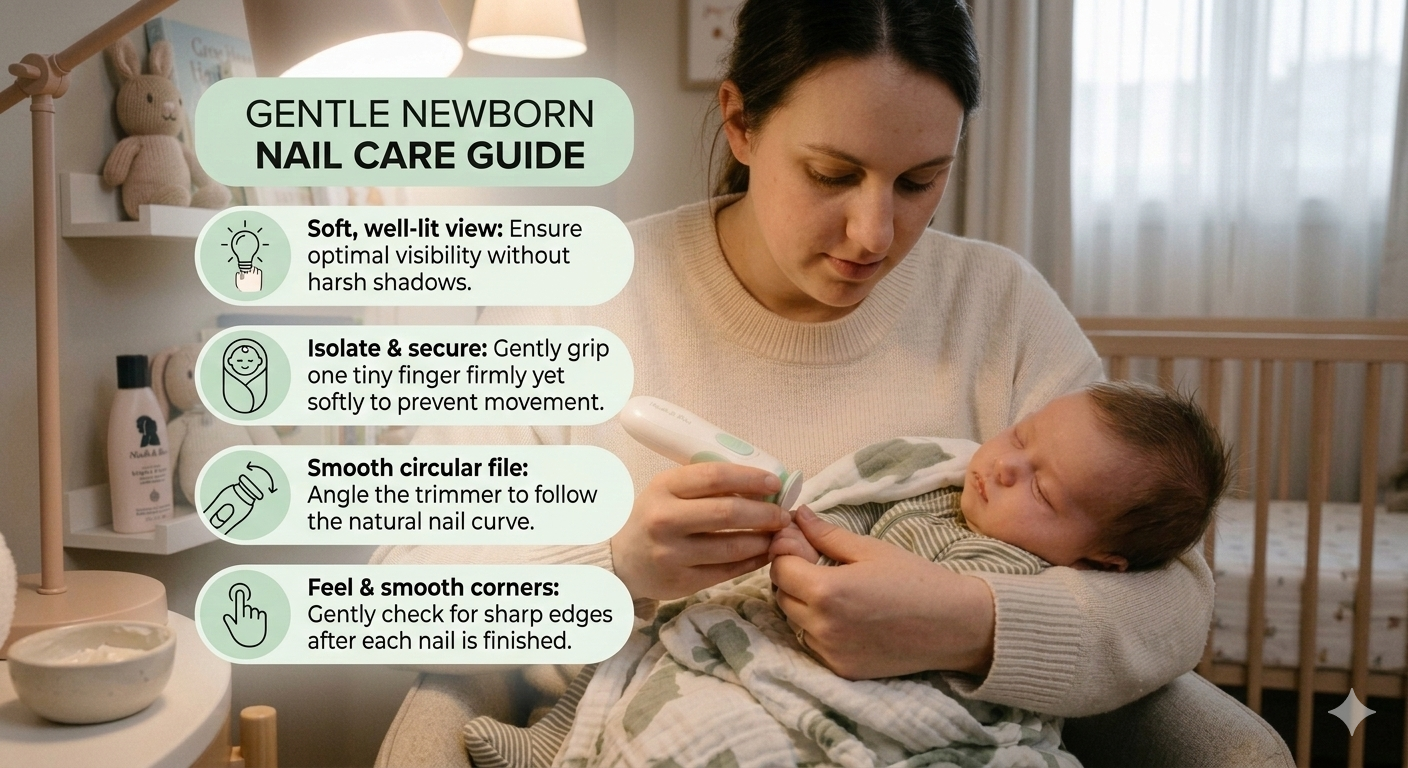
Wait at least 20 minutes after they’ve drifted off. Test their “floppiness” by gently lifting a finger. If they don’t pull back, you are clear for take-off.
Do not try cutting nails newborn baby style in the dark! Use a focused nursing light or a phone flashlight directed at the hand, not the face.
Hold the baby’s palm and the specific finger you are working on firmly. Gently push the skin of the finger pad down and away from the nail. This creates a safety gap.
After cutting baby nails while sleeping, run your own thumb over the edges. If it feels scratchy, use a soft emery board to buff the corners.
Even the most seasoned parents make errors. Avoid these to keep the experience stress-free:
Accidentally nipped your baby? Don’t panic. It happens to almost every parent.
Yes, is it okay to cut baby nails at night? Absolutely. As long as you have adequate lighting to see the separation between the nail and the skin, nighttime is the ideal time because the baby is still.
Fingernails usually need trimming once or twice a week. Toenails grow slower and can usually wait for a bi-weekly or monthly trim.
Look for specialized baby scissors with blunt, rounded tips. Brands like Simba or Frida Baby offer ergonomic grips that make the process much easier.
Try cutting baby nails while sleeping in a car seat or while they are nursing/bottle-feeding. The distraction of food or the deep sleep of a car ride often overrides the sensation of the trim.
Yes! Electric files are whisper-quiet and use sandpaper pads that stop if they touch skin, making them the safest “no-stress” option for nervous parents.
Most experts suggest waiting until the baby is at least 3-4 weeks old before using clippers, using only a file before then.
They can snag on clothing, tear painfully, or develop into ingrown nails which may require medical intervention.
Mid-nap or about 30 minutes after bedtime is usually the deepest sleep window.
Cutting baby nails while sleeping doesn’t have to be a source of anxiety. By choosing the right tools—whether you prefer cutting baby nails with scissors or a modern electric file—and timing your “mission” during a deep sleep cycle, you can keep your baby scratch-free and happy. Remember to always cut toenails straight across and never, ever use your teeth!
Would you like me to create a printable PDF checklist for your baby’s weekly grooming routine?
The information in this article is for educational purposes only and does not substitute for professional medical advice, diagnosis, or treatment. Always seek the advice of your pediatrician with any questions regarding your baby’s health.