Physical Address
304 North Cardinal St.
Dorchester Center, MA 02124
Physical Address
304 North Cardinal St.
Dorchester Center, MA 02124

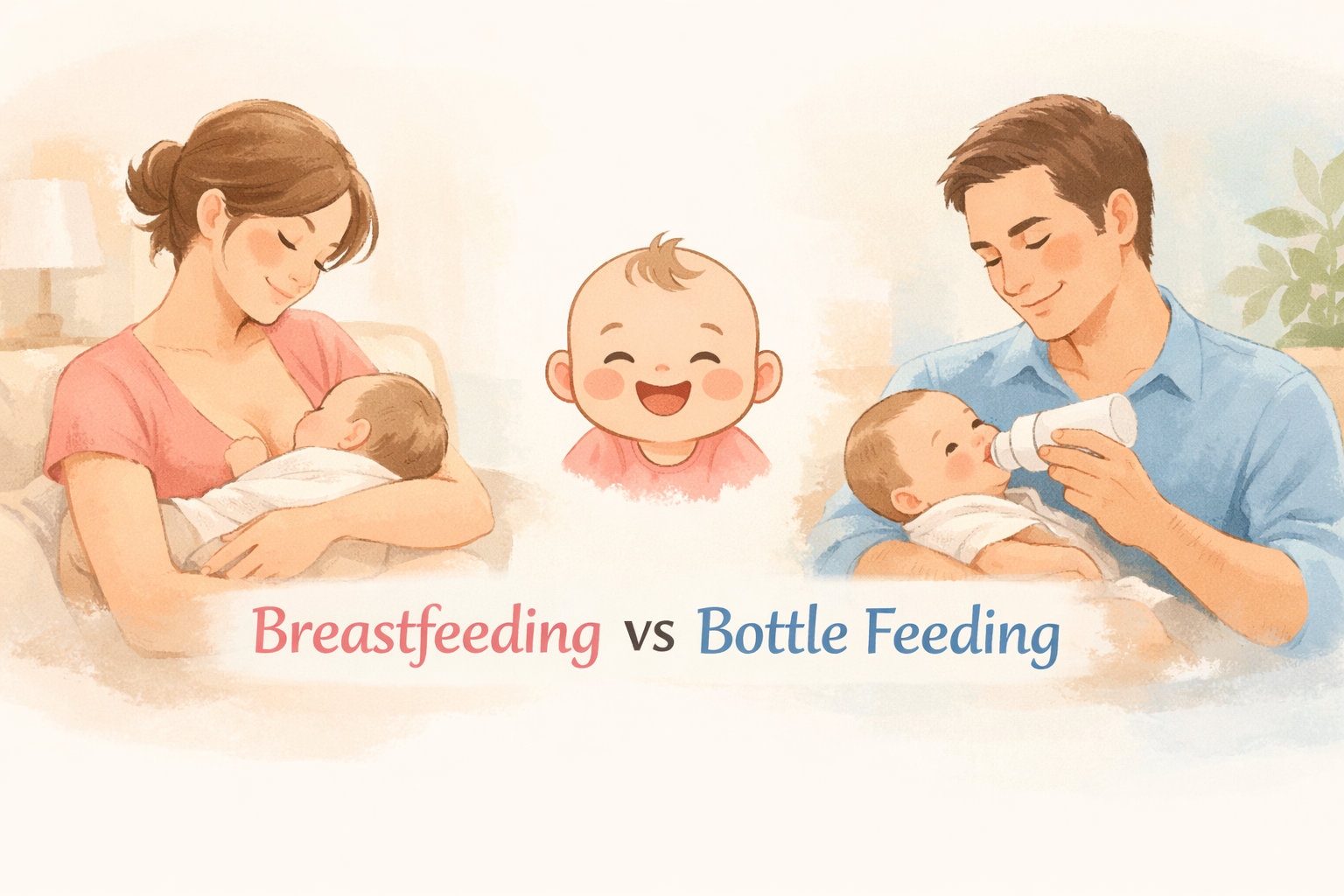
Few parenting decisions create as much stress as breastfeeding vs bottle feeding.
New parents often feel pressure from family, social media, and even strangers. Some hear that breastfeeding is the only healthy choice. Others hear that formula feeding is just as good.
This leaves many parents wondering:
The truth is reassuring.
Both feeding methods can support a healthy, thriving baby.
This ParentNest guide explains breastfeeding vs bottle feeding using trusted pediatric research, practical parenting experience, and clear science-backed advice.
By the end, you’ll understand:
Most importantly, you’ll gain the confidence to make a decision without guilt.
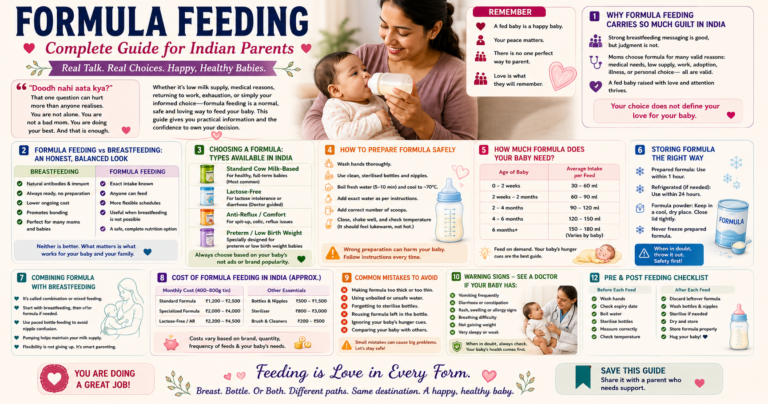
Breastfeeding vs bottle feeding both nourish babies effectively. Breastfeeding provides natural antibodies and digestive benefits, while bottle feeding offers flexibility and precise feeding amounts. Research from pediatric health organizations shows that babies can grow healthy and strong with either method when parents provide responsive, loving care.
The debate around breastfeeding vs bottle feeding often feels intense. But in reality, both methods are simply ways to provide nutrition to a baby.
The main difference is the source of milk and how it is delivered.
| Feeding Method | Description |
|---|---|
| Breastfeeding | Baby feeds directly from the parent’s breast |
| Bottle feeding | Baby drinks pumped milk or infant formula from a bottle |
Bottle feeding may include:
Major pediatric health organizations agree on one important point:
A well-fed baby with responsive caregiving is what matters most.
Breastfeeding is a natural biological process designed to nourish infants.
During breastfeeding:
Human milk adapts to a baby’s needs over time.
According to pediatric health experts including WHO, Mayo Clinic, and NHS, breast milk contains:
These elements help support immune and digestive development.
Bottle feeding allows babies to drink either breast milk or infant formula from a bottle.
Parents may bottle feed for many reasons:
Modern infant formulas are designed to mimic the nutrient profile of breast milk.
Organizations like CDC and HealthyChildren.org confirm that formula-fed babies can grow and develop normally when fed properly.
Bottle feeding also allows:
When comparing breastfeeding vs bottle feeding breast milk, breastfeeding offers several biological advantages.
• Natural immune protection
• Lower risk of some infections
• Easier digestion
• Skin-to-skin bonding
• Hormonal benefits for parents
Breast milk includes antibodies that help protect babies from illness.
The WHO notes that breast milk also adapts over time to match a baby’s changing needs.
Bottle feeding also has unique advantages.
• Feeding responsibilities can be shared
• Parents know exactly how much baby drinks
• More flexibility in schedule
• Helpful for parents returning to work
• Less physical strain for some parents
Bottle feeding can also reduce stress for parents who struggle with breastfeeding challenges.
A calm caregiver often leads to a calmer baby.
Understanding breastfeeding vs formula feeding advantages disadvantages helps parents make balanced decisions.
| Factor | Breastfeeding | Bottle Feeding |
|---|---|---|
| Immune support | High | Moderate |
| Convenience outside home | Sometimes challenging | Easier planning |
| Cost | Usually lower | Formula can be expensive |
| Feeding flexibility | Parent only | Anyone can feed |
| Tracking intake | Harder | Easy |
Each family prioritizes different needs.
There is no universal “perfect” feeding method.
Many parents worry about breastfed vs formula fed babies intelligence.
Some studies suggest slightly higher cognitive scores in breastfed children.
However, researchers emphasize an important factor:
Family environment plays a much bigger role in intelligence.
Brain development depends heavily on:
The Mayo Clinic explains that intelligence outcomes are influenced by many social and developmental factors.
The short answer: not necessarily.
The question “are breastfed babies smarter than formula fed babies” oversimplifies complex child development.
Research shows:
Children thrive when parents provide:
Feeding method alone does not determine intelligence.
Pediatric resources such as HealthyChildren.org emphasize a balanced message about kids health breastfeeding vs bottle feeding.
Key principles include:
• The best feeding method is one that works for the family.
• Babies need consistent nourishment.
• Parent mental health matters.
• Support systems improve feeding success.
Parents should focus on:
Parents asking “Is it better to breastfeed or bottle feed?” should consider practical realities.
Important factors include:
A decision that supports both baby and parent wellbeing is usually the best choice.
Many families choose combination feeding.
This means using both breastfeeding and bottle feeding.
Examples include:
Combination feeding offers:
Many pediatric experts consider this a realistic approach for modern families.
Use this checklist when deciding between breastfeeding vs bottle feeding.
✔ Is the baby gaining weight steadily?
✔ Is feeding calm and comfortable?
✔ Does the parent feel physically okay?
✔ Is the baby producing enough wet diapers?
✔ Is the feeding schedule sustainable?
If the answer to most questions is yes, the feeding method is likely working well.
Parents sometimes struggle due to common misconceptions.
Healthy babies can grow with both feeding methods.
Parental stress affects babies too.
Every baby has unique feeding patterns.
Breastfeeding often improves with practice and support.
ParentNest experts recommend these strategies.
Watch baby’s hunger cues.
Babies feed better when relaxed.
This reduces gas discomfort.
Lactation consultants and pediatricians can help quickly.
Parents may find these tools useful:
• nursing pillows
• breast pumps
• milk storage bags
• anti-colic bottles
• bottle sterilizers
• formula dispensers
These tools can make feeding easier and less stressful.
Research from global health organizations shows interesting patterns.
• Around 70–80% of parents start breastfeeding.
• About half continue breastfeeding after six months.
• Formula feeding increases as babies grow older.
• Combination feeding is extremely common worldwide.
These numbers highlight that many families use multiple feeding approaches.
Both methods support healthy babies. Breastfeeding offers immune benefits, while bottle feeding provides flexibility and shared caregiving.
Research shows only small differences. Parenting environment, stimulation, and education play a larger role in intelligence.
Yes. Infant formulas are carefully designed to support normal growth and development.
Some parents experience discomfort early on. Proper positioning and lactation support usually improve the experience.
Yes. Many families transition gradually or use combination feeding.
Health organizations often recommend breastfeeding for the first months and continuing as desired by parent and baby.
Yes. Bottle feeding allows partners to participate directly, while breastfeeding parents can pump milk for shared feeding.
The debate around breastfeeding vs bottle feeding often creates unnecessary pressure for parents.
Science shows something reassuring:
Healthy babies grow through many different feeding paths.
Breastfeeding offers natural immune benefits and bonding experiences.
Bottle feeding offers flexibility and shared caregiving.
In the end, the best feeding choice is the one that:
Trust your instincts.
A loved, well-fed baby is always the true goal.