Physical Address
304 North Cardinal St.
Dorchester Center, MA 02124
Physical Address
304 North Cardinal St.
Dorchester Center, MA 02124

The question when do babies smile is one of the most exciting things new parents wonder about during the early weeks of their baby’s life. That first tiny smile feels magical — almost like your baby is finally saying hello to the world. But the truth is, baby smiles happen in stages, and not every smile means the same thing. Some early smiles happen automatically while babies sleep, while others are real emotional responses to seeing a familiar face or hearing a parent’s voice.
Most babies begin giving real social smiles between 6 and 8 weeks, although some may smile a little earlier or later depending on their development. Pediatric experts from organizations like the American Academy of Pediatrics (AAP) explain that smiling is an important sign of neurological development and social bonding. When babies smile, their brains are learning how to recognize people, emotions, and communication cues.
Parents often notice different types of smiles during the first few months — sleepy smiles, reflex smiles, and later genuine happy smiles. These early facial expressions are actually a baby’s first attempt at social communication. Understanding when babies smile helps parents track developmental milestones and also strengthens the emotional bond between caregiver and child.
In this comprehensive guide, we will explore when do babies smile and laugh, what early smiles mean, whether a baby can smile at 4 weeks old, and even the fascinating question of when do babies smile in the womb. By the end, you’ll understand exactly what to expect during your baby’s early emotional development.
Most babies begin social smiling at 6–8 weeks of age.
However, parents may notice:
| Age | Type of Smile | Meaning |
|---|---|---|
| Birth – 4 weeks | Reflex smile | Automatic facial movement |
| 4 – 6 weeks | Early response smiles | Reaction to voices or touch |
| 6 – 8 weeks | Social smile | Real emotional response |
| 3 – 4 months | Laughing begins | Social and emotional bonding |
Understanding when do babies smile requires knowing how a baby’s brain develops during the first months of life. Newborn babies are still adjusting to the outside world, and their nervous system is rapidly growing. The muscles responsible for facial expressions are present at birth, but the emotional understanding behind those expressions takes time to develop.
During the first few weeks, babies mainly rely on reflexes to communicate their needs. They cry when they are hungry, sleepy, or uncomfortable. Smiling, however, starts as a reflex action triggered by the brainstem rather than conscious emotion. Pediatric neurologists explain that newborn reflex smiles can occur randomly, often during sleep or when babies are passing gas.
By around 6 weeks of age, the baby’s brain begins forming connections between emotions and facial expressions. This is when the first true social smile appears. A social smile is different because it happens when the baby sees a familiar face, hears a voice, or experiences something pleasant. According to research cited by the Mayo Clinic, this stage marks one of the earliest signs of emotional intelligence in infants.
Parents often describe the moment their baby smiles at them as one of the most rewarding experiences in early parenting. That tiny grin signals the beginning of two-way communication between parent and child. It also strengthens bonding hormones such as oxytocin, helping both baby and caregiver feel emotionally connected.
Not every baby smile means the same thing. Understanding the difference between reflex smiles and social smiles helps parents interpret their baby’s signals correctly.
| Smile Type | Age Range | Cause |
|---|---|---|
| Reflex Smile | Birth – 4 weeks | Brainstem reflex |
| Social Smile | 6 – 8 weeks | Emotional response |
| Laugh Smile | 3 – 4 months | Joyful interaction |
Reflex smiles often appear when babies are asleep or in a relaxed state. These smiles may look adorable but they are not triggered by external stimuli. Social smiles, on the other hand, are intentional and occur when babies recognize familiar faces.
Parents who eagerly watch their newborn often notice subtle clues before the first real smile appears. These early signals show that the baby’s brain is learning how to respond socially.
Common early signs include:
These behaviors usually appear between 4 and 6 weeks, right before babies start smiling socially.
Many parents ask whether a baby can smile at 4 weeks old, and the answer is yes — but it may not yet be a social smile. At around four weeks, babies may show reflex smiles triggered by internal sensations such as digestion or comfort.
Some babies also begin experimenting with facial movements around this time. While it may look like your baby is smiling at you, experts believe true social smiles generally appear closer to the 6-week mark.
If your baby smiles occasionally at 4 weeks, it is completely normal. Every baby develops at a slightly different pace. Pediatricians recommend focusing more on overall development rather than comparing babies to strict milestone timelines.
The journey from smiling to laughing is one of the most joyful stages of early infancy. Most babies begin laughing between 3 and 4 months. This laughter often happens during playful interactions with parents, such as tickling, peek-a-boo games, or funny sounds.
Laughing requires more complex brain coordination than smiling. Babies must recognize humor, anticipate interaction, and respond emotionally. These skills develop gradually during the first months of life.
By the time babies reach 4–6 months, laughter becomes more frequent and expressive. Parents often notice that babies laugh most when interacting with familiar caregivers.
Parents often wonder what is the earliest a baby has smiled. While reflex smiles can occur within days after birth, the earliest true social smile usually appears around 5 weeks of age.
Studies published by pediatric developmental researchers suggest that most babies reach this milestone between 5 and 8 weeks. However, some babies may take a little longer depending on their neurological development
Parents of premature babies frequently worry about developmental delays. The timeline for when do babies smile premature is slightly different because development is measured using corrected age rather than birth age.
For example, if a baby was born two months early, their milestones may occur about two months later than full-term babies. Pediatricians calculate development based on the baby’s expected due date.
Premature babies typically show social smiles between 6 and 10 weeks corrected age.
One fascinating scientific discovery is that babies may actually smile in the womb. Advanced ultrasound technology has shown that fetuses as early as 26 weeks of pregnancy can make facial expressions resembling smiles.
Researchers believe these facial movements help babies practice muscle control before birth. However, these prenatal smiles are not emotional responses — they are part of neurological development.
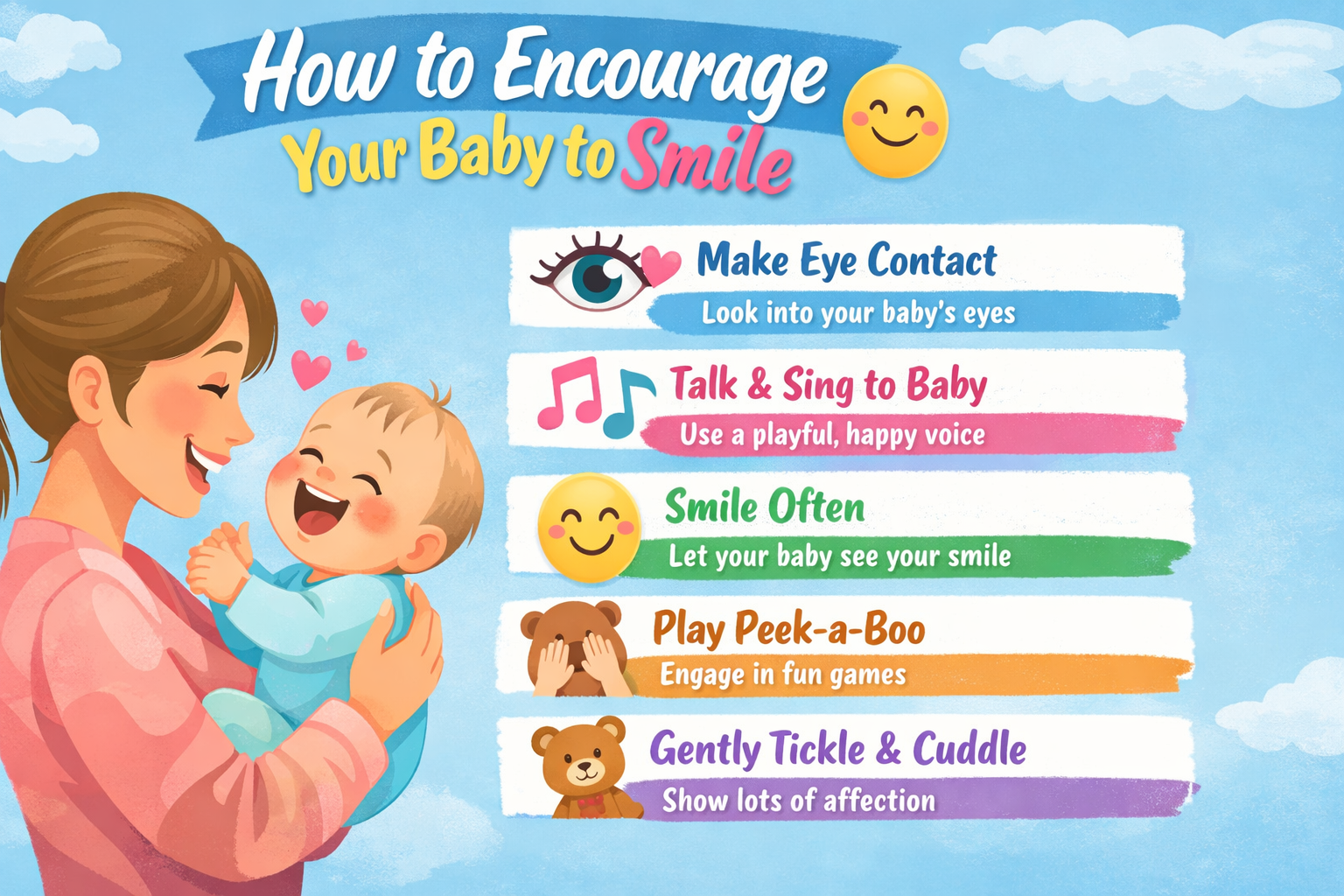
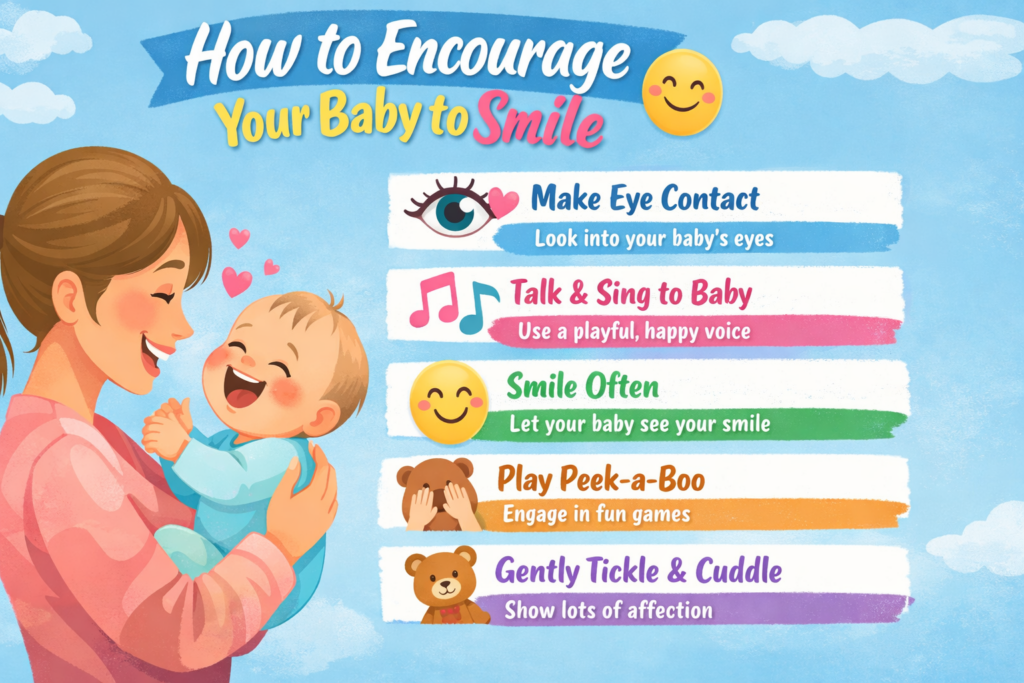
Parents naturally want to see their baby smile more often. While development happens naturally, certain interactions can help stimulate smiling.
Helpful techniques include:
Babies learn social behavior by copying adults. When parents smile and interact warmly, babies are more likely to respond with smiles.
Many new parents unknowingly worry too early about developmental milestones. One common mistake is comparing babies with others. Every baby develops on their own timeline, and slight differences are normal.
Another mistake is expecting immediate social responses from newborns. During the first month, babies are primarily adjusting to life outside the womb. Their brains are still forming essential connections.
Parents should also avoid overstimulating babies with loud noises or bright lights in an attempt to provoke smiles. Gentle interaction works best.
Dr. Tanya Altmann, a pediatrician and spokesperson for the American Academy of Pediatrics, explains that smiling is a critical social milestone. According to her research, babies who regularly engage in face-to-face interaction with caregivers tend to develop stronger emotional communication skills.
Experts recommend daily bonding activities such as talking, cuddling, and smiling at babies to encourage emotional development.
While most babies begin smiling by 2 months, parents should consult a pediatrician if their baby does not show any social smiling by 3 months of age.
Possible concerns may include:
Early medical evaluation helps ensure babies receive appropriate support if needed.
Suggested articles for your parenting blog:
Reliable medical sources referenced:
Most babies show their first real social smile around 6 to 8 weeks old.
Yes, but it is usually a reflex smile rather than a true emotional response.
Babies typically begin laughing between 3 and 4 months.
Premature babies usually smile based on their corrected age, often around 6–10 weeks.
Ultrasound studies show facial expressions similar to smiles appearing around 26 weeks of pregnancy.
Understanding when do babies smile helps parents appreciate one of the most beautiful milestones in early childhood development. Most babies begin showing genuine social smiles between 6 and 8 weeks, while reflex smiles may appear even earlier. These early expressions are more than just adorable moments — they represent important neurological and emotional development.
Watching your baby smile for the first time is unforgettable. It signals the beginning of real communication, emotional bonding, and social interaction between parent and child. With patience, warmth, and consistent interaction, parents can encourage their baby’s natural development and enjoy countless smiles along the way.
This article is for informational purposes only and does not replace professional medical advice. Always consult a qualified pediatrician or healthcare provider regarding your baby’s health and development.