Physical Address
304 North Cardinal St.
Dorchester Center, MA 02124
Physical Address
304 North Cardinal St.
Dorchester Center, MA 02124

Every parent knows the moment.
Your baby fusses, wiggles, cries — and you rush in.
But sometimes you wonder: should I step back so my baby can learn to settle?
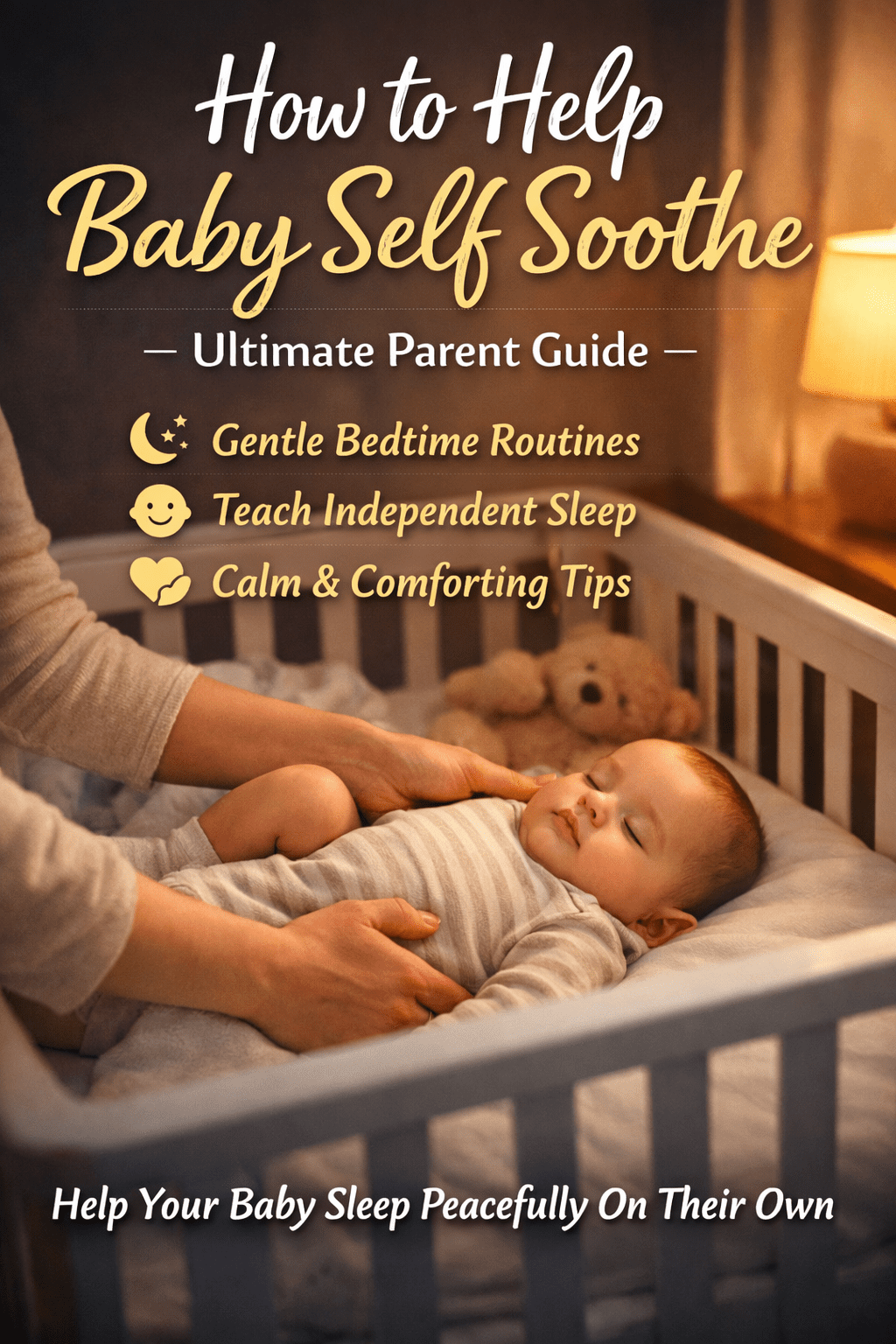
Learning how to help baby self soothe is one of the most emotional parenting challenges. It sits right between responsiveness and independence.
Parents often worry:
You are not alone in these questions.
The truth is reassuring: self-soothing is not something babies must “force learn.” It is a gradual developmental skill supported by loving caregivers.
In this ParentNest guide, you’ll discover research-informed, gentle ways to help your baby develop calm —
while preserving connection and trust.
To help baby self soothe, create predictable routines, respond consistently, and allow brief opportunities for babies to settle with gentle support nearby. Techniques like pausing before responding, offering comfort objects, using sleep cues, and reducing stimulation help babies gradually develop independent calming skills without stress.
Self-soothing is a baby’s ability to calm themselves from mild distress or transition between sleep cycles.
It does not mean ignoring crying.
Instead, it includes:
Self-soothing exists on a spectrum, supported by caregiver presence.
Self-regulation is foundational for:
Helping babies develop calming skills supports lifelong emotional resilience.
Self-soothing emerges gradually.
| Age | Development |
|---|---|
| Newborn | External soothing needed |
| 2–3 months | Early calming attempts |
| 4–6 months | Increased regulation ability |
| 6–9 months | Stronger sleep self-settling |
| 9–12 months | Emotional regulation growth |
There is no single “start date.”
Parents often ask how to know readiness.
Look for:
Readiness signals opportunity.
Research referenced by organizations such as World Health Organization, Mayo Clinic, Centers for Disease Control and Prevention, and HealthyChildren.org highlights that infant calming ability develops through co-regulation.
This means babies first calm with caregivers before internalizing those patterns.
Guidance from NHS and American Academy of Pediatrics emphasizes:
Self-soothing grows from connection, not separation.
Wait 30–60 seconds before responding to mild fussing.
This allows babies to attempt settling.
Songs, phrases, or lighting create predictable signals.
Patting or shushing supports calm while encouraging independence.
Babies naturally find self-comfort through sucking.
Gradually decrease rocking intensity.
Routine builds nervous system expectation.
Quiet environments reduce regulation demands.
Soft cloths or comfort items promote security.
Offer comfort while reducing intensity over time.
Skills emerge through repeated experience.
Same sequence nightly.
Not fully asleep.
Observe response.
Pat or voice reassurance.
Pattern recognition builds skill.
Gentle consistency is key.
Self-soothing skills also grow during wake periods.
Helpful methods:
Day calm supports night calm.
Night waking is developmental.
To support self-soothing:
Night interactions shape expectations.
✔ Dim lighting
✔ Comfortable temperature
✔ White noise
✔ Minimal visual stimulation
✔ Safe sleep surface
✔ Familiar sleep location
Environment reduces regulation load.
| Age | Typical Ability |
|---|---|
| 0–2 months | External soothing dominant |
| 3–4 months | Early self-calming attempts |
| 5–6 months | Improved settling |
| 7–9 months | Stronger independent sleep |
| 10–12 months | Emotional regulation growth |
Progress is gradual.
Understanding development is one of the most important parts of learning how to help baby self soothe. Babies cannot calm themselves the same way at every stage.
Their brain, nervous system, and sleep cycles mature gradually.
At this stage, babies rely heavily on caregivers.
They cannot regulate emotions independently yet.
Helpful approaches:
👉 Goal: Build security, not independence.
This foundation later supports self-soothing ability.
Many babies begin experimenting with calming behaviors.
You may notice:
Ways to help:
👉 This is often the first stage parents explore how to help baby self soothe.
Sleep cycles mature and object permanence develops.
Babies may wake and call for reassurance.
Support learning by:
👉 Gentle practice works best here.
Babies now understand patterns and expectations.
Self-soothing behaviors may include:
Parents can:
👉 Consistency drives progress.
Consistency builds confidence.
Self-soothing is developmental learning.
Trust gradual growth.
Tools enhance consistency.
These reflect infant development research trends.
Early attempts appear around 2–3 months, with stronger ability developing after 4–6 months.
Yes. When paired with responsive caregiving, it supports emotional development.
No. It involves brief opportunities to settle with caregiver support.
Yes. It helps babies transition between sleep cycles independently.
Learning new skills can involve frustration before mastery.
Often weeks of gradual, consistent practice.
Adjust approach, review readiness, and prioritize responsiveness.
Learning how to help baby self soothe is less about teaching independence and more about guiding emotional growth.
Through routines, gentle pauses, responsive comfort, and predictable environments, babies gradually build calming skills rooted in security.
There will be nights of progress and nights of regression. That is normal.
What matters most is consistency, warmth, and patience.
You are not pushing your baby away — you are walking beside them as they learn calm.
And that is powerful parenting.