Physical Address
304 North Cardinal St.
Dorchester Center, MA 02124
Physical Address
304 North Cardinal St.
Dorchester Center, MA 02124


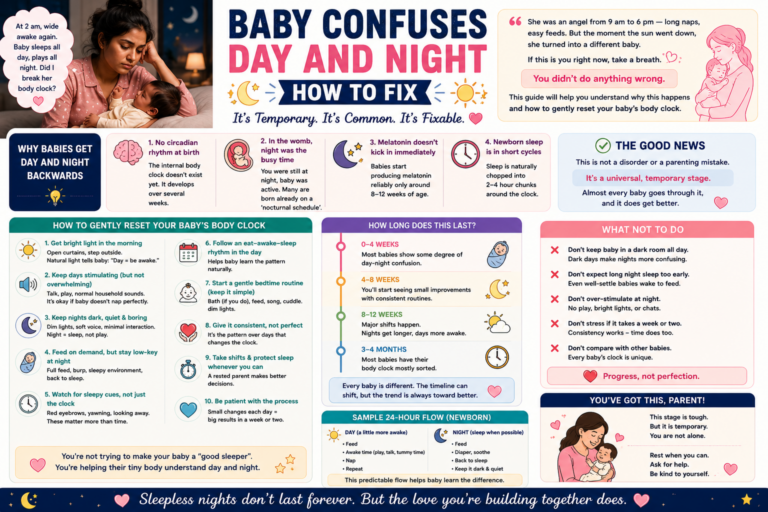
It’s 2:13 a.m. Your baby is awake again.
You rock, shush, feed, and walk the hallway for what feels like the hundredth time this week. Meanwhile, social media and parenting forums debate “cry it out” versus co-sleeping — leaving many parents feeling confused, guilty, and exhausted.
If you’ve been searching for sleep training without crying, you are not alone.
Many parents want better sleep without tears, stress, or emotional overwhelm. The good news? Gentle sleep approaches exist — and they work.
In this comprehensive guide from ParentNest, you’ll learn:
Most importantly, you’ll gain confidence to help your baby sleep while preserving connection and trust.
Let’s begin.
Sleep training without crying is a gentle approach that helps babies develop independent sleep skills while minimizing distress. Instead of leaving babies to cry alone, parents use responsive techniques like routine building, gradual withdrawal, comforting presence, and environment optimization.
These methods focus on connection, predictability, and emotional safety, making them ideal for parents seeking calm, attachment-friendly sleep solutions.
Gentle sleep training, often called the no cry sleep method, prioritizes responsiveness and emotional security.
Instead of sudden behavioral changes, parents make small, gradual adjustments that teach sleep skills over time.
This approach recognizes a simple truth: sleep is learned — but it doesn’t need to be forced.
Understanding night waking reduces frustration and helps parents choose realistic strategies.
1. Immature circadian rhythm
Newborn sleep cycles differ from adults.
2. Small stomach capacity
Frequent feeding is normal in early months.
3. Sleep cycle transitions
Babies wake between cycles more often.
4. Separation awareness
Around 6–10 months, attachment peaks.
5. Developmental leaps
Motor and cognitive growth can disrupt sleep.
According to the American Academy of Pediatrics, night waking in infancy is developmentally typical and often temporary.
Knowing this helps parents shift from “fixing sleep” to supporting sleep maturation.
Gentle sleep training offers more than rest.
Parents often report improved confidence alongside improved sleep.
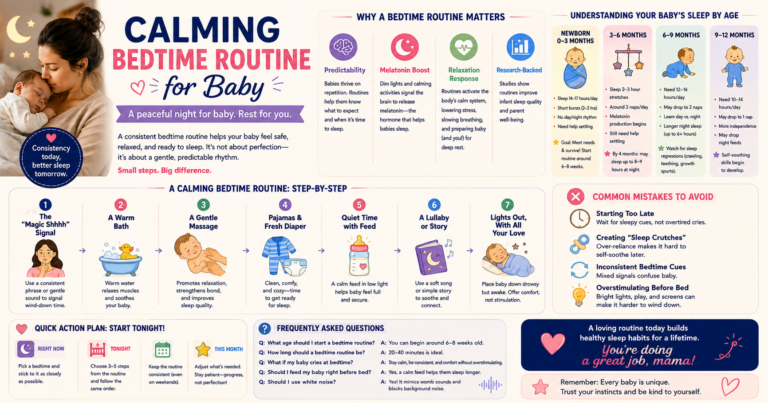
Babies thrive on patterns.
Try:
Routine signals safety and sleep readiness.
Sleep sacks, white noise, and dim lighting act as powerful sleep triggers.
Consistency builds neurological associations.
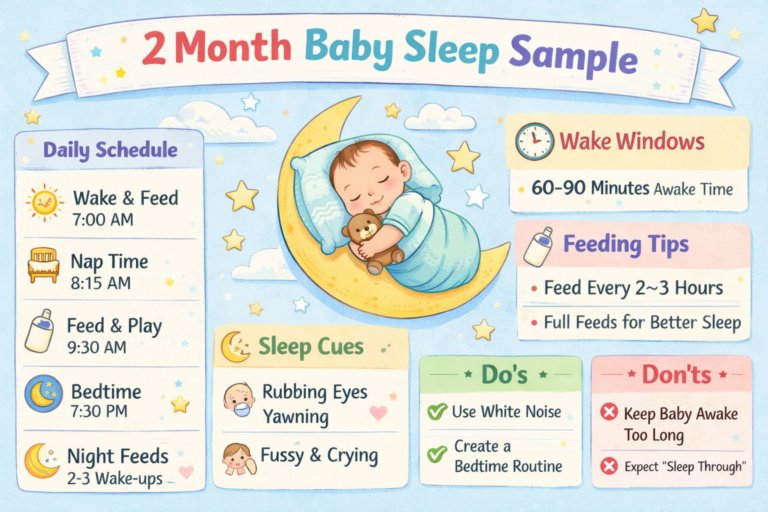
Overtired babies struggle to fall asleep.
Watch for cues:
Instead of immediate pickup, try:
This supports independence while maintaining connection
Sit near your baby while they fall asleep. Gradually move farther away over days.
This provides reassurance without dependency.
Reduce assistance slowly:
Small changes prevent distress.
Comfort fully, then return baby to bed awake.
Repeat calmly as needed.
Combine multiple cues (song + sack + sound) so sleep isn’t dependent on one action.
Ideal sleep space:
Environmental optimization alone improves sleep dramatically.
Babies with full emotional “tanks” often separate more easily at night.
Gentle rocking before sleep — but stop before full sleep.
Pause briefly before intervening.
Sometimes babies resettle independently.
Better naps often equal better nights.
Sleep builds sleep.
Separate feeding from sleep gradually to avoid feed-to-sleep dependency.
Growth spurts temporarily disrupt progress.
Stay consistent.
An early bedtime often prevents overtiredness.
No method fits every child.
Gentle sleep training is flexible by design.
| Age | Focus | Strategy |
|---|---|---|
| 0–3 months | Regulation | Respond quickly, build routine |
| 4–6 months | Foundations | Introduce gentle settling |
| 6–9 months | Skill building | Gradual independence |
| 9–12 months | Separation phase | Reassurance methods |
| 12–24 months | Boundaries | Consistent routine + comfort |
Emma’s 5-month-old woke hourly.
Solution:
Result: 3-hour stretches within 10 days.
Noah nursed to sleep every time.
Solution:
Result: Independent sleep within 2 weeks.
Liam cried when placed down.
Solution:
Result: Reduced bedtime crying significantly.
Sleep tools don’t replace parenting — but they can support success.
Budget items often work equally well. Focus on consistency, not price.
| Method | Parent presence | Speed | Best for |
|---|---|---|---|
| Chair method | High | Moderate | Separation anxiety |
| Pick-up put-down | High | Slow | Younger babies |
| Gradual withdrawal | Medium | Moderate | Gentle transition |
| Responsive settling | High | Flexible | Sensitive babies |
Sleep consultant insights:
Consistency drives learning.
Early bedtime prevents battles.
Light leaks can derail sleep.
Sleep development is cyclical.
Temperament differences are normal.
Safe sleep must always come first.
Guidance supported by World Health Organization and pediatric bodies includes:
Gentle sleep training should never override safety practices.
Yes. Research and parent experience show gradual methods improve sleep while maintaining attachment.
Typically 1–3 weeks depending on consistency and temperament.
Newborns benefit from routines but not formal training.
Most babies achieve longer stretches between 6–12 months.
Crying is communication. Gentle methods focus on responsiveness rather than elimination.
Yes, especially in the first year when nutritionally needed.
Yes, but expectations should be flexible.
No — they build adaptable sleep skills.
If you’ve been navigating sleepless nights, conflicting advice, and emotional exhaustion, remember this:
You are not doing anything wrong.
Your baby isn’t broken.
Sleep is a developmental journey — not a performance metric.
Sleep training without crying offers a compassionate path forward. One where learning happens alongside comfort. Where independence grows without disconnection. And where parents can finally rest without guilt.
Progress may feel slow some nights. Yet over days and weeks, gentle consistency transforms bedtime from a struggle into a rhythm.
And that’s a powerful shift.
You deserve rest. Your baby deserves comfort. And both can exist together.
Start with one gentle change tonight — a routine, a cue, a pause, a comforting phrase.
Small steps create big sleep wins.
Keep learning, stay consistent, and trust your parenting instincts.
Better nights are coming. 🌙