Physical Address
304 North Cardinal St.
Dorchester Center, MA 02124
Physical Address
304 North Cardinal St.
Dorchester Center, MA 02124

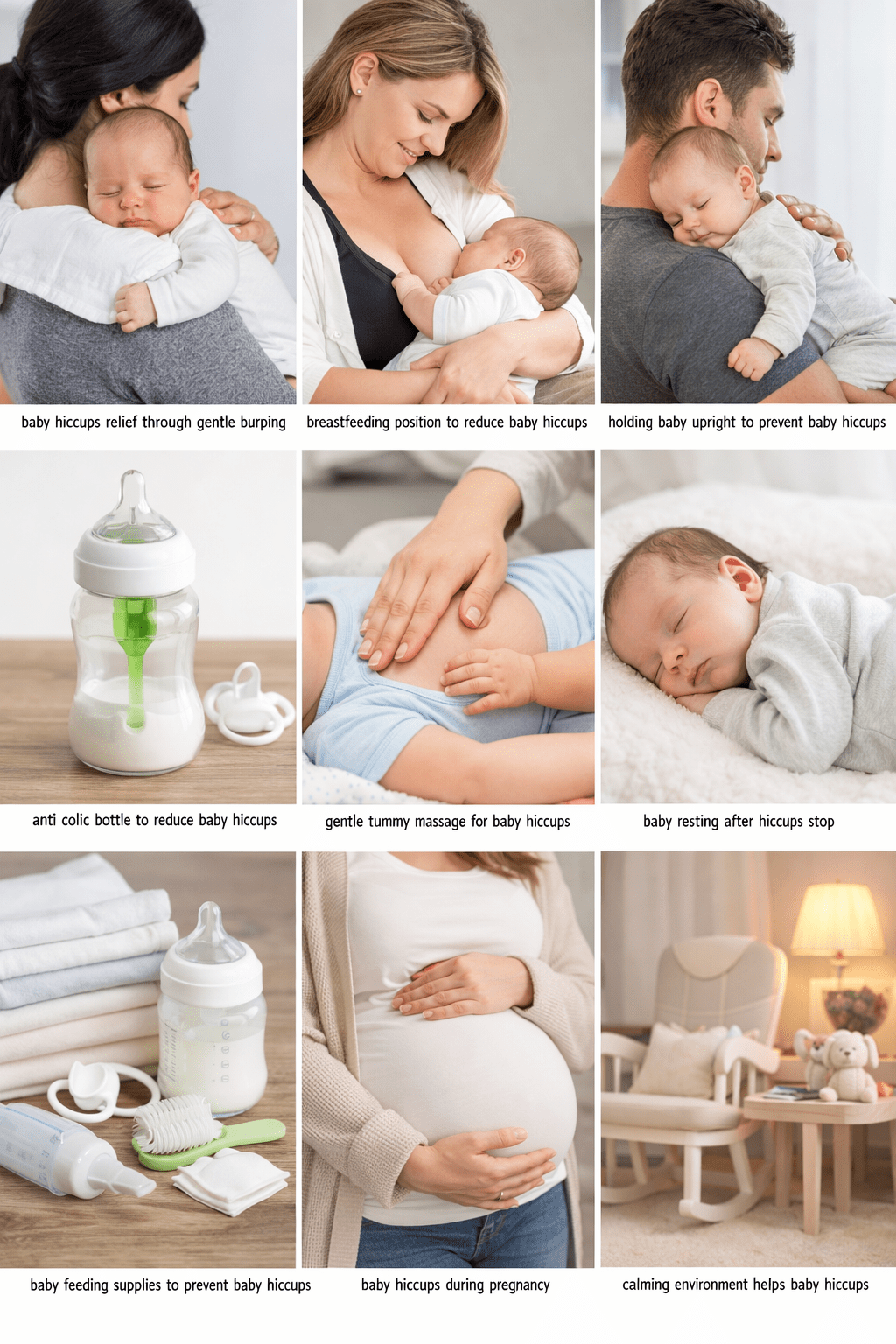
The first time you notice baby hiccups, it can be surprising.
Your newborn’s tiny body jumps. Their little chest makes that soft “hic” sound. And suddenly, you’re wondering… Is this normal? Is my baby okay?
Take a deep breath.
Most baby hiccups are completely normal. In fact, they’re very common in newborns and young infants.
Still, when you’re a first-time parent, every sound and movement feels big. You want to do the right thing. You want your baby comfortable.
In this ParentNest guide, we’ll walk through:
Let’s make this simple and stress-free.
Baby hiccups are usually caused by tiny spasms in the diaphragm.
The diaphragm is a thin muscle under the lungs. When it tightens suddenly, the vocal cords close quickly. That creates the “hic” sound.
Here are the most common reasons baby hiccups happen:
A very full tummy can press against the diaphragm.
This is one of the most common causes in newborns.
Babies often swallow air while:
Extra air in the stomach can trigger hiccups.
Your baby’s digestive system is still developing.
Their tiny bodies are learning how to coordinate breathing, sucking, and swallowing.
Hiccups are part of that learning process.
A quick shift from warm to cool can sometimes cause mild diaphragm spasms.
For example:
Believe it or not, babies can hiccup when they get excited or move a lot.
Their nervous systems are still maturing.
Are baby hiccups normal?
Yes. Baby hiccups are common and usually harmless. They often happen after feeding and do not bother most babies.
Most of the time, baby hiccups are harmless.
But as loving parents, it’s good to observe.
Here’s what’s normal:
Here’s when to speak with your pediatrician:
According to organizations like the American Academy of Pediatrics, hiccups alone are rarely a medical concern. But if they come with feeding problems or distress, it’s worth discussing.
Trust your instincts. You know your baby best.
Here’s the good news: most baby hiccups stop on their own within a few minutes.
But if you’d like to gently help, try these safe, parent-approved tips.
Burping releases trapped air.
Try:
Sometimes this alone stops the hiccups.
If hiccups happen during feeding:
A slower pace means less air swallowed.
Hold baby upright for 10–20 minutes.
This helps digestion and reduces pressure on the diaphragm.
Sucking can help relax the diaphragm.
For breastfeeding moms, lactation experts like La Leche League suggest waiting until breastfeeding is established before frequent pacifier use.
Soft circular movements on baby’s belly may help trapped air move.
Always be gentle.
Please avoid:
These old myths are unsafe.
Here’s a simple action plan:
| Step | What To Do | Why It Helps |
|---|---|---|
| 1 | Pause feeding | Prevents more air intake |
| 2 | Burp gently | Releases trapped air |
| 3 | Hold upright | Reduces diaphragm pressure |
| 4 | Stay calm | Babies sense stress |
| 5 | Wait it out | Most hiccups stop naturally |
Remember: calm parent = calm baby.
Let’s clear up some myths about baby hiccups.
Most of the time, it doesn’t.
Newborn bodies are still adjusting to life outside the womb.
Some parents think more milk helps.
But overfeeding can actually make hiccups worse.
Poor positioning leads to extra air.
Make sure:
It’s normal to worry.
But baby hiccups are rarely an emergency.
These products may help reduce air intake and support digestion.
(Affiliate disclosure: ParentNest may earn a small commission at no extra cost to you.)
Look for bottles designed to reduce air bubbles.
Many parents love:
They use vent systems to reduce swallowed air.
A firm nursing pillow keeps baby aligned and comfortable during feeding.
Proper alignment = less air.
For newborns, slow-flow nipples help control milk speed.
Too fast = gulping = more hiccups.
Soft, absorbent cloths make burping easier and cleaner.
Trust us — you’ll want backups everywhere.
Safety always comes first.
Here’s what to remember:
If hiccups are paired with:
Seek medical advice immediately.
For trusted guidance, consult your pediatrician or reliable sources like the Centers for Disease Control and Prevention.
Most baby hiccups last 5–15 minutes and stop on their own.
Yes! Many moms feel rhythmic movements during pregnancy. These are often hiccups.
Usually no. Most babies stay calm and continue feeding or resting.
Pause and burp gently. If baby seems fine, you can continue slowly.
Not always. Frequent discomfort, spitting up, and poor feeding are stronger signs. Speak to your doctor if concerned.
You can reduce them by:
You can reduce them by:
Feeding before baby gets too hungry
Burping regularly
Keeping baby upright after feeds
Avoiding overfeeding
Consider referencing trusted sources like:
Linking to authoritative parenting and health resources builds trust and improves SEO credibility.
When you see baby hiccups, it’s easy to worry.
But here’s the truth:
Your baby’s body is learning. Growing. Adjusting.
Those tiny hic sounds? They’re usually just part of the journey.
Parenthood is full of small surprises.
You won’t always feel confident. And that’s okay.
The fact that you’re reading this — learning, caring, checking — shows how deeply you love your child.
At ParentNest, we believe calm, informed parents raise confident children.
You’ve got this.