
Introduction: The Beautiful but Overwhelming First Month
Those first weeks with your baby can feel magical — and exhausting at the same time.
You might wonder:
- Is my baby eating enough?
- Why are they crying again?
- Am I doing this right?
If you feel uncertain, you are not alone.
The first month is a period of rapid adjustment for both baby and parents. Your newborn is learning how to eat, sleep, and communicate outside the womb, while you are learning how to respond.
This 1 month baby care guide will walk you through everything you need to know — feeding, sleep, development, hygiene, soothing, safety, and emotional bonding — using expert-backed insights and real-life parenting wisdom.
By the end, you will feel calmer, more confident, and better prepared to nurture your baby’s early growth.
✅ Quick Answer Box
1 month baby care focuses on feeding every 2–3 hours, ensuring safe sleep, gentle hygiene, responsive soothing, monitoring growth, and building emotional bonding. Babies at this age sleep 14–17 hours daily, communicate mainly through crying, and depend on caregivers for comfort, warmth, and regulation.
Understanding Your 1 Month Baby
Your baby is still transitioning from womb to world.
At 1 month, babies typically:
- Sleep most of the day
- Feed frequently
- Start making eye contact
- Show reflex movements
- Cry as primary communication
According to guidance from the World Health Organization, newborn care during the first month is critical for long-term health and development.
What your baby needs most
- Warmth
- Nutrition
- Safety
- Responsive caregiving
- Emotional connection
Your baby cannot be spoiled at this stage. Responding builds trust and neurological security.
Feeding Guide for 1 Month Baby Care
Feeding is the cornerstone of 1 month baby care.
🍼 How often should a 1 month old eat?
Most babies feed:
- Every 2–3 hours
- 8–12 times per day
- On demand
Cluster feeding is normal.
Breastfeeding tips
Experts from Mayo Clinic recommend:
- Feed when baby shows early hunger cues
- Ensure deep latch
- Alternate breasts
- Monitor wet diapers
Hunger cues include:
- Rooting
- Hand-to-mouth movements
- Lip smacking
- Restlessness
Crying is a late hunger sign.
Bottle feeding tips
- Pace feeding slowly
- Burp midway and after feeds
- Hold baby upright
- Avoid propping bottles
📊 Feeding amount guide
| Age | Average Intake |
|---|---|
| Week 1–2 | 30–60 ml per feed |
| Week 3–4 | 60–90 ml per feed |
Remember — babies vary.
Sleep is unpredictable in the first month.
⏰ How much do 1 month babies sleep?
Typically:
- 14–17 hours daily
- Short sleep cycles
- No day-night rhythm yet
Safe sleep rules
Guidance from CDC emphasizes:
- Baby sleeps on back
- Firm mattress
- No pillows or loose bedding
- Separate sleep surface
- Room sharing recommended
Creating gentle sleep habits
- Keep lights low at night
- Talk softly during nighttime care
- Use daytime light exposure
- Establish calming bedtime routine
Consistency builds circadian rhythm.
Newborn Hygiene and Skin Care
Newborn skin is delicate and adaptive.
🛁 Bathing frequency
- 2–3 times weekly is enough
- Sponge baths until cord falls
- Use mild cleanser
- Keep bath short
Umbilical cord care
- Keep clean and dry
- Fold diaper below stump
- Avoid pulling
- Watch for redness or odor
Diaper care
- Change every 2–3 hours
- Use barrier cream if redness appears
- Allow diaper-free time
According to NHS guidance, frequent diaper changes help prevent rash and infection.
Soothing and Understanding Crying
Crying is communication — not misbehavior.
Common reasons babies cry
- Hunger
- Discomfort
- Fatigue
- Gas
- Need for closeness
- Overstimulation
Effective soothing techniques
- Skin-to-skin contact
- Gentle rocking
- Swaddling
- White noise
- Paced walking
- Feeding
The “pause” approach
Wait briefly before intervening.
Some babies self-settle between sleep cycles.
Development Milestones at 1 Month
Every baby develops uniquely, yet common patterns exist.
Expected milestones
- Brief eye contact
- Startle reflex
- Turning toward sound
- Short tummy time tolerance
- Different crying tones
According to HealthyChildren.org, tummy time from early weeks strengthens neck and prevents flat head.
How to encourage development
- Talk often
- Hold baby upright
- Offer tummy time daily
- Use facial expressions
- Provide gentle sensory exposure
Emotional Bonding and Attachment
Attachment begins immediately after birth.
Why bonding matters
- Builds emotional security
- Supports brain development
- Reduces stress hormones
- Promotes breastfeeding success
Bonding activities
- Eye contact
- Talking
- Singing
- Baby massage
- Skin-to-skin
- Responsive caregiving
Bonding happens through ordinary moments.
Health Monitoring and Vaccination Awareness
Regular health observation is essential.
Signs of healthy baby
- Regular feeding
- Wet diapers (6–8 daily)
- Alert periods
- Weight gain
- Responsive behavior
When to seek help
- Fever
- Poor feeding
- Extreme lethargy
- Persistent vomiting
- Breathing difficulty
The American Academy of Pediatrics recommends routine newborn checkups to monitor growth and development.
Safe Handling and Daily Care Routine
Handling newborns safely builds confidence.
Safe handling basics
- Support head and neck
- Avoid shaking
- Keep nails trimmed
- Use safe surfaces
- Wash hands before handling
Sample daily routine
| Time | Activity |
|---|---|
| Morning | Feed + cuddle |
| Midday | Sleep + diaper change |
| Afternoon | Tummy time |
| Evening | Bath (occasionally) |
| Night | Feed + soothing |
Flexibility is key.
✅ Practical Parenting Checklist
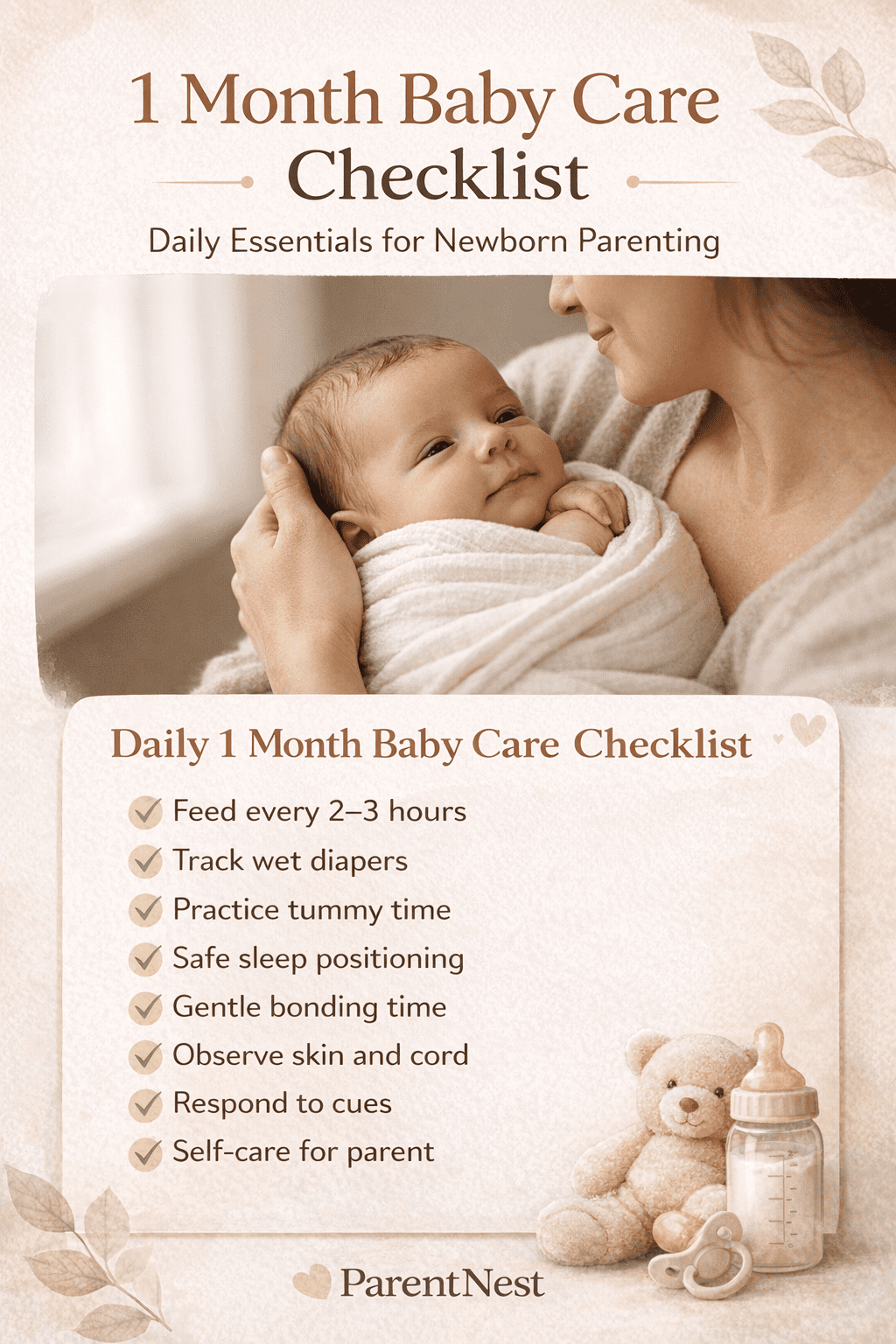
Daily 1 month baby care checklist
✔ Feed every 2–3 hours
✔ Track wet diapers
✔ Practice tummy time
✔ Safe sleep positioning
✔ Gentle bonding time
✔ Observe skin and cord
✔ Respond to cues
✔ Self-care for parent
⚠️ Common Mistakes Parents Make
- Waiting too long to feed
- Overstimulation with visitors
- Comparing babies
- Overbathing
- Ignoring parent exhaustion
- Unsafe sleep practices
- Excessive worry over crying
Remember — learning takes time.
⭐ Expert Pro Tips
- Babies thrive on predictability, not strict schedules
- Use dim lights during night care
- Wear baby for soothing and bonding
- Learn baby’s unique cry patterns
- Prioritize parental rest whenever possible
- Trust instincts — they improve quickly
🧸 Recommended Helpful Tools for Parents
(Soft affiliate-friendly section)
Feeding tools
- Nursing pillow
- Bottle sterilizer
- Burp cloth sets
Sleep tools
- Swaddle blankets
- White noise machine
- Night lamp
Hygiene tools
- Baby bathtub
- Gentle wipes
- Soft hooded towels
Tracking tools
- Baby tracker apps
- Growth journal
- Feeding log notebook
📊 Parenting Statistics You Should Know
- Newborns cry 1–3 hours daily on average
- Around 80% of parents report sleep deprivation in first month
- Skin-to-skin contact increases breastfeeding success by 30–50%
- Room sharing reduces sleep-related risks significantly
- Babies double birth weight by ~5 months
These statistics normalize early challenges.
Frequently Asked Questions
How often should I feed my 1 month baby?
Every 2–3 hours or on demand. Hunger cues are more reliable than the clock.
How long should tummy time be at 1 month?
Start with 1–2 minutes multiple times daily and gradually increase.
Why does my 1 month baby cry so much?
Crying is normal communication for hunger, fatigue, gas, or comfort needs.
Can I take my 1 month baby outside?
Yes, brief outings are fine while avoiding crowded environments.
How many wet diapers are normal?
About 6–8 wet diapers daily indicate adequate hydration.
Is it normal for babies to sleep all day?
Yes, newborns sleep 14–17 hours with short wake periods.
When does newborn sleep improve?
Sleep patterns gradually mature over 2–3 months.
Encouraging Conclusion
The first month with your baby is intense, emotional, and unforgettable.
You may feel tired, unsure, and overwhelmed — yet you are exactly what your baby needs.
This 1 month baby care journey is not about perfection.
It is about presence, responsiveness, and gentle learning.
Each feed, cuddle, and comforting moment builds your baby’s sense of safety and love.
Trust the process.
Trust your instincts.
And most importantly — trust yourself.
You are doing better than you think.