
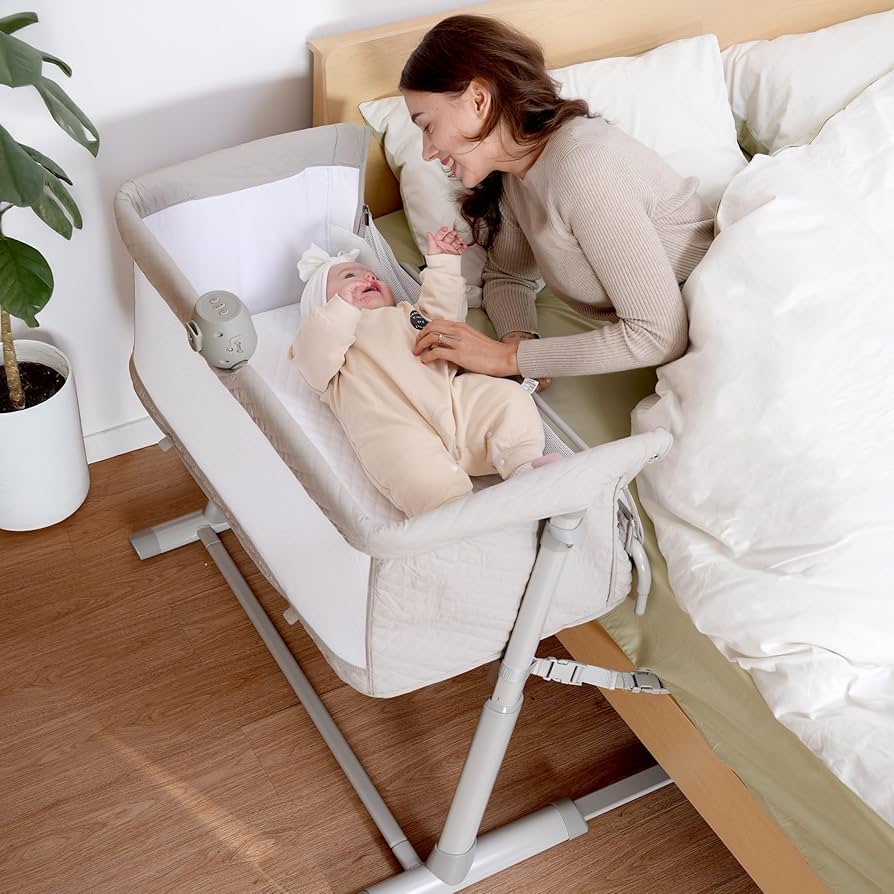
Knowing when to move baby from bassinet to crib safely is one of the most common questions new parents ask. The transition can feel emotional and sometimes confusing, especially when your baby seems comfortable in their bassinet.
However, bassinets are designed for short-term use. As babies grow, their weight, mobility, and sleep patterns change — and safety guidelines become increasingly important.
Many parents wonder exactly when to move baby from bassinet to crib safely, especially during the first few months when sleep patterns are still developing. Understanding the right timing helps prevent unnecessary risks and supports better sleep transitions.
This complete guide explains:
- When it is safe to move your baby
- Signs your baby has outgrown the bassinet
- Safety recommendations
- Step-by-step transition tips
- Common mistakes to avoid
- How to make the move smooth and stress-free
By the end of this article, you’ll feel confident about timing and safety.
Why the Bassinet Is Only Temporary
Bassinets are designed for newborns during the earliest months of life.
They are ideal because:
- They fit next to your bed
- They support room-sharing
- They are compact and convenient
- They help with nighttime feeding
However, bassinets have strict weight and mobility limits.
Understanding when to move a baby from a bassinet to a crib safely begins with understanding those limits.
How Long Can a Baby Sleep in a Bassinet?
Most bassinets are safe for:
👉 Up to 4–6 months
OR
👉 Until baby reaches weight limit (often 15–20 lbs)
OR
👉 Until the baby shows signs of rolling or pushing up
Always check your specific manufacturer guidelines.
Weight limits vary.
The Most Important Signs It’s Time to Move to a Crib
One of the most important factors in deciding when to move baby from bassinet to crib safely is observing developmental milestones rather than relying only on age.
Parents should not wait for an incident to happen.
Here are clear signs that indicate it may be time.
1️⃣ Baby Is Rolling Over
Rolling significantly increases mobility.
Once the baby can:
- Roll from back to side
- Roll from tummy to back
- Push up on hands
The bassinet may no longer be safe due to limited space and lower side walls.
Rolling is one of the strongest signs that it’s time to move.
2️⃣ Baby Is Reaching Weight Limit
Check the product manual.
Even if the baby seems comfortable, exceeding weight limits can:
- Strain the bassinet structure
- Increase tipping risk
- Compromise stability
Safety guidelines exist for a reason.
3️⃣ Baby Is Pushing Up or Sitting
If your baby attempts to:
- Push onto hands and knees
- Sit up
- Grab sides
The bassinet may not provide adequate containment.
4️⃣ Baby Looks Crowded
If baby:
- Touches both sides easily
- Moves frequently
- Seems cramped
More space may improve sleep comfort.
Is There a Specific Age to Move Baby from Bassinet to Crib?
There is no universal age.
However, most transitions happen between:
👉 3 to 6 months
The correct answer depends more on development than age.
When deciding when to move baby from bassinet to crib safely, always prioritize physical readiness over calendar age.
Is It Safe to Move Baby to a Separate Room?
Many parents worry about room-sharing changes.
The American Academy of Pediatrics recommends room-sharing for at least the first 6 months when possible.
If moving crib into nursery:
- Ensure safe sleep setup
- Use a baby monitor
- Maintain a consistent bedtime routine
For general child sleep safety guidance, parents can review public resources such as HealthyChildren.org:
Safe Sleep Guidelines During Transition
Whether bassinet or crib, safe sleep rules remain the same.
✔ Firm mattress
✔ Fitted sheet only
✔ No pillows
✔ No loose blankets
✔ No crib bumpers
✔ Baby placed on back
Regardless of age, knowing when to move baby from bassinet to crib safely ensures that sleep space remains appropriate for your child’s growth.
For broader child safety recommendations, parents may consult the World Health Organization:
Transition does not change safety principles.
Step-by-Step: How to Transition from Bassinet to Crib
Learning when to move baby from bassinet to crib safely also includes preparing emotionally and creating a gradual adjustment plan.
Moving can feel emotional for parents and confusing for babies. A gradual plan helps.
Step 1: Start with Daytime Naps in Crib
Introduce crib during:
- One nap per day
- Calm, well-rested time
This helps baby become familiar with new sleep space.
Step 2: Keep Bedtime Routine Identical
Maintain:
- Same sleep sack
- Same lullaby
- Same lighting
- Same routine order
Consistency reduces disruption.
Step 3: Move the Bassinet Gradually (If Room-Sharing)
If the crib is in the nursery:
- Consider moving the crib into your bedroom first
- Transition the baby to nursery later
This softens the change.
Step 4: Stay Calm and Consistent
Some babies adjust immediately. Others need time.
Avoid:
❌ Switching back and forth nightly
❌ Introducing new sleep associations
❌ Overstimulating before bedtime
Patience supports success.
Common Parent Concerns About Moving to a Crib
“Will My Baby Sleep Worse?”
Temporary disruption is normal.
Cribs offer:
- More space
- Better airflow
- Longer usability
Many babies actually sleep better with room to move.
“Is the Crib Too Big?”
Cribs may look large compared to bassinets.
However:
- Size does not reduce safety
- Proper mattress fit matters more
Ensure the mattress fits snugly with no gaps.
“Should I Lower the Crib Mattress?”
Yes — if baby is mobile.
Adjust mattress height according to developmental stage.
Lower mattress when baby:
- Can sit
- Can pull up
- Attempts to stand
Safety Checklist Before Moving to Crib
Before transition, confirm:
✔ Crib meets safety standards
✔ Mattress fits tightly
✔ No loose bedding
✔ Crib placed away from windows
✔ No cords nearby
✔ Monitor properly placed
Preparation builds confidence.
Emotional Side of the Transition
Parents often feel:
- Sad about the baby growing
- Nervous about change
- Unsure about timing
These feelings are normal.
Moving to a crib is not rushing independence — it is supporting safety.
When Not to Delay the Move
You should not delay if:
- Baby exceeds weight limit
- The bassinet feels unstable
- Baby is climbing
- Baby rolls consistently
Safety always outweighs convenience.
Can Baby Move Back to the Bassinet Later?
Generally, no.
Once baby:
- Rolls
- Pushes up
- Reaches weight limit
Returning to the bassinet may not be safe.
Frequently Asked Questions
When should I move baby from bassinet to the crib safely?
Most babies transition between 3–6 months, or earlier if they reach weight limits or show rolling signs.
Is 3 months too early to move to a crib?
Not necessarily. If baby meets safety criteria, a crib is safe at any age with proper setup.
Can a baby sleep in a crib from birth?
Yes, a crib with firm mattress and fitted sheet is safe from birth.
How do I know the bassinet is no longer safe?
Rolling, pushing up, sitting attempts, and weight limit exceedance are clear signs.
What is the safest time to move baby from bassinet to crib?
The safest time to move baby from bassinet to crib safely is when your baby reaches the manufacturer’s weight limit, begins rolling, or shows signs of pushing up or sitting.
Why You Can Trust This Guide
This article was created using publicly available pediatric sleep recommendations and infant safety guidelines. The goal is to provide structured, practical guidance that supports safe decision-making.
ParentNest is committed to delivering research-informed parenting advice focused on safety and clarity.
Final Thoughts
Ultimately, knowing when to move baby from bassinet to crib safely comes down to recognizing growth signs, checking weight limits, and maintaining safe sleep practices. A crib offers long-term safety and comfort once your baby outgrows the bassinet stage.