
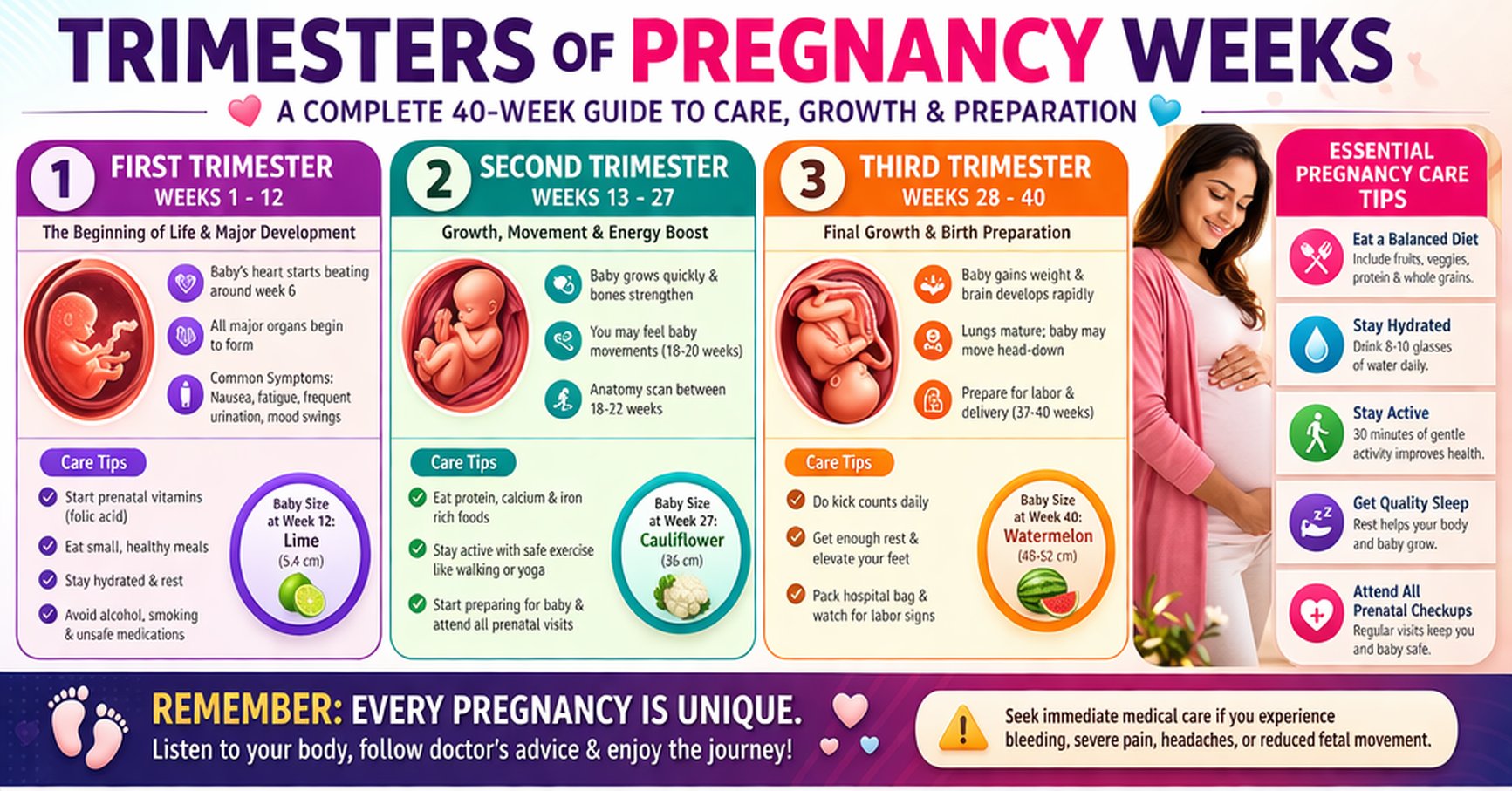
Trimesters of pregnancy weeks are divided into three stages that guide your baby’s development and your body’s changes across 40 weeks. Understanding how these weeks are structured helps parents prepare physically, emotionally, and medically for each milestone.
Pregnancy is typically calculated from the first day of your last menstrual period (LMP), even though conception happens about two weeks later. These 40 weeks are grouped into:
- First Trimester (Weeks 1–12)
- Second Trimester (Weeks 13–27)
- Third Trimester (Weeks 28–40)
In this medically reviewed guide for ParentNest.shop, you’ll learn:
- What happens in each trimester
- Week-by-week baby growth
- Common symptoms
- Doctor visit timelines
- Warning signs
- Practical parenting tips
This article references trusted medical authorities including the World Health Organization, Centers for Disease Control and Prevention, Mayo Clinic, American College of Obstetricians and Gynecologists, and American Academy of Pediatrics.
Let’s break down the trimesters of pregnancy weeks in detail.
Quick Answer Box
How are trimesters of pregnancy weeks divided?
The trimesters of pregnancy weeks are divided into three stages:
• First trimester: Weeks 1–12
• Second trimester: Weeks 13–27
• Third trimester: Weeks 28–40
Each trimester includes specific developmental milestones, symptoms, and medical checkups.
Table of Contents
Overview of Trimesters of Pregnancy Weeks
The trimesters of pregnancy weeks help healthcare providers track fetal development and maternal health.
Here’s a simple breakdown:
| Trimester | Weeks | Major Focus |
|---|---|---|
| First | 1–12 | Organ formation |
| Second | 13–27 | Growth & movement |
| Third | 28–40 | Weight gain & birth prep |
Pregnancy length averages 40 weeks, though normal delivery may occur between 37–42 weeks.
First Trimester: Weeks 1–12
The first stage of the trimesters of pregnancy weeks is crucial because all major organs begin forming.
Early Signs in Weeks 1–4
- Missed period
- Fatigue
- Breast tenderness
- Mild cramping
- Implantation spotting
Weeks 5–8
- Nausea (morning sickness)
- Heightened smell sensitivity
- Frequent urination
- Emotional changes
By week 6, baby’s heart begins beating.
By week 8:
- Brain development accelerates
- Limb buds form
- Facial features begin shaping
Weeks 9–12
- Baby develops fingers and toes
- Vital organs are forming
- Placenta takes over hormone production
Parents often have their first ultrasound during this time.
According to ACOG, prenatal visits typically begin during early first trimester.
Second Trimester: Weeks 13–27
Many call this the “golden period” of the trimesters of pregnancy weeks.
Nausea often improves.
Energy levels increase.
Weeks 13–16
- Baby’s bones strengthen
- Facial expressions develop
- External genitalia visible on ultrasound
Weeks 17–20
- Quickening (first fetal movements)
- Anatomy scan (18–22 weeks)
- Hearing develops
Parents often feel emotional connection during this phase.
Weeks 21–27
- Baby practices breathing
- Eyelids open
- Fat accumulation begins
By week 24, viability outside womb improves with medical care.
Third Trimester: Weeks 28–40
The final stage of the trimesters of pregnancy weeks focuses on growth and delivery preparation.
Weeks 28–32
- Rapid brain development
- Baby gains fat
- Stronger kicks
Doctors monitor:
- Growth scans
- Gestational diabetes
- Blood pressure
Weeks 33–36
- Baby positions head down
- Lungs mature
- Practice breathing increases
Weeks 37–40
- Full term at 39–40 weeks
- Baby averages 6–9 pounds
- Labor signs begin
According to the CDC, full-term birth reduces newborn complications.
Week-by-Week Baby Development Summary Table
| Week | Baby Size | Major Development |
|---|---|---|
| 4 | Poppy seed | Implantation |
| 8 | Raspberry | Heart beating |
| 12 | Lime | Organs formed |
| 20 | Banana | Movement felt |
| 28 | Eggplant | Eyes open |
| 32 | Squash | Brain growth |
| 36 | Papaya | Head-down position |
| 40 | Watermelon | Ready for birth |
Medical Appointments Timeline
| Weeks | Visit Purpose |
|---|---|
| 8–12 | First prenatal visit |
| 18–22 | Anatomy scan |
| 24–28 | Glucose screening |
| 32+ | Biweekly visits |
| 36+ | Weekly visits |
The WHO recommends regular antenatal care to reduce maternal risks.
Common Symptoms by Trimester
First Trimester
- Nausea
- Fatigue
- Mood swings
Second Trimester
- Back pain
- Round ligament pain
- Stretch marks
Third Trimester
- Shortness of breath
- Swelling
- Braxton Hicks contractions
Practical Parenting Preparation
Understanding trimesters of pregnancy weeks allows families to plan ahead.
First Trimester
- Start prenatal vitamins
- Avoid alcohol & smoking
- Confirm due date
Second Trimester
- Begin baby shopping
- Research pediatricians
- Plan maternity leave
Third Trimester
- Pack hospital bag
- Install car seat
- Practice kick counts
Real-Life Parenting Scenario
Meera, first-time mom, tracked trimesters of pregnancy weeks carefully.
She:
- Started prenatal vitamins at week 6
- Completed anatomy scan at week 20
- Packed hospital bag at week 34
She delivered safely at 39 weeks.
Preparation reduces anxiety.
Common Mistakes Parents Make
- Not tracking weeks accurately
- Ignoring warning signs
- Skipping prenatal visits
- Comparing pregnancies
- Delaying hospital preparation
Expert Tips
✔ Download a pregnancy week tracker
✔ Eat balanced meals rich in protein
✔ Stay hydrated
✔ Walk 20–30 minutes daily
✔ Monitor fetal movements after 28 weeks
The Mayo Clinic recommends moderate exercise unless medically restricted.
Safety & Health Notes
Seek immediate care if you experience:
- Severe abdominal pain
- Heavy bleeding
- Sudden swelling
- Reduced fetal movement
- High fever
Early intervention protects both mother and baby.
FAQ Section
How are trimesters of pregnancy weeks divided?
Weeks 1–12, 13–27, and 28–40.
Which trimester is most critical?
First trimester for organ development.
When does baby movement start?
Typically 18–20 weeks.
What week is full term?
39–40 weeks.
How many weeks is pregnancy exactly?
About 40 weeks.
Are trimesters of pregnancy weeks always exact?
They may vary slightly by provider.
When does third trimester begin?
Week 28.
Can baby survive at 28 weeks?
With advanced NICU care, survival chances increase.
Why are trimesters of pregnancy weeks important?
They guide medical care and fetal monitoring.
How do doctors calculate weeks?
From last menstrual period.
Read Also
- Cryptic Pregnancy Symptoms Negative Pregnancy Test: 15 Hidden Signs
- Growth Scan in Which Month of Pregnancy? Complete Guide
Conclusion
Understanding trimesters of pregnancy weeks empowers parents to make informed decisions at every stage.
From early organ development in the first trimester to rapid growth in the third, each week matters.
Regular prenatal care, healthy habits, and preparation improve outcomes for both mother and baby.
Stay informed, attend all checkups, and listen to your body throughout the trimesters of pregnancy weeks.
Medical Disclaimer
This article is for informational purposes only and does not substitute professional medical advice. Always consult your healthcare provider for pregnancy-related concerns.