
Swaddle to Sleep Sack: Complete Parent Guide to a Safe Transition
Swaddle to Sleep Sack transitions are one of the most important milestones in a newborn’s sleep journey. Many parents love swaddling because it helps babies sleep longer and prevents the startle reflex. However, once babies begin rolling or showing signs of movement, transitioning from a swaddle to a sleep sack becomes essential for safety.
For many families, this transition feels stressful. Parents worry about sleep regression, frequent waking, and whether their baby will feel secure without being wrapped tightly.
The good news is that with the right strategy, the swaddle to sleep sack transition can be smooth and even improve sleep quality.
In this expert guide, you will learn:
- When to switch from swaddle to sleep sack
- How to transition baby from swaddle to sleep sack
- Signs your baby is ready
- Safety recommendations from pediatric experts
- Common mistakes to avoid
This guide is designed for new parents, caregivers, and expecting families who want a safe and gentle sleep routine.
Quick Answer Box
When should you transition from swaddle to sleep sack?
Most babies should transition from a swaddle to a sleep sack between 8–12 weeks of age or when they show signs of rolling over. Sleep sacks allow babies to move their arms freely while still staying warm and comfortable, reducing the risk of unsafe sleep positions.
What Is a Swaddle?
Swaddling is the practice of wrapping a baby snugly in a blanket to mimic the feeling of being inside the womb.
Benefits include:
- Reduces the Moro (startle) reflex
- Helps newborns sleep longer
- Provides comfort and security
- Prevents unnecessary movement
However, swaddling should only be used during the newborn stage.
According to the American Academy of Pediatrics (AAP), swaddling must stop once a baby begins attempting to roll.
What Is a Sleep Sack?
A sleep sack (also called a wearable blanket) is a zippered sleep garment designed to keep babies warm without loose blankets.
Sleep sacks allow:
- Arm movement
- Safe rolling
- Temperature regulation
Unlike swaddles, sleep sacks do not restrict movement, which makes them safer for older babies.
Swaddle to Sleep Sack: Key Differences
| Feature | Swaddle | Sleep Sack |
|---|---|---|
| Arm movement | Restricted | Free |
| Age range | 0–3 months | 3–24 months |
| Rolling safety | Unsafe if baby rolls | Safe |
| Warmth | Moderate | High |
| Sleep training | Helpful early | Better long-term |
When to Switch From Swaddle to Sleep Sack
Parents often ask: At what age should you transition from swaddle to sleep sack?
Most pediatricians recommend transitioning when babies are:
- 8–12 weeks old
- Showing signs of rolling
- Breaking out of swaddles
- Pushing arms upward
The CDC and AAP safe sleep guidelines emphasize stopping swaddling once rolling begins.
Early Signs Your Baby Is Ready
Watch for these signals:
1. Rolling attempts
Your baby begins turning onto their side.
2. Breaking out of swaddle
If arms keep escaping, the baby may want more freedom.
3. Increased movement
Leg kicking and arm stretching during sleep.
4. Swaddle resistance
Crying or fussing when wrapped.
How to Transition Baby From Swaddle to Sleep Sack
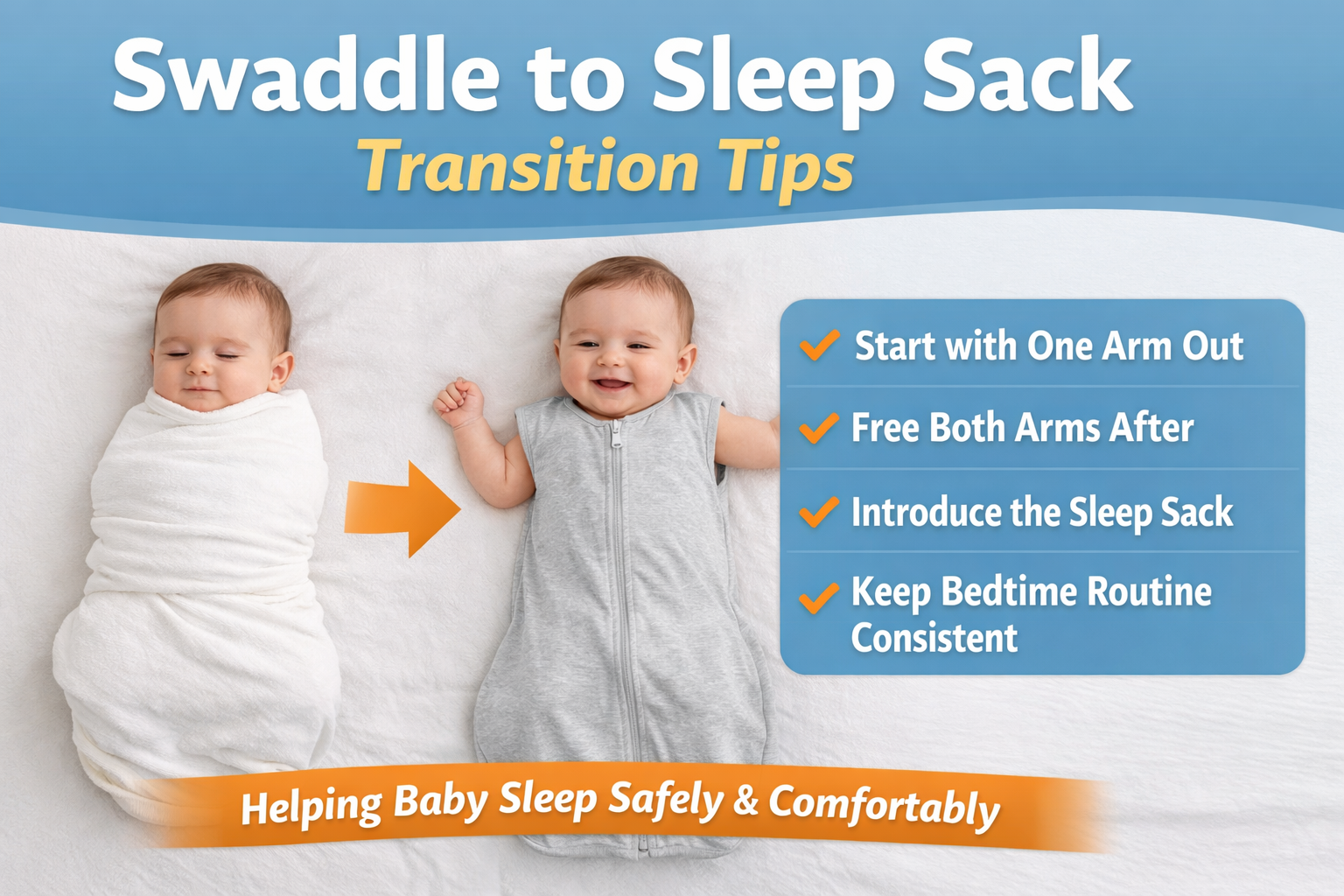
The best way to transition a baby from a swaddle to a sleep sack is gradual adjustment.
Parents who switch suddenly sometimes experience sleep disruption.
Gradual transitions help babies adapt naturally.
Step-by-Step Swaddle to Sleep Sack Transition Plan
Step 1: Start With One Arm Out
For a few nights:
- Leave one arm free
- Keep the other arm swaddled
This reduces the shock of full freedom.
Step 2: Free Both Arms
After a few days:
- Remove both arms
- Continue using the swaddle around the torso
Step 3: Introduce a Sleep Sack
Switch to a sleep sack while keeping the bedtime routine identical.
Consistency helps babies feel safe.
Step 4: Maintain the Same Sleep Environment
Keep these unchanged:
- Bedtime routine
- Room lighting
- White noise
- Feeding schedule
Babies rely heavily on sleep cues.
Real-Life Parenting Example
Many parents notice sleep disturbances during the first few nights.
Example:
A 10-week-old baby may wake more frequently because their arms move freely. However, within 3–5 nights, most babies adjust and begin sleeping normally again.
Is It Safe to Swaddle Up a Sleep Sack?
Parents sometimes ask: Is it safe to swaddle up a sleep sack?
The answer: No.
Using a swaddle inside a sleep sack can:
- Overheat the baby
- Restrict movement
- Increase rolling risk
Pediatric safety organizations recommend using only one sleep garment.
Common Mistakes Parents Make
1. Transitioning Too Late
Waiting until babies roll frequently increases risk.
2. Switching Too Abruptly
Sudden changes may cause sleep disruption.
3. Using Loose Blankets
Loose bedding increases SIDS risk.
4. Overheating the Baby
Too many layers can lead to discomfort.
Expert Tips for a Smooth Transition
Sleep consultants recommend:
• Introduce sleep sacks during naps first
• Keep bedtime routines consistent
• Use breathable cotton sleep sacks
• Maintain a room temperature of 68–72°F (20–22°C)
• Be patient for 3–7 nights
Safety & Health Notes
Trusted organizations recommend safe sleep practices.
Safe Sleep Guidelines
According to:
- WHO
- CDC
- Mayo Clinic
- American Academy of Pediatrics
Babies should:
- Sleep on their back
- Use a firm mattress
- Avoid pillows or blankets
- Share a room but not a bed
These practices reduce the risk of Sudden Infant Death Syndrome (SIDS).
FAQ Section
When should you transition from swaddle to sleep sack?
Usually between 8–12 weeks or when rolling begins.
What is the best way to transition a baby from a swaddle to a sleep sack?
Gradually free one arm, then both arms, before fully switching to a sleep sack.
At what age should you transition from swaddle to sleep sack?
Most babies transition between 2–3 months old.
Is it safe to swaddle up a sleep sack?
No. Combining both can cause overheating and restrict movement.
Will my baby sleep worse during the transition?
Some babies wake more often for 3–5 nights, but most adjust quickly.
Can babies roll in a sleep sack?
Yes. Sleep sacks allow safe rolling and movement.
How long should babies wear sleep sacks?
Many babies use them until 18–24 months.
Do sleep sacks reduce SIDS risk?
They help eliminate loose blankets, supporting safer sleep.
Can newborns wear sleep sacks instead of swaddles?
Yes, but swaddling often helps newborns sleep better initially.
Read Also
- How to Create a Night Routine for Your Baby That Actually Works (Complete Guide)
- Safe Sleep Practices for Babies
- How to Choose the Best Baby Sleep Sack
- Baby Sleep Training Methods
- Signs of Baby Sleep Regression
Conclusion
The swaddle to sleep sack transition is an important milestone in your baby’s sleep development.
While it may seem challenging at first, most babies adjust quickly when the change is introduced gradually.
By watching for readiness signs, following safe sleep practices, and maintaining a consistent bedtime routine, parents can help their baby transition smoothly.
Remember: the goal is to provide both comfort and safety as your baby grows.
Medical Disclaimer
This article is for informational purposes only and does not replace professional medical advice. Always consult a pediatrician regarding your baby’s sleep safety and development.