
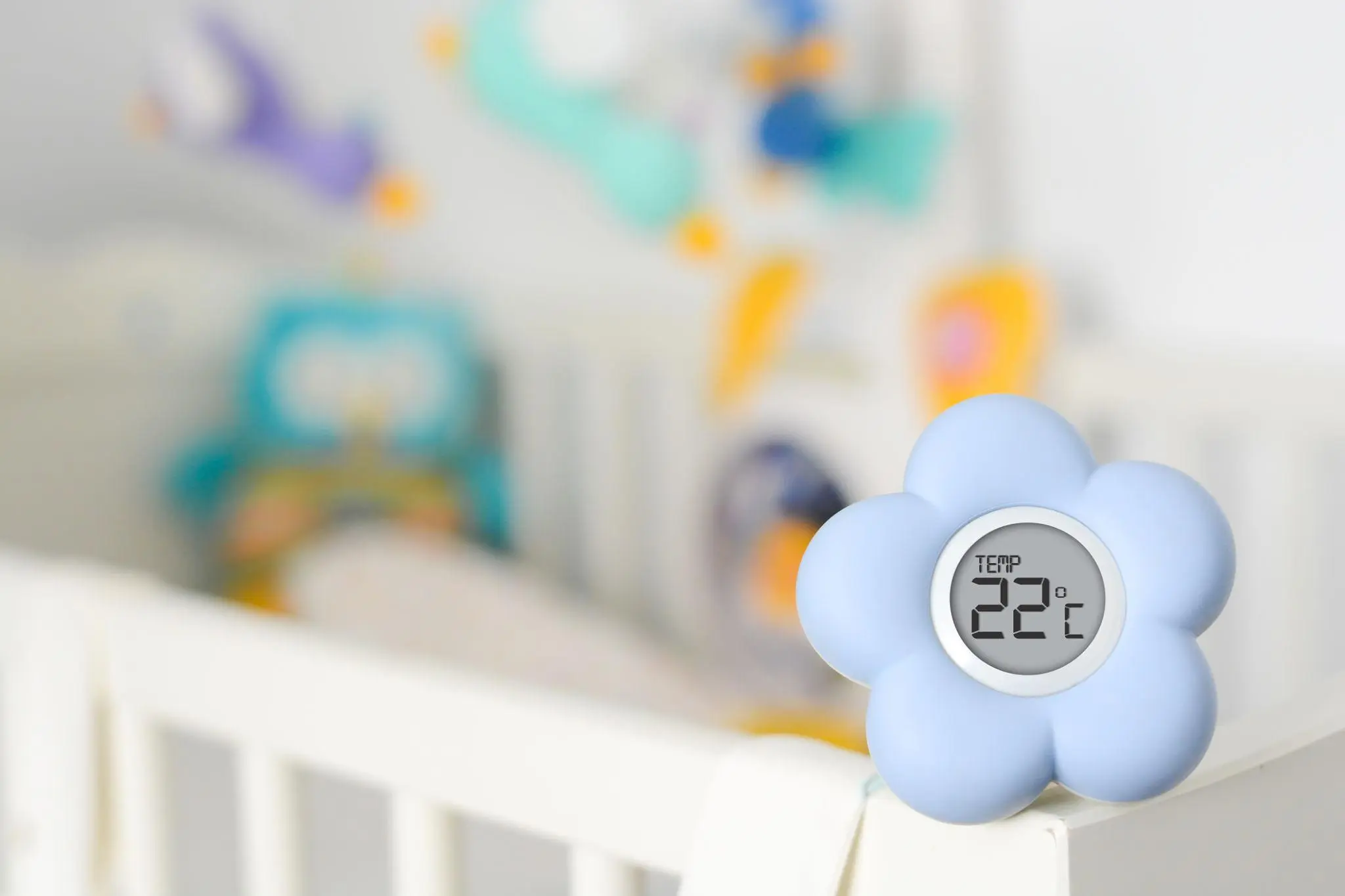
Creating the right sleep environment is one of the most important steps parents can take to support safe sleep for babies. Among all safety factors, room temperature plays a critical role in reducing discomfort and minimizing potential sleep risks.
If you’re wondering about the safe room temperature for baby sleep, this complete guide explains what temperature range is ideal, how to prevent overheating, and how to monitor nursery conditions effectively.
Understanding room temperature helps you create a calm, comfortable, and safer sleep space for your baby.
Table of Contents
Why Room Temperature Matters for Baby Sleep
Babies are more sensitive to temperature changes than adults. Their bodies:
- Regulate heat less efficiently
- Have limited ability to remove blankets
- Cannot adjust clothing independently
Overheating during sleep has been linked to increased sleep-related risks. Maintaining a safe room temperature for baby sleep helps reduce that risk and improves overall comfort.
What Is the Safe Room Temperature for Baby Sleep?
Most pediatric guidance suggests maintaining a room temperature between:
16°C to 20°C (60°F to 68°F)
This range supports safe sleep for babies while preventing overheating.
However, comfort can vary slightly depending on clothing layers and humidity.
Signs Your Baby Is Too Hot or Too Cold
Monitoring your baby’s physical cues is just as important as using a thermometer.
Signs Baby May Be Too Hot
- Sweating
- Damp hair
- Flushed cheeks
- Rapid breathing
- Restlessness
Overheating can increase discomfort and disrupt sleep.
Signs Baby May Be Too Cold
- Cool hands and feet
- Fussiness
- Frequent waking
It’s normal for babies to have slightly cool hands and feet, but their chest should feel warm — not hot or cold.
How to Measure Nursery Temperature Accurately
To maintain a safe room temperature for the baby’s sleep, use reliable tools.
Recommended Options:
✔ Digital room thermometer
✔ Baby monitor with temperature sensor
✔ Smart thermostat
Place the thermometer:
- Away from windows
- Away from heating vents
- At crib height if possible
This ensures accurate readings.
How to Dress a Baby Based on Room Temperature
A good rule of thumb:
Dress your baby in one more layer than you would wear comfortably in the same room.
For example:
If room temperature is 18°C (65°F):
- Light onesie
- Sleep sack
Avoid:
❌ Thick blankets
❌ Heavy comforters
❌ Multiple unnecessary layers
Sleep sacks are generally safer than loose blankets.
The Role of Sleep Sacks in Temperature Regulation
Sleep sacks help maintain safe room temperature for baby sleep by:
- Providing consistent warmth
- Eliminating loose bedding
- Allowing safe movement
Look for TOG ratings:
- 0.5 TOG → warmer climates
- 1.0 TOG → moderate temperature
- 2.5 TOG → cooler environments
Choose based on room conditions, not outside weather.
How Humidity Affects Baby Sleep
Temperature is not the only factor — humidity matters too.
Ideal humidity range:
40% to 60%
Too dry:
- Skin irritation
- Congestion
Too humid:
- Discomfort
- Mold growth
A simple hygrometer can monitor humidity levels.
Winter Sleep Safety Tips
Cold months require careful adjustment.
Avoid:
- Space heaters near crib
- Electric blankets
- Heavy bedding
Instead:
✔ Use layered clothing
✔ Maintain stable room heating
✔ Monitor temperature overnight
Consistency is safer than drastic changes.
Summer Sleep Safety Tips
Warm weather increases overheating risk.
✔ Use breathable cotton clothing
✔ Use light sleep sack
✔ Improve air circulation
✔ Keep crib away from direct sunlight
Never place fans directly on baby’s face.
Should You Use a Fan in Baby’s Room?
Gentle air circulation may support temperature balance.
However:
- Keep fan at low speed
- Position away from crib
- Avoid strong airflow directly on baby
Air movement can improve comfort but should not create chills.
Is Air Conditioning Safe for Babies?
Air conditioning can help maintain a safe room temperature for baby sleep if used properly.
✔ Set a moderate temperature
✔ Avoid direct airflow
✔ Maintain regular filter cleaning
Abrupt temperature drops should be avoided.
Can Babies Sleep in Heated Rooms?
Yes, but overheating must be prevented.
Ensure:
- Temperature remains within the recommended range
- Baby is dressed appropriately
- No heavy blankets are used
Monitoring tools are especially helpful during winter.
Night Monitoring and Smart Devices
Many modern baby monitors include temperature tracking.
Benefits:
✔ Real-time monitoring
✔ Alerts for temperature changes
✔ Added reassurance
However, parents should not rely solely on devices. Physical checks remain important.
Frequently Asked Questions
What is the safest room temperature for baby sleep?
The safest room temperature for baby sleep generally falls between 16°C and 20°C (60°F to 68°F).
How do I know if my baby is overheating at night?
Signs include sweating, flushed skin, rapid breathing, and restlessness.
Is 22°C too warm for baby sleep?
Slightly above recommended range, but appropriate clothing adjustments may help.
Should babies wear hats indoors for sleep?
Hats are generally not recommended indoors, as they can contribute to overheating.
Evidence-Based Guidance
For updated infant sleep recommendations, parents can consult trusted health organizations such as:
These resources provide general child safety recommendations based on research.
Final Thoughts
Maintaining a safe room temperature for baby sleep is one of the simplest yet most impactful ways to improve sleep safety.
By keeping the nursery between 16°C and 20°C, dressing your baby appropriately, and monitoring humidity levels, you create a balanced and comfortable environment.
Small adjustments can make a significant difference in sleep quality and safety.
ParentNest remains committed to sharing practical, research-informed parenting guidance that helps families make confident decisions.