
Introduction
A daily routine for toddlers is one of the most powerful tools parents can use to support healthy growth, emotional stability, and better behavior. Toddlers thrive on predictability. When they know what to expect, they feel safe, confident, and more cooperative throughout the day.
Without a structured routine, many parents face daily struggles like tantrums, poor sleep, irregular eating habits, and overstimulation. The good news? A well-balanced daily routine can transform your toddler’s mood, improve sleep patterns, and even boost brain development.
In this expert-backed guide, you’ll learn how to build a realistic daily routine for toddlers, including sample schedules, age-specific tips, and practical solutions for common parenting challenges. Whether you’re a new parent or looking to improve your current routine, this guide will help you create a calm, happy, and structured day for your child.
Quick Answer Box
What is the best daily routine for toddlers?
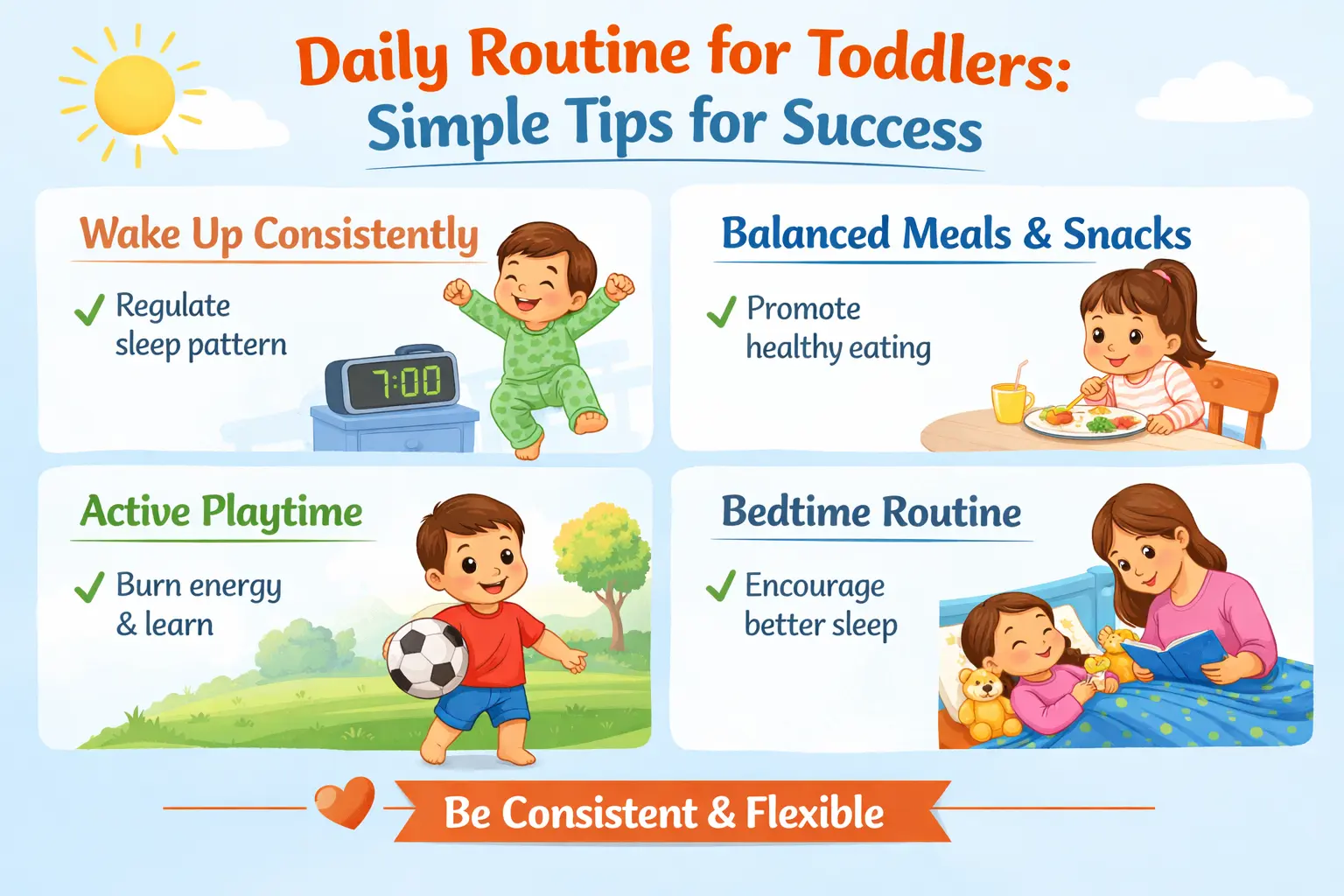
The best daily routine for toddlers includes consistent wake-up times, balanced meals, active play, learning activities, naps, and a calming bedtime routine. A structured routine helps improve behavior, sleep quality, and emotional development.
Table of Contents
Why a Daily Routine Matters for Toddlers
A structured daily routine for toddlers supports both physical and emotional development.
Benefits:
- Improves sleep quality
- Reduces tantrums and anxiety
- Builds independence
- Supports brain development
- Encourages healthy eating habits
Health organizations like WHO and AAP emphasize consistent routines for early childhood development.
Early Signs Your Toddler Needs a Routine
Not sure if your child needs a structured daily routine? Look for these signs:
- Frequent tantrums
- Irregular sleep patterns
- Skipping meals or picky eating
- Difficulty transitioning between activities
- High screen dependency
These signs often indicate a lack of structure.
Ideal Daily Routine for Toddlers (Step-by-Step Guide)
Creating a balanced daily routine for toddlers doesn’t have to be complicated.
Morning Routine (7:00 AM – 10:00 AM)
Start the day with consistency.
Activities:
- Wake up at the same time daily
- Brush teeth & hygiene
- Healthy breakfast
- Free play or outdoor time
Tip: Morning sunlight helps regulate sleep cycles.
Midday Routine (10:00 AM – 2:00 PM)
This is peak energy time.
Activities:
- Learning activities (books, puzzles)
- Snack time
- Lunch
- Nap or quiet time
Afternoon Routine (2:00 PM – 6:00 PM)
Focus on active play.
Activities:
- Outdoor play
- Social interaction
- Creative activities (drawing, music)
Evening Routine (6:00 PM – 9:00 PM)
Wind down gradually.
Activities:
- Dinner
- Bath time
- Storytime
- Bedtime routine
Daily Routine for Toddlers by Age Group
Different ages require slight adjustments.
12–18 Months
- 1–2 naps
- Short play sessions
18–24 Months
- Structured activities
- Longer attention span
2–3 Years
- Reduced naps
- More learning activities
How to Adjust Daily Routine for Toddlers During Growth Phases
Growth spurts and developmental changes can disrupt routines.
Adjust by:
- Being flexible with nap times
- Adding quiet time
- Observing mood changes
- Maintaining bedtime consistency
Sample Daily Routine Table
| Time | Activity | Purpose |
|---|---|---|
| 7:00 AM | Wake up | Set body clock |
| 8:00 AM | Breakfast | Nutrition |
| 10:00 AM | Playtime | Motor skills |
| 12:30 PM | Lunch | Energy |
| 1:30 PM | Nap | Rest & growth |
| 4:00 PM | Snack + Play | Social development |
| 7:00 PM | Dinner | Nutrition |
| 8:30 PM | Bedtime routine | Sleep readiness |
Real-Life Parenting Situations
Situation 1: Toddler Refuses Bedtime
Solution:
- Create calming bedtime rituals
- Avoid screens before sleep
Situation 2: Skipping Meals
Solution:
- Maintain fixed meal times
- Avoid snacks close to meals
Situation 3: Too Many Tantrums
Solution:
- Stick to routine
- Give clear transitions
Common Mistakes Parents Make
- Inconsistent sleep schedules
- Overloading activities
- Too much screen time
- Ignoring hunger/sleep cues
- Being overly rigid
Expert Tips for a Successful Routine
- Keep routines simple and realistic
- Use visual schedules
- Be consistent but flexible
- Involve your toddler in choices
- Praise positive behavior
Safety & Health Notes
Based on WHO, CDC, and Mayo Clinic guidelines:
- Ensure safe sleep environment
- Limit screen time (AAP recommendation: minimal under 2 years)
- Provide balanced nutrition
- Maintain hygiene habits
- Monitor developmental milestones
FAQ
What is the best daily routine for toddlers?
A balanced routine includes meals, play, naps, and bedtime.
How important is a daily routine for toddlers?
It improves behavior, sleep, and emotional stability.
Can I change my toddler’s daily routine?
Yes, adjust gradually based on needs.
What time should toddlers go to bed?
Between 7:30–9:00 PM.
How many naps should toddlers take?
Usually 1–2 naps depending on age.
Does routine reduce tantrums?
Yes, predictability reduces stress.
How strict should a routine be?
Consistent but flexible.
Can screen time affect routine?
Yes, excessive screen time disrupts sleep and behavior.
What if my toddler resists routine?
Introduce changes slowly.
Is routine important for development?
Yes, it supports brain and emotional growth.
Rea Also
- 10 Powerful Baby Crawling Exercises for Faster Development
- 7 Safe Spots: Where to Put Baby Monitor Correctly
- Milk Tongue Breastfed Baby: 7 Signs, Causes & Safe Cleaning
- Toddler nutrition guide
- Managing toddler tantrums
External Authority Sources
- World Health Organization (WHO)
- Centers for Disease Control and Prevention (CDC)
- Mayo Clinic
- American Academy of Pediatrics (AAP)
- American College of Obstetricians and Gynecologists (ACOG)
Conclusion
Creating a consistent daily routine for toddlers is one of the best ways to support your child’s growth, behavior, and emotional well-being. With a balanced mix of play, learning, meals, and rest, your toddler will feel secure and thrive every day.
Remember, routines don’t need to be perfect—they need to be consistent. Start small, stay patient, and adjust based on your child’s needs.
Medical Disclaimer
This content is for informational purposes only and does not replace professional medical advice. Always consult a pediatrician for concerns about your child’s health or development.