
Introduction
It can feel incredibly frustrating when you’ve asked your child to put away their toys for the third time, only to be met with a blank stare or a defiant “No!” Understanding the mechanics of positive discipline toddler not listening habits is the first step toward a more peaceful household. Instead of relying on fear or punishment, positive discipline focuses on teaching and long-term skill building.
As a parent, your goal isn’t just immediate compliance; it’s fostering an environment where your child feels understood and motivated to follow directions. Toddlers are in a unique developmental stage where they are testing boundaries and asserting their independence. This behavior, while exhausting, is actually a sign of healthy neurological growth. By shifting your perspective from “controlling behavior” to “guiding growth,” you can use positive discipline toddler not listening techniques to build a stronger bond with your little one.
Quick Answer: How to Handle a Toddler Who Won’t Listen
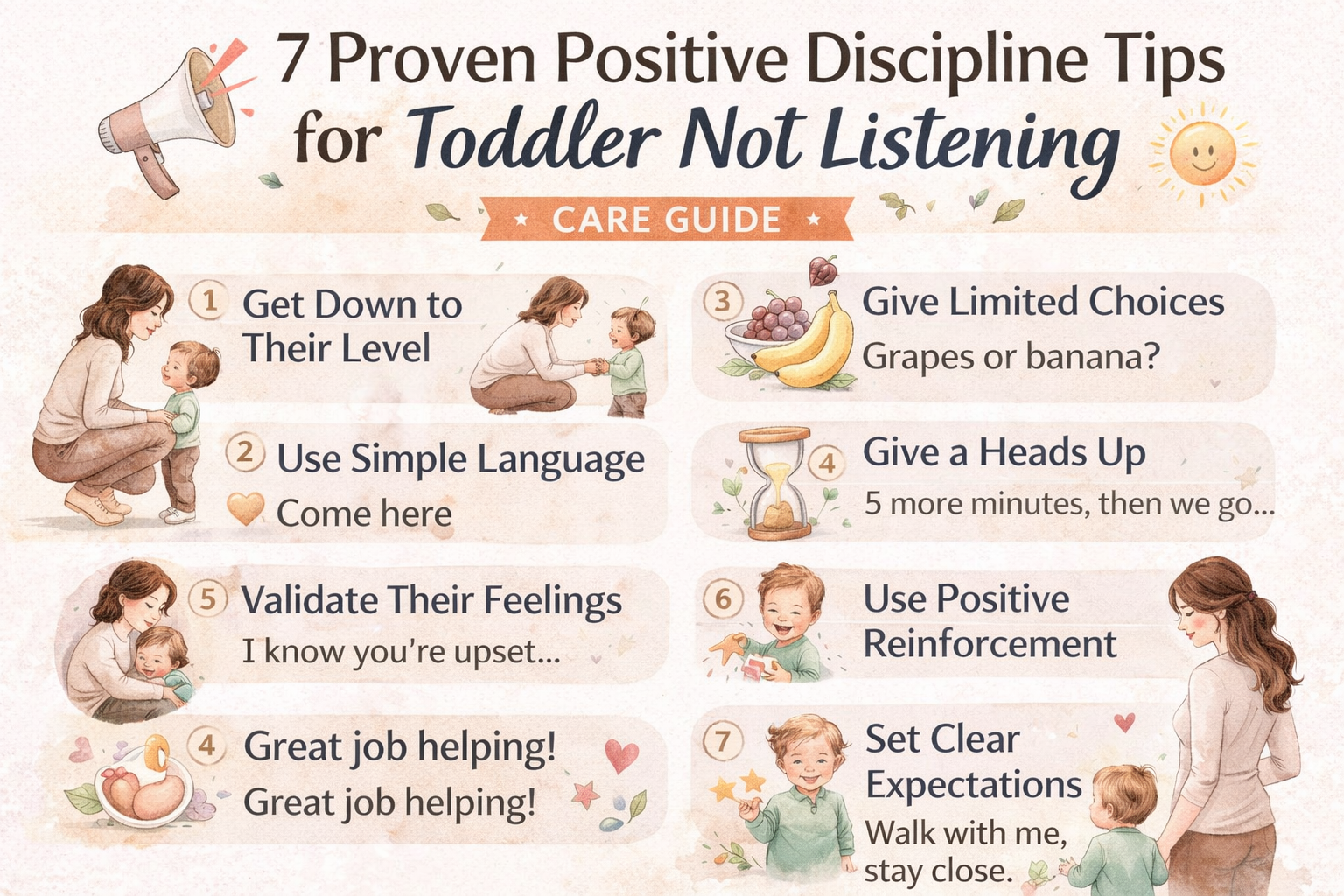
To effectively use positive discipline toddler not listening strategies, follow the “Connect Before You Direct” rule. First, get down to their eye level to ensure attention. Use “When/Then” phrasing (e.g., “When you put on your shoes, then we can go to the park”) and offer limited choices to give them a sense of autonomy. This reduces power struggles and encourages cooperation through mutual respect.
Table of Contents
Understanding the Toddler Brain: Why They Don’t Listen
Before we dive into the positive discipline toddler not listening toolkit, we must look at the “why.” According to the American Academy of Pediatrics (AAP), toddlers lack fully developed impulse control.
The Role of the Prefrontal Cortex
The prefrontal cortex is the part of the brain responsible for logic and emotional regulation. In toddlers, this area is still “under construction.” When a toddler is engrossed in play, their brain is literally wired to stay in that moment. They aren’t ignoring you to be “bad”; they are simply biologically incapable of transitioning as quickly as an adult.
Developmental Milestones
- Autonomy vs. Shame: Erik Erikson’s stages of development highlight that toddlers (ages 1–3) are seeking a sense of personal control.
- Language Gaps: They often understand more than they can express, leading to frustration.
The Core Principles of Positive Discipline
Positive discipline is based on the work of Alfred Adler and Rudolf Dreikurs. It is designed to be:
- Kind and Firm: Respectful to both the child and the parent.
- Connection-Based: Children who feel a sense of belonging are more likely to cooperate.
- Long-Term Focused: It teaches life skills like problem-solving and empathy.
Step-by-Step: Positive Discipline Toddler Not Listening Strategies
Implementing positive discipline toddler not listening techniques requires consistency. Use these steps to navigate a “not listening” episode:
1. Get Down to Their Level
Physical proximity is key. Instead of shouting from the kitchen, walk to the living room, crouch down, and make gentle eye contact. This signals to their nervous system that you are engaging with them, not threatening them.
2. Use Positive Phrasing
Instead of saying “Don’t run,” say “Please use your walking feet.” The toddler brain often misses the “don’t” and only hears the action word.
3. Offer Limited Choices
Give your toddler a sense of power.
- “Do you want to wear the blue shirt or the red shirt?”
- “Should we hop to the bathroom like bunnies or march like soldiers?”
4. Implement Natural Consequences
If a toddler refuses to wear a coat, let them feel the cold (if safe). The environment becomes the teacher, removing you from the role of the “villain.”
Comparison: Traditional vs. Positive Discipline
| Feature | Traditional Discipline | Positive Discipline |
| Focus | Stopping the behavior immediately | Teaching the underlying skill |
| Tool | Punishments (Time-outs, spanking) | Solutions (Natural consequences) |
| Atmosphere | Fear and Control | Respect and Connection |
| Outcome | Temporary compliance | Long-term emotional intelligence |
Common Mistakes Parents Make
Even with the best intentions for positive discipline toddler not listening, these pitfalls can stall progress:
- Over-Explaining: Toddlers have a short attention span. Keep your “why” to one sentence.
- Being Inconsistent: If “No” means “Yes” after five minutes of whining, the child learns to persist.
- Ignoring Physical Needs: A “not listening” toddler is often a “HALT” toddler (Hungry, Angry, Lonely, Tired).
- Losing Your Temper: When you “flip your lid,” you cannot teach your child how to stay calm.
Expert Tips for Positive Discipline
- The 10-Minute Connection: Spend 10 minutes of undivided, screen-free time with your child daily. This “fills their bucket” and reduces attention-seeking defiance.
- Use Visual Timers: Toddlers have no concept of “5 minutes.” A visual sand timer or a digital color-changing clock helps them visualize transitions.
- Validate Emotions: “You are really sad we have to leave the park. It’s hard to stop playing. I hear you.” Validation reduces the “fight” response.
Safety & Health Notes
While positive discipline toddler not listening approaches are effective for behavior, ensure there are no underlying medical issues.
- Hearing Checks: If your child consistently fails to respond, consult a pediatrician to rule out ear infections or hearing loss.
- Neurodiversity: Children with ADHD or Autism may require sensory-based transitions rather than just verbal cues.
- Nutrition: Blood sugar crashes are a leading cause of toddler meltdowns.
FAQ: Positive Discipline Toddler Not Listening
Is positive discipline just “gentle parenting” without rules?
No. Positive discipline includes firm boundaries. It isn’t permissive; it is respectful.
How long does it take for positive discipline toddler not listening techniques to work?
Consistency is key. You may see shifts in 2–3 weeks, but it is a lifestyle change, not a quick fix.
What if my toddler is in danger and won’t listen?
In safety situations (like running toward a street), immediate physical intervention is required. Once safe, you use the positive discipline approach to explain why.
Can I use time-outs with positive discipline?
Instead of a “Time-Out” (isolation), try a “Time-In” where the child sits with you to regulate their emotions.
Does positive discipline work for 2-year-olds?
Absolutely. It is highly effective for the “terrible twos” as it addresses their need for autonomy.
How do I stop a toddler from hitting while using positive discipline?
Hold their hands firmly and say, “I won’t let you hit. Hitting hurts. You can hit this pillow if you are angry.”
Why is my positive discipline toddler not listening at daycare but fine at home?
Transitions and overstimulation at daycare can make it harder for toddlers to process commands.
Is it too late to start positive discipline?
It is never too late to switch to a more respectful and effective communication style.
Read Also
- 12 Proven Baby Overstimulated Signs and How to Calm Your Little One Fast
- Baby Refusing Bottle Suddenly? 15 Proven Fixes
- Newborn Sleep Schedules: A Parent’s Guide
- Nutritious Snack Ideas for Picky Eaters
External Authority Sources
- American Academy of Pediatrics (AAP) on Discipline
- CDC: Developmental Milestones for Toddlers
- Mayo Clinic: Toddler Behavior Tips
Conclusion
Mastering positive discipline toddler not listening challenges is a journey of patience. By focusing on connection, understanding developmental limitations, and maintaining firm but kind boundaries, you transform the “battle of wills” into an opportunity for teaching. Remember, a toddler who isn’t listening is often a child who is simply overwhelmed by their world. Your job is to be their calm in the storm.
Medical Disclaimer: The information provided is for educational purposes only and is not a substitute for professional medical advice, diagnosis, or treatment. Always seek the advice of your pediatrician or other qualified health provider with any questions regarding a medical condition.