
Introduction: When Every Day Feels Like Survival Mode
If you’re reading this at 2 a.m. while holding a crying baby, you’re not alone.
The early weeks with a newborn can feel confusing, exhausting, and unpredictable.
You love your baby more than anything.
But you also wonder…
“Is this normal?”
“Should there be some kind of schedule?”
“Am I doing this right?”
Creating a gentle newborn daily routine can bring calm to the chaos.
Not a strict timetable.
Not military precision.
Just a flexible rhythm that helps both you and your baby feel more secure.
Let’s walk through this together.
Why a Newborn Daily Routine Feels So Hard at First
Newborns are adjusting to the world.
And you’re adjusting to parenthood.
That’s a lot of change at once.
During the first month, babies:
- Don’t know day from night
- Feed every 2–3 hours
- Sleep in short stretches
- Wake often for comfort
Your baby routine first month will look different from month three.
That’s completely normal.
Many parents struggle because:
- Sleep deprivation clouds thinking
- Advice from everyone feels overwhelming
- Social media shows “perfect” babies
- You expect predictability too soon
The truth?
A newborn doesn’t follow a clock.
They follow hunger, sleep, and comfort cues.
A good newborn daily routine respects that.
Signs Your Baby (and You) Need More Structure
Not every family needs a detailed schedule.
But some signs suggest adding gentle structure can help:
- Baby seems overtired often
- Feeding times feel random and stressful
- Evenings are extra fussy
- You feel constantly behind
- Naps happen unpredictably
A flexible newborn sleep and feeding schedule helps create rhythm.
Rhythm builds security.
And security helps babies relax.
Signs Your Baby (and You) Need More Structure
Not every family needs a detailed schedule.
But some signs suggest adding gentle structure can help:
- Baby seems overtired often
- Feeding times feel random and stressful
- Evenings are extra fussy
- You feel constantly behind
- Naps happen unpredictably
A flexible newborn sleep and feeding schedule helps create rhythm.
Rhythm builds security.
And security helps babies relax.
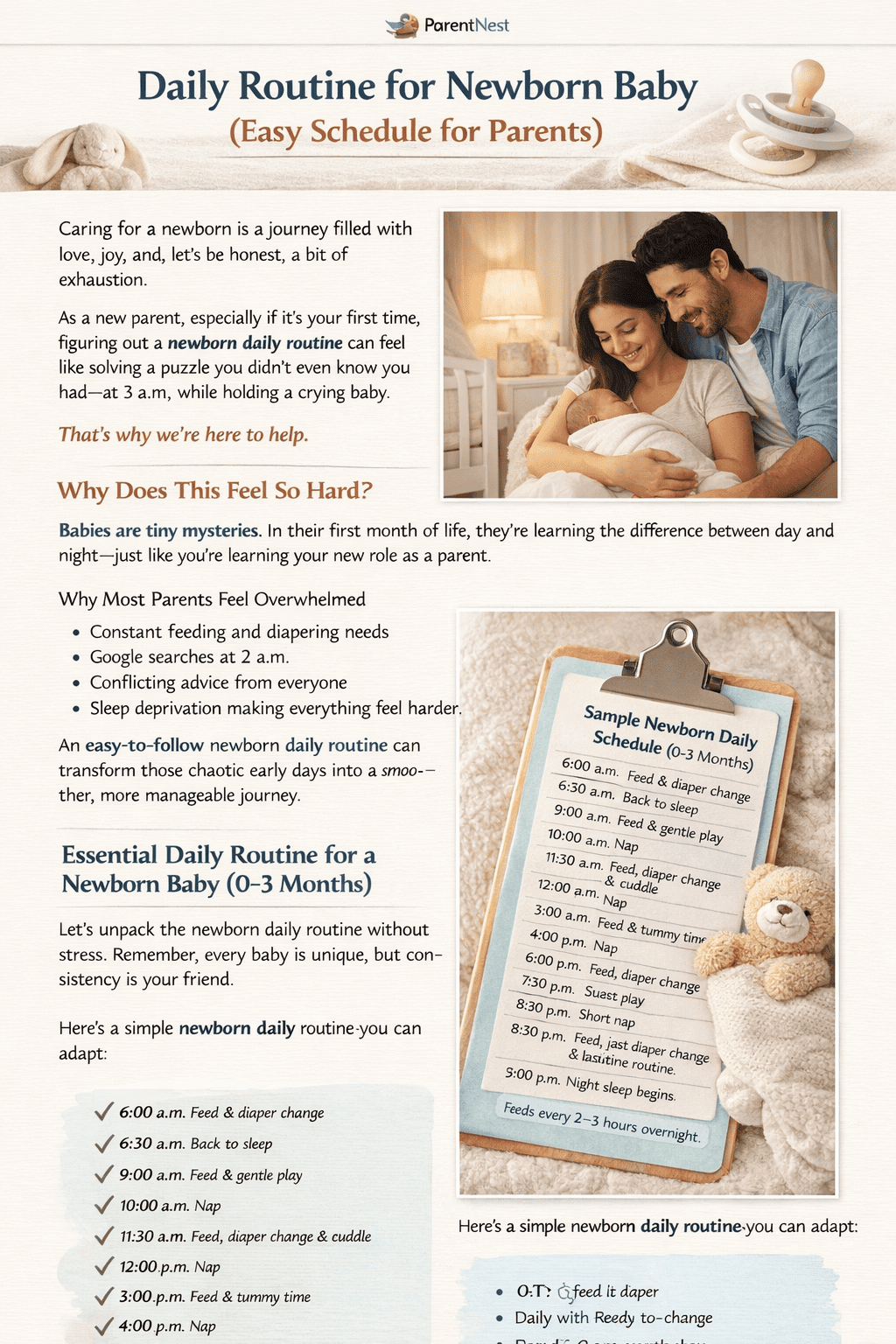
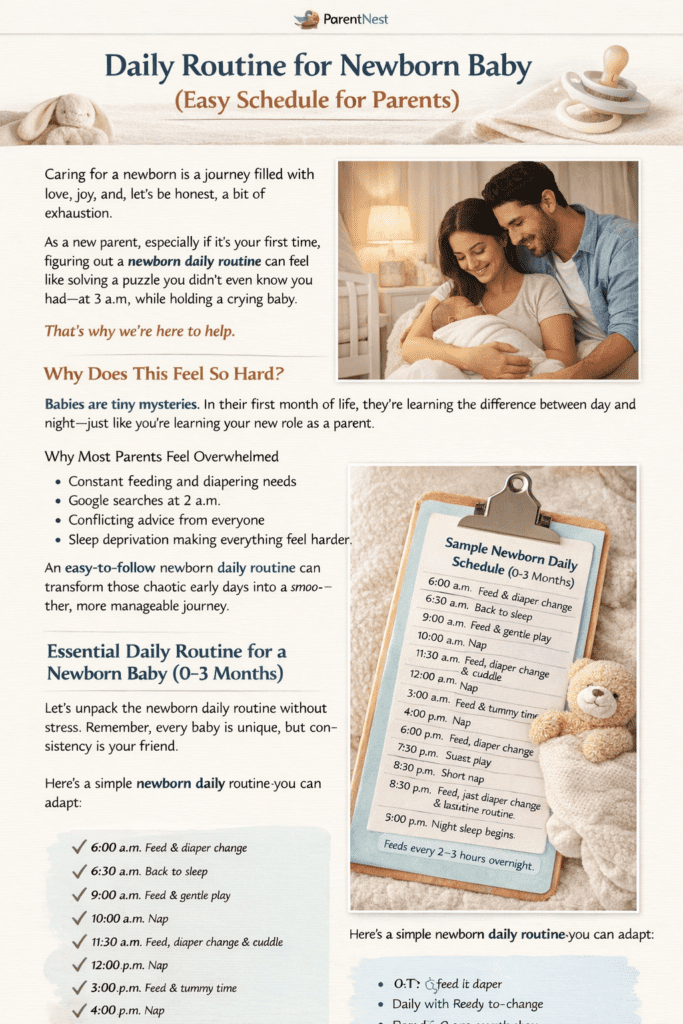
Sample Newborn Daily Routine (0–3 Months)
Here’s an example you can adapt:
| Time | Activity |
|---|---|
| 6:00 a.m. | Feed + diaper change |
| 6:30 a.m. | Back to sleep |
| 9:00 a.m. | Feed + gentle play |
| 10:00 a.m. | Nap |
| 12:00 p.m. | Feed + cuddle |
| 1:00 p.m. | Nap |
| 3:00 p.m. | Feed + tummy time |
| 4:00 p.m. | Nap |
| 6:00 p.m. | Feed + calm bonding |
| 7:30 p.m. | Short nap |
| 9:00 p.m. | Feed + bedtime routine |
| Overnight | Feed every 2–3 hours |
Notice something?
The routine is based on cycles, not strict hours.
That’s the secret.
How Sleep and Feeding Work Together
A newborn sleep and feeding schedule is connected.
When babies eat well, they sleep better.
When they sleep well, they feed better.
In the first 3 months:
- Total sleep: 14–17 hours daily
- Awake window: 45–90 minutes
- Feeds: 8–12 times daily
If baby stays awake too long, overtiredness sets in.
That often leads to more crying and shorter sleep.
Short wake windows are key.
Expert Tips to Make Your Newborn Daily Routine Easier
After guiding many new parents, here’s what truly works.
1. Watch the Baby, Not the Clock
Look for:
- Rooting
- Yawning
- Red eyebrows
- Staring off
Cues matter more than minutes.
2. Create a Simple Morning Start
Open curtains.
Change diaper.
Feed fully.
This helps baby learn day vs night over time.
3. Keep Nighttime Calm
Low lights.
Quiet voices.
No play.
This gently supports sleep rhythm.
4. Don’t Skip Day Feeds
Full daytime feeds can reduce cluster feeding overnight.
5. Use a Mini Bedtime Routine
Even at 6 weeks, babies benefit from predictability.
Try:
- Warm bath (optional)
- Fresh diaper
- Pajamas
- Feed
- Soft lullaby
Same steps nightly.
Consistency builds comfort.
Step-by-Step Guide to Building Your Baby Routine (First Month)
If you’re starting from zero, follow these steps.
Step 1: Track for 2–3 Days
Write down:
- Feed times
- Sleep times
- Fussy periods
Patterns will appear.
Step 2: Identify Natural Rhythms
Does baby sleep longest in the morning?
Are evenings fussier?
Work with those patterns.
Step 3: Protect Wake Windows
For newborns:
- 0–6 weeks: 45–60 minutes
- 6–12 weeks: 60–90 minutes
Short windows prevent overtiredness.
Step 4: Establish a Flexible Bedtime
Between 8–10 p.m. works for most newborns.
Don’t force an early bedtime too soon.
Step 5: Adjust Weekly
Babies change fast.
Your newborn daily routine should evolve too.
Common Mistakes Parents Make with a Newborn Daily Routine
Even loving parents make these mistakes.
It’s okay.
Forcing a Strict Schedule
Newborns need flexibility.
Rigid timing causes stress.
Keeping Baby Awake Too Long
Overtired babies sleep worse.
Short wake windows are better.
Skipping Tummy Time
Even 2–3 minutes helps build strength.
Stimulating Too Much Before Bed
Bright lights and loud play can delay sleep.
Comparing Your Baby
Some babies sleep 4-hour stretches early.
Others don’t.
Both are normal.
Recommended Baby Products That Support Routine
The right tools don’t replace parenting.
But they can make routines smoother.
| Product | Why It Helps |
|---|---|
| White noise machine | Mimics womb sounds |
| Swaddle blanket | Reduces startle reflex |
| Dim night light | Makes nighttime feeds easier |
| Baby tracker app | Tracks feeding and naps |
| Comfortable rocking chair | Makes bonding time easier |
Choose practical over trendy.
Simple tools support consistency.
Safety Tips for Your Newborn Sleep and Feeding Schedule
Safety always comes first.
Remember:
- Place baby on back to sleep
- Use a firm, flat sleep surface
- Keep crib free of loose items
- Support baby’s head during feeds
- Burp baby gently
For updated safe sleep recommendations, refer to guidance from trusted pediatric health organizations.
Featured Snippet: What Is a Good Newborn Daily Routine?
A good newborn daily routine follows a simple cycle of feed, awake time, and sleep every 2–3 hours. It stays flexible, respects baby cues, and includes short wake windows to prevent overtiredness.
For added credibility, reference:
FAQs About Newborn Daily Routine
When should I start a newborn daily routine?
You can begin gentle structure from week one. Keep it flexible during the first month.
How long should a newborn stay awake?
Typically 45–90 minutes depending on age.
Should I wake my baby to feed?
If baby is under pediatric care guidelines for weight gain, follow professional advice. Many newborns feed every 2–3 hours naturally.
Is it okay if my baby doesn’t follow the schedule?
Yes. Routines guide, not control.
When do newborns sleep longer at night?
Many babies begin longer stretches around 8–12 weeks, but every baby is different.
How many naps should a newborn take?
Newborns may nap 4–6 times daily.
Final Thoughts: You’re Learning Together
Your baby is new to this world.
And you’re new to this role.
Some days will feel smooth.
Others will feel messy.
A gentle newborn daily routine isn’t about control.
It’s about comfort.
For your baby.
And for you.
Trust your instincts.
Adjust when needed.
And remember — you are exactly the parent your baby needs.
Welcome to ParentNest 💛