

Introduction: When Your Baby Arrives, So Do a Thousand Questions
The first moments after birth are magical, emotional, and sometimes overwhelming. Parents often wonder:
- Am I holding my baby correctly?
- Is my baby breathing normally?
- How soon should feeding start?
- What care does my newborn need right now?
These questions are natural. Every parent wants to protect their baby and do everything “right.”
This guide on newborn baby care immediately after birth will walk you through exactly what your baby needs during the first hours, days, and early weeks. You’ll learn gentle, science-backed practices that support bonding, comfort, safety, and healthy development.
By the end, you’ll feel calmer, informed, and prepared to nurture your newborn with confidence.
Quick Answer Box
Newborn baby care immediately after birth includes keeping the baby warm through skin-to-skin contact, starting early feeding, ensuring safe breathing, delaying bathing, monitoring temperature, maintaining hygiene, and supporting bonding. Gentle handling, responsive feeding, and observing newborn cues help babies adjust safely to life outside the womb.
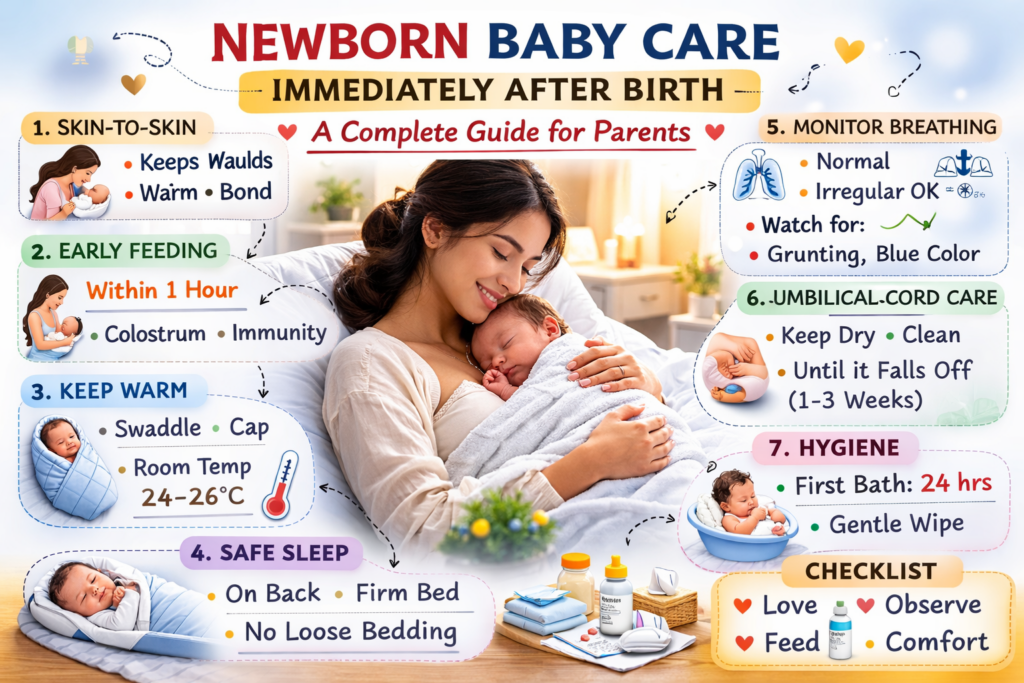
Understanding Newborn Baby Care Immediately After Birth
The transition from womb to world is profound. Inside the womb, babies receive warmth, nutrition, oxygen, and protection automatically. After birth, they rely on caregivers for these essentials.
Newborn baby care immediately after birth focuses on:
- Warmth regulation
- Feeding initiation
- Safe breathing
- Infection prevention
- Emotional bonding
- Physiological stabilization
Experts from organizations like the World Health Organization emphasize that gentle, uninterrupted contact and early feeding are key protective practices for newborn survival and development.
The Golden Hour: Why the First 60 Minutes Matter
The “golden hour” refers to the first hour after birth when babies are highly alert and biologically primed to bond and feed.
What happens during this time
- Baby’s senses activate rapidly
- Reflexes support feeding readiness
- Body temperature stabilizes
- Hormones promote bonding
Benefits of golden hour care
- Improved breastfeeding success
- Stable heart rate and breathing
- Reduced stress for baby
- Stronger emotional connection
Parents often remember this hour vividly because it sets the emotional tone for early parenting.
Skin-to-Skin Contact: The Foundation of Newborn Comfort
Skin-to-skin contact is one of the most powerful elements of newborn baby care immediately after birth.
How it works
The baby lies chest-to-chest with a caregiver, covered with a blanket.
Benefits
- Maintains body temperature
- Stabilizes blood sugar
- Encourages breastfeeding reflex
- Reduces crying
- Supports brain development
The Mayo Clinic notes that skin-to-skin care improves newborn physiological stability and strengthens attachment.
First Feeding Guidance: When and How to Start
Newborns typically show feeding readiness within the first hour.
Early feeding cues
- Lip smacking
- Rooting (turning head toward touch)
- Hand-to-mouth movement
- Gentle fussiness
Why early feeding matters
- Provides colostrum (nutrient-rich first milk)
- Supports immunity
- Promotes gut development
- Prevents low blood sugar
Parent tip
Avoid waiting for crying, as this is a late hunger signal.
Temperature and Warmth Management
Newborns lose heat quickly because they have:
- Thin skin
- Limited fat stores
- Large surface area relative to body size
Ways to keep the baby warm
- Skin-to-skin care
- Drying immediately after birth
- Using a soft cap
- Swaddling lightly
- Maintaining a comfortable room temperature
Guidance from the NHS highlights warmth as a core newborn safety priority.
Umbilical Cord Care Basics
The umbilical stump usually falls off within 1–3 weeks.
Care steps
- Keep clean and dry
- Fold the diaper below the stump
- Avoid covering tightly
- Observe for redness or odor
When to seek advice
- Pus discharge
- Persistent bleeding
- Swelling around the base
Gentle dry care supports natural healing.
Newborn Breathing Patterns Explained
Many parents worry about newborn breathing.
Normal newborn breathing
- Irregular rhythm
- Occasional pauses
- Fast breathing cycles
- Soft sounds
These patterns often reflect immature respiratory control.
Concerning signs
- Persistent grunting
- Chest retractions
- Bluish skin tone
- Very rapid breathing
The Centers for Disease Control and Prevention advises monitoring breathing comfort rather than counting breaths obsessively.
Hygiene and Bathing Timing
Bathing immediately after birth is no longer recommended.
Why delay bathing
- Protects the natural skin barrier
- Prevents temperature drop
- Promotes bonding
- Maintains beneficial microbes
First bath tips
- Use warm water only
- Avoid strong soaps
- Keep duration short
- Support the head and neck
Many newborns enjoy gentle wiping rather than full immersion initially.
Sleep and Safe Positioning
Sleep dominates newborn life.
Safe sleep basics
- Place the baby on its back
- Use a firm surface
- Avoid loose bedding
- Keep the sleep area clear
- Share room, not bed
Safe positioning reduces sleep-related risks.
Emotional Adjustment for Parents
Newborn baby care immediately after birth also involves parental emotional adaptation.
Parents may experience:
- Joy
- Anxiety
- Exhaustion
- Overwhelm
- Identity shift
These feelings are normal.
Helpful coping strategies
- Accept support
- Rest when possible
- Focus on small wins
- Practice gentle self-talk
Remember: learning newborn care is a process, not a test.
Step-by-Step Newborn Baby Care Immediately After Birth Checklist
Immediate care
✔ Skin-to-skin contact
✔ Dry baby gently
✔ Check breathing
✔ Initiate feeding
First hours
✔ Maintain warmth
✔ Observe feeding cues
✔ Monitor elimination
✔ Support bonding
First days
✔ Cord care
✔ Gentle hygiene
✔ Sleep positioning
✔ Emotional adjustment
This checklist simplifies the transition period.
Common Mistakes Parents Make
1. Bathing too soon
Can cause temperature instability.
2. Overbundling
May lead to overheating.
3. Waiting for crying before feeding
Delays nutrition.
4. Excessive stimulation
Newborns need calm environments.
5. Comparing babies
Every newborn develops uniquely.
Recognizing these patterns helps parents respond thoughtfully rather than reactively.
Expert Pro Tips for Smoother Newborn Care
- Watch baby cues more than the clock
- Use touch as reassurance
- Keep lighting soft
- Limit visitors early
- Maintain predictable routines
- Trust your instincts
Pediatric guidance from HealthyChildren.org reinforces responsive caregiving as the cornerstone of early development.
Recommended Helpful Tools for Parents
(Soft affiliate-friendly suggestions)
Comfort tools
- Muslin swaddles
- Skin-to-skin wraps
- White noise machines
Feeding support
- Nursing pillows
- Burp cloth sets
- Feeding trackers
Hygiene essentials
- Soft washcloths
- Gentle wipes
- Newborn nail files
These tools simplify daily care without replacing responsive parenting.
Newborn Care Statistics Parents Should Know
- Around 80–90% of newborns display feeding cues within the first hour.
- Skin-to-skin care can reduce crying by up to 40%.
- Early breastfeeding initiation improves exclusive feeding rates significantly.
- Delayed bathing lowers the risk of temperature instability.
- Room-sharing reduces sleep-related risks by nearly half.
Statistics highlight how small practices can produce meaningful outcomes.
Frequently Asked Questions
What is the most important newborn baby care immediately after birth?
Skin-to-skin contact, early feeding, and warmth maintenance are the most critical initial steps.
How soon should a newborn feed after birth?
Most babies are ready within the first hour and benefit from early feeding initiation.
Is it normal for newborn breathing to be irregular?
Yes. Irregular breathing patterns are typical in newborns unless accompanied by distress signs.
When should the first bath happen?
Bathing is often delayed at least 24 hours to support temperature stability and skin protection.
How do I know if my baby is cold?
Cool hands, fussiness, and low body temperature may indicate cold stress.
How often should newborns sleep?
Newborns may sleep 14–17 hours daily in short cycles.
When does the umbilical stump fall off?
Usually within 1–3 weeks, depending on individual healing.
Encouraging Conclusion
The first days with your baby are tender, emotional, and deeply transformative. While newborn baby care immediately after birth may feel overwhelming, it centers on simple, powerful actions:
- Holding
- Feeding
- Warming
- Watching
- Loving
Perfection isn’t required. Presence is.
By responding gently to your baby’s cues and trusting your growing instincts, you create a safe world where your newborn can thrive. Each diaper change, cuddle, and feeding builds confidence — both yours and your baby’s.
You are learning together, one quiet moment at a time.