
Introduction
Milk tongue breastfed baby is a very common concern for new parents. When you look inside your baby’s mouth and notice a white coating on the tongue, it can be worrying. Many parents immediately fear infections like thrush, but in many cases, the cause is simply milk residue left on the tongue after feeding.
Newborns feed frequently, especially breastfed babies who may nurse 8–12 times a day. Because their saliva production is still developing, milk can temporarily coat the tongue and create a white appearance known as milk tongue.
The good news is that milk tongue is usually harmless and often resolves naturally as your baby grows. However, it’s important to know the difference between milk residue and oral thrush, since thrush requires medical treatment.
In this comprehensive parenting guide, we’ll explain:
- What milk tongue is
- Why it happens in breastfed babies
- How to get rid of baby milk tongue safely
- The difference between newborn baby milk tongue vs thrush
- When parents should see a pediatrician
By the end of this guide, you’ll know exactly when to relax and when to seek medical advice.
Quick Answer Box
Milk tongue in breastfed babies is a harmless white coating caused by milk residue left on the tongue after feeding. It typically wipes away easily and does not cause discomfort. Unlike thrush, milk tongue usually appears only on the tongue and disappears as the baby’s saliva production increases.
What Is Milk Tongue in Breastfed Babies?
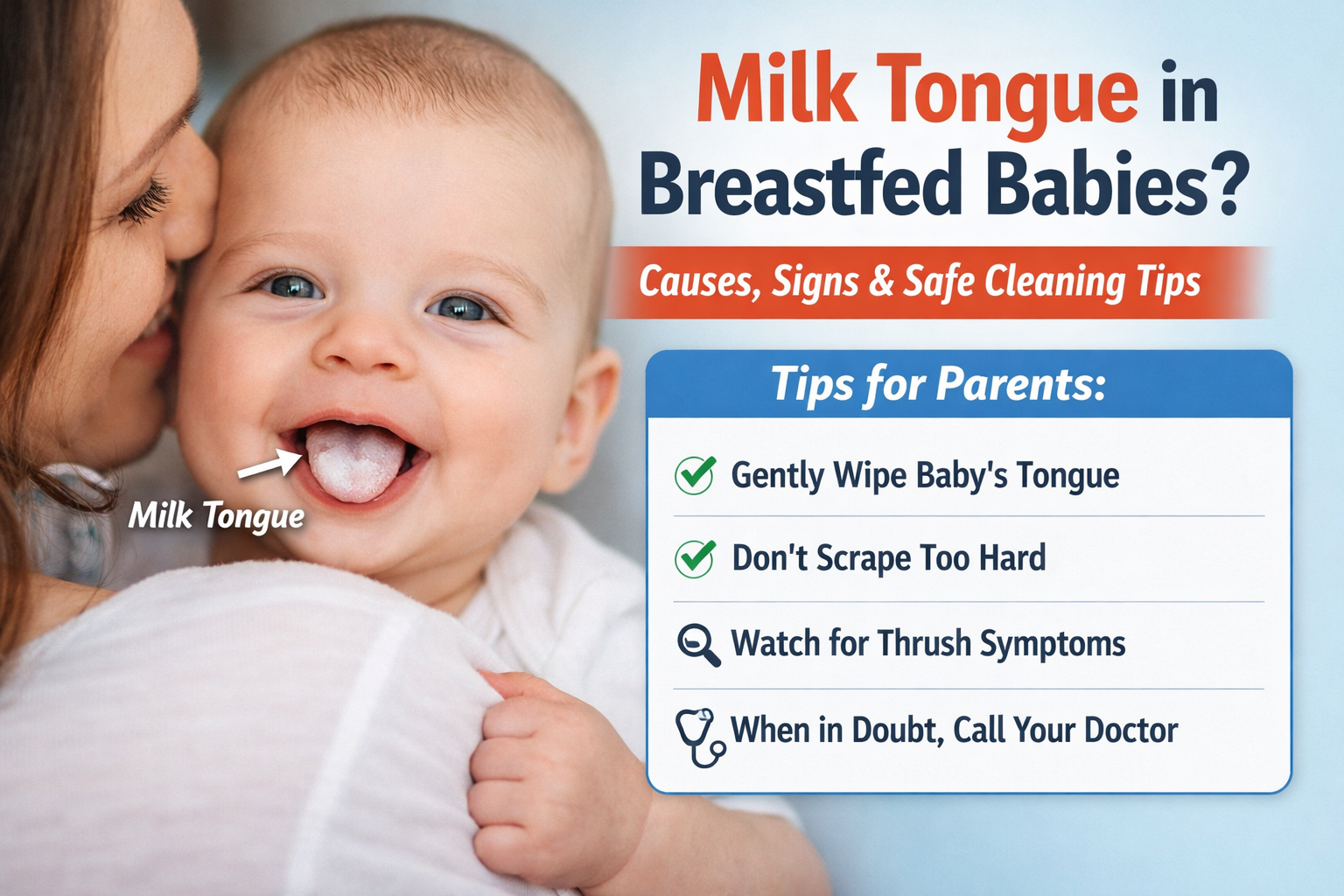
Milk tongue breastfed baby refers to a white coating on a newborn’s tongue caused by leftover milk.
Newborns have:
- Immature saliva glands
- Frequent feeding schedules
- Limited tongue movement
Because of this, milk sometimes sits on the tongue surface rather than being washed away.
This coating may look alarming but is usually harmless.
Characteristics of Milk Tongue
- White film only on the tongue
- No irritation or redness
- Baby feeds normally
- No pain or fussiness
Why Breastfed Babies Get Milk Tongue
Milk tongue occurs due to several normal developmental factors.
1. Immature Saliva Production
Newborns produce less saliva. Saliva normally helps wash away milk residue.
2. Frequent Feeding
Breastfed babies may feed every 2–3 hours, leaving little time for the tongue to clear.
3. Milk Fat Residue
Breast milk contains natural fats that can temporarily stick to the tongue surface.
4. Limited Tongue Mobility
Young babies do not move their tongue as actively as older infants.
Trusted health organizations like the American Academy of Pediatrics explain that many newborn mouth changes are normal developmental phases.
Early Signs of Milk Tongue
Parents often notice milk tongue during daily baby care.
Common Signs
- White or creamy layer on the tongue
- Appears after feeding
- Tongue wipes partially clean
- Baby is comfortable while feeding
What it does NOT cause
- Crying during feeding
- Mouth sores
- Refusal to nurse
If these symptoms appear, another condition such as oral thrush might be involved.
Milk Tongue vs Thrush (Important Comparison)
Many parents confuse milk residue on baby tongue with thrush.
Below is a helpful comparison.
| Feature | Milk Tongue | Oral Thrush |
|---|---|---|
| Appearance | Thin white coating | Thick white patches |
| Location | Mostly on tongue | Tongue, cheeks, gums |
| Wipes off | Usually yes | Usually no |
| Baby discomfort | None | May cause fussiness |
| Cause | Milk residue | Yeast infection |
| Treatment | None needed | Antifungal medication |
Thrush is a yeast infection caused by Candida, and health organizations like the Centers for Disease Control and Prevention recommend medical treatment when it occurs.
White Spots on Baby Tongue Not Thrush
Not all white spots indicate infection.
Possible harmless causes include:
- Milk tongue
- Dry mouth
- Minor milk buildup
However, if white patches spread to:
- Lips
- Cheeks
- Gums
You should consult a pediatrician.
Medical resources like Mayo Clinic recommend evaluation when mouth lesions do not wipe away.
How to Get Rid of Baby Milk Tongue
Most cases require no treatment.
However, gentle cleaning can help reduce buildup.
Step-by-Step Safe Cleaning
- Wash your hands thoroughly.
- Wrap a clean soft gauze or muslin cloth around your finger.
- Dip it in warm boiled water (cooled).
- Gently wipe the baby’s tongue.
Do not scrape aggressively, as newborn tongues are delicate.
When to Clean
- Once daily
- After bath time
- If coating becomes thick
How Long Does Milk Tongue Last?
Parents often ask: How long does milk tongue last?
Milk tongue typically disappears as babies grow.
Average timeline
| Baby Age | Likelihood of Milk Tongue |
|---|---|
| 0–2 months | Very common |
| 3–4 months | Less frequent |
| 5–6 months | Rare |
By this age, babies produce more saliva and begin moving their tongue more.
What Is the Earliest a Baby Has Smiled?
Many parents notice milk tongue around the same time babies start showing early social behavior.
The earliest a baby has smiled can be:
- Newborn reflex smile: birth to 6 weeks
- Social smile: around 6–8 weeks
The World Health Organization highlights early facial interaction as a key sign of infant development.
Common Mistakes Parents Make
When dealing with milk tongue breastfed baby, parents sometimes make avoidable mistakes.
1. Assuming It Is Thrush Immediately
Most cases are harmless milk residue.
2. Scraping Too Hard
This can irritate delicate newborn tissue.
3. Using Unsafe Cleaning Methods
Avoid:
- Toothpaste
- Honey
- Salt solutions
4. Overcleaning the Mouth
Daily gentle wiping is enough.
Expert Tips from Pediatricians
Encourage Saliva Production
Let baby suck on a clean finger briefly after feeding.
Burp After Feeding
Burping helps clear milk from the mouth.
Maintain Breast Hygiene
Clean nipples before feeds if milk buildup is frequent.
Monitor Changes
If patches spread or baby becomes fussy, consult your doctor.
Guidelines from the American College of Obstetricians and Gynecologists recommend regular pediatric checks during newborn months.
Safety & Health Notes
Always seek medical advice if you notice:
- White patches spreading inside the mouth
- Baby refusing feeds
- Cracked nipples in breastfeeding mothers
- Diaper rash with mouth patches
These symptoms may indicate yeast infection requiring treatment.
FAQ Section
What is milk tongue breastfed baby?
Milk tongue breastfed baby is a white coating caused by milk residue remaining on the tongue after breastfeeding.
How to get rid of baby milk tongue?
Gently wipe the tongue with a clean damp cloth or gauze once daily. Most cases disappear naturally.
How long does milk tongue last?
Milk tongue usually lasts a few weeks to a few months and resolves as saliva production increases.
Is milk tongue painful for babies?
No. Milk tongue does not cause pain or feeding problems.
White spots on baby tongue not thrush?
Yes. Milk residue can create white spots that are not thrush.
Can formula-fed babies get milk tongue?
Yes. Both breastfed and formula-fed babies can develop milk residue.
Does milk tongue mean poor hygiene?
No. It is a normal developmental phase in newborns.
When should I worry about white tongue in baby?
If patches spread to cheeks or gums or don’t wipe away.
Can milk tongue affect breastfeeding?
No. It does not interfere with feeding.
Should I treat milk tongue with medication?
No medication is needed unless a doctor diagnoses thrush.
Read Also
Create articles linking to this guide:
- Signs of Oral Thrush in Babies
- Newborn Feeding Schedule Guide
- How to Clean a Newborn’s Mouth Safely
- Baby Tongue Tie: Symptoms & Treatment
- Why Do Babies Stick Their Tongue Out?
- Breastfeeding Tips for New Mothers
Conclusion
Milk tongue breastfed baby is a normal and harmless condition that many newborns experience. The white coating you see on your baby’s tongue is usually just milk residue, not an infection.
As your baby grows and produces more saliva, the coating typically disappears on its own. Gentle cleaning with a soft cloth can help reduce buildup, but aggressive cleaning is unnecessary.
The key is knowing the difference between milk tongue and thrush. If white patches spread or cause discomfort, consult your pediatrician.
Most importantly, remember that milk tongue is simply a normal part of early infant development, and in most cases, there’s nothing to worry about.
Medical Disclaimer
This article is for educational purposes only and does not replace professional medical advice. Always consult a qualified pediatrician for diagnosis or treatment of infant health concerns.