
Introduction: “Is My Toddler Talking Enough?”
If you’re searching for language development activities for toddlers, you may be wondering:
Why isn’t my child talking as much as others?
Should they be saying more words by now?
Am I doing enough to help?
Take a deep breath.
Toddlers develop language at different speeds. But here’s the powerful truth: small daily interactions shape their speech more than any expensive toy ever could.
In this ParentNest guide, I’ll walk you through research-backed, simple, real-life language development activities for toddlers that you can start today — without pressure, stress, or perfection.
You don’t need special training.
You just need connection.
Quick Answer: Best Language Development Activities for Toddlers
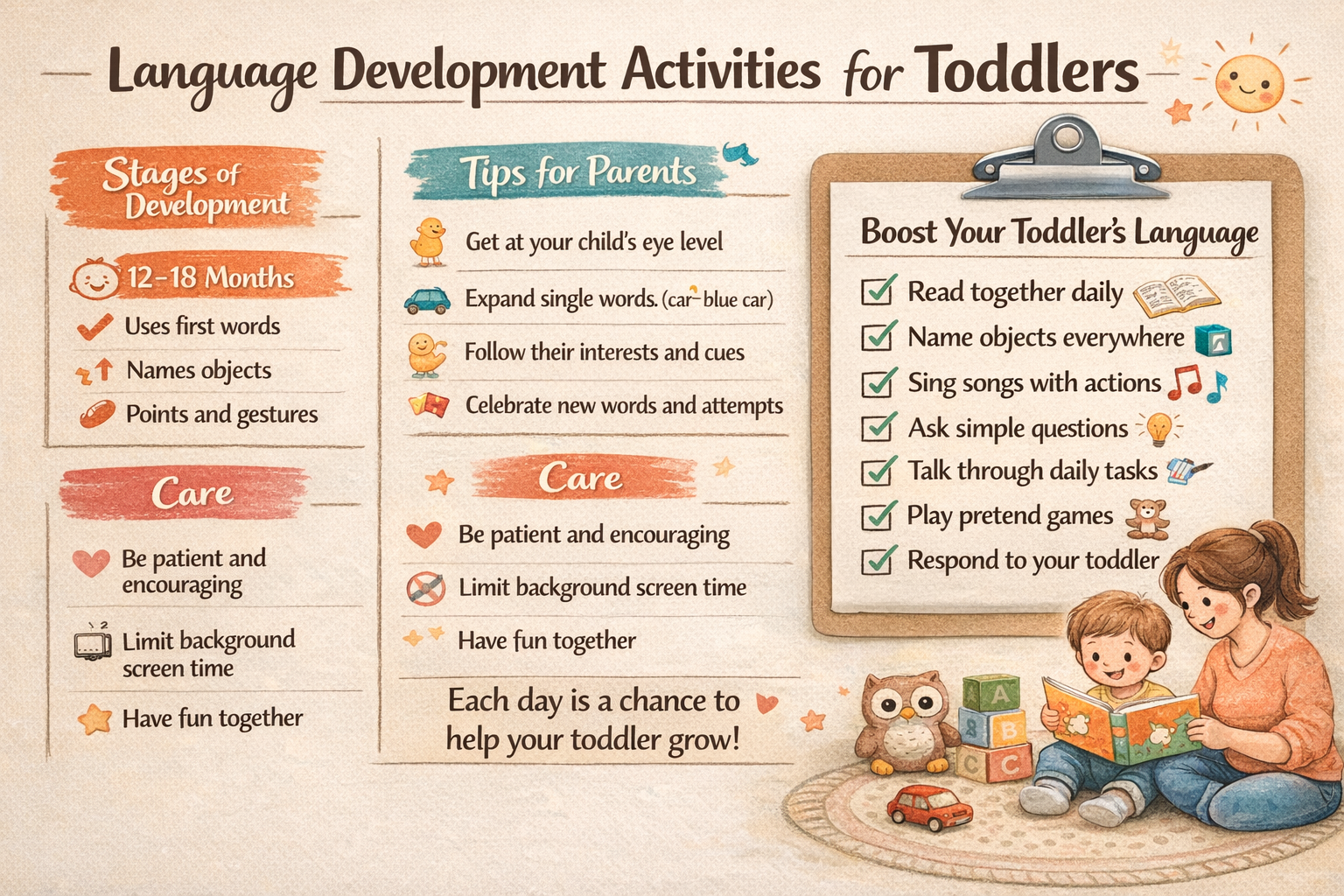
The best language development activities for toddlers include reading daily, talking during routines, singing songs, naming objects, asking simple questions, pretend play, and responsive conversation. These everyday interactions strengthen vocabulary, listening skills, social communication, and brain development during the critical early years.
Why Language Development Activities for Toddlers Matter
The first three years are a brain-building powerhouse stage.
According to the World Health Organization (WHO), early childhood experiences strongly influence cognitive and language growth.
Neural connections form rapidly during toddlerhood. When you talk, respond, sing, and play, you literally build your child’s brain.
Language development activities for toddlers help with:
- Vocabulary growth
- Listening skills
- Emotional regulation
- Social confidence
- Future reading ability
Speech isn’t just about words. It’s about connection.
How Toddler Language Actually Develops
Language development follows predictable patterns, even though each child moves at their own pace.
The CDC explains that toddlers typically move from:
- Babbling
- Single words
- Two-word phrases
- Short sentences
The Mayo Clinic notes that understanding language often develops before speaking it.
This means your toddler may understand far more than they can say.
That’s normal.
Signs of Healthy Speech Milestones
Based on guidance from HealthyChildren.org and the NHS, here are general patterns:
Around 12 Months:
- Says “mama” or “dada”
- Responds to name
- Uses gestures
Around 18 Months:
- Says 10–20 words
- Points to body parts
- Follows simple commands
Around 2 Years:
- Uses two-word phrases
- Has 50+ words
- Names common objects
If milestones are significantly delayed, consult your pediatric provider.
Language Development Activities for Toddlers at 12–18 Months
This stage focuses on naming and imitation.
1. Name Everything
During daily routines, narrate what you see.
“Red ball.”
“Big dog.”
“Warm milk.”
Simple repetition builds vocabulary.
2. Gesture + Word Pairing
Point and label:
- “Cup.”
- “Door.”
- “Shoes.”
The CDC notes that combining gestures with words strengthens understanding.
3. Read Board Books Daily
Even five minutes helps.
According to HealthyChildren.org, daily reading improves early language exposure dramatically.
Language Development Activities for Toddlers at 18–24 Months
Now toddlers begin combining words.
1. Expand Their Words
If they say “car,” respond:
“Yes, blue car!”
This technique is called expansion modeling.
2. Offer Choices
“Do you want apple or banana?”
Choices encourage verbal responses.
3. Simple Question Prompts
Ask:
- “Where is your nose?”
- “What does the dog say?”
Wait patiently.
Language Development Activities for Toddlers at 2–3 Years
Now language explodes.
1. Pretend Play Conversations
Use dolls or toy animals.
“Baby is sleepy.”
“What does teddy want?”
Imaginative play strengthens narrative skills.
2. Describe Feelings
“You look frustrated.”
“You are happy!”
The WHO emphasizes early emotional vocabulary supports social development.
3. Story Building
Ask:
“What happened next?”
Even short responses count.
Daily Routine Language Development Activities for Toddlers
The best language development activities for toddlers happen naturally.
During Meals
- Name foods
- Describe taste and color
- Count bites
During Bath Time
- “Splash!”
- “Wash your hands.”
During Dressing
- “Blue shirt.”
- “Two socks.”
Consistency matters more than perfection.
Play-Based Language Development Activities for Toddlers
Play is powerful.
According to the Mayo Clinic, play-based learning supports cognitive growth.
Great Language Games:
- Matching picture cards
- Animal sound games
- Toy telephone conversations
- Block building with narration
Music and Movement Language Development Activities for Toddlers
Songs improve rhythm and word memory.
The CDC encourages singing as part of early learning.
Try:
- Action songs
- Finger play rhymes
- Name songs
Repetition boosts retention.
Outdoor Language Development Activities for Toddlers
Nature offers endless vocabulary.
Point out:
- Birds
- Leaves
- Cars
- Sounds
Ask:
“What do you hear?”
Outdoor exploration sparks curiosity.
Screen Time and Language: What Experts Say
The WHO recommends limited screen time for toddlers.
Passive screen use does not replace real conversation.
Live interaction builds stronger neural connections than digital media.
If using screens:
- Watch together
- Talk about what you see
- Avoid background TV
When to Seek Professional Advice
Consult your pediatric provider if:
- No words by 18 months
- No two-word phrases by 2 years
- Loss of language skills
- Limited eye contact
The CDC encourages early intervention if concerns arise.
Early help makes a big difference.
Practical Daily Checklist for Language Development Activities for Toddlers
✔ Read 5–10 minutes daily
✔ Narrate routines
✔ Ask open-ended questions
✔ Expand single words
✔ Sing one song
✔ Limit background screens
✔ Offer choices
Consistency beats intensity.
Common Mistakes Parents Make
- Comparing children
- Correcting too often
- Using baby talk excessively
- Overusing screens
- Talking without listening
Language is a two-way process.
Expert Pro Tips for Powerful Language Growth
- Get at eye level when speaking
- Pause and wait 5 seconds
- Follow your toddler’s interests
- Use expressive facial cues
- Celebrate attempts, not perfection
Connection fuels communication.
Recommended Helpful Tools for Parents
(ParentNest may earn from qualifying purchases.)
- Board books with simple pictures
- Picture flashcards
- Musical toys
- Storytelling puppets
You may also want to Read our complete baby care guide.
Explore Toddler behavior support strategies for emotional growth.
And check out How to build positive daily routines for toddlers.
Speech & Language Statistics Every Parent Should Know
- 90% of brain growth happens before age 5 (WHO)
- Children exposed to rich conversation hear millions more words by age 3
- Early reading increases vocabulary growth significantly (HealthyChildren.org)
- About 1 in 5 children may experience temporary speech delay
Early support improves long-term literacy outcomes.
Frequently Asked Questions
What are the best language development activities for toddlers?
Reading daily, singing songs, naming objects, and responsive conversation.
How much should I talk to my toddler?
As much as possible during daily routines.
Is baby talk harmful?
Simple language is helpful. Overly distorted speech is not recommended.
Does screen time delay speech?
Excessive passive screen time may reduce interactive language exposure.
When should toddlers start combining words?
Around 18–24 months.
Should I correct pronunciation?
Model correct words gently instead of correcting harshly.
Can bilingual homes delay speech?
No. Research shows bilingual exposure does not cause long-term delays.
Conclusion: Small Moments Build Big Voices
The most powerful language development activities for toddlers are not complicated.
They are daily, loving interactions.
Reading together.
Naming objects.
Listening patiently.
You don’t need to do everything perfectly.
You just need to be present.
And every word you share builds your child’s world.