
Introduction
The first time your baby cries after a feeding, it can feel scary.
You fed them. You changed them. They should be comfortable… right?
But then they squirm. Their face turns red. They pull their legs up. They cry harder.
This is when many new parents start searching: how to burp a baby the right way.
Burping may seem simple. But for first-time moms and dads, it can feel confusing. How long do you try? What position works best? What if no burp comes out?
Take a deep breath.
You’re not doing anything wrong.
In this complete ParentNest guide, I’ll walk you through exactly how to burp a baby safely, gently, and confidently.
Why Learning How to Burp a Baby Matters More Than You Think
Babies swallow air when they feed.
This happens during:
- Breastfeeding
- Bottle feeding
- Crying
- Fast drinking
That trapped air forms tiny gas bubbles in their stomach.
Since newborn digestive systems are still developing, they cannot release gas easily on their own. This trapped air can cause:
- Fussiness
- Arching back
- Spit-up
- Gassy discomfort
- Trouble sleeping
Burping helps release that air.
And when the air comes out?
Your baby often relaxes almost instantly.
That’s why knowing how to burp a baby properly can reduce crying and improve sleep for everyone.
Signs Your Baby Needs to Be Burped
Not every baby burps loudly.
Sometimes the signs are subtle.
Watch for:
- Squirming during feeding
- Pulling away from nipple or bottle
- Turning red in the face
- Arching back
- Clenching fists
- Fussiness after feeding
- Pulling legs toward belly
If your baby suddenly cries during feeding, try burping before offering more milk.
Sometimes they aren’t hungry — they’re just uncomfortable.
How to Burp a Baby: 3 Gentle and Effective Positions
There is no single “perfect” method. Some babies respond better to certain positions.
Try these three safe techniques:
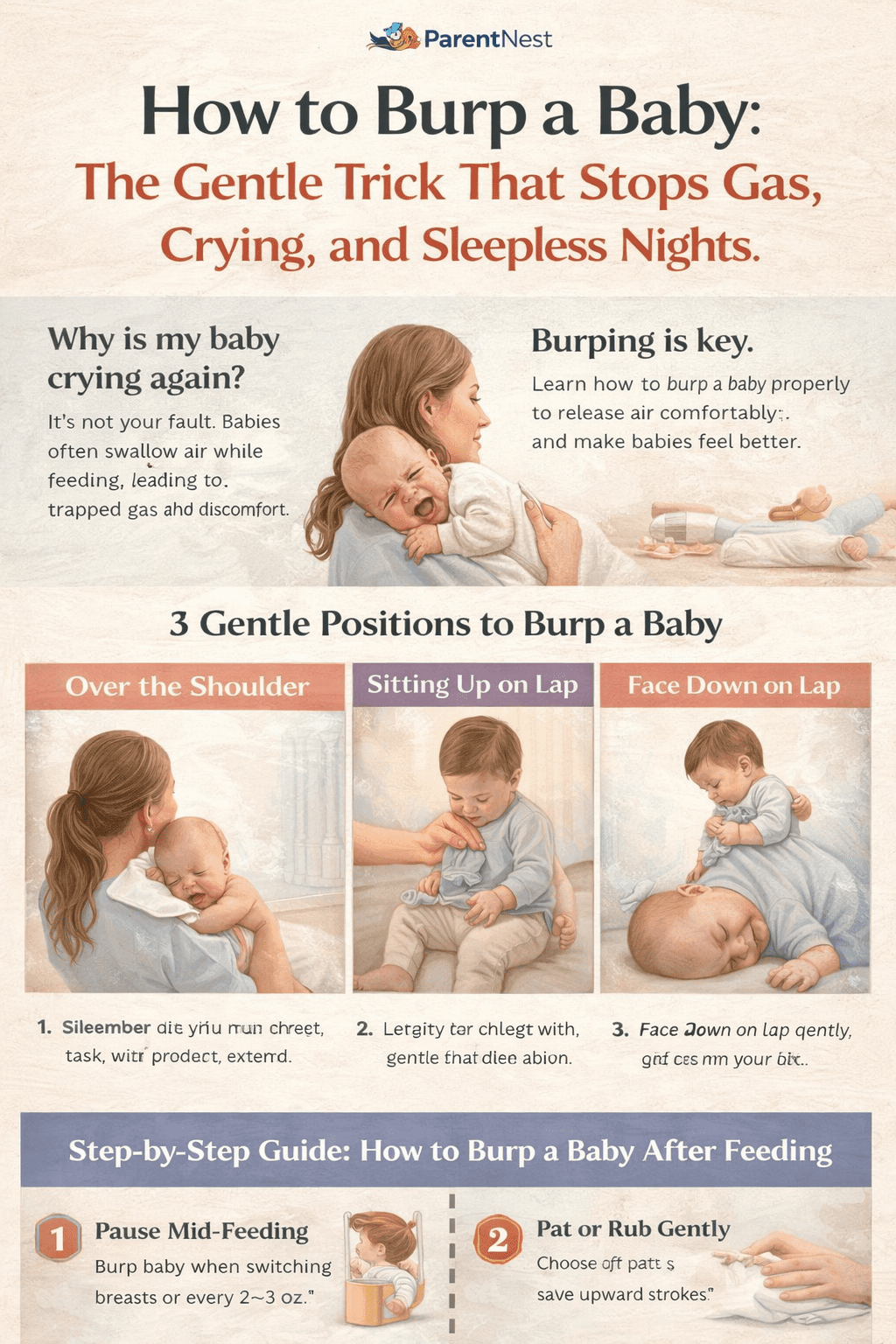
1. Over-the-Shoulder Method
This is the most common position.
How to do it:
- Hold your baby upright against your chest.
- Their chin should rest gently on your shoulder.
- Support their bottom with one hand.
- Use the other hand to gently pat or rub their back.
Use slow, soft pats. Not hard slaps.
Many babies burp within 1–3 minutes in this position.
2. Sitting on Your Lap Method
This works well for babies who need more support.
Steps:
- Sit your baby upright on your lap.
- Support their chest and head with one hand.
- Lean them slightly forward.
- Gently pat or rub their back with the other hand.
Keep their head higher than their chest.
This helps air move upward.
3. Face-Down Across Your Lap
This position helps with stubborn gas.
Steps:
- Lay baby face down across your lap.
- Support their head slightly higher than their chest.
- Gently rub or pat their back.
Be careful not to put pressure on the stomach.
This position uses gravity to help release trapped air.
How Long Should You Burp a Baby?
Most babies need 2–5 minutes.
If no burp comes after 5 minutes, it’s okay to stop.
Some babies don’t swallow much air and may not burp every time.
If your baby seems calm and relaxed, don’t worry.
Step-by-Step Guide: How to Burp a Baby After Feeding
Here is a simple routine you can follow:
Step 1: Pause Mid-Feeding
If bottle feeding, burp after every 2–3 ounces.
If breastfeeding, burp when switching breasts.
Step 2: Hold Baby Upright
Choose one of the three safe positions above.
Step 3: Pat or Rub Gently
Use soft upward strokes or light pats.
Step 4: Wait Patiently
Give it time. Stay calm.
Step 5: Try a Second Position
If no burp happens, switch positions.
Consistency helps you learn what works for your baby.
Common Mistakes Parents Make When Burping
Even loving parents make these mistakes:
- Patting too hard
- Giving up too quickly
- Forgetting mid-feed burping
- Laying baby down immediately after feeding
- Not supporting the head and neck
Burping should be gentle.
Think comfort, not force.
When Baby Won’t Burp: What to Do
Sometimes the burp just doesn’t come.
Here’s what you can try:
- Change positions
- Gently rock while burping
- Walk around while holding the baby upright
- Try again after 5 minutes
If your baby seems content and not fussy, they may not need to burp.
Every baby is different.
How to Burp a Sleeping Baby
This is a common question.
Yes, you can burp a sleeping baby.
Hold them upright and gently rub their back.
Keep movements calm and slow.
If they stay asleep and seem comfortable, that’s okay too.
Breastfed vs Bottle-Fed Babies: Is Burping Different?
Generally:
| Feeding Type | Burping Needs |
|---|---|
| Breastfed | May swallow less air |
| Bottle-fed | Often need more frequent burping |
Bottle-fed babies tend to swallow more air, especially if the bottle nipple flow is too fast.
Choose slow-flow nipples for newborns.
Recommended Baby Products (Soft Affiliate Section)
These tools can make burping easier:
| Product | Why It Helps |
|---|---|
| Burp cloths | Protect clothes from spit-up |
| Supportive nursing pillow | Keeps baby upright |
| Anti-colic bottles | Reduce air intake |
| Slow-flow nipples | Control milk flow |
| Baby carrier | Keeps baby upright after feeding |
Always choose products designed for newborn safety.
Safety Tips Every Parent Should Know
- Always support baby’s head and neck
- Keep a burp cloth nearby
- Never shake a baby
- Don’t force a burp
- Keep baby upright 10–15 minutes after feeding if prone to spit-up
If spit-up happens, stay calm. It’s normal.
Expert Insight: Why Babies Get Gassy
Newborn digestive systems are immature.
Gas can build up easily.
Common causes include:
- Overfeeding
- Fast milk flow
- Crying before feeding
- Swallowing air
Burping helps reduce pressure in their tiny stomach.
If excessive discomfort continues, consult your pediatrician for guidance.
(For general feeding guidelines, you can review resources from the American Academy of Pediatrics.)
How do you burp a baby properly?
To burp a baby properly, hold them upright against your chest or seated on your lap, support their head and neck, and gently pat or rub their back for 2–5 minutes until air is released.
FAQs About How to Burp a Baby
How often should I burp my baby?
Burp during and after each feeding. Bottle-fed babies may need more frequent burping.
What if my baby doesn’t burp?
If baby seems comfortable, it’s okay. Not all babies burp every time.
Can burping prevent colic?
Burping may reduce gas discomfort but does not prevent colic entirely.
Should I burp baby at night?
Yes, especially if they wake fussy after feeding.
Why does my baby spit up while burping?
A little spit-up is normal. Keep baby upright and use a burp cloth.
Is it okay if baby falls asleep before burping?
Yes. Try gently burping without waking fully.
When do babies stop needing to burp?
Many babies need less burping around 4–6 months as digestion improves.
Final Thoughts
The truth is…
Learning how to burp a baby isn’t about technique alone.
It’s about connection.
It’s about holding your little one close.
Listening to their small sounds.
Responding with calm hands and patience.
Every burp you help release is a moment of care.
You are learning.
Your baby is learning.
And together, you will find your rhythm.
Parenting isn’t about perfection.
It’s about showing up.
And you’re doing that beautifully 💛