
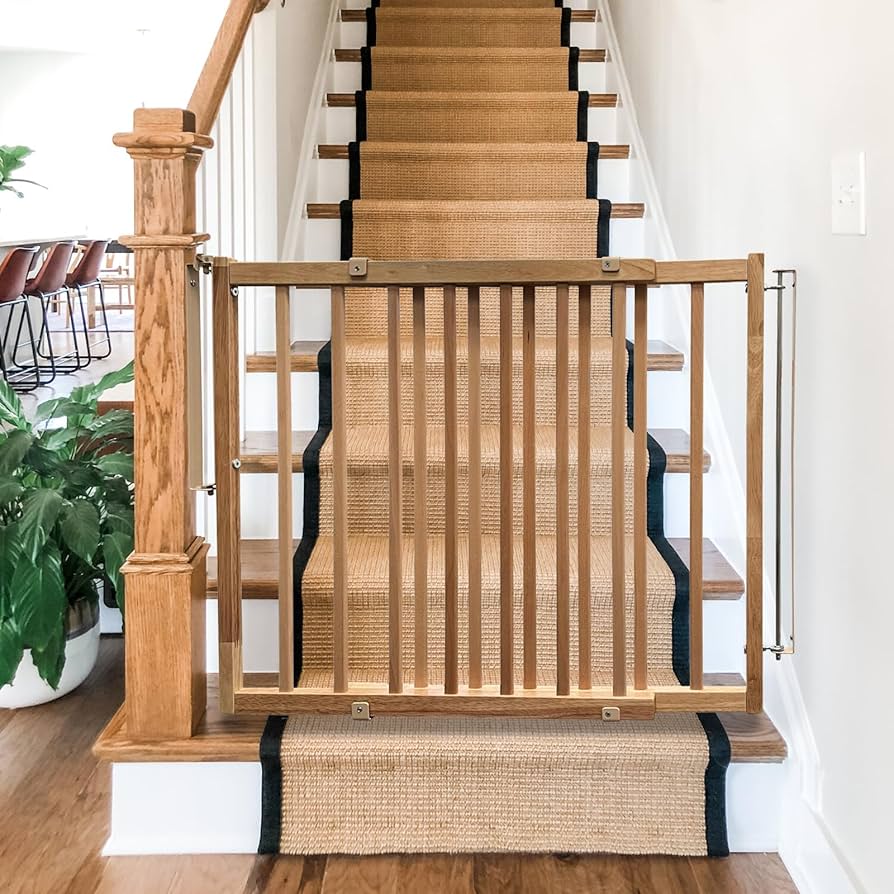
Installing the best baby safety gates for stairs is one of the most important steps in baby-proofing your home. As babies begin crawling and pulling up, stairs quickly become one of the highest risk areas.
This complete guide explains how to choose the safest gate, what features matter most, how to install it correctly, and common mistakes parents should avoid.
By the end of this article, you’ll know exactly how to select and install a stair safety gate that protects your growing child.
Table of Contents
Why Stair Safety Gates Are Essential
Stairs present multiple risks:
- Falling from a height
- Slipping while learning to walk
- Climbing unsupervised
Babies develop mobility quickly. One day they roll, the next they crawl. Installing the best baby safety gates for stairs before crawling begins significantly reduces accident risk.
Types of Baby Safety Gates for Stairs
Not all gates are appropriate for stair use. Understanding the difference is critical.
1️⃣ Hardware-Mounted Safety Gates (Recommended for Top of Stairs)
Hardware-mounted gates are screwed directly into the wall or banister.
Why They Are Safer:
- More stable
- No pressure bars to trip over
- Stronger hold
- Less likely to dislodge
For top-of-stairs installation, hardware-mounted gates are strongly recommended.
2️⃣ Pressure-Mounted Gates (Better for Doorways)
Pressure-mounted gates use tension to stay in place.
Pros:
- Easy installation
- No drilling required
- Portable
Cons:
- Less secure for stair tops
- May shift under pressure
Pressure gates are generally safer for bottom-of-stairs use or flat doorways.
What to Look for in the Best Baby Safety Gates for Stairs
Choosing the right gate requires careful evaluation.
1️⃣ Secure Locking Mechanism
Look for:
- Dual-action opening
- Adult-friendly release
- Child-resistant design
Avoid gates with simple push-open latches.
2️⃣ Proper Height & Width
Most safety gates range between:
- 28–36 inches in height
Measure stair width before purchasing. Adjustable gates offer better fit.
3️⃣ Durable Materials
Common materials include:
- Steel (very durable)
- Wood (aesthetic but sturdy)
- Mesh (lighter but flexible)
Metal gates often provide maximum durability for stair use.
4️⃣ No Climb Design
Avoid gates with:
- Horizontal bars
- Large gaps
- Decorative footholds
Vertical bars reduce climbing risk.
Where to Install Baby Safety Gates
The most critical areas include:
- Top of stairs
- Bottom of stairs
- Split-level areas
- Basement staircases
Installing both top and bottom gates adds layered protection.
Step-by-Step Installation Guide
Proper installation matters just as much as product selection.
Step 1: Measure Carefully
Measure:
- Stair width
- Wall structure
- Banister spacing
Use a level tool to ensure alignment.
Step 2: Mount Securely
For hardware-mounted gates:
- Mark drill holes
- Use appropriate anchors
- Tighten screws fully
- Check alignment
Never install a pressure gate at the top of stairs unless specifically rated safe for that position.
Step 3: Test Stability
After installation:
- Apply firm pressure
- Check the locking function
- Ensure no wobbling
- Recheck weekly
Regular inspection maintains safety.
Common Mistakes Parents Make
Even the best baby safety gates for stairs can fail if installed incorrectly.
Avoid:
❌ Installing a pressure gate at stair top
❌ Forgetting to tighten screws
❌ Using worn-out hardware
❌ Leaving the gate open accidentally
❌ Delaying installation
Safety preparation should happen before the baby becomes mobile.
When Should You Install a Stair Safety Gate?
Most parents install gates:
- Around 4–6 months
- Before crawling begins
It is always better to install early rather than react after a fall.
How Long Should You Keep Stair Gates Installed?
Stair gates are typically used until:
- Child reliably navigates stairs safely
- Around toddler years
Every child develops differently. Continue supervision even after removal.
Are Retractable Gates Safe for Stairs?
Retractable gates can work if:
- Specifically rated for stair use
- Installed securely
- Properly tensioned
However, rigid hardware-mounted gates are generally considered more stable.
Evidence-Based Safety Guidance
For additional child safety recommendations, consult trusted public health organizations such as:
U.S. Consumer Product Safety Commission
These organizations provide updated safety guidance on child injury prevention.
Frequently Asked Questions
What is the safest baby gate for the top of stairs?
Hardware-mounted gates are generally considered the safest option for the top of stairs.
Are pressure-mounted gates safe for stairs?
Pressure-mounted gates are typically better suited for doorways or bottom-of-stairs use.
How high should a baby gate be?
Most safe stair gates range between 28 and 36 inches tall.
Can toddlers climb baby gates?
Some toddlers attempt to climb gates with horizontal bars. Choosing vertical bar designs reduces this risk.
What are the best baby safety gates for stairs for active toddlers?
The best baby safety gates for stairs for active toddlers are hardware-mounted models with strong locking systems and vertical bar designs to prevent climbing.
Safety Checklist Before Buying
✔ Hardware-mounted for stair tops
✔ Strong locking mechanism
✔ No horizontal climbing bars
✔ Secure wall anchors
✔ Proper fit and measurement
Review product instructions carefully before installation.
Final Thoughts
Installing the best baby safety gates for stairs is a proactive step that significantly reduces household injury risk.
By choosing hardware-mounted gates, ensuring secure installation, and performing regular safety checks, parents create a safer environment for growing children.
Child safety is not about perfection — it’s about preparation.
Investing in the best baby safety gates for stairs provides long-term protection as your child becomes more mobile.
ParentNest remains committed to providing practical, research-informed guidance to support confident parenting decisions.