
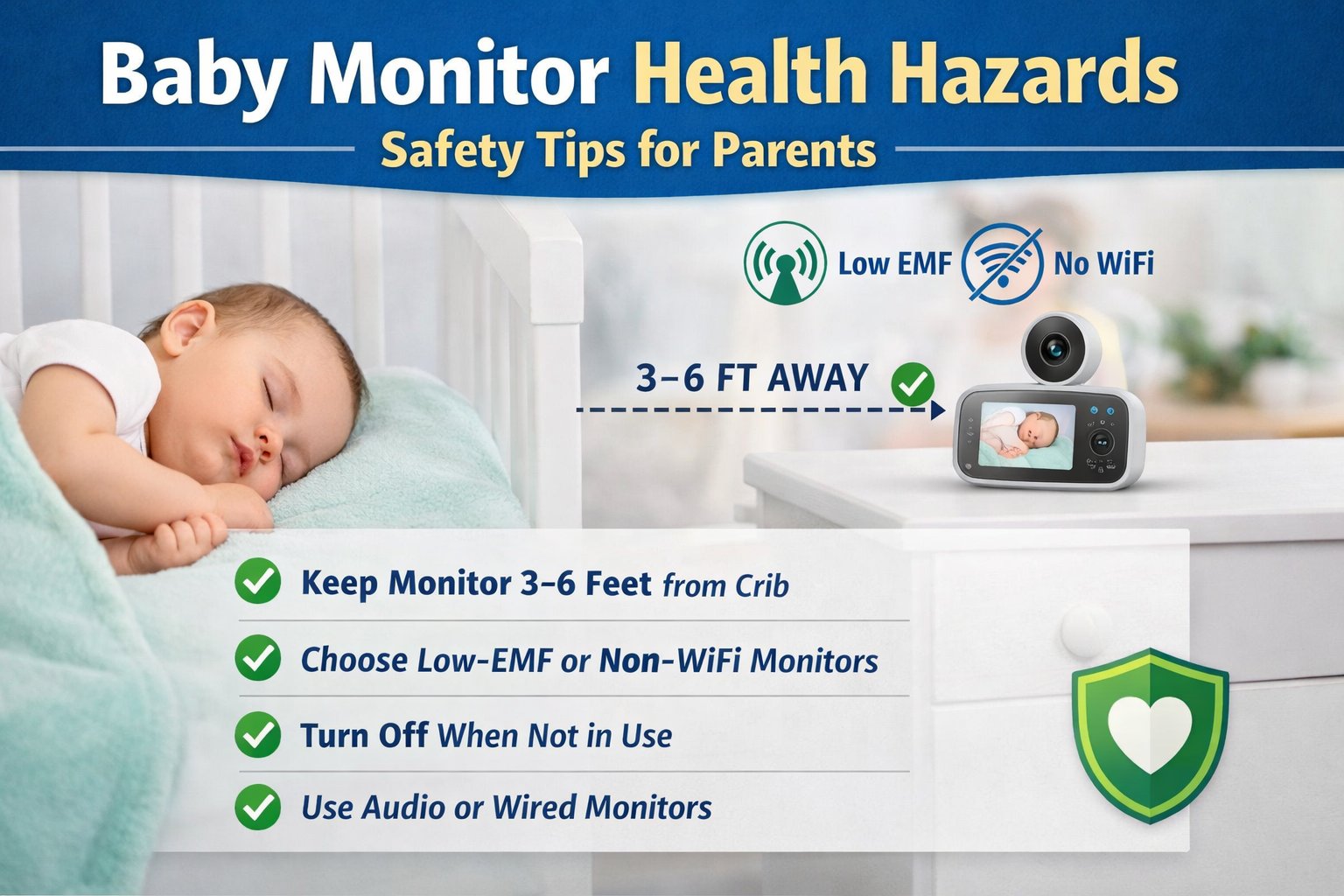
Baby Monitor Health Hazards: What Every Parent Should Know
Baby monitor health hazards are a growing concern for parents who want to keep their babies safe while also protecting their long-term health. Modern baby monitors use wireless signals, cameras, microphones, and mobile apps. While these features offer convenience and peace of mind, many parents worry about potential radiation exposure, EMF signals, and sleep disturbances.
Most pediatric experts agree that baby monitors are generally safe when used correctly, but improper placement or excessive reliance on wireless devices may increase certain risks.
Understanding the science behind baby monitors can help parents make informed decisions. This guide explores whether baby monitors emit radiation, if non-WiFi monitors are safer, and what pediatricians recommend for safe monitoring.
If you’re a new parent, pregnant, or caring for a newborn, this evidence-based guide will help you balance safety, technology, and your baby’s health.
Quick Answer Box
Are baby monitor health hazards real?
Baby monitors can emit low levels of electromagnetic fields (EMF) and radiofrequency radiation similar to WiFi routers or smartphones. According to health authorities, these levels are generally below harmful limits, but long-term exposure near a baby’s sleeping area may raise concerns for some families.
Parents can reduce potential risks by:
• Keeping the monitor at least 3–6 feet away from the crib
• Choosing low-EMF or non-WiFi monitors
• Turning monitors off when not needed
• Using audio-only or local connection monitors
Proper use makes baby monitors safe and helpful tools for monitoring infants.
Understanding Baby Monitor Technology
Baby monitors allow parents to listen to or watch their baby remotely. These devices use different types of technology:
• Audio transmission
• Video cameras
• WiFi internet connections
• Radiofrequency signals
Most monitors operate using radio waves or wireless signals, which create low levels of electromagnetic fields (EMF).
EMF exposure from baby monitors is similar to everyday household electronics such as:
• Smartphones
• WiFi routers
• Bluetooth devices
• Cordless phones
Health organizations state that low-level exposure is generally safe, but experts recommend minimizing unnecessary exposure for infants.
Are Baby Monitor Health Hazards Real?
Many parents search online asking “are baby monitors bad for babies?”
The answer is not straightforward.
Baby monitor health hazards are typically related to three main concerns:
1. EMF Exposure
Wireless monitors emit radiofrequency radiation.
Although levels are low, infants have:
• Thinner skulls
• Developing brains
• Higher cell growth rates
This is why some experts recommend keeping wireless devices at a distance from babies.
2. Sleep Disruption
Bright camera lights or monitor noise can disturb babies’ sleep cycles.
Poor sleep in infancy may affect:
• Brain development
• Mood regulation
• Growth hormones
3. Over-Monitoring Anxiety
Constant monitoring sometimes leads to parental anxiety, making parents check monitors excessively.
Healthy parenting includes balanced supervision and trust in safe sleep practices.
Is Baby Monitor Radiation Safe?
Parents often ask: Is baby monitor radiation safe?
Most baby monitors emit non-ionizing radiation, the same category as WiFi and radio waves.
This type of radiation does not damage DNA like X-rays or nuclear radiation.
According to the World Health Organization, current evidence shows no confirmed health effects from low-level radiofrequency exposure.
Similarly, the American Academy of Pediatrics emphasizes that baby monitors can be used safely with proper placement and moderation.
However, precautionary practices are still recommended.
Do Baby Monitors Without WiFi Emit EMF?
Yes, baby monitors without WiFi still emit EMF, but the levels are often lower and more localized.
These monitors usually rely on radio frequency signals instead of internet connections.
Comparison of Baby Monitor Types
| Monitor Type | Internet Needed | EMF Level | Security Risk | Recommended For |
|---|---|---|---|---|
| WiFi Smart Monitor | Yes | Moderate | Higher | Remote viewing |
| Digital RF Monitor | No | Low-Moderate | Low | Local monitoring |
| Audio-Only Monitor | No | Very Low | Minimal | Basic monitoring |
| Breathing Monitor | No | Very Low | Minimal | Health tracking |
Parents concerned about baby monitor health hazards often choose non-WiFi monitors or audio monitors.
ypes of Baby Monitors and Their Safety
Audio Baby Monitors
These transmit sound only.
Pros:
• Lower radiation
• Simple design
• Affordable
Cons:
• No visual monitoring
Video Baby Monitors
These include cameras and screens.
Pros:
• Visual reassurance
• Motion detection
Cons:
• Higher power usage
• Potential hacking risks
WiFi Smart Monitors
These connect to smartphone apps.
Pros:
• Remote access
• Smart alerts
• Sleep tracking
Cons:
• Higher EMF exposure
• Security vulnerabilities
Early Signs Parents Worry About
Some parents believe certain symptoms may relate to baby monitor exposure.
While scientific evidence is limited, parents sometimes report concerns like:
• Restless sleep
• Frequent waking
• Irritability
• Sensitivity to light or noise
These symptoms are far more likely caused by normal infant development, feeding schedules, or growth spurts.
Still, maintaining low-exposure environments can bring peace of mind.
Pediatrician Recommended Baby Monitor Practices
Many pediatricians advise the following precautions:
• Place the monitor at least 3–6 feet from the crib
• Avoid mounting directly above the baby
• Use wired or low-EMF options when possible
• Turn off monitors during naps if nearby
• Avoid placing routers close to the nursery
The Centers for Disease Control and Prevention and pediatric health experts recommend limiting unnecessary electronic exposure around infants.
Step-by-Step Guide to Safe Baby Monitor Use
Step 1: Choose the Right Monitor
Look for devices that offer:
• Low EMF output
• Secure signal encryption
• Adjustable power settings
Step 2: Maintain Safe Distance
Never place the monitor directly inside the crib.
Safe distance: 3–6 feet from baby.
Step 3: Reduce Wireless Devices Nearby
Keep these away from the crib:
• WiFi routers
• Smart speakers
• Bluetooth devices
Step 4: Use Night Mode
Many monitors include infrared night vision instead of bright LEDs.
Step 5: Turn Off When Not Needed
This reduces overall exposure and power consumption.
Common Mistakes Parents Make
Even caring parents sometimes unknowingly increase baby monitor health hazards.
Common mistakes include:
• Mounting monitors inside the crib
• Placing the device right above the baby’s head
• Using multiple wireless devices in the nursery
• Leaving monitors on all day and night unnecessarily
• Ignoring device firmware updates (security risk)
Avoiding these mistakes dramatically improves safety.
Expert Tips for Safer Monitoring
Child development specialists suggest:
• Use audio monitors for newborn stage
• Switch to video monitors when babies become mobile
• Keep nursery electronics minimal and simple
• Use monitors mainly during sleep times
Parents should also remember that safe sleep practices matter more than constant monitoring.
Safety & Health Notes
Research on EMF exposure is ongoing.
Health organizations including:
• World Health Organization
• Mayo Clinic
• American College of Obstetricians and Gynecologists
state that everyday electronic devices produce low levels of radiation that are considered safe within recommended limits.
However, they encourage precautionary use around infants and pregnant women.
FAQ: Baby Monitor Health Hazards
Are baby monitor health hazards proven?
No major health risks have been scientifically proven, but reducing unnecessary EMF exposure is recommended.
Are baby monitors bad for babies?
Baby monitors are generally safe when placed at a safe distance from the crib.
Is baby monitor radiation safe for newborns?
Most monitors emit non-ionizing radiation, which is considered low risk.
Do baby monitors without WiFi emit EMF?
Yes, but the EMF levels are typically lower than WiFi monitors.
What is the safest baby monitor type?
Audio-only and low-EMF digital monitors are often considered the safest options.
Should a baby monitor be placed inside the crib?
No. Always place it outside the crib at least 3 feet away.
Do pediatricians recommend baby monitors?
Some pediatricians recommend them for convenience, but they are not essential for healthy babies.
Can baby monitors affect sleep?
Bright lights or noise from monitors may disturb sleep if placed too close.
Are WiFi baby monitors safe?
Yes, but they may produce higher EMF and potential security risks.
Can EMF exposure harm infants?
Current research has not confirmed harm at low exposure levels.
Read Also
• 7 Powerful Advice for Baby Monitors for a Baby
• Best Baby Monitors for New Parents
• Safe Sleep Tips for Newborn Babies
• How to Reduce EMF Exposure in the Nursery
• Baby Sleep Safety Guidelines for Parents
External Authority Sources
Reliable health information can be found at:
• World Health Organization
• Centers for Disease Control and Prevention
• Mayo Clinic
• American Academy of Pediatrics
• American College of Obstetricians and Gynecologists
Conclusion
Understanding baby monitor health hazards helps parents make smarter decisions about nursery technology. While most baby monitors emit low levels of EMF and radiation, proper placement and responsible use can significantly reduce potential exposure.
Keeping the monitor several feet away from the crib, choosing low-EMF devices, and minimizing unnecessary electronics in the nursery are simple steps that protect your baby’s health.
Baby monitors should be viewed as helpful parenting tools—not replacements for safe sleep practices and attentive care.
When used correctly, they provide reassurance without compromising your baby’s well-being.
Medical Disclaimer
This article is for informational purposes only and does not replace professional medical advice. Always consult your pediatrician or healthcare provider regarding concerns about baby monitor safety or infant health.