
introduction
Just when you felt like you were finally getting the hang of baby sleep, everything changes.
Your baby who once slept peacefully now wakes frequently. Naps become short. Bedtime turns into a struggle. And suddenly, exhaustion returns.
If this sounds familiar, you may be noticing 4 month sleep regression signs — a normal developmental shift many babies experience.
The good news? This phase is temporary and often signals healthy brain growth.
In this ParentNest guide, you’ll learn:
- Clear 4 month sleep regression signs
- Why this infant sleep phase happens
- Gentle ways to support your baby
- Real-life parent strategies that work
Take a deep breath. You’re not doing anything wrong — and better nights are ahead.
⭐ Quick Answer: What Are 4 Month Sleep Regression Signs?
4 month sleep regression signs include frequent night waking, shorter naps, fussiness at bedtime, increased hunger, and difficulty settling independently. These changes happen because your baby’s sleep cycles mature and become more like adult sleep patterns.
Most babies experience this infant sleep phase between 3–5 months, and it typically lasts 2–6 weeks.
What Is the 4 Month Sleep Regression?
The 4 month sleep regression is not a setback.
Instead, it’s a permanent neurological change in how babies sleep.
During the newborn stage, babies cycle between light and deep sleep. Around 4 months, their sleep becomes structured into stages:
- Light sleep
- Deep sleep
- REM sleep
Because of this shift, babies wake more often between cycles.
This explains why many parents suddenly search for 4 month sleep regression signs after weeks of smoother sleep.
Around four months, babies begin transitioning from newborn sleep patterns into more mature cycles. Understanding how baby sleep cycles develop can help parents recognize why frequent waking suddenly appears.
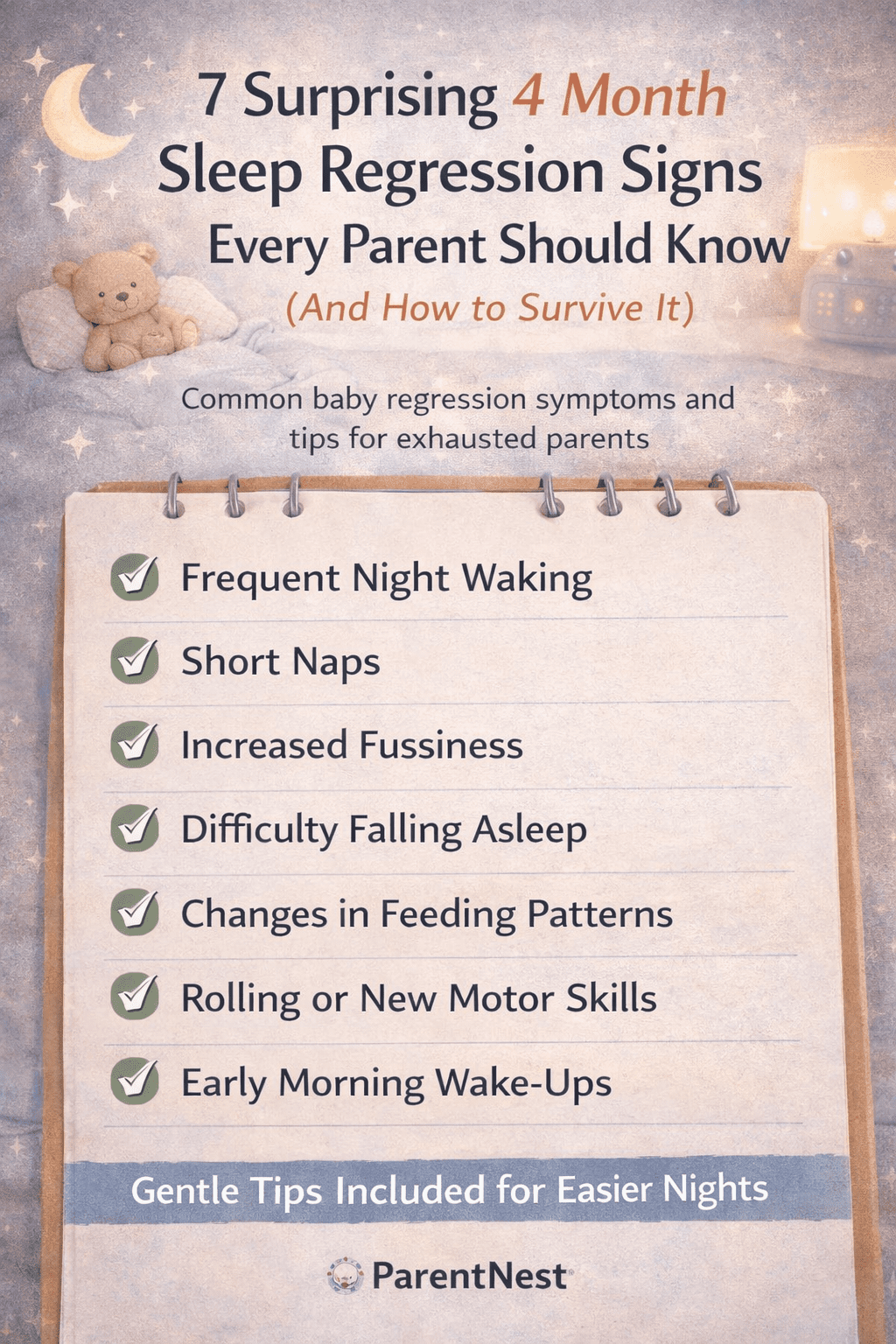
7 Clear 4 Month Sleep Regression Signs
1. Frequent Night Waking
Your baby wakes every 1–2 hours.
Previously long stretches disappear.
This is the most common infant sleep phase indicator.
2. Short Naps
Naps may drop to 20–40 minutes.
Babies struggle to connect sleep cycles during daytime.
3. Increased Fussiness
Sleep deprivation affects mood.
Babies may cry more and resist soothing.
4. Difficulty Falling Asleep
Bedtime suddenly takes longer.
Your baby may need extra rocking or feeding.
5. Changes in Feeding Patterns
Some babies nurse more at night.
Others become distracted during daytime feeds.
6. Rolling or New Motor Skills
Development often overlaps regression.
New movement skills stimulate the brain.
7. Early Morning Wake-Ups
Babies may wake before sunrise and struggle to resettle.
Recognizing these 4 month sleep regression signs helps parents respond with confidence rather than worry.
Why This Infant Sleep Phase Happens
Understanding causes reduces stress.
Brain Development
Sleep architecture matures.
More sleep stages mean more awakenings.
Circadian Rhythm Formation
Babies begin aligning sleep with day-night cycles.
This adjustment takes time.
Developmental Milestones
Rolling, grasping, and social awareness increase brain activity.
Growth Spurts
Increased caloric needs lead to night feeding.
All these factors combine to create noticeable regression.
Step-by-Step Ways to Handle 4 Month Sleep Regression Signs
Step 1: Create a Predictable Bedtime Routine
Consistency signals sleep.
Simple routines work best:
- Bath
- Pajamas
- Feeding
- Song or cuddle
- Bed
Step 2: Watch Wake Windows
Overtired babies sleep worse.
Typical 4-month wake windows:
- 90–120 minutes
Step 3: Encourage Daytime Sleep
Protect naps even if short.
Dark rooms and white noise help.
Step 4: Offer Comfort Without Overstimulation
Keep nighttime interactions calm.
Dim lights and quiet voices preserve sleep cues.
Step 5: Pause Before Responding
Babies sometimes resettle independently.
A brief pause can prevent unnecessary wake cycles.
Step 6: Prioritize Daytime Feeding
Full daytime feeds reduce night hunger.
Step 7: Be Patient
This infant sleep phase resolves naturally.
Gentle consistency matters more than perfection.
Age-Based Sleep Expectations
| Age | Total Sleep | Night Sleep | Naps |
|---|---|---|---|
| 3 months | 14–17 hrs | 8–10 hrs | 3–5 naps |
| 4 months | 13–16 hrs | 9–11 hrs | 3–4 naps |
| 5 months | 13–15 hrs | 10–11 hrs | 3 naps |
This context helps parents distinguish regression from abnormal sleep patterns.
Practical Parenting Examples
Example 1: Emma, First-Time Mom
Emma’s baby began waking hourly at 4 months.
She introduced a predictable bedtime routine and adjusted wake windows.
Within 3 weeks, night sleep improved.
Example 2: Carlos and Maya
Their baby’s naps dropped to 25 minutes.
They used a dark room and white noise consistently.
Naps gradually lengthened.
These experiences highlight that recognizing 4 month sleep regression signs leads to effective adjustments.
Practical Parenting Examples
Example 1: Emma, First-Time Mom
Emma’s baby began waking hourly at 4 months.
She introduced a predictable bedtime routine and adjusted wake windows.
Within 3 weeks, night sleep improved.
Example 2: Carlos and Maya
Their baby’s naps dropped to 25 minutes.
They used a dark room and white noise consistently.
Naps gradually lengthened.
These experiences highlight that recognizing 4 month sleep regression signs leads to effective adjustments.
Provide safe comfort and warmth.
Night Lights
Allow nighttime care without overstimulation.
Budget vs Premium
| Budget | Premium |
|---|---|
| Basic white noise apps | Smart sound machines |
| DIY blackout solutions | Custom blackout curtains |
| Cotton sleep sacks | Temperature-regulating sleep sacks |
Choose based on need, not price.
⭐ Expert Tips Box
💡 Regression often peaks before improving
💡 Focus on routine, not rigid schedules
💡 Daytime stimulation supports nighttime sleep
💡 Independent sleep skills develop gradually
💡 Parental rest matters too
Common Mistakes Parents Make
- Assuming regression is permanent
- Constantly changing routines
- Overstimulating nighttime responses
- Letting baby become overtired
- Comparing babies to others
Avoiding these pitfalls reduces stress and confusion.
Safety & Pediatric Advice
Safe sleep remains essential during regression.
Follow these guidelines:
- Place baby on back to sleep
- Use firm, empty sleep surface
- Avoid loose blankets and pillows
- Maintain comfortable room temperature
- Monitor rolling milestones
Consult your pediatric provider if sleep disruption accompanies:
- Poor weight gain
- Persistent crying
- Feeding difficulties
- Illness symptoms
FAQ Section
How long do 4-month sleep regression signs last?
Most babies experience regression for 2–6 weeks, though duration varies.
Do all babies experience this infant sleep phase?
Many do, but intensity differs.
Can sleep training stop regression?
Sleep training does not prevent regression, but gentle routines can support sleep.
Why is my baby waking every hour at 4 months?
Frequent waking reflects new sleep cycle transitions.
Should I feed during regression?
Feed if baby shows hunger cues and weight gain is appropriate.
Are short naps normal during regression?
Yes. Many babies struggle to connect daytime sleep cycles.
Will regression happen again?
Future regressions may occur around developmental milestones.
Key Takeaways
- 4 month sleep regression signs reflect healthy development
- Frequent waking results from sleep cycle maturation
- Consistent routines provide stability
- Wake windows prevent overtiredness
- Most regressions resolve within weeks
- Gentle support works better than drastic changes
Conclusion
Few parenting experiences feel as exhausting as sleep regression.
Yet this phase often marks meaningful growth.
Your baby’s brain is learning, organizing, and adapting.
By recognizing 4 month sleep regression signs, responding with gentle consistency, and maintaining realistic expectations, you create a supportive sleep environment.
Remember — sleep is a skill built over time.
And this stage will pass.
💛 ParentNest Encouragement CTA
If this guide helped you understand your baby’s sleep changes, you’re already doing something powerful — learning.
Save this article for late-night reassurance. Share it with another tired parent. And explore more ParentNest sleep guides designed to support calm, confident parenting.
Better nights are coming — one gentle step at a time. 🌙